Best Linux Patch Management Software for Server Farms for 2026: Our 5 Vetted Picks
Best linux patch management software for server farms: 5 contenders ranked by fit, with entry costs and free tiers. Real limits included. Decide faster.
- Editor's choice
 Chef Infra
Automating consistent system configuration
Starts at$59 per node a yearVisit chef.ioFull review - Great alternativeAnsible Automation Platform
Agentless automation-first patch runs
Starts atSee websiteVisit redhat.comFull review - Also considerPuppet Enterprise
Consistency across large infrastructure
Starts atSee websiteVisit puppet.comFull review
Direct answer
For automating consistent system configuration, Chef Infra is where this list starts. Listed starting prices: Chef Infra from $59 per node a year. Ansible Automation Platform fits Agentless automation-first patch runs; Puppet Enterprise fits consistency across large infrastructure. The full list of 5 tools follows, with prices and free plan facts.
TL;DR:
- Top of the list is Chef Infra, which targets automating consistent system configuration.
- SUSE Manager suits mixed Linux distributions in one system.
- The main caution on Puppet Enterprise: Patch workflows depend on configuration design.
- A permanent free plan is missing from all 5 tools, Chef Infra and SUSE Manager included; plan for a trial or a premium start.
- For Ansible Automation Platform, Puppet Enterprise, Red Hat Satellite and SUSE Manager, you have to request a quote because no starting price is shown.
Last checked November 2026. Prices and plan details were read from the vendors' own pages in November 2026; vendors change plans often, so confirm the current price on the vendor site before you buy.
Quick comparison
| Tool | Best for | Starts at | Free plan? | |
|---|---|---|---|---|
| Chef Infra | Automating consistent system configuration | $59 per node a year | Free trial | Visit |
| Ansible Automation Platform | Agentless automation-first patch runs | See website | Not stated | Visit |
| Puppet Enterprise | Consistency across large infrastructure | See website | Not stated | Visit |
| Red Hat Satellite | Red Hat estates needing lifecycle patching | See website | Not stated | Visit |
| SUSE Manager | Mixed Linux distributions in one product | See website | Not stated | Visit |
Linux Patch Management Software for Server Farms, one by one
LinkVetted compared 5 linux patch management software for server farms. The goal is a practical shortlist: published prices, free plan facts, best-fit use cases and honest limits for every entry.
Chef Infra was built for automating consistent system configuration. Chef Infra automates the process of managing configurations, ensuring that every system is configured correctly and consistently. More specifically, if your priority is a ready-made patch dashboard, consider Ivanti or ManageEngine instead.
Where it is weaker: Patch reporting needs additional design.
In a server farm, that consistency is the foundation for reliable patching, since package state and repositories can be defined as code. It is a configuration management system first, so dedicated patch scheduling and compliance reporting may need additional components or custom work. Chef Infra pricing: $59 per node per year. As for free access: Free trial.
- Suits code-driven operations teams
- Keeps systems configured consistently
- Steeper learning curve for newcomers
Ansible Automation Platform
Best for: Agentless automation-first patch runs
In short, Ansible Automation Platform is for Agentless automation-first patch runs. Red Hat Ansible Automation Platform is described as the trusted execution layer for mission-critical IT operations.
What to check first: Large inventories need careful organization.
For patching, its agentless approach means administrators can reach servers over standard connections without installing a persistent agent on every host. That makes it attractive for farms where rolling out agents is impractical or where patching should be orchestrated alongside other operational tasks. Check the vendor site for Ansible Automation Platform pricing; none is listed in this comparison. Free plan details: Not stated.
- Agentless execution model
- Trusted execution layer for IT operations
- Patch logic must be built in playbooks
Puppet Enterprise
Best for: Consistency across large infrastructure
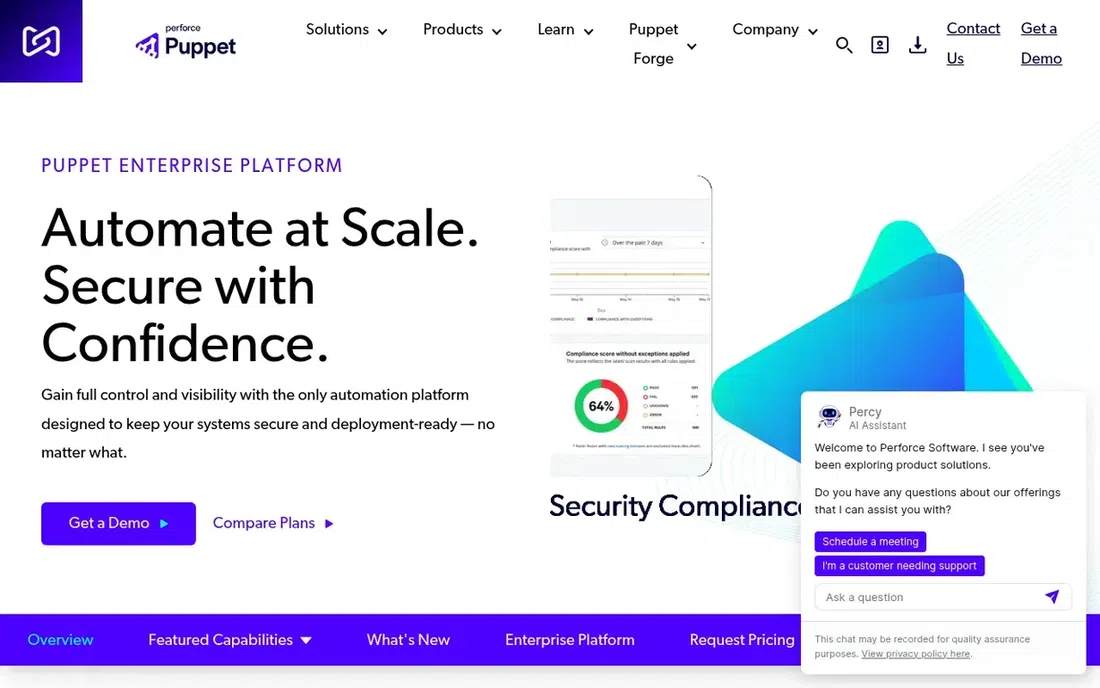
Puppet Enterprise is designed for consistency across large infrastructure. Patching suits into its model as part of broader desired-state configuration, so server farms can keep systems aligned instead of patching ad hoc.
Also, patching is not a standalone feature here; results rely on how well your manifests and modules are designed. Pricing for Puppet Enterprise is not stated here, so ask the vendor for current figures. Trial and free access: Not stated.
The main drawbacks: Patch workflows rely on configuration design.
- Fits large
- Infrastructure operations system built to scale
- Needs Puppet skills to run well
Red Hat Satellite
Best for: Red Hat estates needing lifecycle patching
Red Hat Satellite works best for Red Hat estates needing lifecycle patching. Teams without Red Hat subscriptions or with largely non-Red Hat servers should weigh alternatives like SUSE Manager or Ansible Automation Platform before committing. Worth adding: for server farms running Red Hat systems, it centralizes content and patch delivery so administrators can keep plenty of hosts consistent.
Points against: Needs planning for content sync and repos.
Its strengths are concentrated in Red Hat estates, so heavily mixed fleets may need extra tooling for other distributions. For everyday use, Red Hat Satellite is system management software that makes Red Hat infrastructure simpler to deploy, scale and run across any environment. Pricing for Red Hat Satellite is not stated here, so ask the vendor for current figures. Trial and free access: Not stated.
- Designed for Red Hat infrastructure at scale
- Ties patching to content and lifecycle management
- Most valuable inside Red Hat environments
SUSE Manager
Best for: Mixed Linux distributions in one product
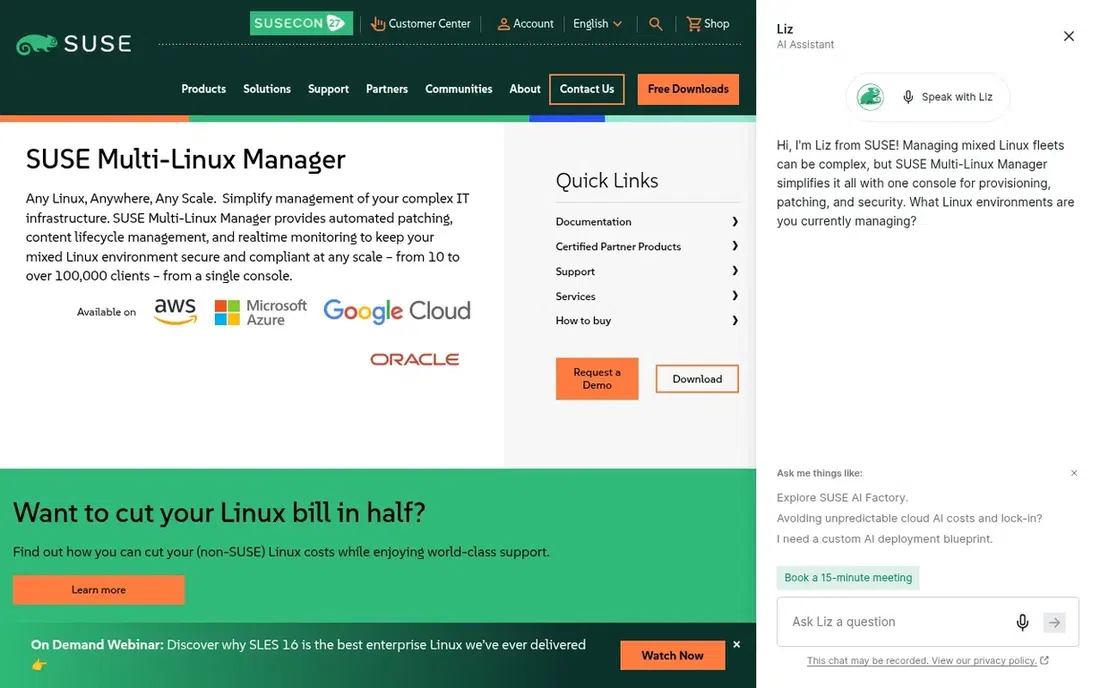
SUSE Manager targets mixed Linux distributions in one product. Since it spans plenty of distributions, some capabilities rely on the specific OS and its tooling, so validate coverage for your mix. Organizations wanting a narrowly focused patch tool may find the product broader than needed, whereas large mixed fleets are the natural fit.
Where it is weaker: Wide scope can mean a longer setup.
More specifically, the emphasis on managing without disruption fits operations teams that cannot afford patching windows to destabilize production services. SUSE Manager, presented as SUSE Multi-Linux Manager, is an open source infrastructure management system for all your Linux distributions. It targets administrators who want one place to handle patching and configuration across a heterogeneous server farm. No starting price is listed for SUSE Manager here; confirm pricing on the vendor site. Free plan details: Not stated.
- Aims for management without disruption
- Handles all major Linux distributions
- Feature depth varies by distribution
How the list was put together
Each tool was reviewed on what its vendor publishes: price, plan limits, core features and stated drawbacks. We did not run hands-on tests. Prices and plan limits come from vendor pages and can change, so confirm them on the vendor site before you buy. Tools are placed by general fit for linux patch management software for server farms, with price clarity and free access as tie-breakers. A different team can reasonably rank them differently.
Things to verify first
- Confirm the entry price on the vendor page. For Ansible Automation Platform, Puppet Enterprise, Red Hat Satellite and SUSE Manager that means a quote rather than a fixed price.
- Run a trial of Chef Infra with real work before paying for a year; your own workflow is the best test.
- Before choosing Chef Infra, weigh its main limit: steeper ramp-up time for newcomers.
- Test how quickly Chef Infra answers a pre-sales question; it hints at how support will feel later.
- Map your must-have features to a specific Puppet Enterprise plan before you compare prices.
FAQ
Do these tools publish their prices?
Not all of them. Ansible Automation Platform, Puppet Enterprise, Red Hat Satellite and SUSE Manager publish no starting price, so expect a quote request for those. The rest, Chef Infra included, show a starting price, though seats and billing terms still change the final cost.
How does risk-based patching differ from scheduled patching?
Scheduled patching applies updates on a fixed cadence. Numerous farms combine both, using risk data to decide what goes first within each window.
Does any tool for linux patch management software for server farms here have a free plan?
A permanent free plan is not offered by Chef Infra, SUSE Manager or the other tools here. Chef Infra offer a trial. Plan a short evaluation period instead.
Can I try these tools before paying?
Often, yes. Chef Infra offers a free trial. Use your own data and a real task during the test, and check what the free tier or trial limits before you rely on it.
How are the tools for linux patch management software for server farms ordered?
Chef Infra sits first and SUSE Manager last because the order follows typical fit for linux patch management software for server farms, then price clarity and free access. It is a judgement call, so read each profile for fit and limits.
Sources
- https://www.chef.io/products/chef-infra
- https://www.redhat.com/en/technologies/management/ansible
- https://www.puppet.com/products/puppet-enterprise
- https://www.redhat.com/en/technologies/management/satellite
- https://www.suse.com/products/suse-manager