The 6 Best Lab Inventory Management Software for Remote Teams in 2026, Ranked
Best lab inventory management software for remote teams in 2026: 6 contenders with entry costs and free tiers. Short verdicts, no fluff. See the full list.
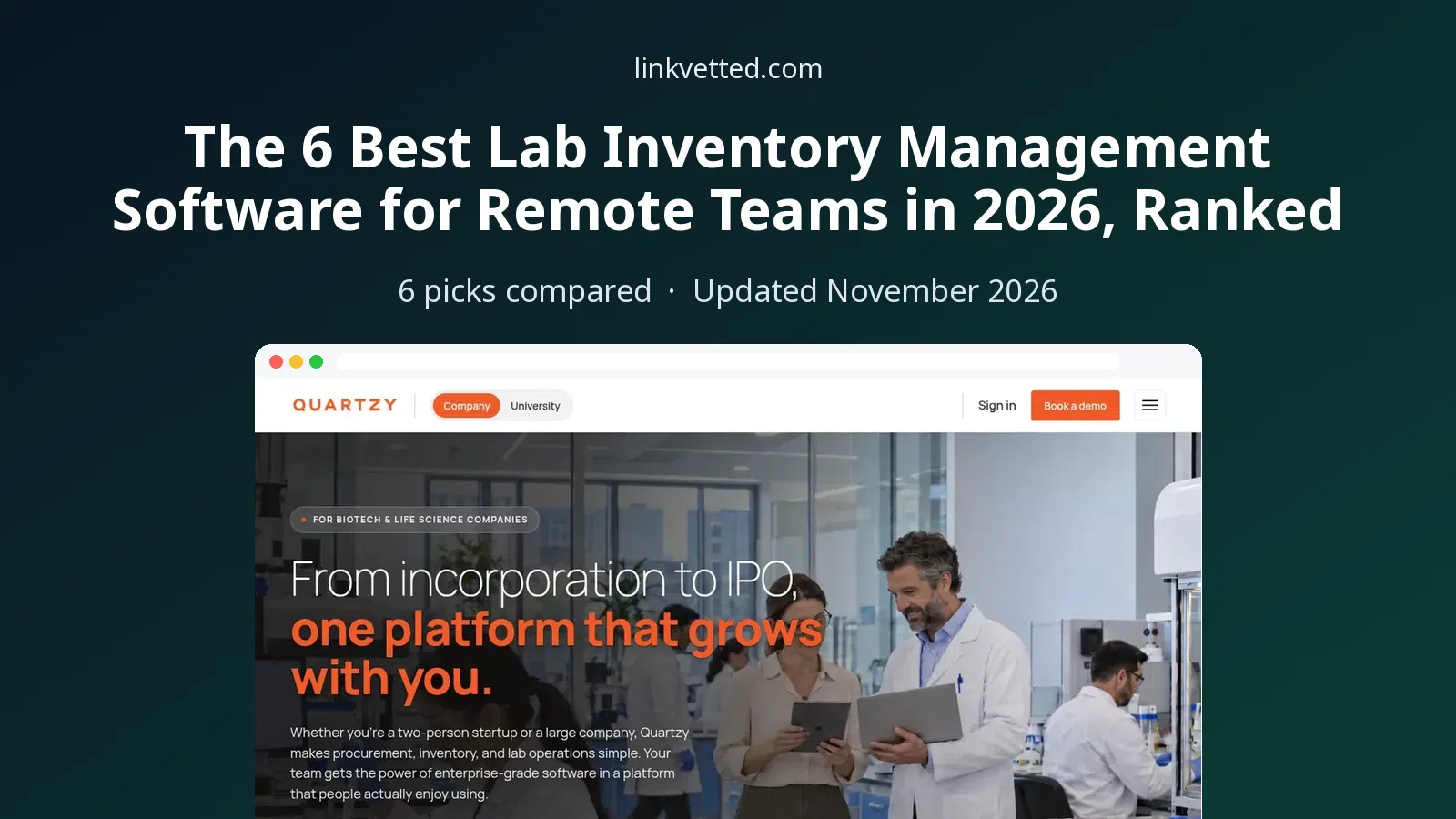
- Editor's choice
 SciNote
Electronic lab notebook for research teams
Starts atSee websiteVisit scinote.netFull review - Great alternative
 Quartzy
Supply ordering and inventory tracking
Starts at$50 a monthVisit quartzy.comFull review - Also consider
 LabCollector
All-in-one lab notebook and inventory product
Starts atSee websiteVisit labcollector.comFull review
Direct answer
SciNote is the first pick on this list for electronic lab notebook for research teams. Listed starting prices: Quartzy from $50 a month and LabArchives from $25 per student per term. Alternatives: Quartzy for supply ordering and inventory tracking, and LabCollector for all-in-one lab notebook and inventory system. Prices, free plans and limits for all 6 tools follow.
TL;DR:
- This list starts with SciNote, which is built for electronic lab notebook for research teams.
- Labguru is the one to check for unified lab management and experiment tracking.
- The main caution on SciNote: inventory features may be secondary.
- For the cheapest start, look at Quartzy: $50 per month.
- A permanent free plan is missing from all 6 tools, SciNote and Labguru included; plan for a trial or a premium start.
Last checked November 2026. Prices and plan details were read from the vendors' own pages in November 2026; vendors change plans often, so confirm the current price on the vendor site before you buy.
Quick comparison
| Tool | Best for | Starts at | Free plan? | |
|---|---|---|---|---|
| SciNote | Electronic lab notebook for research teams | See website | Not stated | Visit |
| Quartzy | Supply ordering and inventory tracking | $50 a month | No | Visit |
| LabCollector | All-in-one lab notebook and inventory product | See website | Free trial | Visit |
 LabArchives | Electronic lab notebook and data organization | $25 per student per term | Free trial | Visit |
 Benchling | Biology-focused R&D collaboration | See website | Not stated | Visit |
 Labguru | Unified lab management and experiment tracking | See website | Not stated | Visit |
Lab Inventory Management Software for Remote Teams profiles
Short on time? The summary and table above give the quick view of 6 lab inventory management software for remote teams, and the profiles that follow give the detail behind each entry.
Pick SciNote if this describes you: electronic lab notebook for research teams. It is a reasonable fit for academic and life science groups that prioritize notebook capabilities and need remote access to lab records.
SciNote does not show a starting price in this comparison, so check the vendor site for current pricing. On free options: Not stated.
Drawbacks to consider: Details vary by configuration.
- Cloud-accessible for remote teams
- Supports research documentation
- Inventory features may be secondary

Think of Quartzy for supply ordering and inventory tracking. Quartzy helps biotech and academic labs order supplies, track inventory, and run procurement from a single system. It is well suited to remote teams that require visibility into stock levels and purchasing workflows without a heavy LIMS implementation.
Downsides: May not handle complicated LIMS needs.
Where it shines: Order supplies and track inventory. The product is meant to support labs from early stages through growth, making it a practical choice for inventory-centric operations. Quartzy is primarily an ordering and inventory tool, so teams needing broad electronic lab notebook or LIMS functionality may find it restricted. If your priority is experiment documentation, consider a notebook-first product instead. What you pay to start with Quartzy: $50 per month. Quartzy has no free plan.
- Suited to biotech and academic labs
- Handle procurement in one system
- Less centred on electronic lab notebooks
LabCollector makes the most sense for all-in-one lab notebook and inventory product. LabCollector is an all-in-one lab notebook and management product that covers straightforward data and lab inventory up to highly customized LIMS. Also, LabCollector's adaptability can mean more configuration effort than a turnkey inventory tool.
Watch-outs: Wide product can be complicated.
For everyday use, remote teams can use it to track inventory and records in one place, with adaptability to fit different situations. It is a good fit for labs that want a single product with room to customize as needs grow. This comparison lists no price for LabCollector; ask the vendor. Free plan details: Free trial.
- Configurable LIMS choices
- All-in-one notebook and management
- Customization may need planning
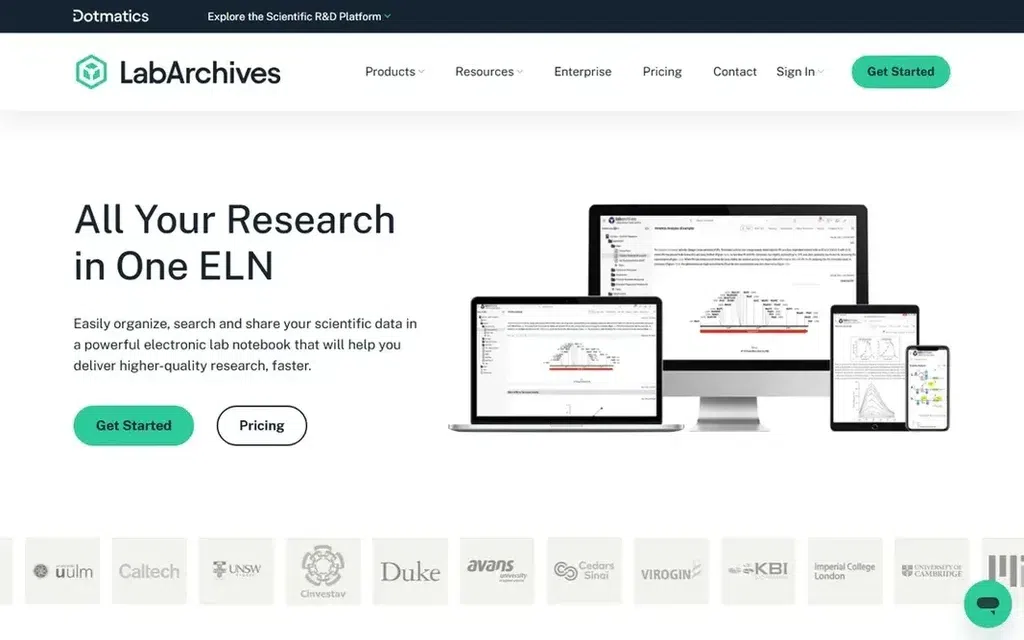
Where LabArchives fits: electronic lab notebook and data organization. LabArchives is a modern electronic lab notebook built to help teams organize, search, and share scientific data. The system emphasizes data sharing and searchability, which supports collaboration when team members are not in the same lab.
Limits to weigh: Not a dedicated procurement system.
LabArchives is not a dedicated inventory or procurement system, so teams needing deep stock-level automation may have to pair it with another tool. Its strength is in notebook and data management instead of supply ordering. Price to start with LabArchives: $25 per student per term. Free options: Free trial.
- Cloud-based access from any location
- Organize and search scientific data
- Inventory features may need extras

Benchling is built with biology-focused R&D collaboration in mind. Benchling is a cloud-based system for biotechnology research and development, described as a biology-first product for scientific data, collaboration, and insights. Choose it when scientific data collaboration is central and inventory is part of a broader research system.
Downsides: Centred on biology workflows.
Benchling is built around biology R&D workflows, so labs outside that domain may find it less straight applicable. It is not a light inventory tool, and teams seeking only stock tracking may prefer a more straightforward choice. Benchling does not show a starting price in this comparison, so check the vendor site for current pricing. On free options: Not stated.
- Biology-first data and collaboration tools
- Cloud-based product for biotech R&D
- May be complicated for straightforward inventory needs
For unified lab management and experiment tracking, Labguru is a natural candidate. Remote teams can use it as a shared workspace for both experimental records and inventory-related tasks. Labguru includes a wide range of lab management functions, which can mean a steeper ramp-up time for teams focused only on inventory.
It may be more than needed for straightforward stock tracking. Consider it when you want an integrated system for experiments, collaboration, and inventory together. No starting price is listed for Labguru here; confirm pricing on the vendor site. Free access: Not stated.
Points against: Wide feature set can be complicated.
- Unified lab management product
- Supports team collaboration
- May need setup for full inventory use
Our selection method
For each of the 6 tools we noted price, free plan or trial, fit for lab inventory management software for remote teams and the main limit, using vendor pages and documentation. Plan names, prices and limits change often. Treat the figures here as a starting point and verify them with the vendor. Order on the page follows fit for the typical buyer first, then price transparency and free access. Your own requirements should decide the final pick.
What to check before you buy
- Ask SciNote, LabCollector, Benchling and Labguru for a written quote, since no starting price is shown.
- Take the trial from LabCollector and LabArchives and push a live task through it before you pay.
- Read the limits listed for SciNote first: inventory features may be secondary.
- Pick one real project and run it in LabCollector first; a small pilot shows fit faster than a checklist.
- Confirm that Labguru connects to the apps your team already uses, on the plan you would actually buy.
FAQ
Is SciNote the right pick for everyone comparing lab inventory management software for remote teams?
No single tool suits every team. SciNote comes first because it fits electronic lab notebook for research teams, while Quartzy suits supply ordering and inventory tracking and LabCollector suits all-in-one lab notebook and inventory platform. Match the tool to your own size, budget and workflow before deciding.
Do these tools publish their prices?
Not all of them. SciNote, LabCollector, Benchling and Labguru publish no starting price, so expect a quote request for those. The rest, Quartzy included, show a starting price, though seats and billing terms still change the final cost.
How are the tools for lab inventory management software for remote teams ordered?
SciNote sits first and Labguru last because the order follows typical fit for lab inventory management software for remote teams, then price clarity and free access. It is a judgement call, so read each profile for fit and limits.
Can electronic lab notebooks also manage inventory?
Some electronic lab notebooks, for example LabArchives and Labguru, contain inventory-related features or plug into inventory tools. That said, dedicated inventory platforms like Quartzy may offer deeper stock and procurement functionality.
Can I try these tools before paying?
Often, yes. LabCollector and LabArchives offer a free trial. Use your own data and a real task during the test, and check what the free tier or trial limits before you rely on it.
What are typical challenges with lab inventory software for remote teams?
Typical challenges bundle ensuring data accuracy when team members update records remotely, integrating with existing instruments and systems, and maintaining consistent access permissions. Beyond that, choosing a cloud-based tool with clear collaboration features and checking vendor documentation can help address these issues.
Sources
- https://www.scinote.net
- https://www.quartzy.com
- https://www.labcollector.com
- https://www.labarchives.com
- https://www.benchling.com
- https://www.labguru.com