Best Inventory Management Software for Wholesale in 2026: 9 Tools Compared
Compare the best inventory management software for wholesale in 2026, with B2B portals, customer pricing, multi-warehouse stock, and EDI tools for distributors.

- Editor's choice
 inFlow Inventory
Small and mid-size wholesalers
Starts at$129 per monthVisit inflowinventory.comFull review - Great alternative
 Cin7 Core
Multichannel brands that also sell wholesale
Starts at$349 per monthVisit cin7.comFull review - Also consider
 Unleashed
Distributors with purchasing controls
Starts at$99 per monthVisit unleashedsoftware.comFull review
TL;DR:
- The best wholesale inventory management software handles bulk orders, customer-specific pricing, B2B portals, and multi-warehouse stock, not just retail stock counts.
- inFlow Inventory is our pick for small and mid-size wholesalers, because its B2B portal, per-customer pricing, and ease of use fit wholesale work well.
- Cin7 Core and NetSuite scale better for large distributors, while Zoho Inventory is the budget option for teams already using Zoho.
- EDI and tiered pricing matter more in wholesale than in retail. Check both before you buy, especially if you supply large retailers.
- Price lists and portals save real back-office time. If trade customers still phone or email every order, a portal alone can justify the switch.
Quick comparison
| Tool | Best for | Starts at | Free plan? | |
|---|---|---|---|---|
| inFlow Inventory | Small and mid-size wholesalers | $129 per month | Free trial (14 days) | Visit |
| Cin7 Core | Multichannel brands that also sell wholesale | $349 per month | Free trial | Visit |
| Unleashed | Distributors with purchasing controls | $99 per month | Free trial (14 days) | Visit |
 Fishbowl | QuickBooks-based distributors | $229 per month | No | Visit |
 Zoho Inventory | Budget wholesale teams on Zoho | Free | Yes | Visit |
 Oracle NetSuite | Large distributors on a full ERP | See website | No | Visit |
 Odoo Inventory | Businesses wanting a full ERP path | Free | Yes | Visit |
 Katana | Wholesalers that also manufacture | See website | Free trial | Visit |
 Finale Inventory | Lot and serial tracking for distributors | See website | Free trial | Visit |
The best inventory management software for wholesale
Wholesale inventory software tracks stock across warehouses, manages purchase orders, applies customer-specific pricing, and lets trade customers order through a portal. We compared official pricing pages, feature pages, and public reviews to build this list.

inFlow Inventory is our pick for small and mid-size wholesalers because it is built around how wholesale actually works. Trade customers get a private B2B portal showing only their products and prices, so they can place orders without phoning the office. Per-customer pricing, stock across locations, and clear order workflows keep the back office in control.
Pricing starts at $129 per month, or $99 per month billed annually, with a 14-day trial and no free plan. Larger distributors that need deep EDI for big-box retail may need Cin7 Omni or Fishbowl instead. For most wholesalers, inFlow offers the best balance of wholesale features and ease of use.
- Private B2B portals with per-customer products and prices
- Easy to learn
- Strong wholesale order workflows
- No free plan, only a trial
- Enterprise EDI depth is less than Cin7 Omni
- Pricing rises with users and locations
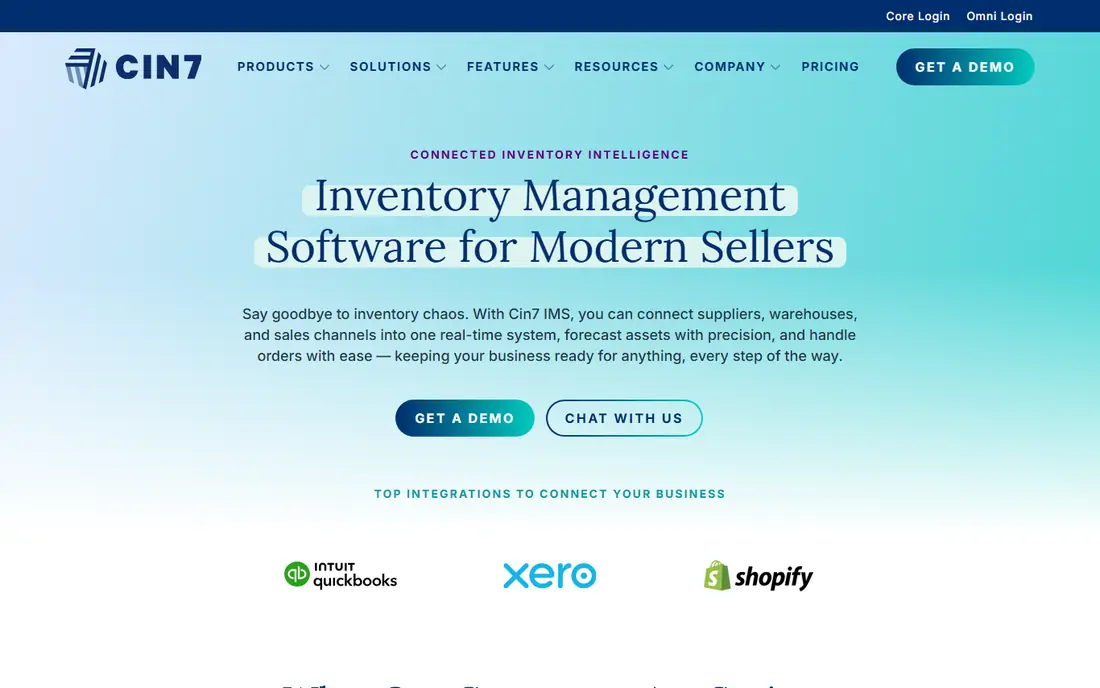
Cin7 Core suits brands that sell wholesale alongside retail and online channels. Stock, orders, and purchasing sit in one system, so a wholesale order and a Shopify order draw from the same inventory truth. The B2B portal lets trade customers order themselves, and the wider Cin7 Omni tier adds built-in EDI for retail partners.
The cost is $349 per month at entry, and setup needs work around products, locations, and channels. Smaller pure wholesalers may prefer inFlow on price and simplicity. For multichannel brands with a wholesale arm, Cin7 Core is a strong, scalable system.
- B2B portal add-on
- 700 plus integrations
- Multi-warehouse and multichannel stock in one place
- Price jump from inFlow
- Setup takes time
- B2B portal is an add-on on some plans
Unleashed is a real-time inventory platform for wholesalers and distributors that want tight purchasing controls. Multi-location tracking, demand forecasting, automated purchase orders, and customer-specific pricing help distributors keep stock accurate while serving many trade accounts. A B2B store add-on lets customers order online with their own pricing.
Entry pricing starts at $99 per month for Lite, while multi-warehouse Core is higher, so check which tier matches your locations. The interface takes some learning, and add-ons can raise total cost. For distributors that rank purchasing control highly, Unleashed is a serious contender.
- Deep purchasing and multi-location controls
- Customer-specific pricing
- B2B store add-on
- Multi-warehouse Core tier is higher priced
- Interface takes learning
- Some features need add-ons
Fishbowl remains the natural choice for a distributor already running QuickBooks. It handles inventory, warehouse management, purchasing, and manufacturing, with barcoding and work orders, and it syncs deeply with QuickBooks for accounting. EDI and tiered pricing rules on Advanced tiers help distributors that supply large retailers.
Pricing starts around $229 per month billed annually, and setup takes effort, especially for warehouse workflows. If you are not on QuickBooks, Fishbowl's main advantage fades. For QuickBooks-based distributors with EDI needs, Fishbowl is a strong, proven option.
- Deep QuickBooks integration
- EDI and tiered pricing on Advanced tiers
- Warehouse and manufacturing depth
- Higher price than inFlow
- Setup effort is significant
- Demo rather than a free trial for many buyers
Zoho Inventory is the budget way into wholesale inventory management. The free tier covers limited orders per month, and paid plans start from $29 per month billed annually. Price lists, a customer portal, purchase orders, and multichannel sync cover the core wholesale job for early-stage distributors.
At scale, warehouse depth and advanced wholesale workflows are lighter than Cin7, Fishbowl, or NetSuite. Teams already using Zoho Books or Zoho CRM will get the most value, since data flows cleanly across the suite. For budget-conscious wholesalers, Zoho Inventory is a credible starting point.
- Free tier
- Paid plans from $29 per month billed annually
- Price lists and customer portal
- Warehouse depth is lighter than Cin7 or Fishbowl
- Wholesale features are basic at scale
- Best inside Zoho
Oracle NetSuite is the ERP choice for large and fast-growing distributors. Inventory, financials, order management, and CRM sit in one cloud system, so wholesale, retail, and accounting teams work from the same data. Multi-entity, multi-warehouse, and international operations are where NetSuite earns its price.
That price is quoted and high, and implementation is a major project, not a quick setup. Small wholesalers should not start here. For distributors that have outgrown standalone inventory tools and need a full ERP, NetSuite is the standard enterprise path.
- Inventory inside a full cloud ERP
- Financials, orders, and CRM together
- Scales to complex operations
- Pricing by quote and high
- Implementation is a major project
- Overkill for small wholesalers
Odoo Inventory appeals to businesses that want inventory now and an ERP later. The inventory app is free for one app, with per-user pricing for the full suite, and B2B portal users are free, which helps wholesalers let trade customers order online without paying per customer. Modules for sales, purchasing, accounting, and manufacturing can be added as the business grows.
The modular approach needs configuration, and wholesale depth depends on which modules and settings you choose. Implementation partners vary in quality, so check references. For businesses that want a low-cost start with a clear ERP path, Odoo is a flexible option.
- Free for one app
- Per-user pricing for full suite
- B2B portal users are free
- Modular ERP growth path
- Setup and configuration take effort
- Wholesale depth depends on modules chosen
- Support varies by partner
Katana suits wholesalers that also make what they sell. Bill of materials, production workflows, and shop-floor visibility sit alongside inventory and sales, so a wholesaler-manufacturer can track raw materials, work in progress, and finished stock in one place. Real-time stock visibility helps avoid promising trade customers stock that is still in production.
Pure distributors without manufacturing may not need Katana's production depth, and pricing is published on the vendor site with add-ons for some features. For maker-wholesalers, Katana bridges manufacturing and wholesale better than a pure inventory tool.
- Manufacturing and inventory together
- Bill of materials and production workflows
- Real-time stock visibility
- Pricing by quote on current plans
- Manufacturing focus may exceed pure wholesale needs
- Add-ons raise cost
Finale Inventory is a strong choice for distributors that must track lots, serial numbers, or expiry dates. Food, supplement, electronics, and medical distributors often need that traceability for recalls and compliance, and Finale preserves lot and serial data through receiving, transfers, and fulfillment. Multi-warehouse support and QuickBooks integration round out the core.
Pricing is quoted, and the interface prioritizes function over polish. Smaller vendors also mean buyers should check support and roadmap fit. For distributors where lot and serial tracking is non-negotiable, Finale deserves a close look.
- Strong lot and serial number tracking
- Multi-warehouse support
- Good QuickBooks and marketplace integrations
- Pricing by quote
- Interface is functional rather than polished
- Smaller vendor than NetSuite or Cin7
How we picked these
We compared official pricing pages, feature pages, and public reviews, and we checked that each product is sold and supported in October 2026. We favored tools with real wholesale features, including B2B portals, customer-specific pricing, purchase orders, and multi-warehouse stock, and we included budget, mid-tier, and enterprise options. Where pricing was not published, we wrote See website rather than guessing.
What to check before you buy wholesale inventory software
Start with your wholesale workflow, not retail features. List your trade customers, price lists, minimum order rules, payment terms, and portal needs, then test those exact workflows in a trial. A tool that handles retail beautifully but fumbles customer-specific pricing will frustrate your best accounts.
Check EDI, portals, and accounting fit
If you supply large retailers, confirm EDI support, including which documents and partners are covered, and whether EDI sits in your tier or needs an upgrade. Check that the B2B portal shows the right products and prices per customer, and confirm accounting sync with QuickBooks, Xero, or your ERP, including invoices, bills, and cost journals.
Test scanning on the warehouse floor
Run a real receiving, picking, and transfer session with the mobile app before you buy. Barcode scanning, bin locations, and stock adjustments are where wholesale software earns or loses its price. If the floor team finds it slow or confusing, accuracy will suffer no matter how good the dashboard looks.
FAQ
What is the best wholesale inventory management software?
inFlow Inventory is our pick for most small and mid-size wholesalers, because of its B2B portal and per-customer pricing. Cin7 Core suits multichannel brands, Fishbowl suits QuickBooks users with EDI needs, and NetSuite suits large distributors that need a full ERP.
What is the best inventory management software for wholesale on a budget?
Zoho Inventory offers a free tier and paid plans from $29 per month billed annually, making it the budget pick. inFlow Inventory is the next step up for wholesalers that need stronger B2B portal features.
Do I need EDI for wholesale inventory software?
EDI matters if you supply large retailers or distributors that require electronic purchase orders, invoices, and shipping notices. Smaller wholesalers selling to independent shops may not need it yet. Check EDI support before you commit if big-box retail is in your plans.
What is a B2B portal in wholesale software?
A B2B portal is a private online store where trade customers log in, see only their products and prices, and place orders themselves. It reduces phone and email orders, cuts errors, and lets your team focus on service rather than order entry.
How is wholesale inventory software different from retail inventory software?
Wholesale software adds bulk orders, customer-specific pricing and price lists, B2B portals, payment terms, and often EDI, while retail software focuses on point-of-sale stock and single-customer sales. Multi-warehouse and purchase order depth also matter more in wholesale.
Can wholesale inventory software sync with QuickBooks?
Yes, many tools on this list sync with QuickBooks Online or Desktop, including inFlow, Fishbowl, Finale, and Zoho Inventory, though sync depth varies. Confirm invoices, bills, stock adjustments, and cost handling against your accounting setup before you buy.