Choosing Cloud Based Inventory Management Software in 2026: 6 Options Compared
6 tools for the best cloud based inventory management software, compared on pricing, free plans and best-fit use. Plain-spoken summaries throughout. Start here.
- Editor's choice
 Zoho Inventory
Small sellers who want the most for the least
Starts at$29 per monthVisit zoho.comFull review - Great alternative
 Katana
Manufacturers and product firms that also make
Starts atSee websiteVisit katanamrp.comFull review - Also consider
 NetSuite
Mid size to large businesses needing full ERP
Starts atSee websiteVisit netsuite.comFull review
Direct answer
If you need small sellers who want the most for the least, Zoho Inventory is the first tool to look at here. Listed starting prices: Zoho Inventory from $29 per month, Sortly from $49 a month and Cin7 from $349 a month. Katana is better for manufacturers and product companies that also make, and NetSuite is better for mid size to large firms needing full ERP. The remaining 3 options are covered below with prices and limits.
TL;DR:
- Top of the list is Zoho Inventory, which targets small sellers who want the most for the least.
- What to know about NetSuite first: quote based pricing with implementation costs.
- For the cheapest start, look at Zoho Inventory: $29 per month.
- Fishbowl fits manufacturers and distributors on QuickBooks.
Last checked November 2026. Prices and plan details were read from the vendors' own pages in November 2026; vendors change plans often, so confirm the current price on the vendor site before you buy.
Quick comparison
| Tool | Best for | Starts at | Free plan? | |
|---|---|---|---|---|
| Zoho Inventory | Small sellers who want the most for the least | $29 per month | Yes | Visit |
| Katana | Manufacturers and product firms that also make | See website | Yes | Visit |
| NetSuite | Mid size to large businesses needing full ERP | See website | No | Visit |
 Sortly | Straightforward visual tracking for small teams | $49 a month | Yes | Visit |
 Cin7 | Multichannel product firms that require scale | $349 a month | Free trial | Visit |
 Fishbowl | Manufacturers and distributors on QuickBooks | $229 a month | No | Visit |
The full cloud based inventory management software list
If you are comparing cloud based inventory management software, this page covers 6 tools in one place: what each is best for, what it costs to start, whether it has a free plan, and the main limit to know about.
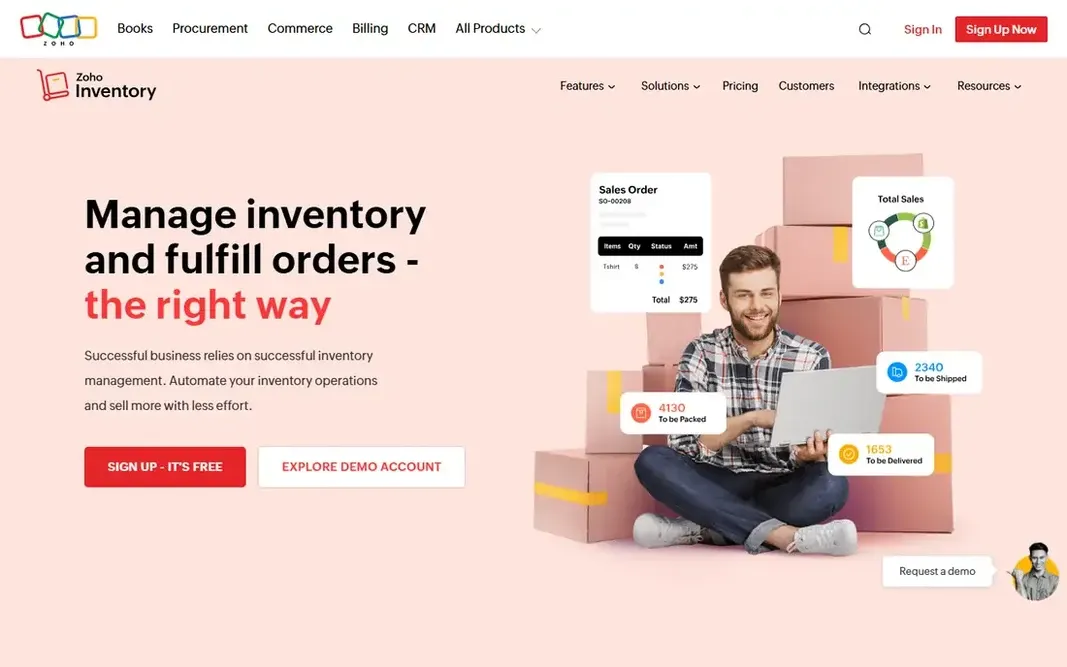
Choose Zoho Inventory for small sellers who want the most for the least. If you already use Zoho apps, the value case is even more solid. On top of that, the free plan deals with 50 orders per month for one user at one location, which is enough for a side business or a new store to run properly.
More specifically, order volume, user count, and warehouse limits all rise with the plan, so a business that grows past 500 orders per month moves to Professional at $79 per month, and automation, fulfillment, and advanced reporting wait on higher levels. Standard, at $29 per month billed yearly, raises that to 500 orders, three users. Two locations, and pricing is per organization instead of per seat, which keeps costs down for a small team. In daily use, the level structure is the catch. As for the details, Zoho Inventory resets expectations for small sellers. The starting price for Zoho Inventory: $29 per month. Zoho Inventory offers a free plan.
What to check first: location caps rise with plan, so expanding sellers upgrade quick.
- Flat per organization pricing
- Deep Zoho Books and CRM integration
- Order, user
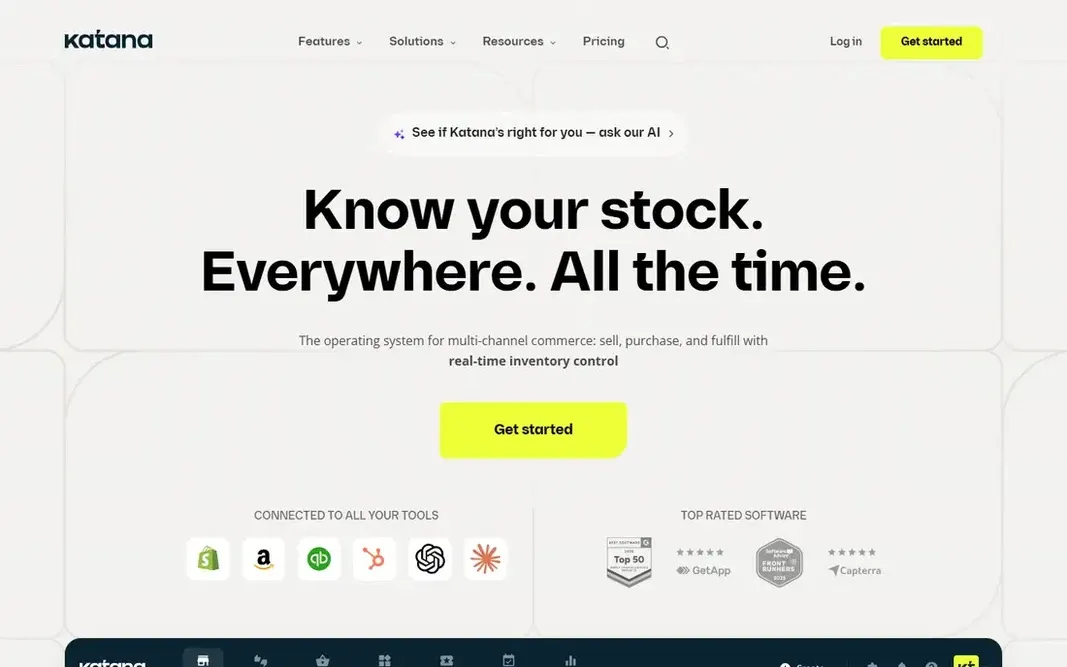
Katana is designed for manufacturers and product companies that also make. Integrations with Shopify, WooCommerce, QuickBooks, and Xero keep sales and accounting in sync, which matters for small manufacturers selling direct to consumer. Advanced shop floor and planning features also sit on higher levels.
For everyday use, Katana merges inventory management with manufacturing resource planning, which is rare at its price point. For a product business that manufactures, assembles, or kits its goods, Katana is one of the best cloud choices. For everyday use, pricing needs a direct check, since Katana has revised its plans and entry points over time, and some sources cite different starting figures. Pricing for Katana is not stated here, so ask the vendor for current figures. You can start on Katana without paying.
Limits to weigh: Advanced manufacturing features need higher levels.
- End to end manufacturing with bill of materials tracking
- Ecommerce and accounting integrations
- Pricing has changed over time, so confirm the current plan
Pick NetSuite if this describes you: mid size to large firms needing full ERP. Pricing is quote based, implementation involves process design, data migration, and training, and a small seller will find the system disproportionate.
Drawbacks to consider: Implementation is a major project.
For a scaling company that needs ERP depth, NetSuite is a long term system. Check the vendor site for NetSuite pricing; none is listed in this comparison. NetSuite does not include a free plan.
- Automation in one system
- Full ERP with inventory, financials, CRM
- Quote based pricing with implementation costs
Sortly serves straightforward visual tracking for small teams. Sortly does not match Cin7 for multichannel order sync, Katana for manufacturing, or NetSuite for ERP.
Limits to weigh: Not made for complicated manufacturing or multichannel order management.
So an expanding ecommerce brand will outgrow it. Sortly pricing: $49 per month. A free plan is available with Sortly.
- Visual
- Simple to pick up interface
- Premium plans start at $49 per month for advanced features
Cin7 is designed for multichannel product companies that require scale. Cin7, with its Core product for mid market brands and Omni for bigger operations, is made for businesses that sell across Shopify, Amazon, wholesale, and retail at the same time. For a multichannel brand that has outgrown spreadsheets or an entry-level app, Cin7 is a capable, scalable choice.
Honest limits: Setup and ramp-up time are longer than entry-level tools.
Core opens at $349 per month, with a 14 day free trial, and Omni is quote based for bigger operations. Stock, orders, and accounting stay connected, so a sale on one channel cuts available stock everywhere, and purchase orders can be raised from forecasted demand instead of guesswork. In daily use, the integration count, often cited above 700, spans ecommerce, accounting, shipping, and marketplace tools that expanding brands depend on. On top of that, small sellers will find that heavy, and implementation takes longer than a straightforward tracker, since channel mappings, warehouse setup, and accounting sync need care. Cin7 starts at: $349 per month. Free access: Free trial. What Cin7 does well: 700 plus integrations.
- Demand forecasting tools
- Multichannel stock sync
- Some features need higher levels
Fishbowl targets manufacturers and distributors on QuickBooks. Live assembly tracking, multi warehouse management, barcode scanning, and manufacturing workflows link to QuickBooks for accounting, so stock movements and costs stay in sync with the books.
Watch-outs: No free plan, demo only.
That QuickBooks link is the reason plenty of Fishbowl buyers choose it over a standalone inventory app. What you pay to start with Fishbowl: $229 per month. There is no free plan with Fishbowl.
- Live assembly and warehouse tracking
- Deep QuickBooks integration
- Setup takes time
What went into this list
LinkVetted looked at what each vendor publishes: pricing, plan limits, feature coverage for cloud based inventory management software and stated drawbacks. No hands-on testing is claimed. Plan names, prices and limits change often. Treat the figures here as a starting point and verify them with the vendor. Order on the page follows fit for the typical buyer first, then price transparency and free access. Your own requirements should decide the final pick.
What to check before you buy
- Get a written quote from Katana and NetSuite; the list shows no starting price for them.
- Check what the free option really includes: Zoho Inventory, Katana and Sortly offer a free plan, and usage caps differ.
- Take the trial from Cin7 and push a live task through it before you pay.
- Before choosing Zoho Inventory, weigh its main limit: order, user, and location caps rise with plan, so expanding sellers upgrade quick.
- Compare total cost, not headline price: for Sortly, add extra seats, add-ons and any usage-based charges.
- Ask Katana which support channels and response times come with the plan you would buy.
FAQ
How are the tools for cloud based inventory management software ordered?
Zoho Inventory sits first and Fishbowl last because the order follows typical fit for cloud based inventory management software, then price clarity and free access. It is a judgement call, so read each profile for fit and limits.
What is the difference between Cin7 and Zoho Inventory?
Cin7 fits multichannel brands that require wide integrations, EDI, and forecasting at $349 per month and up, whereas Zoho Inventory fits small sellers with a free plan and premium plans from $29 a month.
What is the cheapest option for cloud based inventory management software in this list?
On published monthly entry prices, Zoho Inventory is the lowest here at $29 per month. Entry price is only part of the cost, because seats, add-ons and billing terms can change the total.
What is cloud based inventory management software?
It also deals with updates, backups, and security, whereas your team accesses the same live stock count from warehouse, store, or home.
Can I try these options before paying?
Often, yes. Zoho Inventory, Katana and Sortly have a free plan and Cin7 offers a free trial. Use your own data and a real task during the test, and check what the free tier or trial limits before you rely on it.
Which options for cloud based inventory management software have a free plan?
Zoho Inventory, Katana and Sortly offer a free plan in this list. Free plans usually cap users, projects or features, so check the limits on the vendor page. One other tool offers a trial instead.
Sources
- https://www.zoho.com/inventory/
- https://katanamrp.com
- https://www.netsuite.com
- https://www.sortly.com
- https://www.cin7.com
- https://www.fishbowl.com