Best Java Work Frameworks in 2026: Prices, Free Plans and 5 Picks
Shortlisting the best java work frameworks? 5 products compared on cost, free access and ideal buyer. Includes honest limits for each tool. Quick to scan.
- Editor's choiceDropwizard
Opinionated RESTful web services
Starts atPricing on requestVisit dropwizard.ioFull review - Great alternativeQuarkus
Quick, efficient cloud-native services
Starts atPricing on requestVisit quarkus.ioFull review - Also considerSpring Boot
Wide enterprise Java applications
Starts atPricing on requestVisit spring.ioFull review
Direct answer
For Opinionated RESTful web services, Dropwizard is where this list starts. Quarkus fits quick, efficient cloud-native services; Spring Boot fits wide enterprise Java applications. The remaining 2 options are covered below with pricing notes and limits. None of these vendors publish plan prices, so pricing is on request for every option.
TL;DR:
- Dropwizard takes the first slot, best suited to Opinionated RESTful web services.
- Helidon is the one to check for light Java microservices.
- One limit worth knowing about Quarkus: smaller ecosystem than Spring.
- None of the 5 tools, from Dropwizard to Helidon, has a free plan, so budget for a subscription or use a trial.
Last checked November 2026. Pricing on request: vendors did not publish plan prices when this guide was last checked (November 2026), so ask each vendor for a written quote.
Quick comparison
| Tool | Best for | Starts at | Free plan? | |
|---|---|---|---|---|
| Dropwizard | Opinionated RESTful web services | Pricing on request | Not stated | Visit |
| Quarkus | Quick, efficient cloud-native services | Pricing on request | Not stated | Visit |
| Spring Boot | Wide enterprise Java applications | Pricing on request | Not stated | Visit |
| Jakarta EE | Standards-based enterprise modernization | Pricing on request | Not stated | Visit |
| Helidon | Light Java microservices | Pricing on request | Not stated | Visit |
Java Work Frameworks compared in detail
Choosing java work frameworks usually comes down to price, fit and limits. This LinkVetted guide sets 5 tools side by side on those three points, with the facts kept short and checkable.
Dropwizard
Best for: Opinionated RESTful web services
Choose Dropwizard for Opinionated RESTful web services. Dropwizard is a framework for building RESTful web services that bundles well-known Java libraries into a single, opinionated setup.
The main drawbacks: Less adaptable for unusual needs.
It is built to get services running rapidly with sensible defaults and operational features included. From a buyer's view, Dropwizard is less adaptable when requirements diverge from its chosen stack, and swapping components can be awkward. Pricing for Dropwizard is not stated here, so ask the vendor for current figures. On free options: Not stated.
- Clear operational focus
- Bundles proven libraries
- Tied to its chosen stack
Quarkus
Best for: Quick, efficient cloud-native services
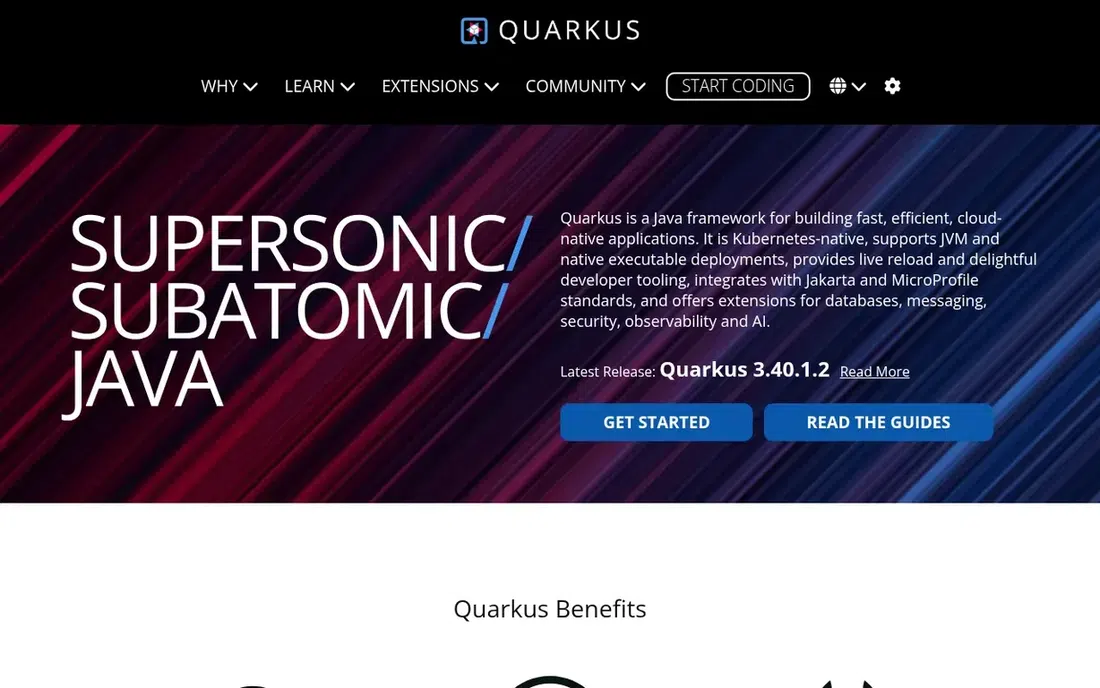
For quick, efficient cloud-native services, Quarkus is a natural candidate. It suits teams deploying containerized services that care about startup time and memory use.
Pricing for Quarkus is not stated here, so ask the vendor for current figures. On free options: Not stated.
Trade-offs to know: Native builds add complexity.
- Kubernetes-native design
- Quick startup and low memory
- Smaller ecosystem than Spring
Spring Boot
Best for: Wide enterprise Java applications
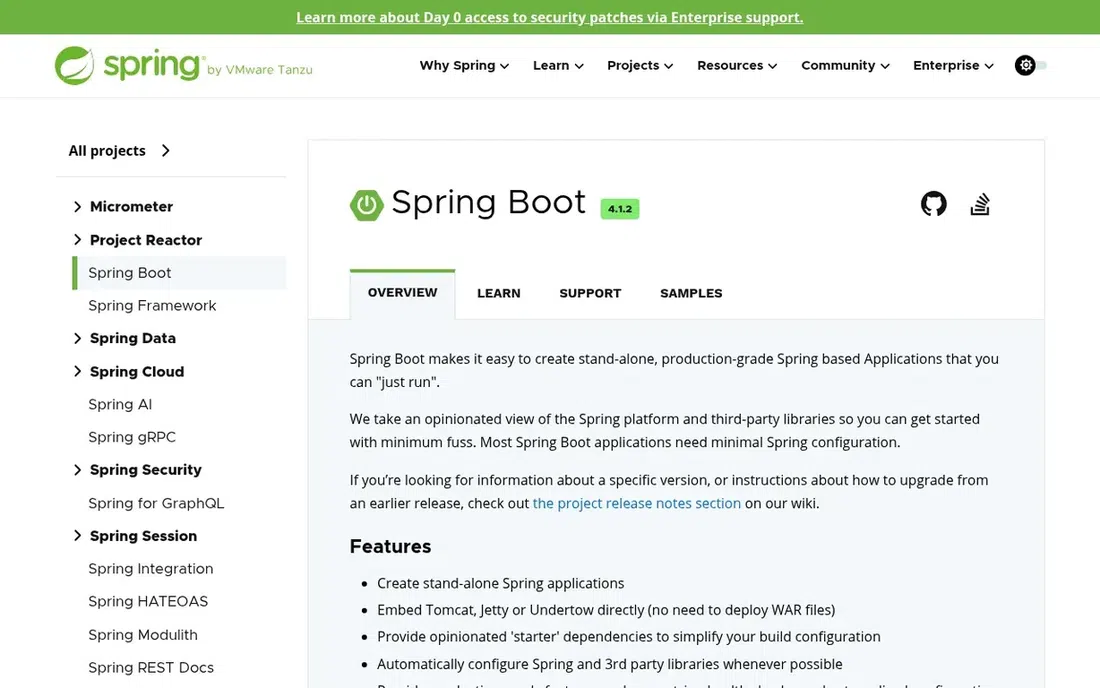
For wide enterprise Java applications, Spring Boot is a natural candidate. It bundles the Spring ecosystem into a runnable setup and fits teams that want a mature, well-documented foundation for web services, APIs and enterprise systems.
Limits to weigh: Startup and memory overhead.
Also, choose Spring Boot when ecosystem depth and long-term familiarity matter more than minimal resource use. From a buyer's view, the trade-off is that Spring Boot applications can be heavier at startup and consume more memory than leaner alternatives. Spring Boot shows no starting price here, so confirm the cost on the vendor site. On free options: Not stated.
- Convention over configuration
- Capable integration support
- Can feel heavy for small services
Jakarta EE
Best for: Standards-based enterprise modernization
Jakarta EE targets standards-based enterprise modernization. Jakarta EE is the open source, cloud-native future of enterprise Java, positioned as the continuation of Java EE. It provides a standards-based product for building enterprise applications and helps protect investments in existing Java EE systems whereas modernizing them.
Points against: Slower innovation pace.
Also, Jakarta EE moves at a standards pace, so modern features can arrive later than in vendor-driven frameworks. It also requires a compatible runtime or application server, which brings setup decisions. Choose Jakarta EE when standards compliance and portability outweigh the fastest possible access to new features. Check the vendor site for Jakarta EE pricing; none is listed in this comparison. Free options: Not stated.
- Solid enterprise history
- Open standards and portability
- Needs a compatible runtime
Helidon
Best for: Light Java microservices
Helidon targets light Java microservices. It gives you a light approach to building services and supports more than one programming style.
Where it is weaker: Fewer learning resources.
More specifically, choose Helidon when a lean microservice library set matches your team's style. Helidon has a smaller ecosystem and fewer learning resources than Spring Boot, which can slow onboarding for teams new to it. Check the vendor site for Helidon pricing; none is listed in this comparison. As for free access: Not stated.
- Microservice-focused libraries
- Simple
- Smaller ecosystem
Selection criteria
Pricing pages, product documentation and feature lists were the main sources, and every entry carries at least one honest drawback. Where a price is missing, the vendor does not list one publicly or ties it to a quote. Always confirm before budgeting. The order reflects how well each tool fits the most common buying scenario for java work frameworks, then price clarity, then free plan access. It is a starting point, not a verdict.
Questions to settle before buying
- Request quotes from Dropwizard, Helidon and the others; the list shows no fixed prices.
- Before choosing Dropwizard, weigh its main limit: less adaptable for unusual needs.
- Pick one real project and run it in Dropwizard first; a small pilot shows fit faster than a checklist.
- Ask Spring Boot how an export works before you move any records in; an easy exit lowers the risk.
- Price Quarkus for your actual team size; headline prices rarely include add-ons or overage.
FAQ
Which Java framework is a good match for microservices?
Dropwizard is the pick this page puts first, mainly for Opinionated RESTful web services. If your situation differs, Quarkus suits quick, efficient cloud-native services, and Spring Boot suits wide enterprise Java applications. Compare price and limits before you decide.
Does any tool for java work frameworks here have a free plan?
A permanent free plan is not offered by Dropwizard, Helidon or the other tools here. Plan a short evaluation period instead.
Is Dropwizard the right pick for everyone comparing java work frameworks?
No single tool suits every team. Dropwizard comes first because it fits Opinionated RESTful web services, while Quarkus suits fast, efficient cloud-native services and Spring Boot suits broad enterprise Java applications. Match the tool to your own size, budget and workflow before deciding.
Do these tools publish their prices?
No. None of the tools, from Dropwizard to Helidon, shows a fixed starting price here, so budget time for quotes.
How are the tools for java work frameworks ordered?
Dropwizard sits first and Helidon last because the order follows typical fit for java work frameworks, then price clarity and free access. It is a judgement call, so read each profile for fit and limits.
Sources
- https://www.dropwizard.io
- https://quarkus.io
- https://spring.io/projects/spring-boot
- https://jakarta.ee
- https://helidon.io