Best Hybrid Cloud Storage Solutions for Enterprise for 2026: Our 6 Vetted Picks
6 tools for the best hybrid cloud storage solutions for enterprise, compared on pricing, free plans and best-fit use. Each listing flags where it falls short.
- Editor's choiceIBM Storage Ceph
Software-defined open-source storage system
Starts atPricing on requestVisit ibm.comFull review - Great alternativeHPE GreenLake
Unified hybrid cloud operations and AI acceleration
Starts atPricing on requestVisit hpe.comFull review - Also considerGoogle Cloud Storage
Cloud-native object storage with redundancy choices
Starts atPricing on requestVisit cloud.google.comFull review
Direct answer
Our first pick is IBM Storage Ceph, best for software-defined open-source storage product. For a different need, HPE GreenLake covers unified hybrid cloud operations and AI acceleration and Google Cloud Storage covers Cloud-native object storage with redundancy choices. The remaining 3 options are covered below with pricing notes and limits. None of these vendors publish plan prices, so pricing is on request for every option.
TL;DR:
- The list opens with IBM Storage Ceph, aimed at software-defined open-source storage product.
- For bridging on-premises environments to cloud storage, AWS Storage Gateway is worth a look.
- AWS Storage Gateway stands alone as the one tool in this list with a free plan.
- IBM Storage Ceph, AWS Storage Gateway and the 4 others all sell by quote; expect sales conversations before you see a price.
Last checked November 2026. Pricing on request: vendors did not publish plan prices when this guide was last checked (November 2026), so ask each vendor for a written quote.
Quick comparison
| Tool | Best for | Starts at | Free plan? | |
|---|---|---|---|---|
| IBM Storage Ceph | Software-defined open-source storage system | Pricing on request | Not stated | Visit |
| HPE GreenLake | Unified hybrid cloud operations and AI acceleration | Pricing on request | Not stated | Visit |
| Google Cloud Storage | Cloud-native object storage with redundancy choices | Pricing on request | Not stated | Visit |
| NetApp Cloud Volumes ONTAP | Optimizing cloud storage costs and performance | Pricing on request | Free trial | Visit |
| Microsoft Azure Stack HCI | Unified hybrid system with local and cloud management | Pricing on request | Not stated | Visit |
| AWS Storage Gateway | Bridging on-premises environments to cloud storage | Pricing on request | Yes | Visit |
Our 6 picks for hybrid cloud storage solutions for enterprise
Short on time? The summary and table above give the quick view of 6 tools for hybrid cloud storage solutions for enterprise, and the profiles that follow give the detail behind each entry.
IBM Storage Ceph
Best for: Software-defined open-source storage system
IBM Storage Ceph serves software-defined open-source storage system. IBM Storage Ceph is an IBM-supported, open-source, software-defined storage product that provides scalable object, block, and file storage in a single system.
Where IBM Storage Ceph stands out: IBM-supported.
What to check first: Self-managed deployment.
It demands operational expertise and is not a turnkey hybrid cloud product. In practice, for managed hybrid experiences, Microsoft Azure Stack HCI or HPE GreenLake may be better suits. No starting price is listed for IBM Storage Ceph here; confirm pricing on the vendor site. As for free access: Not stated.
- Open-source adaptability
- File storage in one system
- Needs open-source expertise
HPE GreenLake
Best for: Unified hybrid cloud operations and AI acceleration
In short, HPE GreenLake is for unified hybrid cloud operations and AI acceleration. HPE GreenLake eases IT, cuts costs, unifies and secures data, and accelerates AI, optimizing hybrid cloud and simplifying operations.
As for the details, the breadth of the product can mean a steeper adoption curve and reliance on HPE services. Pricing for HPE GreenLake is not stated here, so ask the vendor for current figures. Free access: Not stated.
Trade-offs to know: Wide product may need significant planning.
- Accelerates AI initiatives
- Brings together and secures data
- Vendor-specific ecosystem
Google Cloud Storage
Best for: Cloud-native object storage with redundancy choices
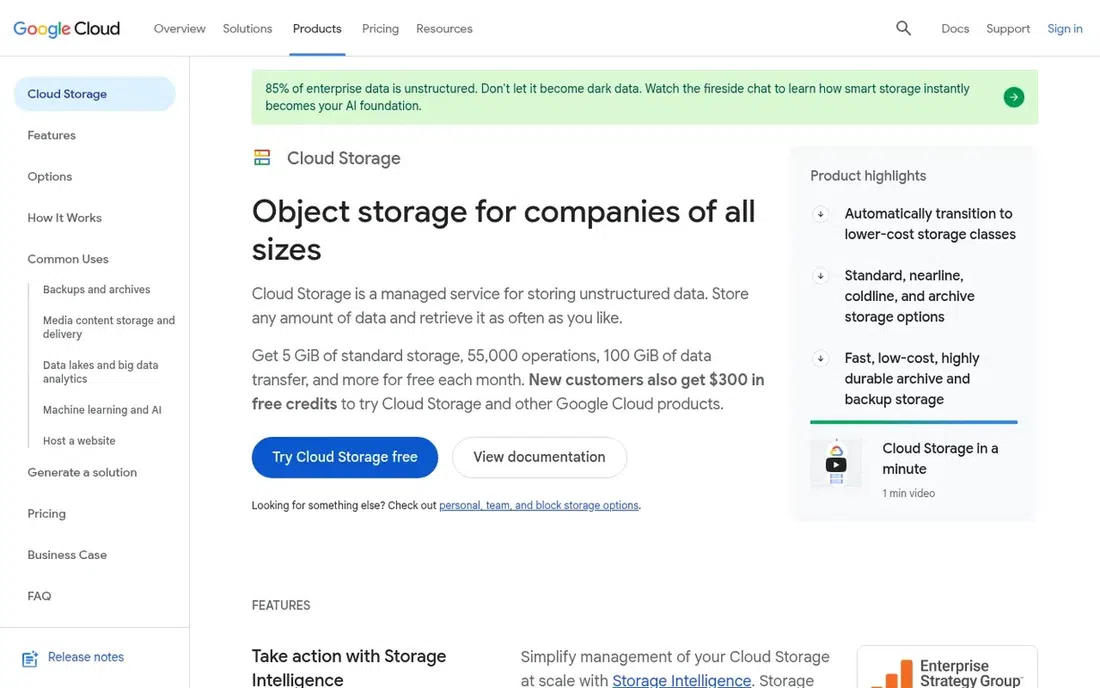
Google Cloud Storage makes the most sense for Cloud-native object storage with redundancy choices. It is a good fit for enterprises building cloud-native applications or needing durable object storage as part of a hybrid strategy, frequently paired with on-premises gateways or caches.
Watch-outs: Needs integration for hybrid workflows.
It is not a complete hybrid system on its own; on-premises integration needs extra components. Check the vendor site for Google Cloud Storage pricing; none is listed in this comparison. Free options: Not stated.
- Several redundancy choices
- Scalable object storage
- Not a turnkey on-premises hybrid product
NetApp Cloud Volumes ONTAP
Best for: Optimizing cloud storage costs and performance
Choose NetApp Cloud Volumes ONTAP for optimizing cloud storage costs and performance. For more straightforward object storage needs, Google Cloud Storage or AWS Storage Gateway may be more straightforward.
Watch-outs: May need NetApp expertise.
Pricing for NetApp Cloud Volumes ONTAP is not stated here, so ask the vendor for current figures. Free plan details: Free trial.
- Data protection and security features
- Compliance support
- Complexity in tuning for optimal cost
Microsoft Azure Stack HCI
Best for: Unified hybrid system with local and cloud management
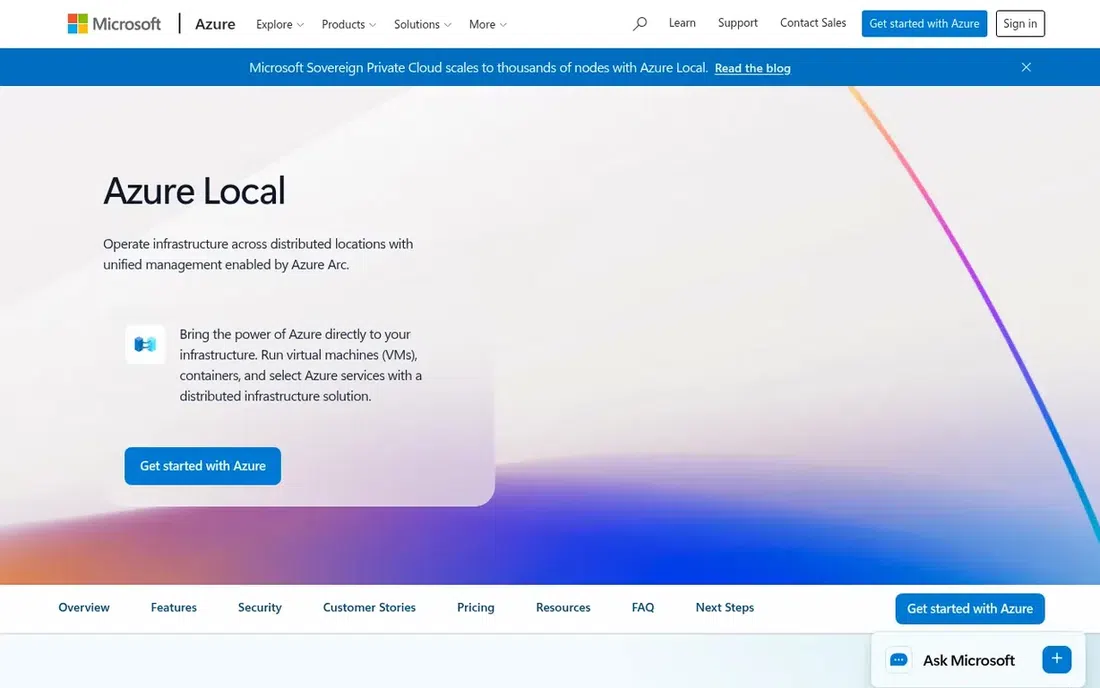
Pick Microsoft Azure Stack HCI if this describes you: unified hybrid product with local and cloud management. Microsoft Azure Stack HCI, now positioned as Azure Local, is a hybrid cloud product designed to run modern and traditional applications locally with adaptability, security, and unified management.
It suits enterprises already invested in Microsoft technologies that want a consistent operational model across on-premises and cloud environments. Microsoft Azure Stack HCI does not show a starting price in this comparison, so check the vendor site for current pricing. As for free access: Not stated.
Points against: Hardware dependency for on-premises deployment.
- Runs modern and traditional applications locally
- Adaptability, security
- Needs familiarity with Microsoft stack
AWS Storage Gateway
Best for: Bridging on-premises environments to cloud storage
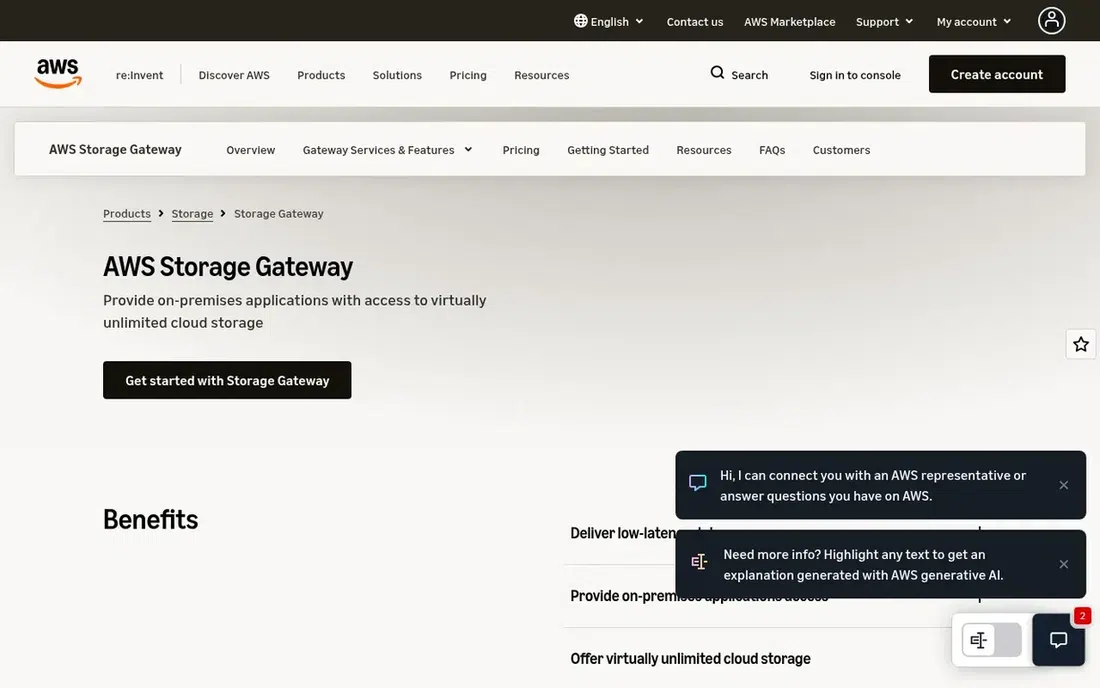
Think of AWS Storage Gateway for bridging on-premises environments to cloud storage. AWS Storage Gateway links on-premises environments with cloud storage through cached volumes, stored volumes, and tape-based backup.
Trade-offs to know: Primarily AWS-centric integration.
For everyday use, the service is tightly coupled with AWS, so multi-cloud or non-AWS strategies may find it limiting. AWS Storage Gateway does not show a starting price in this comparison, so check the vendor site for current pricing. Free access exists with AWS Storage Gateway.
- Cached volumes for low-latency access
- Stored volumes for full local data retention
- Needs on-premises gateway appliance
How these tools were picked
For each of the 6 tools we noted price, free plan or trial, fit for hybrid cloud storage solutions for enterprise and the main limit, using vendor pages and documentation. Prices and plan limits come from vendor pages and can change, so confirm them on the vendor site before you buy. Position on the page reflects fit for a typical buyer first, with price clarity and free access breaking ties. Treat it as a guide, not a ruling.
Before you commit
- Confirm the entry price with every vendor: no tool from IBM Storage Ceph to AWS Storage Gateway shows a fixed starting price.
- Test the free plan from AWS Storage Gateway against your real workload before relying on it.
- Use real work to test the free trial from NetApp Cloud Volumes ONTAP, rather than a demo project.
- Read the limits listed for IBM Storage Ceph first: needs open-source expertise.
- Look at the help docs and support options for IBM Storage Ceph before you commit.
- Map your must-have features to a specific Google Cloud Storage plan before you compare prices.
FAQ
How are the tools for hybrid cloud storage solutions for enterprise ordered?
The order follows typical fit for hybrid cloud storage solutions for enterprise, with IBM Storage Ceph first and AWS Storage Gateway last, then price clarity and free access. It is editorial judgement, not a score, so another team could rank the tools differently.
Which option is a good match for connecting on-premises systems to cloud storage?
The first pick on this list is IBM Storage Ceph, because it suits software-defined open-source storage system. HPE GreenLake is better for unified hybrid cloud operations and AI acceleration, and Google Cloud Storage for Cloud-native object storage with redundancy choices. Check price and limits against your own needs before choosing.
Do these tools publish their prices?
No. None of the tools, from IBM Storage Ceph to AWS Storage Gateway, shows a fixed starting price here, so budget time for quotes.
Can I try these tools before paying?
Often, yes. AWS Storage Gateway has a free plan and NetApp Cloud Volumes ONTAP offers a free trial. Use your own data and a real task during the test, and check what the free tier or trial limits before you rely on it.
Is IBM Storage Ceph the right pick for everyone comparing hybrid cloud storage solutions for enterprise?
No single tool suits every team. IBM Storage Ceph comes first because it fits software-defined open-source storage platform, while HPE GreenLake suits unified hybrid cloud operations and AI acceleration and Google Cloud Storage suits Cloud-native object storage with redundancy options. Match the tool to your own size, budget and workflow before deciding.
Sources
- https://www.ibm.com/products/storage-ceph
- https://www.hpe.com/us/en/greenlake.html
- https://cloud.google.com/storage
- https://www.netapp.com/cloud-services/cloud-volumes-ontap
- https://azure.microsoft.com/en-us/products/azure-stack/hci
- https://aws.amazon.com/storagegateway