Choosing Hosting for Python Web Apps in 2026: 6 Options Compared
6 best hosting for python web apps, compared on pricing, free plans and best-fit use. Trade-offs are spelled out for each entry. Updated November 2026.
- Editor's choice
 Google Cloud Run
Containerized Python services
Starts atSee websiteVisit cloud.google.comFull review - Great alternative
 Railway
All-in-one app and database deploys
Starts at$5 minimum usageVisit railway.comFull review - Also consider
 AWS Elastic Beanstalk
AWS-centered app deployment
Starts atSee websiteVisit aws.amazon.comFull review
Direct answer
If you need Containerized Python services, Google Cloud Run is the first tool to look at here. Listed starting prices: Railway from $5 minimum usage, Heroku from $5 a month and Render from $25 a month. Alternatives: Railway for all-in-one app and database deploys, and AWS Elastic Beanstalk for AWS-centered app deployment. The remaining 3 options are covered below with prices and limits.
TL;DR:
- The list opens with Google Cloud Run, aimed at Containerized Python services.
- Only 2 of the 6 tools have a free plan (Railway, Render), so check the caps.
- One limit worth knowing about Heroku: less low-level control than raw cloud infrastructure.
- Microsoft Azure App Service fits managed PaaS on Azure.
- The cheapest monthly starting price in the list is $5 per month, offered by Heroku.
Last checked November 2026. Prices and plan details were read from the vendors' own pages in November 2026; vendors change plans often, so confirm the current price on the vendor site before you buy.
Quick comparison
| Tool | Best for | Starts at | Free plan? | |
|---|---|---|---|---|
| Google Cloud Run | Containerized Python services | See website | Not stated | Visit |
| Railway | All-in-one app and database deploys | $5 minimum usage | Yes | Visit |
| AWS Elastic Beanstalk | AWS-centered app deployment | See website | Not stated | Visit |
 Heroku | Completely managed app hosting | $5 a month | No | Visit |
 Render | Easy-to-learn cloud for builders | $25 a month | Yes | Visit |
| Microsoft Azure App Service | Managed PaaS on Azure | See website | Not stated | Visit |
Our 6 hosting for python web apps
LinkVetted compared 6 hosting for python web apps. The goal is a practical shortlist: published prices, free plan facts, best-fit use cases and honest limits for every entry.
Google Cloud Run targets Containerized Python services. Google Cloud Run is a completely managed product for building and deploying scalable containerized apps written in any language, including Python. On top of that, choose Cloud Run when container portability and managed scaling are central to your Python deployment plans.
Beyond that, because it works with containers, it suits teams that already package Python services into images and want a managed runtime for them. It is a natural choice for API services and web apps that benefit from container portability and a managed execution environment. It also sits within the wider Google Cloud ecosystem, so familiarity with that environment helps. No starting price is listed for Google Cloud Run here; confirm pricing on the vendor site. Free access: Not stated.
Trade-offs to know: Google Cloud ecosystem context helps.
- Supports Python alongside other runtimes
- Runs containerized apps in any language
- Needs container packaging knowledge
Railway is built with all-in-one app and database deploys in mind. Railway describes itself as a full-stack cloud for deploying web apps, servers, databases, and more, with automatic scaling, monitoring, and security. That all-in-one framing appeals to Python developers who want their app and supporting services handled in one place.
Verify that your Python runtime and any specialized dependencies are supported before moving production workloads. As for the details, choose Railway when an all-in-one developer cloud matches your workflow, and compare with bigger products for complex enterprise requirements. Price to start with Railway: $5 minimum usage. You can start on Railway without paying.
Downsides: Younger ecosystem than major clouds.
- Deploys web apps, servers, databases
- Full-stack cloud positioning
- Confirm runtime support on the vendor site
AWS Elastic Beanstalk is designed for AWS-centered app deployment. AWS Elastic Beanstalk is described as a product as a service that helps you deploy and handle web applications with capacity provisioning, app health monitoring, and more. Worth adding: for Python teams already using AWS, it supplies a way to run web apps whereas the system manages provisioning and health checks.
In practice, Elastic Beanstalk assumes you are working within AWS. So teams outside that ecosystem face a ramp-up time around accounts, permissions, and related services. Beyond that, configuration choices can feel involved compared to more straightforward systems. This comparison lists no price for AWS Elastic Beanstalk; ask the vendor. Free access: Not stated.
The main drawbacks: Configuration can feel involved for newcomers.
- Deploy and handle web applications
- App health monitoring included
- AWS account and concepts required
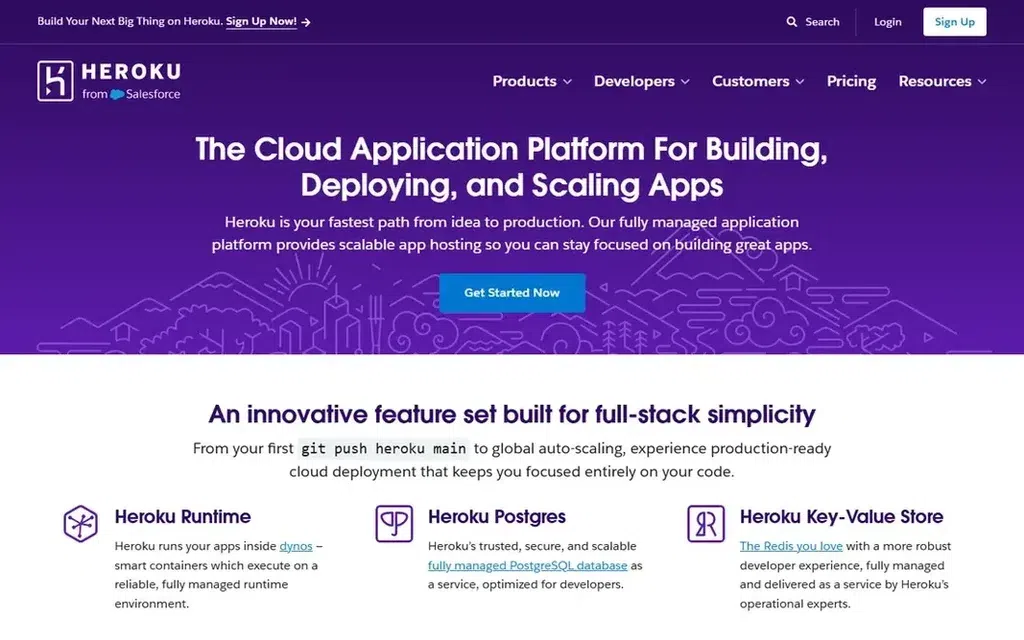
Heroku serves completely managed app hosting. The tradeoff is that a completely managed system provides you less direct control over the underlying infrastructure than raw cloud services.
Drawbacks to consider: Pricing details need checking on the vendor site.
Teams with unusual runtime requirements or heavy customization needs may prefer a container-first choice. Choose Heroku when managed simplicity matters more than infrastructure depth, and compare the alternatives here if you need finer control. The starting price for Heroku: $5 per month. Heroku has no free plan.
What Heroku does well: Well known among developers for straightforward deploys.
- Supports building, deploying
- Managed system that manages hosting operations
- Less low-level control than raw cloud infrastructure

Choose Render for easy-to-learn cloud for builders. Its homepage emphasizes easy-to-learn cloud infrastructure for the modern web, which recommends a focus on developer experience.
Limits to weigh: Confirm current capabilities on the vendor site.
As for the details, for Python web apps, that makes it a reasonable candidate for small teams and solo builders who want a clear path from code to a running service without deep product expertise. Starting cost for Render: $25 per month. Render offers a free plan.
- Supports growth from first user onward
- Easy-to-learn infrastructure pitched at the modern web
- Feature depth varies by service type
Microsoft Azure App Service
Best for: Managed PaaS on Azure
Microsoft Azure App Service was built for managed PaaS on Azure. Teams without existing Azure ties may find other systems quicker to start with. For everyday use, Python web apps can fit here when an organization already standardizes on Microsoft Azure and wants managed hosting with global reach.
Where it falls short: Azure familiarity is useful.
Azure App Service is a completely managed product as a service for rapidly building, deploying, and scaling web apps and APIs globally. The breadth of Azure App Service means you should scope which capabilities you actually need before committing, and familiarity with Azure concepts helps. Check the vendor site for Microsoft Azure App Service pricing; none is listed in this comparison. Trial and free access: Not stated.
- Deploy and scale globally
- Completely managed PaaS for web apps and APIs
- Service scope is wide and needs scoping
How the list was put together
LinkVetted looked at what each vendor publishes: pricing, plan limits, feature coverage for hosting for python web apps and stated drawbacks. No hands-on testing is claimed. Prices and plan limits come from vendor pages and can change, so confirm them on the vendor site before you buy. Tools are placed by general fit for hosting for python web apps, with price clarity and free access as tie-breakers. A different team can reasonably rank them differently.
Questions to settle before buying
- Ask Google Cloud Run, AWS Elastic Beanstalk and Microsoft Azure App Service for a written quote, since no starting price is shown.
- Check what the free option really includes: Railway and Render offer a free plan, and usage caps differ.
- Before choosing Google Cloud Run, weigh its main limit: needs container packaging knowledge.
- Let daily users try AWS Elastic Beanstalk on real work; their feedback beats any feature checklist.
- Ask Render how an export works before you move any records in; an easy exit lowers the risk.
FAQ
Which options for hosting for python web apps have a free plan?
On this list, Railway and Render include a free plan. Caps on seats, usage or features are common, so test the free plan against your real workload.
Can I try these options before paying?
Often, yes. Railway and Render have a free plan. Use your own data and a real task during the test, and check what the free tier or trial limits before you rely on it.
Which hosting system is a good match for a first Python web app?
Google Cloud Run comes first here and is built for Containerized Python services. Buyers with other needs may prefer Railway (for all-in-one app and database deploys) or AWS Elastic Beanstalk (for AWS-centered app deployment). Compare costs and limits first.
What is the cheapest option for hosting for python web apps in this list?
On published monthly entry prices, Heroku is the lowest here at $5 per month. Entry price is only part of the cost, because seats, add-ons and billing terms can change the total. Prices, free plan details and limits for all 6 tools in this hosting for Python web apps roundup sit on the individual cards above.
How are the tools for hosting for python web apps ordered?
Google Cloud Run sits first and Microsoft Azure App Service last because the order follows typical fit for hosting for python web apps, then price clarity and free access. It is a judgement call, so read each profile for fit and limits.
Sources
- https://cloud.google.com/run
- https://railway.com
- https://aws.amazon.com/elasticbeanstalk
- https://www.heroku.com
- https://render.com
- https://azure.microsoft.com/en-us/products/app-service