Best Python Web Server Framework in 2026: 6 Tools Compared
Need the best python web server framework? We compare 6 tools on cost, free access and who each suits. Every pick gets a straight assessment. Easy to scan.
- Editor's choiceFlask
Small services and prototypes
Starts atPricing on requestVisit flask.palletsprojects.comFull review - Great alternativeFalcon
Lean, high-throughput APIs
Starts atPricing on requestVisit falcon.readthedocs.ioFull review - Also considerDjango
Full-featured web applications
Starts atPricing on requestVisit djangoproject.comFull review
Direct answer
Start with Flask if you need small services and prototypes. Alternatives: Falcon for lean, high-throughput APIs, and Django for full-featured web applications. Details, prices and limits for the rest of the 6 tools are below. None of these vendors publish plan prices, so pricing is on request for every option.
TL;DR:
- Top of the list is Flask, which targets small services and prototypes.
- Every tool from Flask to Pyramid works by quote, with no list price shown.
- Pyramid fits expanding from small to large.
- Before buying Bottle, weigh this: restricted for large applications.
- Flask, Pyramid and the 4 others all need a premium plan or a trial, since no free plan is listed.
Last checked November 2026. Pricing on request: vendors did not publish plan prices when this guide was last checked (November 2026), so ask each vendor for a written quote.
Quick comparison
| Tool | Best for | Starts at | Free plan? | |
|---|---|---|---|---|
| Flask | Small services and prototypes | Pricing on request | Not stated | Visit |
| Falcon | Lean, high-throughput APIs | Pricing on request | Not stated | Visit |
| Django | Full-featured web applications | Pricing on request | Not stated | Visit |
| Bottle | Single-file micro apps | Pricing on request | Not stated | Visit |
| FastAPI | API-first and typed projects | Pricing on request | Not stated | Visit |
| Pyramid | Expanding from small to large | Pricing on request | Not stated | Visit |
6 options for python web server framework in detail
Choosing python web server framework usually comes down to price, fit and limits. This LinkVetted guide sets 6 tools side by side on those three points, with the facts kept short and checkable.
Flask
Best for: Small services and prototypes
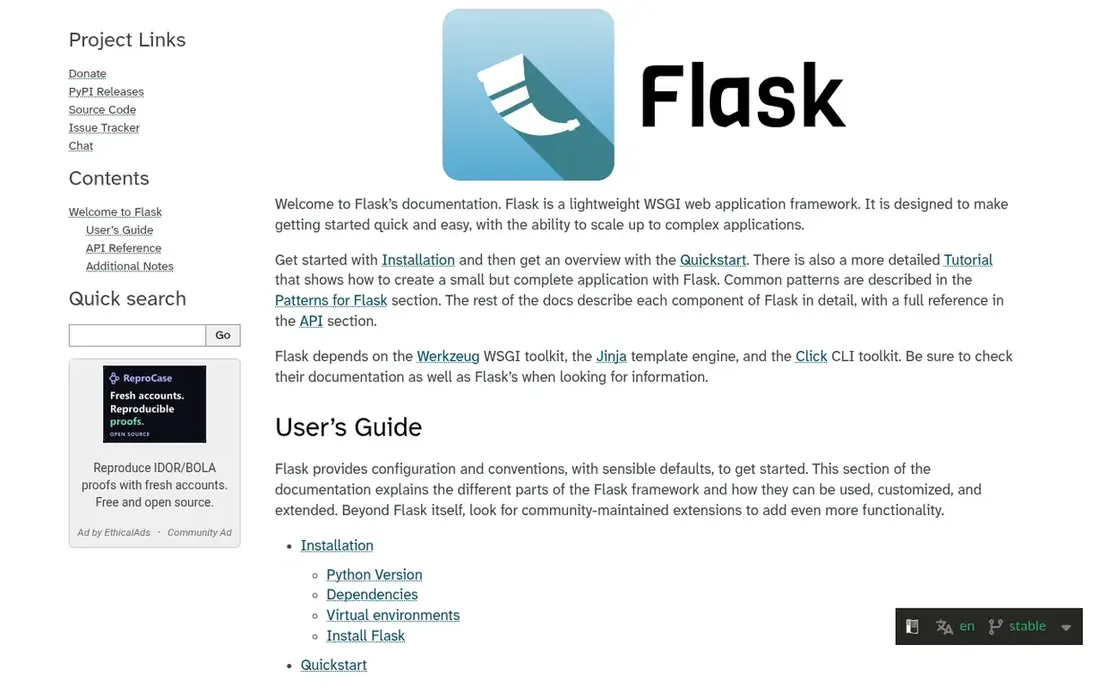
Pick Flask if this describes you: small services and prototypes. Since so much is optional, bigger Flask projects need discipline to avoid inconsistent structure.
Downsides: Few built-in conventions.
You may end up wiring together plenty of extensions. Flask shows no starting price here, so confirm the cost on the vendor site. Trial and free access: Not stated.
- Adaptable project layout
- Minimal core to learn
- You assemble most features
Falcon
Best for: Lean, high-throughput APIs
In short, Falcon is for lean, high-throughput APIs. Falcon is a web framework oriented toward building REST APIs and microservices with a small, explicit core, so request handling stays lean and predictable.
Downsides: Narrow scope beyond APIs.
Its scope is narrower, so features like templating, admin interfaces and wide ORM integration are not the focus, and you add supporting libraries yourself. For server-rendered sites or projects wanting an all-in-one toolkit, another framework is likely a better fit. Pricing for Falcon is not stated here, so ask the vendor for current figures. Trial and free access: Not stated.
- Minimal API-focused core
- Made for REST-style services
- Less help for full web apps
Django
Best for: Full-featured web applications
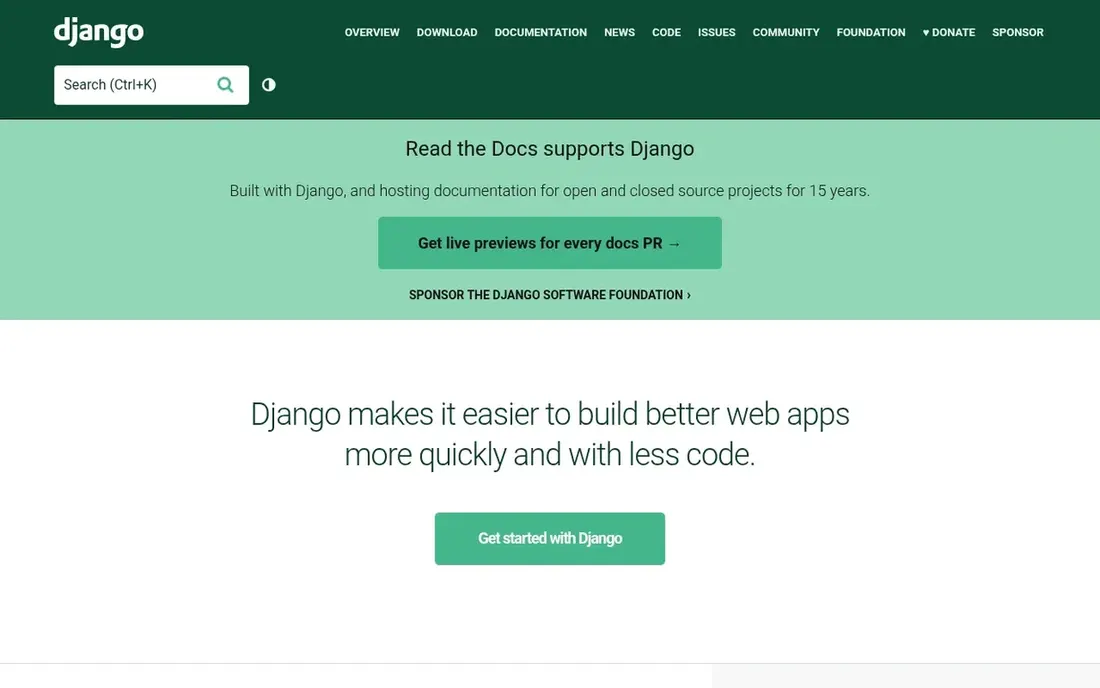
For full-featured web applications, Django is a natural candidate. Django is a full-stack framework that ships with an ORM, templating, authentication and an admin interface, so much of an usual web application is covered before you add external parts.
The included toolkit can feel heavy for a small API or a fast prototype. The framework asks you to follow its structure instead of assemble your own. Pricing for Django is not stated here, so ask the vendor for current figures. As for free access: Not stated.
Where it is weaker: Heavier ramp-up time.
- Capable conventions for large teams
- Batteries-included toolkit
- Less adaptable for tiny services
Bottle
Best for: Single-file micro apps
Bottle is designed for single-file micro apps. Bottle describes itself as a quick, straightforward and light WSGI micro-framework. It is noted for fitting into a single file with routing, templating and request handling included.
Watch-outs: Restricted for large applications.
For everyday use, Bottle is not aimed at large, multi-team applications, and its ecosystem is smaller than those of mainstream frameworks. When an application needs an admin, complicated data modeling or plenty of integrations, a fuller framework will save time later. Bottle shows no starting price here, so confirm the cost on the vendor site. Trial and free access: Not stated.
- No heavy dependencies
- Straightforward WSGI micro-framework
- Small ecosystem
FastAPI
Best for: API-first and typed projects
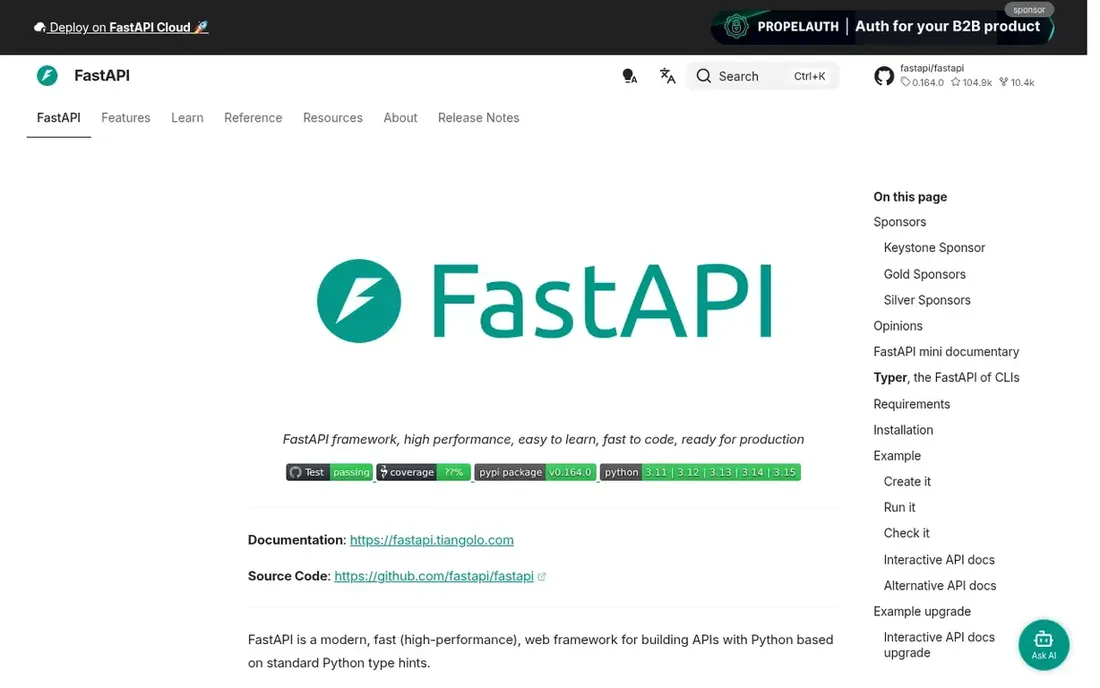
FastAPI is aimed squarely at API-first and typed projects. FastAPI is an API-focused framework that uses Python type hints to validate requests and produce interactive documentation. Its homepage describes it as high performance, quick to learn and ready for production.
The main drawbacks: Async patterns need care.
It is oriented toward APIs instead of traditional server-rendered pages, so content-heavy sites may need extra tooling. From a buyer's view, async code also demands care, and developers unfamiliar with typing will spend time learning those patterns before they feel productive. This comparison lists no price for FastAPI; ask the vendor. Free options: Not stated.
- Automatic interactive docs
- Made for production APIs
- Less suited to server-rendered pages
Pyramid
Best for: Expanding from small to large
Pyramid targets growing from small to large. If you would rather have structure and typical components decided for you, a fuller stack may be quicker to start.
Limits to weigh: Fewer ready-made defaults.
Check the vendor site for Pyramid pricing; none is listed in this comparison. As for free access: Not stated.
- Flexible component choices
- Start minimal
- Needs architectural decisions
Selection criteria
Things to verify first
- Ask each vendor, from Flask to Pyramid, for a written quote; none of them publishes a starting price.
- Read the limits listed for Flask first: you assemble most features.
- Find out whether the entry plan of Falcon covers your must-haves or only a trimmed-down version.
- Price Flask for your actual team size; headline prices rarely include add-ons or overage.
- Pick one real project and run it in Pyramid first; a small pilot shows fit faster than a checklist.
FAQ
Do these tools publish their prices?
No. None of the tools, from Flask to Pyramid, shows a fixed starting price here, so budget time for quotes.
Does any tool for python web server framework here have a free plan?
A permanent free plan is not offered by Flask, Pyramid or the other tools here. Plan a short evaluation period instead.
Which Python framework should a beginner start with?
Flask and Django are typical starting points for different reasons: Flask exposes the basics with little ceremony, whereas Django teaches a complete structure with an ORM and admin. Pick Flask to learn request handling rapidly and Django to learn how a full application is organized.
Can these frameworks run behind a production web server?
Most are WSGI or ASGI applications and are often deployed behind a dedicated server or process manager, with the exact setup documented by each project.
How are the tools for python web server framework ordered?
Flask sits first and Pyramid last because the order follows typical fit for python web server framework, then price clarity and free access. It is a judgement call, so read each profile for fit and limits.
Is Flask the right pick for everyone comparing python web server framework?
No single tool suits every team. Flask comes first because it fits small services and prototypes, while Falcon suits lean, high-throughput APIs and Django suits full-featured web applications. Match the tool to your own size, budget and workflow before deciding.
Sources
- https://flask.palletsprojects.com
- https://falcon.readthedocs.io
- https://www.djangoproject.com
- https://bottlepy.org
- https://fastapi.tiangolo.com
- https://trypyramid.com