Best ERP Software for Government Contractors for 2026: Our 6 Vetted Picks
Comparing the best ERP software for government contractors? 6 contenders, each with entry cost, free tier and best-fit buyer. Short verdicts, no fluff.
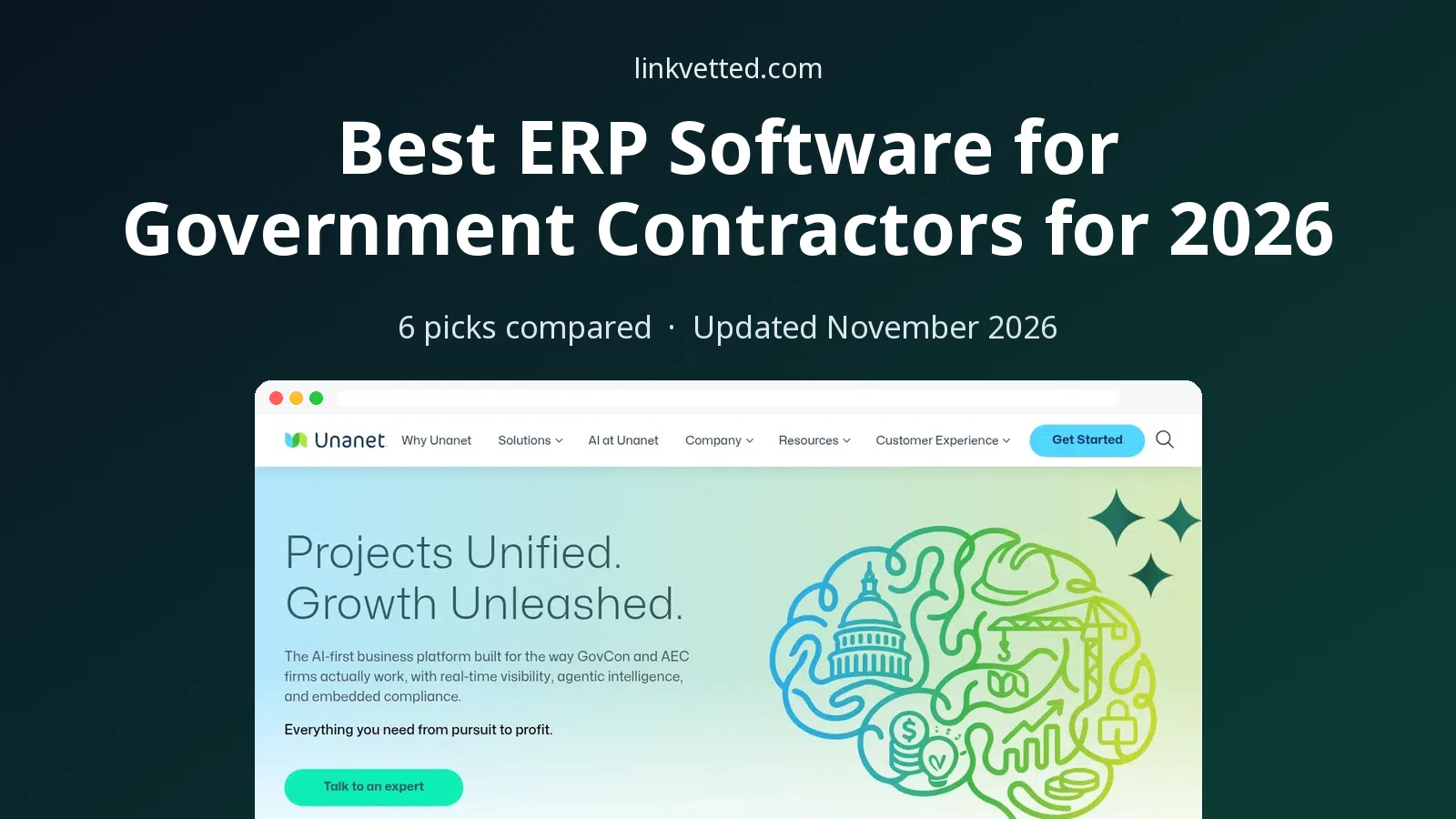
- Editor's choice
 SAP S/4HANA
Large government contractors needing modular, AI-driven ERP
Starts atPricing on requestVisit sap.comFull review - Great alternativeUnanet ERP GovCon
Project-driven government contractors seeking modern ERP and CRM
Starts atPricing on requestVisit unanet.comFull review - Also considerDeltek Costpoint
Government contractors needing deep compliance and project accounting
Starts atPricing on requestVisit deltek.comFull review
Direct answer
If you need large government contractors needing modular, AI-driven ERP, SAP S/4HANA is the first tool to look at here. Alternatives: Unanet ERP GovCon for project-driven government contractors seeking modern ERP and CRM, and Deltek Costpoint for government contractors needing deep compliance and project accounting. The full list of 6 tools follows, with free plan facts. None of these vendors publish plan prices, so pricing is on request for every option.
TL;DR:
- The list opens with SAP S/4HANA, aimed at large government contractors needing modular, AI-driven ERP.
- The main caution on Deltek Costpoint: may be complicated for small businesses.
- A permanent free plan is missing from all 6 tools, SAP S/4HANA and Acumatica Cloud ERP included; plan for a trial or a premium start.
- Acumatica Cloud ERP suits mid-size government contractors seeking adaptable cloud ERP.
- Pricing across the list, from SAP S/4HANA to Acumatica Cloud ERP, is by quote only.
Last checked November 2026. Pricing on request: vendors did not publish plan prices when this guide was last checked (November 2026), so ask each vendor for a written quote.
Quick comparison
| Tool | Best for | Starts at | Free plan? | |
|---|---|---|---|---|
| SAP S/4HANA | Large government contractors needing modular, AI-driven ERP | Pricing on request | Not stated | Visit |
| Unanet ERP GovCon | Project-driven government contractors seeking modern ERP and CRM | Pricing on request | Not stated | Visit |
| Deltek Costpoint | Government contractors needing deep compliance and project accounting | Pricing on request | Not stated | Visit |
| JAMIS Prime ERP | Government contractors needing DCAA-compliant accounting | Pricing on request | Not stated | Visit |
 Oracle NetSuite | Expanding government contractors needing scalable cloud ERP | Pricing on request | Not stated | Visit |
| Acumatica Cloud ERP | Mid-size government contractors seeking adaptable cloud ERP | Pricing on request | Not stated | Visit |
Every option for ERP software for government contractors explained
This LinkVetted guide covers 6 ERP software for government contractors. Each profile lists a starting price, free plan details, strengths and drawbacks, so you can drop poor fits quickly.
SAP S/4HANA targets large government contractors needing modular, AI-driven ERP. SAP S/4HANA Cloud Public Edition is a modular ERP option built to bring built-in AI to core business processes, enabling organizations to scale without limits. It is well-suited for large government contractors with complicated operations that require a solid, scalable system.
The system supports a broad set of business functions and can be tailored to specific needs. For everyday use, for a more focused option, consider Deltek Costpoint or Unanet. S/4HANA is not tailored for government contracting from day one, so significant customization or extras are needed to meet compliance standards. Its complexity may be excessive for mid-size or smaller contractors. Check the vendor site for SAP S/4HANA pricing; none is listed in this comparison. Trial and free access: Not stated.
Where it falls short: Government compliance needs extras.
- Supports core business processes
- Scalable for complicated organizations
- High complexity and implementation effort
Unanet ERP GovCon
Best for: Project-driven government contractors seeking modern ERP and CRM

For project-driven government contractors seeking modern ERP and CRM, Unanet ERP GovCon is a natural candidate. Contractors with highly complicated regulatory needs should evaluate those alternatives.
Pricing for Unanet ERP GovCon is not stated here, so ask the vendor for current figures. On free options: Not stated.
Downsides: May lack some deep compliance features.
- Links projects, people, financials
- Comes with CRM capabilities
- Concentrated on project-driven companies
Deltek Costpoint
Best for: Government contractors needing deep compliance and project accounting
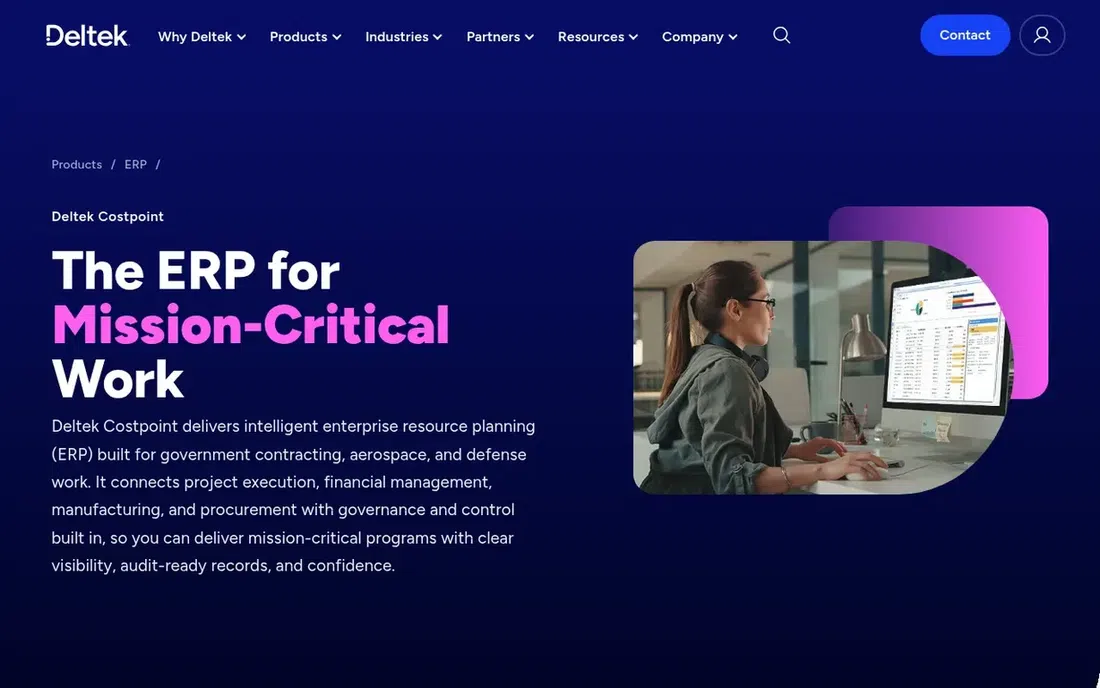
Deltek Costpoint was built for government contractors needing deep compliance and project accounting. It tracks costs, runs contracts, and helps maintain audit readiness with governance and control features integrated into the system.
That said, Costpoint may be more than small contractors need, and its specialized focus might not suit businesses with significant commercial business. Pricing for Deltek Costpoint is not stated here, so ask the vendor for current figures. As for free access: Not stated.
Trade-offs to know: Focused primarily on government contracting.
- Intelligent ERP made for government contractors
- Tracks costs and handles contracts
- May be complicated for small businesses
JAMIS Prime ERP
Best for: Government contractors needing DCAA-compliant accounting
JAMIS Prime ERP makes the most sense for government contractors needing DCAA-compliant accounting. JAMIS Prime ERP is DCAA-compliant accounting software made for the unique needs and demands of government contractors. It eases compliance and gives you tools specifically built to meet government contracting requirements, making it a solid choice for businesses that prioritize audit readiness and regulatory adherence.
The main drawbacks: Focused primarily on accounting.
JAMIS Prime may offer fewer broader ERP features compared with bigger suites like SAP S/4HANA or Oracle NetSuite. It may not be a strong match for businesses with significant commercial operations. In daily use, the system is tailored to the workflows of government contractors. No starting price is listed for JAMIS Prime ERP here; confirm pricing on the vendor site. Trial and free access: Not stated.
- Made for government contractor needs
- Eases compliance
- May be less adaptable for commercial work
Oracle NetSuite
Best for: Expanding government contractors needing scalable cloud ERP
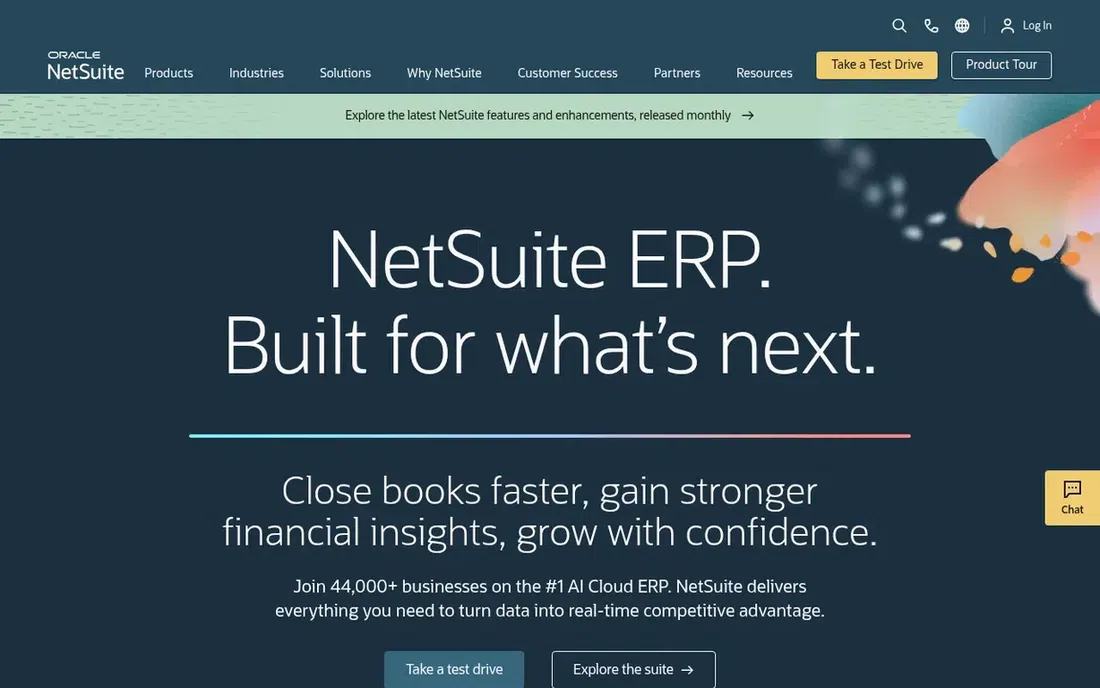
Oracle NetSuite makes the most sense for expanding government contractors needing scalable cloud ERP. Oracle NetSuite is an AI-powered cloud ERP that merges financials, CRM, accounting, inventory management, and more. It uses built-in AI to ease work and turn data into action, making it a versatile choice for government contractors that require a broad, scalable system.
Its cloud nature supports remote access and live visibility across the organization. From a buyer's view, consider Deltek Costpoint or JAMIS Prime if out-of-the-box compliance is a priority. More specifically, NetSuite is not preconfigured for government contracting compliance, so contractors must customize it or integrate external tools to meet DCAA and FAR requirements. It may also be overkill for small contractors. Oracle NetSuite does not show a starting price in this comparison, so check the vendor site for current pricing. Free options: Not stated.
Limits to weigh: May be complicated to configure.
- Thorough cloud ERP with AI
- Integrates financials, CRM, inventory
- Needs customization for government compliance
Acumatica Cloud ERP
Best for: Mid-size government contractors seeking adaptable cloud ERP
Acumatica Cloud ERP is a good fit for mid-size government contractors seeking adaptable cloud ERP. Acumatica Cloud ERP offers cloud and mobile technology with a customer-centric licensing model, enabling a complete, live view of your business anytime, anywhere. It is an adaptable option that can be adapted for government contractors needing modern cloud access and a unified view of operations.
Its licensing approach may appeal to businesses looking for scalability. Acumatica lacks built-in government contracting compliance features like DCAA audit trails, so customization or integrations are necessary. It may suit contractors with more straightforward requirements or those willing to build compliance layers. For specialized needs, consider JAMIS Prime or Deltek Costpoint. No starting price is listed for Acumatica Cloud ERP here; confirm pricing on the vendor site. On free options: Not stated.
Where it is weaker: Requires customization for compliance.
- Cloud and mobile technology
- Customer-centric licensing model
- Restricted government-specific features
Our selection method
Selection started from tools commonly considered for ERP software for government contractors, then narrowed to 6 that have clear pricing information or a clear quote process. Prices and plan limits come from vendor pages and can change, so confirm them on the vendor site before you buy. The ranking is editorial: typical fit first, then clear pricing, then free access. If your needs are unusual, read the profiles rather than relying on position.
Questions to settle before buying
- Ask each vendor, from SAP S/4HANA to Acumatica Cloud ERP, for a written quote; none of them publishes a starting price.
- Read the limits listed for SAP S/4HANA first: high complexity and implementation effort.
- Look at the help docs and support options for Unanet ERP GovCon before you commit.
- Compare total cost, not headline price: for Oracle NetSuite, add extra seats, add-ons and any usage-based charges.
- A short pilot of Acumatica Cloud ERP with your real workflow tells you more than a feature table.
FAQ
How important is project accounting in government contracting ERP?
Project accounting is critical since government contracts frequently need in-depth cost tracking by project and contract. It makes it possible for accurate billing, profitability analysis, and compliance with contract terms.
Do these tools publish their prices?
No. None of the tools, from SAP S/4HANA to Acumatica Cloud ERP, shows a fixed starting price here, so budget time for quotes.
Can general-purpose ERPs like NetSuite or SAP be used for government contracting?
Yes, but they generally need customization or add-on modules to meet government contracting compliance standards. This can increase implementation time and cost.
How are the tools for ERP software for government contractors ordered?
The order follows typical fit for ERP software for government contractors, with SAP S/4HANA first and Acumatica Cloud ERP last, then price clarity and free access. It is editorial judgement, not a score, so another team could rank the tools differently.
What should small government contractors look for in an ERP?
Small contractors should prioritize affordability, simplicity, and essential compliance features. Scalability is also important to support growth. Options like Unanet or JAMIS Prime may offer a decent balance of functionality and cost for smaller businesses.
Is SAP S/4HANA the right pick for everyone comparing ERP software for government contractors?
No single tool suits every team. SAP S/4HANA comes first because it fits large government contractors needing modular, AI-driven ERP, while Unanet ERP GovCon suits project-driven government contractors seeking modern ERP and CRM and Deltek Costpoint suits government contractors needing deep compliance and project accounting. Match the tool to your own size, budget and workflow before deciding.
Sources
- https://www.sap.com/products/erp/s4hana.html
- https://www.unanet.com
- https://www.deltek.com/en/products/project-erp/costpoint
- https://www.jamis.com
- https://www.netsuite.com/portal/home.shtml
- https://www.acumatica.com