Best Entertainment Companies to Work For in 2026: 8 Companies Compared
We compared the best entertainment companies to work for on benefits, career paths and work life balance, so job seekers can shortlist wisely before applying.
- Editor's choice
 The Walt Disney Company
Broad benefits and career paths
Starts atSee websiteVisit thewaltdisneycompany.comFull review - Great alternative
 Netflix
High pay and creative freedom
Starts atSee websiteVisit netflix.comFull review - Also consider
 Warner Bros. Discovery
Studio and streaming careers
Starts atSee websiteVisit wbd.comFull review
TL;DR:
- Disney and NBCUniversal offer the broadest benefit packages in this group, including family care, mental health support and education help.
- Netflix is known for high pay and creative freedom, paired with high performance expectations and less job security than traditional studios.
- Warner Bros. Discovery, Paramount and Sony Pictures suit people who want studio and streaming work with traditional benefits and structured career paths.
- Spotify and Electronic Arts suit people who want music and games careers with tech style flexibility, though project cycles can be intense.
- Benefits vary by role, location and employment type, so confirm the package for your exact job before you accept an offer.
Quick comparison
| Tool | Best for | Starts at | Free plan? | |
|---|---|---|---|---|
| The Walt Disney Company | Broad benefits and career paths | See website | No | Visit |
| Netflix | High pay and creative freedom | See website | No | Visit |
| Warner Bros. Discovery | Studio and streaming careers | See website | No | Visit |
 NBCUniversal | Theme parks, TV and film variety | See website | No | Visit |
 Paramount | TV, film and streaming breadth | See website | No | Visit |
 Sony Pictures | Film studio careers | See website | No | Visit |
 Spotify | Music and tech culture | See website | No | Visit |
 Electronic Arts | Games careers at scale | See website | No | Visit |
The best entertainment companies to work for
Entertainment work spans film, TV, streaming, theme parks, music and games, and the best employer depends on what kind of career you want. The eight companies below are major US entertainment employers in October 2026, chosen for scale, benefit breadth and career options. We compare what each offers employees, not what it offers audiences, so a beloved streaming service is not automatically a great workplace.
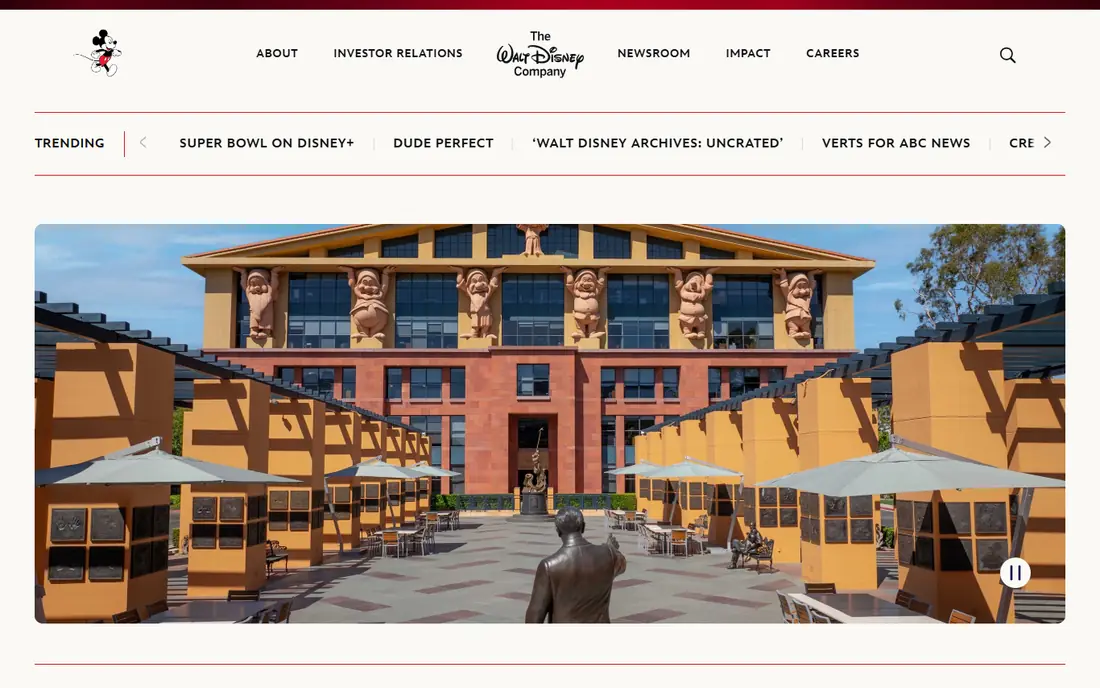
Disney is our pick for most entertainment job seekers who want breadth and stability. Its total rewards package covers pay, health and savings benefits, time off, family care resources including childcare and senior care, paid family care leave, family building support for fertility and adoption, and free mental health resources. With film, TV, streaming, parks and cruises under one company, internal moves are more realistic than at a single business studio.
The catch is size. A job at Disney can feel very different in parks operations, studio production, streaming tech or corporate, and bureaucracy is real in a company this large. Research the specific team and manager, not just the Disney name, before you decide.
- Comprehensive total rewards including health, family care and education
- Many internal moves across film, TV, parks and streaming
- Strong brand stability
- Large company bureaucracy
- Experience varies a lot by business unit and role
Netflix suits experienced professionals who want top pay and room to make decisions without layers of approval. Employees often praise its commitment to creative freedom and diverse stories, and its global slate means work on productions from many countries. For senior engineers, product staff and creative leaders, Netflix pay and freedom are hard to match.
The trade off is intensity. Netflix is known for high performance expectations and a direct feedback culture, and job security feels thinner than at traditional studios with longer tenure norms. If you thrive on autonomy and accountability, that is a feature. If you want a slower, more sheltered path, it may not be.
- Competitive pay and creative freedom
- Strong focus on inclusion and diverse storytelling
- Global content scope
- High performance expectations
- Less traditional job security
- Feedback culture can feel blunt
Warner Bros. Discovery fits people who want classic studio work plus streaming, across HBO, Warner Bros. film and a large cable portfolio. Its benefits include health, dental and vision insurance, 401k, an employee stock purchase plan, performance bonuses, generous parental leave, adoption and fertility help, childcare benefits, mental health support and employee discounts. That breadth makes it a strong traditional employer choice.
Change is the honest catch. Mergers and restructuring in recent years have created uncertainty in some divisions, and morale reports vary by team. Ask about team stability, recent reorganizations and headcount plans in interviews, and weigh the specific division more than the corporate brand.
- Wide benefit range including 401k, stock purchase, parental leave and mental health support
- HBO, film and cable brands under one roof
- Employee discounts
- Restructuring and change have affected morale in recent years
- Experience varies by division
NBCUniversal suits job seekers who want variety, from Universal parks to NBC, cable, film and news. Its US benefits include medical, prescription, vision and dental insurance, life and disability cover, fertility and adoption help, and parental leave of 16 weeks for a primary caregiver and 4 weeks for a non primary caregiver. Paid time off for US full time staff includes vacation days, company holidays, personal days, caregiving days and sick leave.
The catch is variation. Policies differ by location and role, and parks roles can involve shift work, weekends and holidays that office roles do not. Confirm the exact schedule and benefits for your role, since a corporate job and a parks job at the same company feel very different.
- Health benefits from day one for many roles
- 16 weeks parental leave for primary caregivers in the US
- Parks, TV, film and news variety
- Large company with varied policies by location
- Some roles are shift based, especially in parks
Paramount fits people who want to work across film, broadcast TV, cable and streaming without changing employers. Its portfolio spans studio production, network TV, cable brands and the Paramount streaming service, which creates paths from production to tech to corporate roles. Benefits follow a traditional large media pattern, with health, retirement and time off programs that vary by role and location.
The limit is the same facing all traditional media: streaming economics and industry change affect hiring pace and team stability. Research the specific brand and team, ask about recent hiring trends, and favor teams with clear growth plans over teams in flux.
- Film, TV and streaming brands in one company
- Traditional media benefits
- Career paths across production, tech and corporate roles
- Industry change and streaming economics affect hiring
- Experience varies by brand and team
Sony Pictures suits people whose first love is film. As one of the major studios, it offers work across production, distribution, marketing and post production, with a creative community that many employees praise for collaboration. Its global distribution reach means films and series travel widely, which suits people who want international exposure.
The trade off is breadth. Sony Pictures does not offer the theme park, broadcast network or cruise paths that Disney and NBCUniversal do, so internal moves are narrower. If film is your focus, that narrowness is fine. If you want to sample many entertainment businesses, a broader company fits better.
- Classic film studio work with global distribution
- Strong creative community
- Roles across production, marketing and tech
- Smaller scope than Disney or NBCUniversal
- Fewer theme park or broadcast paths for internal moves
Spotify fits people who want music plus tech, rather than film or TV. Its culture blends a music mission with software company flexibility, including remote and flexible work for many roles and a focus on learning. For engineers, designers, data staff and music specialists, Spotify offers a distinctive mix that pure tech firms and pure studios do not.
The catch is that music economics and product cycles still shape the work, and some teams face intense launch periods. Ask about team roadmap, on call expectations and remote policy for your exact role, since flexibility varies by team.
- Music focused mission with tech style flexibility
- Global teams and remote options for many roles
- Learning and development support
- Music industry economics affect some teams
- Project intensity varies by product cycle
Electronic Arts, known as EA, suits people who want a games career at scale. Its studios work on sports, action, simulation and live service titles, with roles across engineering, design, art, production and live operations. A global studio network creates moves between teams and cities that smaller studios cannot offer, and live service work provides longer term roles than single launch projects.
Launch intensity is the honest catch. Games development is famous for crunch periods around milestones and launches, and experience varies sharply by studio and title. Ask prospective teams about recent launch schedules, overtime norms and retention, and treat those answers as central to your decision.
- Large games portfolio with many studios
- Roles across development, design, live services and tech
- Global studio network
- Game launch cycles can mean intense periods
- Experience varies a lot by studio and title
How we picked these
We compared company careers pages, published benefit summaries and independent entertainment workplace roundups current in October 2026. We kept only major US entertainment employers with a live hiring presence and published benefit information, and we favored firms with broad benefit packages and varied career paths. We did not claim hands-on employment at these firms, and we compared official careers pages, benefit summaries and public employee reports.
How to choose an entertainment employer
Start with the work, not the logo. A great company can hold a miserable team, and a smaller brand can hold a team you love for years. Ask what you will actually do day to day, who your manager is, what the team shipped recently, and how long people on that team typically stay. Those answers predict your experience better than any corporate benefits page.
Next, compare the full package for your role. Check base pay, bonus eligibility, equity if offered, health costs, retirement matching, parental leave, time off and remote policy, since these vary by role and location even inside one company. For parks, production and live service roles, also check schedule, overtime and seasonal patterns, which affect daily life more than a headline benefit.
Finally, weigh stability against growth. A stable traditional studio may offer steadier work but slower promotion, while a fast growing streamer may offer faster growth with higher performance pressure. Neither is better in general. Pick the trade off that fits your stage of life, your tolerance for change, and how much you value creative freedom versus predictability.
FAQ
Which entertainment company pays best?
Netflix is often cited for the highest pay among major entertainment employers, especially for senior tech and creative roles. Disney, NBCUniversal and Warner Bros. Discovery offer competitive pay with broader traditional benefits, which can close the gap in total value. Compare total compensation for your exact role, not headline salary alone.
Is Disney a good company to work for?
For many people, yes, thanks to broad benefits, internal mobility and brand stability. Experience varies a lot by business unit, though, from parks operations to studio production to streaming tech. Research the specific team, manager and schedule before you decide, since those factors shape daily life more than the company name.
Do entertainment companies offer remote work?
Many corporate, tech and some creative roles offer hybrid or remote work, while parks, production and studio operations roles usually require on site presence. Spotify and Netflix offer flexible options for many tech roles, while Disney and NBCUniversal vary by team. Confirm remote policy for your exact job in writing before you accept.
How hard is it to get a job at Netflix or Disney?
Both are competitive, with many applicants for each opening and multi stage interviews. Netflix emphasizes performance history and cultural fit in a direct feedback culture, while Disney emphasizes role skills and team fit across many businesses. Relevant portfolio work, referrals and tailored applications help more than generic applications.
What benefits should I compare across entertainment employers?
Compare health insurance costs and coverage, retirement matching, parental leave length, paid time off, mental health support, education help and employee discounts or perks. Also check bonus and equity eligibility, since those can be a large share of total pay at streamers and tech leaning firms. A benefits page summary is a starting point, not a contract, so confirm details in the offer.
Are games companies good places to work?
They can be excellent for people who love games and want creative, technical work at scale, as at Electronic Arts and similar studios. Launch cycles can bring intense periods, and experience varies by studio and title, so ask about overtime norms and retention on the specific team. A studio with sustainable schedules and strong leadership is worth more than a famous title.