5 Embedded Business Intelligence Software for Startups Worth Shortlisting in 2026
Best embedded business intelligence software for startups in 2026: 5 contenders with entry costs and free tiers. With pricing notes and limits. See which fits.
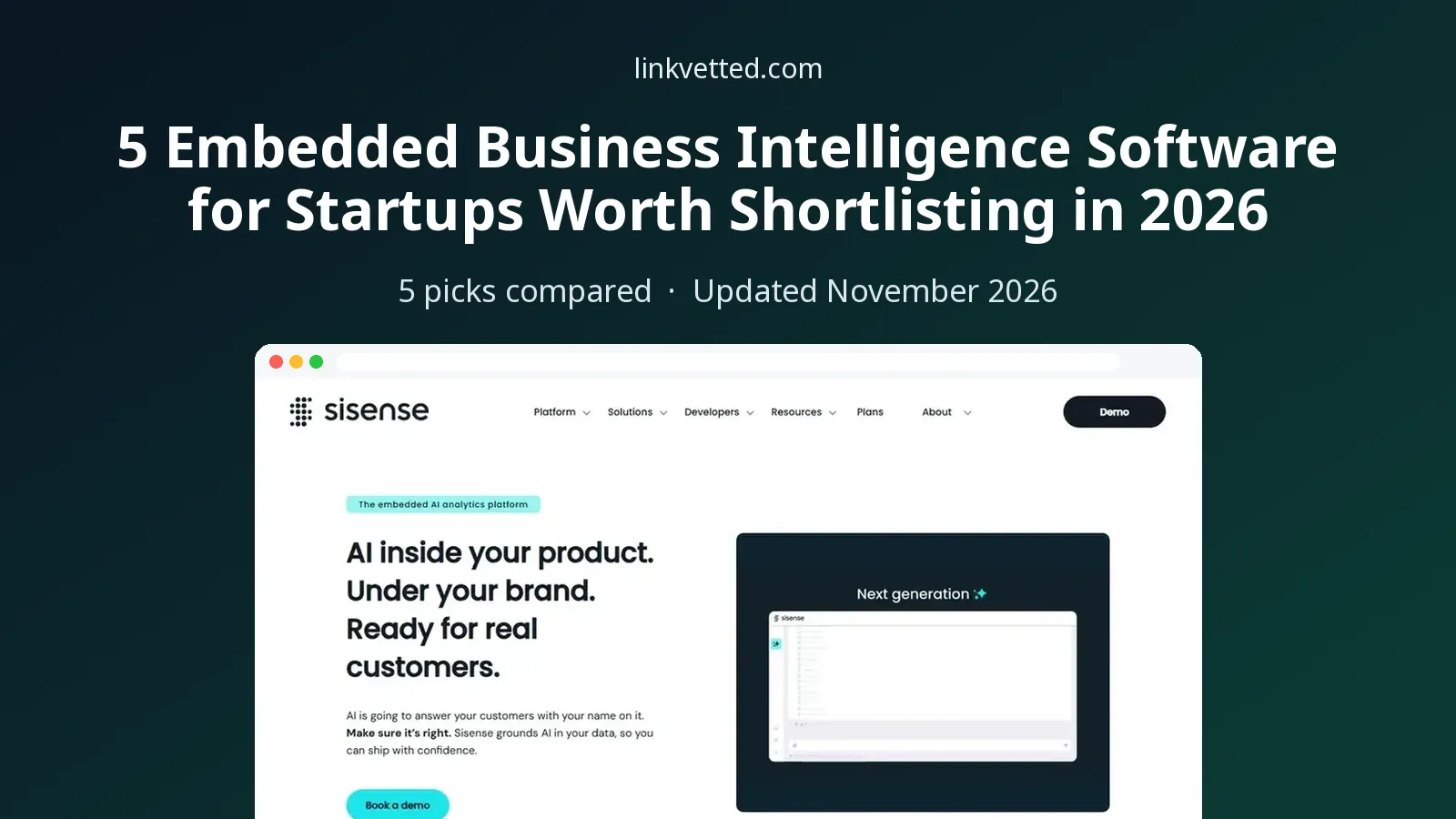
- Editor's choice
 GoodData
Running dashboards and agents on one foundation
Starts atSee websiteVisit gooddata.comFull review - Great alternative
 Sisense
Embedding analytics with adaptable build choices
Starts atSee websiteVisit sisense.comFull review - Also consider
 Tableau
Quick visual exploration and sharing
Starts at$15 per user per monthVisit tableau.comFull review
Direct answer
GoodData leads the list, best for running dashboards and agents on one foundation. Listed starting prices: Tableau from $15 per user per month. Look at Sisense for embedding analytics with adaptable build options, and at Tableau for quick visual exploration and sharing. Prices, free plans and limits for all 5 tools follow.
TL;DR:
- GoodData takes the first slot, best suited to running dashboards and agents on one foundation.
- Before buying Tableau, weigh this: embedding takes additional configuration.
- Tableau is the lowest-priced starter here at $15 per user per month.
- For governed embedded metrics with AI agents, Looker is worth a look.
- Only Tableau offers a free plan among these 5 tools.
Last checked November 2026. Prices and plan details were read from the vendors' own pages in November 2026; vendors change plans often, so confirm the current price on the vendor site before you buy.
Quick comparison
| Tool | Best for | Starts at | Free plan? | |
|---|---|---|---|---|
| GoodData | Running dashboards and agents on one foundation | See website | Free trial | Visit |
| Sisense | Embedding analytics with adaptable build choices | See website | Free trial | Visit |
| Tableau | Quick visual exploration and sharing | $15 per user per month | Yes | Visit |
 Domo | Connecting and governing data for AI | See website | Free trial | Visit |
 Looker | Governed embedded metrics with AI agents | See website | Not stated | Visit |
The best embedded business intelligence software for startups
Short on time? The summary and table above give the quick view of 5 embedded business intelligence software for startups, and the profiles that follow give the detail behind each entry.
GoodData is a good fit for running dashboards and agents on one foundation. Teams wanting a straightforward embedded chart library may prefer a more focused choice.
GoodData shows no starting price here, so confirm the cost on the vendor site. As for free access: Free trial.
The main drawbacks: Agentic focus may exceed early needs.
- Dashboards
- Aimed at high-concurrency demand
- Needs thoughtful data governance
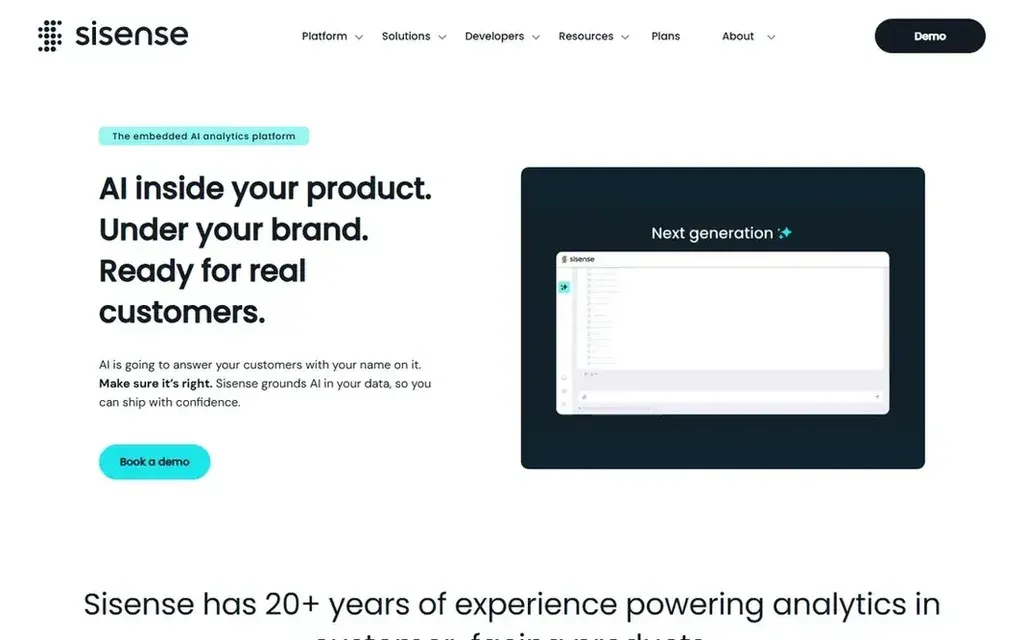
Pick Sisense if this describes you: embedding analytics with adaptable build choices. Sisense provides AI-powered embedded analytics targeted at turning data into revenue.
Main advantages: AI-powered embedded analytics focus.
Its pro-code, low-code and no-code adaptability means different team members can build and embed analytics at their comfort level. Beyond that, the range of build choices means a ramp-up time, and a very early startup may only use a fraction of the system. Pricing for Sisense is not stated here, so ask the vendor for current figures. Free access: Free trial. Limits to weigh: Small teams may not need every choice.
- Pro-code
- Low-code and no-code adaptability
- Feature breadth can take time to learn
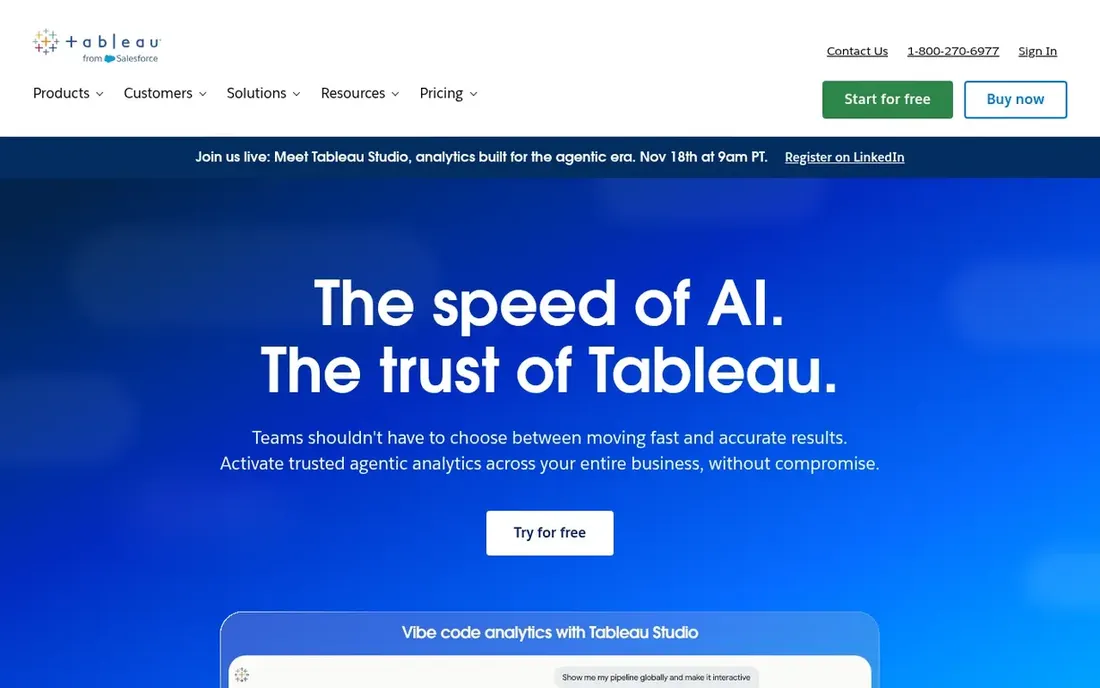
Tableau works best for quick visual exploration and sharing. Tableau is a well-known business intelligence system built around visual analysis. From a buyer's view, for startups, it fits teams that want analysts and founders exploring data rapidly and presenting findings without heavy setup.
What works well: Drag-and-drop visualization building.
Honest limits: Embedding takes additional configuration. Tableau is most solid for internal analysis, so embedding analytics inside a customer-facing product needs extra configuration. Users link to almost any database, build charts by dragging and dropping, and share results with a click. For everyday use, startups whose central goal is white-labeled in-app dashboards may want a platform aimed at embedding first. What you pay to start with Tableau: $15 per user per month. Tableau offers a free plan.
- Share dashboards with a click
- Connects to almost any database
- Governance setup can grow complicated
Domo is a good fit for connecting and governing data for AI. Startups that want a single place to handle data journeys and surface business-critical insights can use it as a foundation.
Where it is weaker: Embedding is one part of a bigger suite.
Beyond that, Domo is a wide data system, so a tiny startup may find the scope bigger than its immediate embedding needs. From a buyer's view, if the priority is a light embedded dashboard inside a product, a dedicated embedding tool may be quicker. Pricing for Domo is not stated here, so ask the vendor for current figures. Trial and free access: Free trial.
- Prepares and expands data access
- Links data from any source
- Wide platform can feel heavy for tiny teams
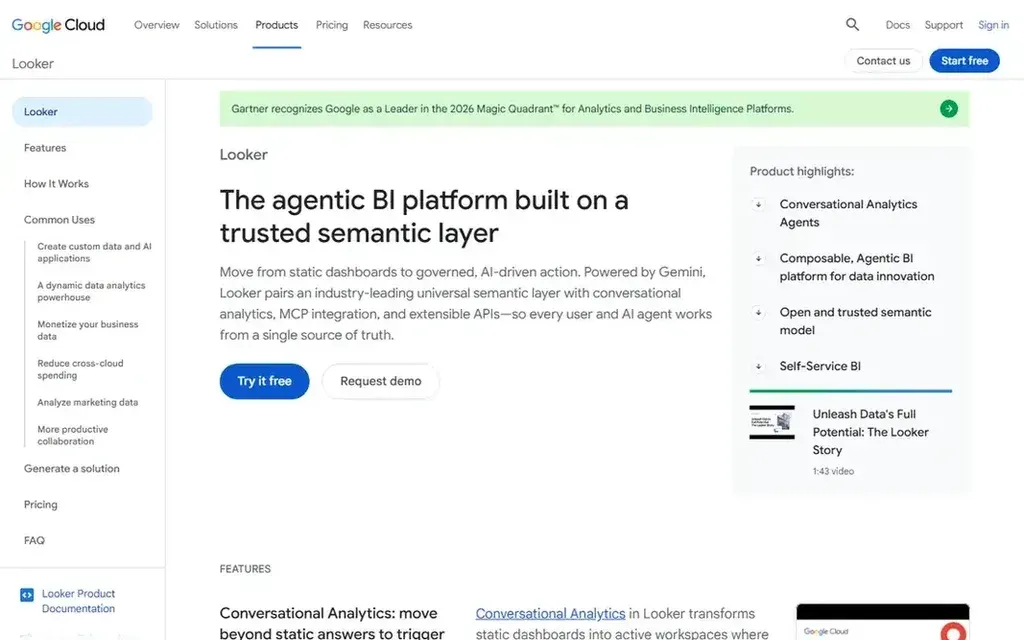
Where Looker fits: governed embedded metrics with AI agents. Looker is Google Cloud's agentic business intelligence and embedded analytics product.
It centers on a trusted semantic layer that brings together metric definitions, with Gemini agents layered on top for AI-driven exploration. More specifically, for startups, it suits teams that want consistent, governed numbers embedded in their products and are prepared to invest in modeling discipline early. Pricing for Looker is not stated here, so ask the vendor for current figures. Free plan details: Not stated.
The main drawbacks: Modeling layer needs setup effort.
- Gemini agents for AI-assisted analysis
- Trusted semantic layer for consistent metrics
- Best fit for teams with data engineering support
How we built this list
A buyer's checklist
- Confirm the entry price on the vendor page. For GoodData, Sisense, Domo and Looker that means a quote rather than a fixed price.
- Test the free plan from Tableau against your real workload before relying on it.
- Run a trial of GoodData, Sisense and Domo with real work before paying for a year; your own workflow is the best test.
- Before choosing GoodData, weigh its main limit: agentic focus may exceed early needs.
- Before you load data into Tableau, check what an export looks like and who can run it.
- Let daily users try Sisense on real work; their feedback beats any feature checklist.
FAQ
What should a startup look for in embedded BI software?
Prioritize how easily analytics embed into your product, the governance model behind the metrics, and the setup effort your small team can absorb. Confirm data source support and how much customization the system permits before committing.
How are the embedded business intelligence software for startups ordered?
GoodData sits first and Looker last because the order follows typical fit for embedded business intelligence software for startups, then price clarity and free access. It is a judgement call, so read each profile for fit and limits.
Which embedded business intelligence software for startups have a free plan?
Tableau is the only tool in this list with a free plan. Free plans usually cap users, projects or features, so check the limits on the vendor page. Several others offer a trial instead. Prices, free plan details and limits for all 5 tools in this embedded business intelligence software for startups roundup sit on the individual cards above.
Is Looker or Sisense better for embedding analytics?
Looker centers on a trusted semantic layer with Gemini agents, which fits teams that value governed metrics. Sisense emphasizes embedded analytics with pro-code, low-code and no-code adaptability, which fits product teams embedding dashboards.
Do these tools publish their prices?
Not all of them. GoodData, Sisense, Domo and Looker publish no starting price, so expect a quote request for those. The rest, Tableau included, show a starting price, though seats and billing terms still change the final cost.
How does GoodData differ from Domo for startups?
Domo emphasizes connecting and governing data across sources for AI and insights. Choose based on whether your priority is serving analytics and agents or managing the broader data journey.
Sources
- https://www.gooddata.com
- https://www.sisense.com
- https://www.tableau.com
- https://www.domo.com
- https://cloud.google.com/looker