Choosing Docs As Code Platforms for APIs in 2026: 6 Options Compared
Best docs as code platforms for APIs in 2026: 6 tools with starting prices, free plans and limits. Cost notes and weak points included. Quick comparison inside.
- Editor's choice
 GitBook
General documentation with AI assistance
Starts at$65 per site a monthVisit gitbook.comFull review - Great alternativeBump.sh
OpenAPI docs with governance and observability
Starts at$50 a monthVisit bump.shFull review - Also consider
 Stoplight
Design-first OpenAPI authoring and docs
Starts at$44 per monthVisit stoplight.ioFull review
Direct answer
For general documentation with AI assistance, GitBook is where this list starts. Listed starting prices: GitBook from $65 per site a month, Bump.sh from $50 a month and Stoplight from $44 per month. Alternatives: Bump.sh for OpenAPI docs with governance and observability, and Stoplight for design-first OpenAPI authoring and docs. Details, prices and limits for the rest of the 6 tools are below.
TL;DR:
- GitBook takes the first slot, best suited to general documentation with AI assistance.
- Free plans exist at 2 of 6 tools (GitBook, Postman).
- Fern suits generated SDKs and API documentation.
- Starting prices begin at $9 per month with Postman.
Last checked November 2026. Prices and plan details were read from the vendors' own pages in November 2026; vendors change plans often, so confirm the current price on the vendor site before you buy.
Quick comparison
| Tool | Best for | Starts at | Free plan? | |
|---|---|---|---|---|
| GitBook | General documentation with AI assistance | $65 per site a month | Yes | Visit |
| Bump.sh | OpenAPI docs with governance and observability | $50 a month | Free trial | Visit |
| Stoplight | Design-first OpenAPI authoring and docs | $44 per month | Free trial | Visit |
 ReadMe | Interactive developer-facing API docs | See website | Not stated | Visit |
 Postman | Teams already working in Postman | $9 per month | Yes | Visit |
 Fern | Generated SDKs and API documentation | See website | Not stated | Visit |
The full docs as code platforms for APIs list
This LinkVetted guide covers 6 options for docs as code platforms for APIs. Each profile lists a starting price, free plan details, strengths and drawbacks, so you can drop poor fits quickly.
GitBook is designed for general documentation with AI assistance. GitBook presents itself as a documentation system made for humans and AI. That makes it a reasonable fit for teams that require broader product documentation alongside API guides and want AI-assisted maintenance of content.
If your docs are largely narrative guides with some API content, it can be a good fit. In daily use, GitBook is a general documentation product instead of an API-specific generator, so teams whose priority is rendering a large OpenAPI description into reference docs may want to check how deep that support goes. Starting cost for GitBook: $65 per site per month. A free plan is available with GitBook.
Trade-offs to know: Confirm OpenAPI rendering depth.
- Built-in MCP links docs to AI agents
- Documentation product for humans and AI
- Not solely centred on API reference docs
Bump.sh
Best for: OpenAPI docs with governance and observability
Bump.sh targets OpenAPI docs with governance and observability. The product is centered on OpenAPI-driven documentation, so organizations needing a full general-purpose knowledge base may need another tool for guides and internal content.
In daily use, if you primarily want a straightforward static reference page, a lighter generator may be enough. Entry price for Bump.sh: $50 per month. Free options: Free trial.
Honest limits: Confirm fit for deep guide content.
- Built-in governance
- OpenAPI to production documentation flow
- Narrower than full documentation suites
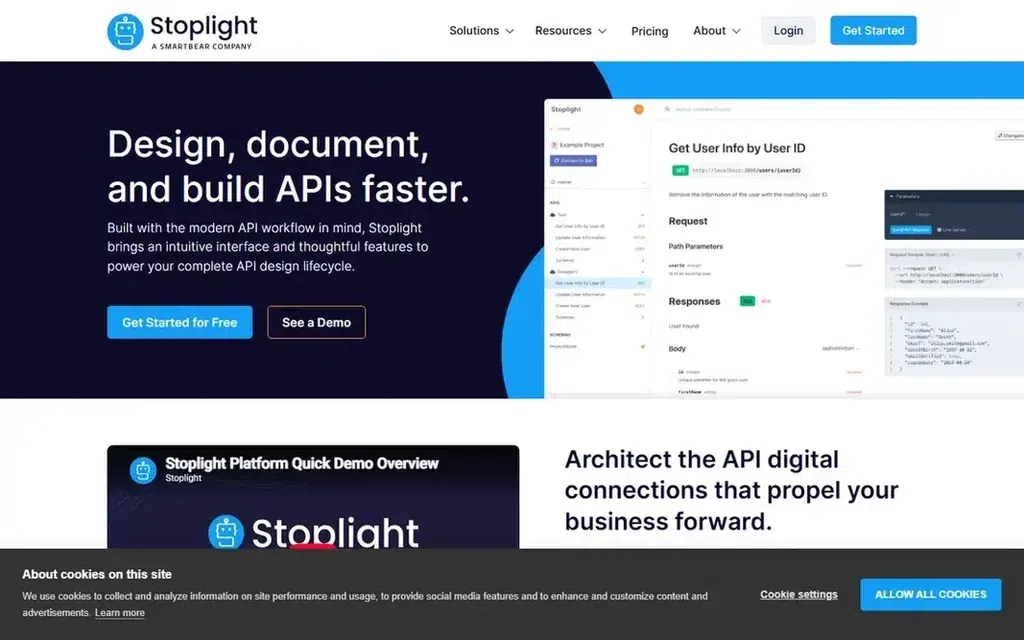
Stoplight is aimed squarely at design-first OpenAPI authoring and docs. Stoplight describes itself as an OpenAPI design and documentation management tool. Its homepage says you can produce OpenAPI descriptions, documentation and mock servers quicker than with other API tools, with no specialized knowledge required, all in one centralized product.
For everyday use, the product is oriented toward OpenAPI-centric workflows. So teams documenting plenty of non-API guides or narrative content may want a broader documentation tool alongside it. If your primary need is turning an existing OpenAPI file into reference docs automatically, a generator-focused choice may be more straightforward. Entry price for Stoplight: $44 per month. Free plan details: Free trial.
Limits to weigh: Check how it suits non-OpenAPI content.
- Produce OpenAPI descriptions and documentation
- Mock servers included in one product
- Centered on OpenAPI instead of general docs
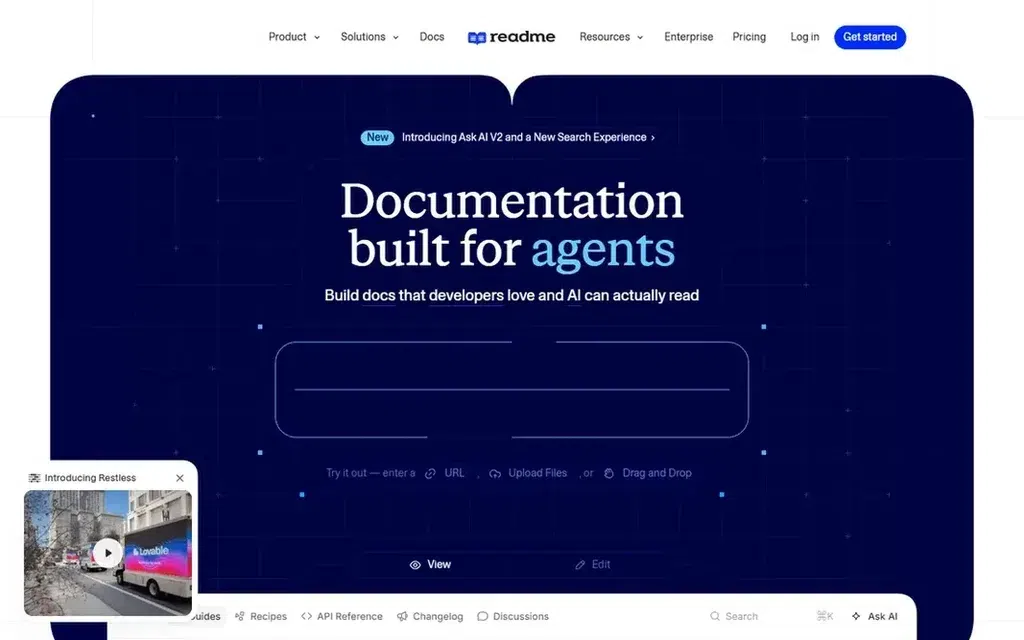
Think of ReadMe for interactive developer-facing API docs. ReadMe is built around creating interactive API documentation that developers find approachable. Its homepage emphasizes attractive, developer-friendly docs, which makes it a natural fit for teams publishing APIs to external developers or partners who require to try calls and understand endpoints rapidly.
What to check first: Confirm how it suits your existing repo workflow.
Worth adding: consider alternatives if your priority is generating reference docs straight from a repository on every pull request instead of curating a hosted docs site. On top of that, since the emphasis is on the documentation experience, teams that want strict design-first OpenAPI authoring or heavy mock server workflows may find other tools a closer match. ReadMe shows no starting price here, so confirm the cost on the vendor site. As for free access: Not stated.
- Interactive documentation developers can explore
- Friendly presentation for external audiences
- Less concentrated on design-first authoring
Postman serves teams already working in Postman. Postman is widely known as an API engineering environment for building, testing and collaborating on APIs. Its homepage frames it around moving quicker from development to production.
Downsides: Docs are one part of a bigger tool.
For everyday use, documentation is one aspect of a broader API tool. So teams wanting a dedicated docs-as-code pipeline or highly customized public documentation may prefer a specialized product. In practice, for teams already using it to exercise endpoints, documenting APIs there keeps requests, examples and docs close to the work, which can cut the gap between testing an API and describing it. On top of that, check how published docs are generated from your collections and whether that matches your version control workflow. What you pay to start with Postman: $9 per month. A free plan is available with Postman.
- Handy during development and testing
- API engineering environment teams may already use
- Confirm how docs publish from your collections
Fern targets generated SDKs and API documentation. It tends to suit engineering-led organizations that define their API formally and prefer generated artifacts over hand-maintained docs and SDK code.
Where it is weaker: Evaluate fit for hand-written guides.
Also, since the value centers on generation from definitions, teams with loosely specified APIs or heavy editorial needs should confirm how much customization is available. This comparison lists no price for Fern; ask the vendor. Trial and free access: Not stated.
- Documentation generated alongside client libraries
- Known for generating SDKs from API definitions
- Confirm current feature scope on the vendor site
How we compared the tools
LinkVetted looked at what each vendor publishes: pricing, plan limits, feature coverage for docs as code platforms for APIs and stated drawbacks. No hands-on testing is claimed. Plan names, prices and limits change often. Treat the figures here as a starting point and verify them with the vendor. We ordered the tools by general fit, then by how clearly pricing is shown, then by free access. A buyer with unusual needs may reorder them.
Questions to settle before buying
- Ask ReadMe and Fern for a written quote, since no starting price is shown.
- Check what the free option really includes: GitBook and Postman offer a free plan, and usage caps differ.
- Take the trial from Bump.sh and Stoplight and push a live task through it before you pay.
- Read the limits listed for GitBook first: not solely concentrated on API reference docs.
- Confirm that ReadMe connects to the apps your team already uses, on the plan you would actually buy.
- The entry price of Bump.sh is only the starting point; model the full cost with seats and extras.
FAQ
Do these tools publish their prices?
Not all of them. ReadMe and Fern publish no starting price, so expect a quote request for those. The rest, GitBook included, show a starting price, though seats and billing terms still change the final cost.
What does docs as code mean for APIs?
It means treating API documentation like source code: stored in version control, reviewed through pull requests and updated whenever the API description changes.
Is GitBook the right pick for everyone comparing docs as code platforms for APIs?
No single tool suits every team. GitBook comes first because it fits general documentation with AI assistance, while Bump.sh suits OpenAPI docs with governance and observability and Stoplight suits design-first OpenAPI authoring and docs. Match the tool to your own size, budget and workflow before deciding.
What is the cheapest option for docs as code platforms for APIs in this list?
On published monthly entry prices, Postman is the lowest here at $9 per month. Entry price is only part of the cost, because seats, add-ons and billing terms can change the total. Prices, free plan details and limits for all 6 tools in this docs as code platforms for APIs roundup sit on the individual cards above.
Can I keep hand-written guides alongside generated reference docs?
Commonly yes, but the balance differs. General documentation products for example GitBook are aimed at narrative content, whereas generator-focused tools center on reference material.
Can I try these tools before paying?
Often, yes. GitBook and Postman have a free plan and Bump.sh and Stoplight offer a free trial. Use your own data and a real task during the test, and check what the free tier or trial limits before you rely on it.
Sources
- https://www.gitbook.com
- https://bump.sh
- https://stoplight.io
- https://readme.com
- https://www.postman.com
- https://www.buildwithfern.com