Best DevOps Platforms for Startups for 2026: Our 6 Vetted Picks
Compare 6 best DevOps platforms for startups, with prices, free plans and who each fits. Each listing flags where it falls short. Reviewed in November 2026.
- Editor's choiceJFrog Artifactory
Managing artifacts and dependencies
Starts at$50 a monthVisit jfrog.comFull review - Great alternative
 Datadog
Cloud monitoring in one place
Starts at$8 per committer per monthVisit datadoghq.comFull review - Also consider
 GitHub
Code hosting with built-in automation
Starts at$4 per user a monthVisit github.comFull review
Direct answer
For managing artifacts and dependencies, JFrog Artifactory is where this list starts. Listed starting prices: JFrog Artifactory from $50 a month, Datadog from $8 per committer per month and GitHub from $4 per user a month. Datadog is better for cloud monitoring in one place, and GitHub is better for code hosting with built-in automation. Details, prices and limits for the rest of the 6 tools are below.
TL;DR:
- The list opens with JFrog Artifactory, aimed at managing artifacts and dependencies.
- JFrog Artifactory comes with a trade-off: specialized focus beyond general DevOps.
- PagerDuty suits incident response and on-call.
- The lowest published monthly entry price here is $4 per user per month, from GitHub.
- 4 of 6 tools offer a free plan: GitHub, CircleCI, GitLab, PagerDuty.
Last checked November 2026. Prices and plan details were read from the vendors' own pages in November 2026; vendors change plans often, so confirm the current price on the vendor site before you buy.
Quick comparison
| Tool | Best for | Starts at | Free plan? | |
|---|---|---|---|---|
| JFrog Artifactory | Managing artifacts and dependencies | $50 a month | Not stated | Visit |
| Datadog | Cloud monitoring in one place | $8 per committer per month | Free trial | Visit |
| GitHub | Code hosting with built-in automation | $4 per user a month | Yes | Visit |
 CircleCI | Automatic validation of every change | $15 per month | Yes | Visit |
 GitLab | Integrated lifecycle with governance | $15 per user per month | Yes | Visit |
 PagerDuty | Incident response and on-call | $21 per user a month | Yes | Visit |
Every option for DevOps platforms for startups explained
Short on time? The summary and table above give the quick view of 6 DevOps platforms for startups, and the profiles that follow give the detail behind each entry.
JFrog Artifactory
Best for: Managing artifacts and dependencies
Choose JFrog Artifactory for managing artifacts and dependencies. Artifact management is a specialized need, and teams with a single application and straightforward releases may not need a dedicated repository yet.
In practice, operating and securing another system also takes effort. Beyond that, startups building and releasing plenty of components can use it to keep dependencies and build outputs organized and secure. The starting price for JFrog Artifactory: $50 per month. Trial and free access: Not stated.
Upsides: containers and packages.
Watch-outs: Specialized focus beyond general DevOps.
- Supports AI and ML model artifacts
- Includes the artifact lifecycle
- Brings a system to operate and secure
Datadog works best for cloud monitoring in one place. Observability products add operational overhead, and the benefit relies on how much telemetry you send and review. Datadog provides cloud monitoring as a service, bringing metrics from applications, tools and services into one place.
Drawbacks to consider: Another system to configure and maintain.
Consider a more straightforward monitoring approach until your architecture and on-call needs justify a dedicated product. Very early startups with a single service may not need this depth yet. In daily use, startups running distributed systems can use it to spot problems before users report them. Datadog cost at the entry level: $8 per committer per month. On free options: Free trial.
- Wide visibility across the stack
- Collects metrics from apps and services
- Value relies on how much telemetry you send
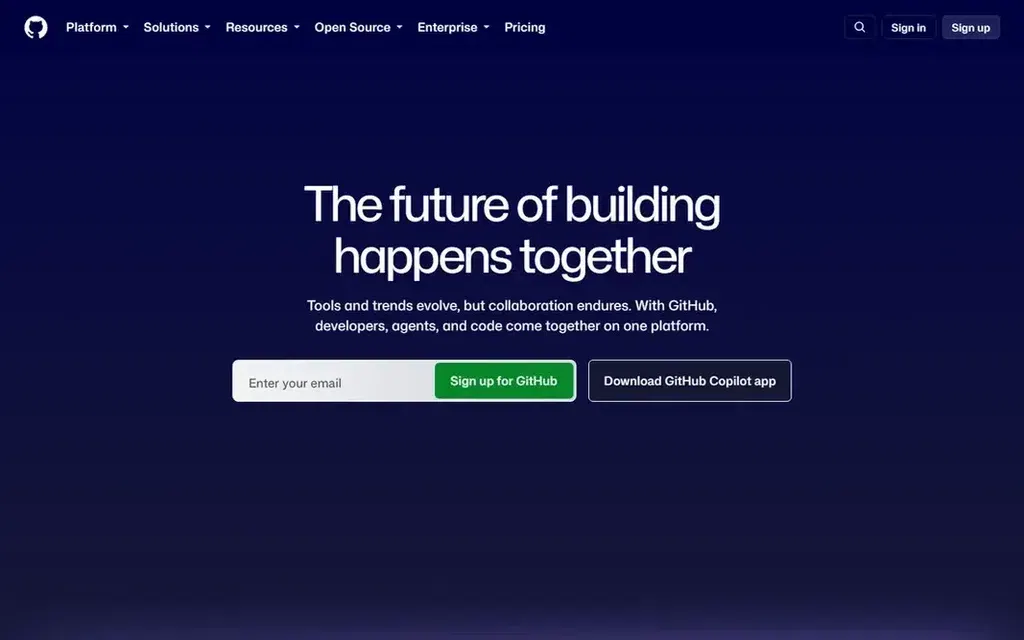
Where GitHub fits: code hosting with built-in automation. Since GitHub is broadly adopted, teams with strict lifecycle governance needs may find they want more bundled controls elsewhere.
It is also not an observability or incident tool, so monitoring and on-call still need dedicated systems. Also, for startups, that means source control, pull requests and workflow automation can live in one familiar place that most new engineers already know. What you pay to start with GitHub: $4 per user per month. A free plan is available with GitHub.
Downsides: Advanced controls spread across settings.
- Solid open source community
- Widely adopted developer system
- Less bundled lifecycle governance than some suites
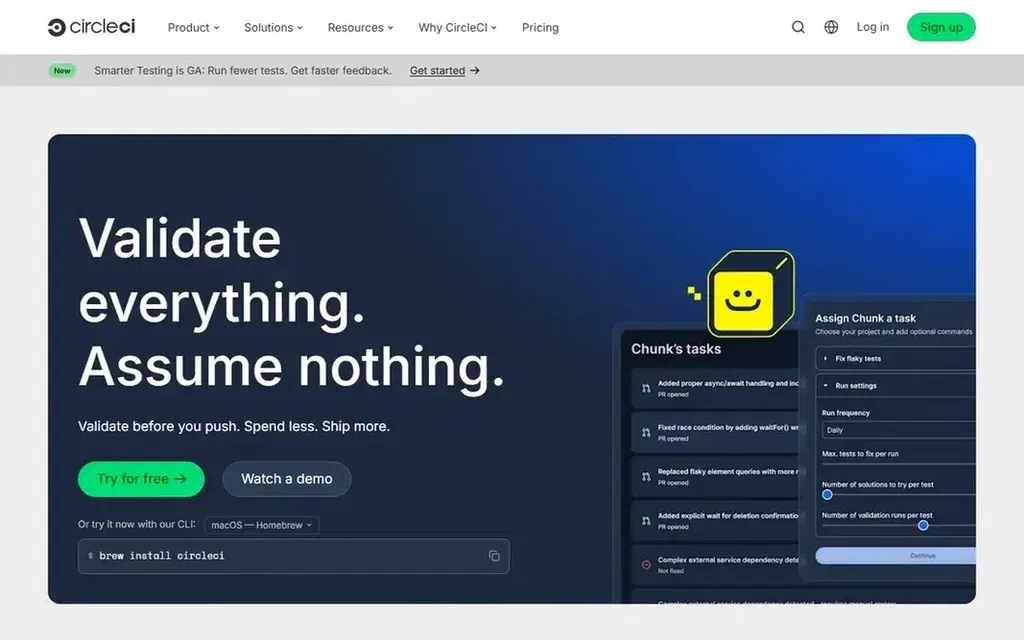
Pick CircleCI if this describes you: automatic validation of every change. CircleCI is not a code host or a monitoring tool, so it performs best alongside other products. If you want everything bundled in one suite, an integrated system may cut the number of moving parts.
The main drawbacks: Narrower scope than full suites.
Where CircleCI stands out: Intelligent automation for testing.
Beyond that, configuration and pipeline maintenance still need engineering time. For everyday use, teams shipping often benefit from a system built around continuous integration instead of one that treats it as a side feature. The starting price for CircleCI: $15 per month. CircleCI includes a free tier.
- Centres on continuous integration
- Production-ready delivery
- Needs pipeline configuration effort
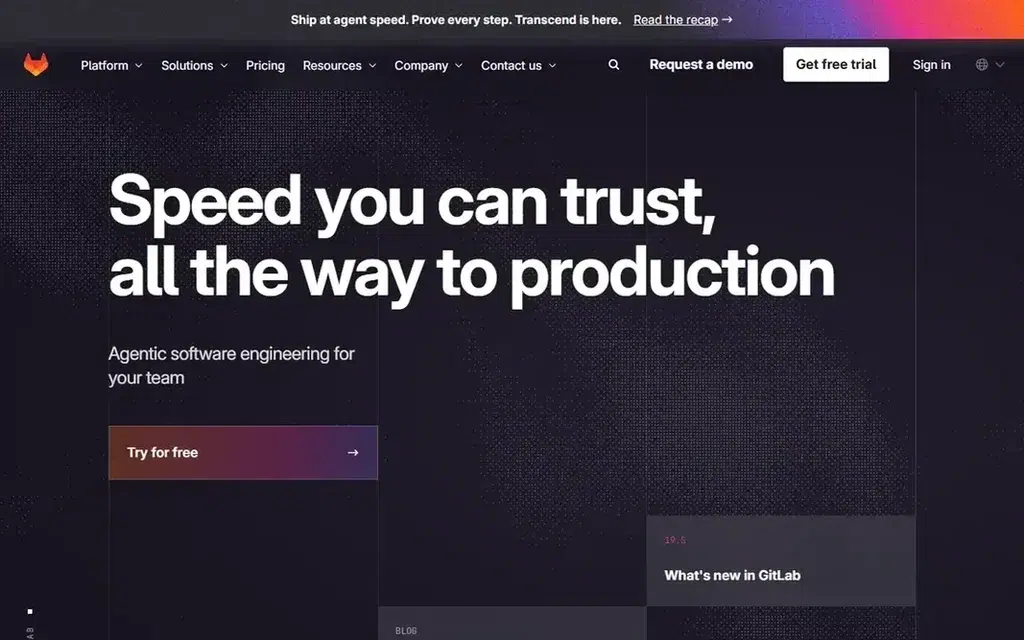
GitLab works best for integrated lifecycle with governance. GitLab presents itself as an intelligent orchestration platform with context and governance for the whole software lifecycle.
Where it is weaker: Wide surface can take time to configure.
For everyday use, consider alternatives when your priority is one narrow capability instead of a full lifecycle suite. GitLab pricing: $15 per user per month. A free plan is available with GitLab.
- Governance and context built in
- Supports teams and agents working together
- Feature depth varies by area
PagerDuty makes the most sense for incident response and on-call. Startups that serve live customers and need reliable alerting can use it to formalize on-call rotations and incident workflows. In daily use, incident platforms rely on monitoring and alerting sources to be useful, so they are seldom a first purchase.
Worth adding: very early teams without on-call responsibilities may not need one yet. Beyond that, consider it once uptime commitments and customer expectations make structured response necessary. The starting price for PagerDuty: $21 per user per month. PagerDuty includes a free tier.
What to check first: Relies on integrations with monitoring tools.
- Aims to prevent repeat issues
- Automates incident detection to resolution
- Only handy once you have on-call needs
How we compared the tools
LinkVetted looked at what each vendor publishes: pricing, plan limits, feature coverage for DevOps platforms for startups and stated drawbacks. No hands-on testing is claimed. Prices and plan limits come from vendor pages and can change, so confirm them on the vendor site before you buy. The order reflects how well each tool fits the most common buying scenario for DevOps platforms for startups, then price clarity, then free plan access. It is a starting point, not a verdict.
What to check before you buy
- Confirm the entry price on the vendor page: GitHub starts at $4 per user per month, but seat counts and billing terms change the total.
- Look at free plan limits closely: GitHub, CircleCI, GitLab and PagerDuty have one, and the caps decide whether it is usable for real work.
- Use real work to test the free trial from Datadog, rather than a demo project.
- Before choosing JFrog Artifactory, weigh its main limit: specialized focus beyond general DevOps.
- Check how data leaves CircleCI: formats, limits and whether exports are available on every plan.
- Check whether the features you need in GitLab sit on the entry plan or only on higher tiers.
FAQ
Can I try these tools before paying?
Often, yes. GitHub, CircleCI, GitLab and PagerDuty have a free plan and Datadog offers a free trial. Use your own data and a real task during the test, and check what the free tier or trial limits before you rely on it.
Is JFrog Artifactory the right pick for everyone comparing DevOps platforms for startups?
No single tool suits every team. JFrog Artifactory comes first because it fits managing artifacts and dependencies, while Datadog suits cloud monitoring in one place and GitHub suits code hosting with built-in automation. Match the tool to your own size, budget and workflow before deciding.
Is an integrated product better than separate point tools?
Separate tools like CircleCI or JFrog Artifactory can go deeper in one area. The right choice relies on whether you value fewer systems or specialized depth.
Which options for DevOps platforms for startups have a free plan?
GitHub, CircleCI, GitLab and PagerDuty offer a free plan in this list. Free plans usually cap users, projects or features, so check the limits on the vendor page. One other tool offers a trial instead.
What is the cheapest option for DevOps platforms for startups in this list?
On published monthly entry prices, GitHub is the lowest here at $4 per user per month. Entry price is only part of the cost, because seats, add-ons and billing terms can change the total. All 6 picks in this DevOps platforms for startups comparison list a starting price, free plan details and the main limits on their cards above.
Sources
- https://jfrog.com/artifactory
- https://www.datadoghq.com
- https://github.com
- https://circleci.com
- https://gitlab.com
- https://www.pagerduty.com