Data De-Identification Tools for Remote Teams in 2026: The 6 Best Options Side by Side
Weighing the best data De-Identification tools for remote teams? We lined up 6 products by cost, free access and fit. Short verdicts, no fluff. No hype.
- Editor's choice
 Tonic.ai
Synthetic data for development and testing
Starts at$29 a monthVisit tonic.aiFull review - Great alternative
 Delphix
Compliant data delivery and automation
Starts atSee websiteVisit delphix.comFull review - Also consider
 IBM InfoSphere Optim
Enterprise data management and masking
Starts atSee websiteVisit ibm.comFull review
Direct answer
For synthetic data for development and testing, Tonic.ai is where this list starts. Listed starting prices: Tonic.ai from $29 a month. Delphix is the stronger choice for compliant data delivery and automation, while IBM InfoSphere Optim suits enterprise data management and masking. The other 3 tools in the list cover narrower or pricier cases.
TL;DR:
- Tonic.ai sits first on this list: synthetic data for development and testing.
- Informatica Data Privacy Management fits policy-driven privacy and access governance.
- The cheapest monthly starting price in the list is $29 per month, offered by Tonic.ai.
- Before buying Tonic.ai, weigh this: centred on synthetic data.
Last checked November 2026. Prices and plan details were read from the vendors' own pages in November 2026; vendors change plans often, so confirm the current price on the vendor site before you buy.
Quick comparison
| Tool | Best for | Starts at | Free plan? | |
|---|---|---|---|---|
| Tonic.ai | Synthetic data for development and testing | $29 a month | Yes | Visit |
| Delphix | Compliant data delivery and automation | See website | Not stated | Visit |
| IBM InfoSphere Optim | Enterprise data management and masking | See website | Not stated | Visit |
 Collibra | Enterprise AI governance and control | See website | Not stated | Visit |
| Privitar | Privacy engineering and data protection | See website | Not stated | Visit |
| Informatica Data Privacy Management | Policy-driven privacy and access governance | See website | Not stated | Visit |
The 6 tools in detail
Short on time? The summary and table above give the quick view of 6 data De-Identification tools for remote teams, and the profiles that follow give the detail behind each entry.
Tonic.ai is built with synthetic data for development and testing in mind. It produces realistic, production-like test data that preserves privacy and compliance in complicated environments.
Limits to weigh: Centred on synthetic data.
As for the details, Tonic.ai concentrates on synthetic data, so teams needing in-place masking of existing datasets may need complementary tools. Entry price for Tonic.ai: $29 per month. A free plan is available with Tonic.ai.
- Supports complicated environments
- Preserves privacy
- May need setup for source connections
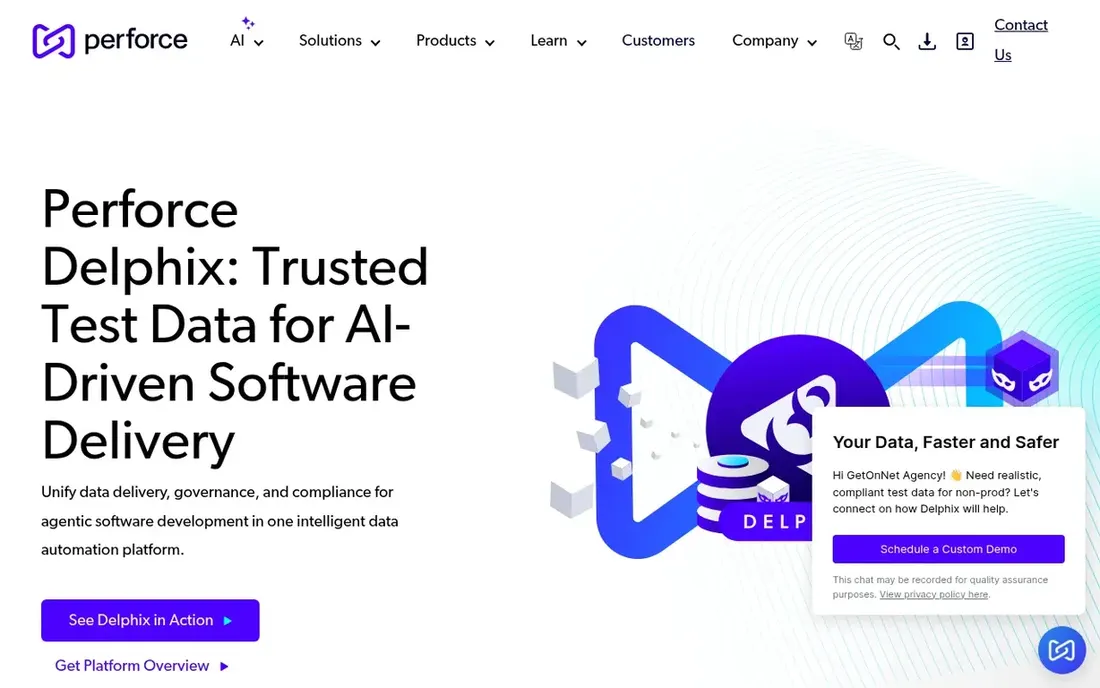
Delphix is aimed squarely at compliant data delivery and automation. Choose it when data delivery speed and compliance are both priorities for distributed teams. In daily use, Delphix is a platform-level option, so teams may have to adjust workflows and infrastructure to adopt it.
It may be more than needed for straightforward masking tasks. It provides quick, compliant, AI-ready data anywhere, which can help remote teams provision de-identified data copies for development and analytics. Delphix shows no starting price here, so confirm the cost on the vendor site. Free options: Not stated.
Points against: Platform-oriented approach.
- Brings together data delivery and governance
- Supports compliance
- May need infrastructure changes
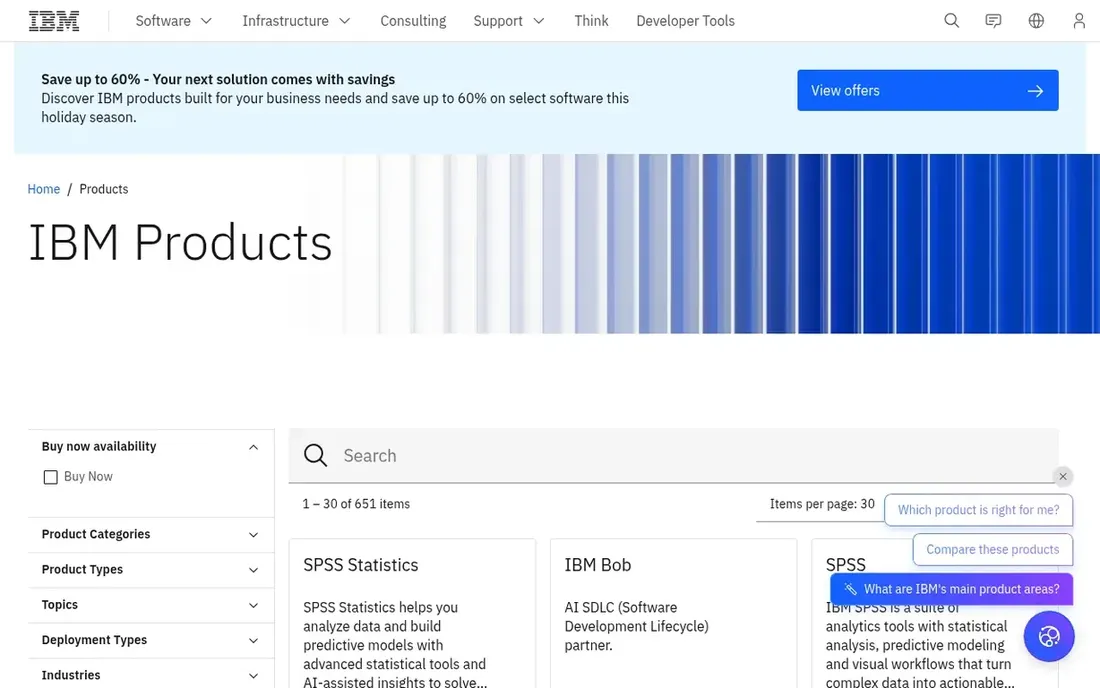
IBM InfoSphere Optim makes the most sense for enterprise data management and masking. It may not be the first choice for teams wanting a fast, self-service de-identification utility.
Check the vendor site for IBM InfoSphere Optim pricing; none is listed in this comparison. Trial and free access: Not stated.
Downsides: Needs IBM ecosystem familiarity.
- Part of IBM portfolio
- Integrated data management
- Complicated setup
Collibra targets enterprise AI governance and control. Collibra is an enterprise AI control plane built over years of ontology engineering.
Trade-offs to know: Wide governance focus.
More specifically, Collibra is a governance system instead of a dedicated de-identification tool, so it may not perform masking itself. Check the vendor site for Collibra pricing; none is listed in this comparison. Trial and free access: Not stated.
- Control plane for AI
- Ontology-based approach
- May be complicated for small teams
Privitar
Best for: Privacy engineering and data protection
Privitar is designed for Privacy engineering and data protection. Public information about Privitar is now tied to Informatica's broader system, so teams should confirm current capabilities with the vendor.
As for the details, remote teams can apply privacy rules consistently across distributed data workflows. Pricing for Privitar is not stated here, so ask the vendor for current figures. As for free access: Not stated.
Watch-outs: May need Informatica ecosystem.
- Part of Informatica offering
- Supports policy-based de-identification
- Restricted public homepage detail
Informatica Data Privacy Management
Best for: Policy-driven privacy and access governance
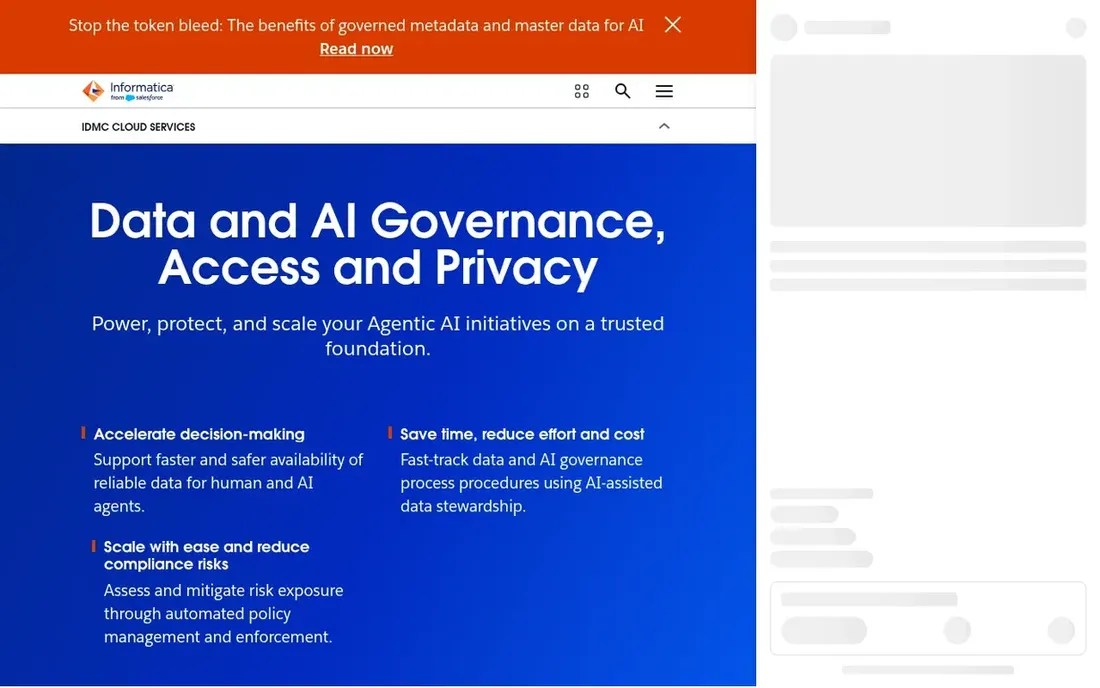
Where Informatica Data Privacy Management fits: policy-driven privacy and access governance. The system is part of a broader data governance suite, so adoption may involve coordination with existing Informatica investments. Informatica Data Privacy Management is a governance option that helps organizations govern data and AI assets with automatic policy management, access controls, and privacy enforcement.
Drawbacks to consider: May need integration effort.
It is made for teams that need to apply consistent privacy rules across systems and support compliance outcomes. Teams seeking a light, standalone de-identification tool might find it more full than needed. Check the vendor site for Informatica Data Privacy Management pricing; none is listed in this comparison. Trial and free access: Not stated.
- Automatic policy management
- AI-powered governance
- Wide product focus
Our selection method
For each of the 6 tools we noted price, free plan or trial, fit for data De-Identification tools for remote teams and the main limit, using vendor pages and documentation. Prices and plan limits come from vendor pages and can change, so confirm them on the vendor site before you buy. The sequence is a judgement call: typical use case first, then pricing transparency, then free access. Use the profiles to check fit.
Things to verify first
- Confirm the entry price on the vendor page. For Delphix, IBM InfoSphere Optim, Collibra and others that means a quote rather than a fixed price.
- Test the free plan from Tonic.ai against your real workload before relying on it.
- Read the limits listed for Tonic.ai first: centred on synthetic data.
- Confirm that Privitar connects to the apps your team already uses, on the plan you would actually buy.
- Involve the people who will use Delphix daily; a short pilot beats a long feature checklist.
FAQ
How does synthetic data help with de-identification?
Synthetic data tools like Tonic.ai create realistic but artificial records that preserve privacy. This lets remote teams test and develop without exposing real sensitive data, reducing compliance risk whereas maintaining data utility.
Is Tonic.ai the right pick for everyone comparing data De-Identification tools for remote teams?
No single tool suits every team. Tonic.ai comes first because it fits synthetic data for development and testing, while Delphix suits compliant data delivery and automation and IBM InfoSphere Optim suits enterprise data management and masking. Match the tool to your own size, budget and workflow before deciding.
What should remote teams look for in a data de-identification tool?
Remote teams should prioritize tools that enforce consistent policies across locations, support the data types they use, and connect with their collaboration and cloud products. Access control and audit features are also important for compliance.
What is the cheapest option for data De-Identification tools for remote teams in this list?
On published monthly entry prices, Tonic.ai is the lowest here at $29 per month. Entry price is only part of the cost, because seats, add-ons and billing terms can change the total. For the full picture, the cards above cover all 6 entries of this data De-Identification tools for remote teams list, including price, free plan and limits.
How are the tools for data De-Identification tools for remote teams ordered?
The order follows typical fit for data De-Identification tools for remote teams, with Tonic.ai first and Informatica Data Privacy Management last, then price clarity and free access. It is editorial judgement, not a score, so another team could rank the tools differently.
Which options for data De-Identification tools for remote teams have a free plan?
Tonic.ai is the only tool in this list with a free plan. Free plans usually cap users, projects or features, so check the limits on the vendor page.
Sources
- https://www.tonic.ai
- https://www.delphix.com
- https://www.ibm.com/products/optim-data-management
- https://www.collibra.com
- https://www.privitar.com
- https://www.informatica.com/products/data-security/data-privacy-management.html