Comparing 8 Customer Data Platforms Cdp Tools in 2026
Weighing the best customer data platforms cdp? We lined up 8 products by cost, free access and fit. Each listing flags where it falls short. Clear verdicts.
- Editor's choice
 Adobe Real-Time CDP
Enterprises invested in the Adobe Experience Cloud
Starts atCustomVisit adobe.comFull review - Great alternative
 BlueConic
Marketing-led teams that require segmentation without engineering tickets
Starts atCustomVisit blueconic.comFull review - Also consider
 Twilio Segment
Engineering-led teams that want clean tracking plans and quick integrations
Starts atFree tier; Team from $120/monthVisit segment.comFull review
Direct answer
Adobe Real-Time CDP is the first pick on this list for enterprises invested in the Adobe Experience Cloud. BlueConic is the stronger choice for marketing-led teams that require segmentation without engineering tickets, while Twilio Segment suits engineering-led teams that want clean tracking plans and quick integrations. The full list of 8 tools follows, with prices and free plan facts.
TL;DR:
- Adobe Real-Time CDP takes the first slot, best suited to enterprises invested in the Adobe Experience Cloud.
- Amperity is the one to check for retail and hospitality brands obsessed with identity resolution.
- A free plan is available from 2 of the 8 tools: Twilio Segment, RudderStack.
- A fair warning about BlueConic: custom pricing roughly $50,000 to $200,000 a year.
- For Adobe Real-Time CDP, BlueConic, Lytics and others, you have to request a quote because no starting price is shown.
Quick comparison
| Tool | Best for | Starts at | Free plan? | |
|---|---|---|---|---|
| Adobe Real-Time CDP | Enterprises invested in the Adobe Experience Cloud | Custom | No | Visit |
| BlueConic | Marketing-led teams that require segmentation without engineering tickets | Custom | No | Visit |
| Twilio Segment | Engineering-led teams that want clean tracking plans and quick integrations | Free tier; Team from $120/month | Yes | Visit |
 Lytics | Mid-market teams that want AI-driven segmentation without enterprise overhead | Custom | No | Visit |
 Hightouch | Teams with a data warehouse that want activation without another data store | See website | Free trial | Visit |
 RudderStack | Teams that want open-source CDP infrastructure under their own control | See website | Yes | Visit |
 Treasure Data | Enterprises running AI and machine learning on customer data | Custom | No | Visit |
 Amperity | Retail and hospitality brands obsessed with identity resolution | Custom | No | Visit |
The full customer data platforms cdp list
LinkVetted compared 8 tools for customer data platforms cdp. The goal is a practical shortlist: published prices, free plan facts, best-fit use cases and honest limits for every entry.

Pick Adobe Real-Time CDP if this describes you: enterprises invested in the Adobe Experience Cloud. Adobe Real-Time CDP serves the Adobe-committed enterprise the way Data Cloud serves Salesforce shops. As for the details, as with all ecosystem CDPs, the value concentrates inside the stack.
Profiles update in live and activate at the edge into Adobe Target, Journey Optimizer and premium media, with separate editions tuned for B2C and B2B motions. More specifically, for firms running Adobe Analytics and Campaign, the unified data story is compelling. Adobe Real-Time CDP does not show a fixed starting price, so you request a quote. There is no free plan with Adobe Real-Time CDP.
What users get: targeting and journey tools.
Downsides: Adobe-stack dependency for full value.
- Solid B2B and B2C editions
- Enterprise governance
- Implementation complexity is significant
BlueConic
Best for: Marketing-led teams that require segmentation without engineering tickets
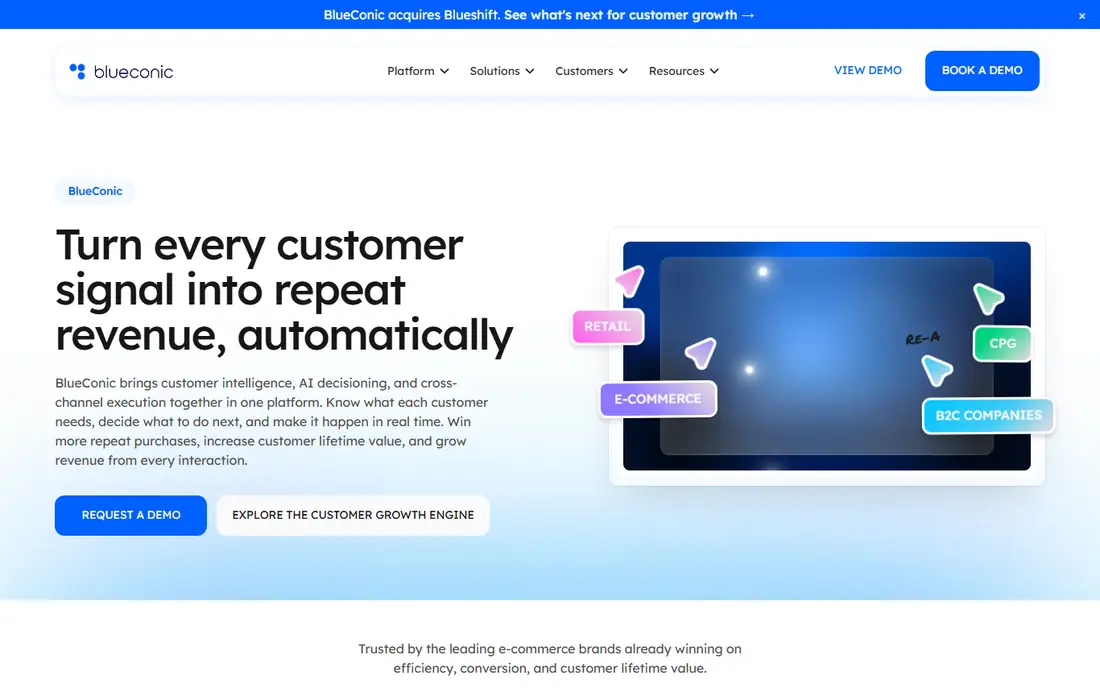
In short, BlueConic is for marketing-led teams that require segmentation without engineering tickets. The system trades some developer adaptability and heavy-duty data science for usability, which is the right trade for marketing-led buyers and the wrong one for engineering-led ones.
Drawbacks to consider: Less developer extensibility than Segment.
BlueConic's pitch is ownership: marketers build segments, orchestrate experiences and activate channels without filing engineering requests. On top of that, pricing is custom and firmly mid-market to enterprise. BlueConic does not show a fixed starting price, so you request a quote. There is no free plan with BlueConic.
- Behavioral data collection without heavy IT
- No-code segmentation and activation
- Custom pricing roughly $50,000 to $200,000 a year
Twilio Segment
Best for: Engineering-led teams that want clean tracking plans and quick integrations
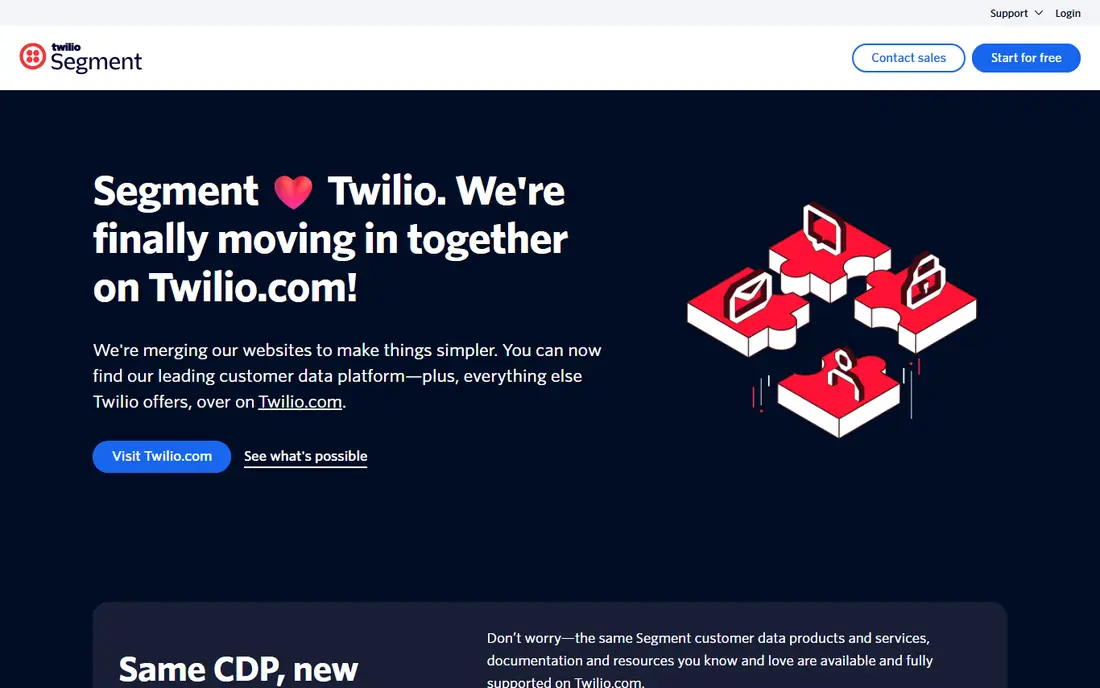
Twilio Segment targets engineering-led teams that want clean tracking plans and quick integrations. Segment is the developer's CDP. One API collects events from every source, Protocols validates them against the tracking plan, and hundreds of destinations receive clean, consistent data.
Strengths: 400+ pre-built integrations.
What to check first: Marketer self-service is thinner than BlueConic.
Engineering teams adopt it since it replaces a tangle of point-to-point integrations with one governed pipeline. The free level handling 1,000 monthly tracked users means teams can prove value before finance gets involved. In daily use, the Team plan starts around $120 a month, but that figure is a floor: event-volume pricing means high-traffic properties pay significantly more, and enterprises should negotiate volume commitments and overage caps at the start. Entry price for Twilio Segment: Free tier. Twilio Segment includes a free tier.
- API-first architecture developers trust
- Protocols enforces tracking-plan discipline
- Costs scale steeply with event volume
Lytics
Best for: Mid-market teams that want AI-driven segmentation without enterprise overhead
Lytics is designed for mid-market teams that want AI-driven segmentation without enterprise overhead. Lytics targets the mid-market gap between free-tier collectors and six-figure enterprise systems. Its CDP merges profile unification with AI-driven recommendations and behavioral scoring, so smaller marketing teams get personalization features that normally need a data science group.
Upsides: AI content and product recommendations built in.
Honest limits: Enterprise scale stories are thinner.
On top of that, implementation is lighter than the enterprise alternatives. Pricing is custom. For mid-size businesses that want intelligent segmentation without hiring a data team or signing an enterprise contract, it deserves a place on the shortlist. There is no fixed entry price for Lytics; pricing comes through a quote. Lytics has no permanent free option.
- Behavioral scoring from day one
- Decent integration set
- Custom pricing with less transparency
Hightouch
Best for: Teams with a data warehouse that want activation without another data store
Hightouch is built with teams with a data warehouse that want activation without another data store in mind. For businesses that already invested in Snowflake, BigQuery or Databricks, it avoids paying to store the same data twice.
Points against: Newest architecture means fewer long-tenured references.
Hightouch does not show a starting price in this comparison, so check the vendor site for current pricing. Free plan details: Free trial.
- Quick syncs to 200+ destinations
- Warehouse-native approach avoids duplicating data
- Needs a functioning warehouse first
RudderStack
Best for: Teams that want open-source CDP infrastructure under their own control
RudderStack is a good fit for teams that want open-source CDP infrastructure under their own control. RudderStack is the open-source answer to Segment: event collection, transformation and routing that teams can self-host, keeping raw customer data inside their own infrastructure.
Highlights: Open source with full data control.
premium cloud levels add managed infrastructure and features. RudderStack shows no starting price here, so confirm the cost on the vendor site. RudderStack includes a free tier. Limits to weigh: Marketer UI trails commercial CDPs.
- Developer-friendly and extensible
- Warehouse-first architecture
- Enterprise features need the premium cloud levels
Treasure Data
Best for: Enterprises running AI and machine learning on customer data
Pick Treasure Data if this describes you: enterprises running AI and machine learning on customer data. Treasure Data is the CDP for firms where the data team, not the marketing team, drives the purchase. Beyond that, enterprises with serious data science ambitions pick it over marketer-friendly alternatives.
What to check first: Needs data engineering and data science skills.
Where it shines: 400+ connectors. That power demands skills: implementation is a data engineering project, not a marketing signup, and pricing is custom at enterprise levels. In practice, firms whose CDP use case is really "sync segments to ad systems" will find it heavy. There is no fixed entry price for Treasure Data; pricing comes through a quote. No free plan comes with Treasure Data.
- Manages massive data volumes with ML tooling built in
- Capable in regulated and data-heavy industries
- Enterprise pricing and sales motion
Amperity
Best for: Retail and hospitality brands obsessed with identity resolution
Amperity is aimed squarely at retail and hospitality brands obsessed with identity resolution. Amperity built its reputation on one hard problem: stitching together the fragmented identities of retail and hospitality customers across POS, e-commerce, loyalty and marketing systems. Its machine-learning identity resolution deals with the duplicates, householding and sparse identifiers that break more straightforward CDPs, which is why multi-brand retailers and hotel groups standardize on it.
Limits to weigh: Implementation needs data cleanup first.
Activation into email, advertising and personalization follows from the unified profile. Pricing is custom and enterprise, and buyers should know that no CDP fixes dirty source data: cleaning duplicates and standardizing formats at the source remains prerequisite work. Amperity sells by quote instead of a published price. Amperity has no free plan. Where it shines: Decent activation into marketing channels.
- Travel and multi-brand retail
- High customer ratings
- Custom enterprise pricing
More on customer data platforms cdp
Every personalization feature a company buys later inherits the limits of its customer data foundation. In daily use, a customer data platform brings together fragmented profiles from websites, apps, keeps and support into one record, resolves identities across devices, and activates audiences into marketing tools. Get it wrong and every downstream AI feature works on partial, duplicated or stale data.
Beyond that, the category now splits four ways: developer-first collectors, marketer-owned segmentation tools, enterprise compliance engines, and warehouse-native activators that skip storing data altogether.
How we built this list
We compared the tools on published pricing, free plan or trial availability, feature coverage for customer data platforms cdp, and the limits each vendor documents. Seat minimums, billing terms and add-ons can move the real cost, so the starting prices here are a guide and not a quote. The ranking is editorial: typical fit first, then clear pricing, then free access. If your needs are unusual, read the profiles rather than relying on position.
A buyer's checklist
- Get a written quote from Adobe Real-Time CDP, BlueConic, Lytics and others; the list shows no starting price for them.
- Look at free plan limits closely: Twilio Segment and RudderStack have one, and the caps decide whether it is usable for real work.
- Use real work to test the free trial from Hightouch, rather than a demo project.
- Read the limits listed for Adobe Real-Time CDP first: custom enterprise pricing.
- List the apps you already depend on and check that Adobe Real-Time CDP supports each one on the plan you would buy.
- Get the contract term, renewal terms and any onboarding fees from BlueConic in writing.
FAQ
Is Adobe Real-Time CDP the right pick for everyone comparing customer data platforms cdp?
No single tool suits every team. Adobe Real-Time CDP comes first because it fits enterprises invested in the Adobe Experience Cloud, while BlueConic suits marketing-led teams that need segmentation without engineering tickets and Twilio Segment suits engineering-led teams that want clean tracking plans and fast integrations. Match the tool to your own size, budget and workflow before deciding.
Which options for customer data platforms cdp have a free plan?
On this list, Twilio Segment and RudderStack include a free plan. Caps on seats, usage or features are common, so test the free plan against your real workload. One other tool offers a trial instead.
Can I try these tools before paying?
Often, yes. Twilio Segment and RudderStack have a free plan and Hightouch offers a free trial. Use your own data and a real task during the test, and check what the free tier or trial limits before you rely on it.
Do these tools publish their prices?
Not all of them. Adobe Real-Time CDP, BlueConic, Lytics and others publish no starting price, so expect a quote request for those. The rest, Twilio Segment included, show a starting price, though seats and billing terms still change the final cost.