Choosing Data De-Identification Tools for Enterprise in 2026: 6 Options Compared
Best data De-Identification tools for enterprise in 2026: 6 contenders with entry costs and free tiers. Limits and pricing notes included. Skim the table first.
- Editor's choice
 Tonic.ai
Realistic synthetic test data
Starts at$29 a monthVisit tonic.aiFull review - Great alternative
 Immuta
Authorization and access control for data
Starts atSee websiteVisit immuta.comFull review - Also consider
 Collibra
Governance context around de-identification
Starts atSee websiteVisit collibra.comFull review
Direct answer
Start with Tonic.ai if you need realistic synthetic test data. Listed starting prices: Tonic.ai from $29 a month. Immuta fits authorization and access control for data; Collibra fits governance context around de-identification. All 6 tools are compared below on price, free plan and limits.
TL;DR:
- The list opens with Tonic.ai, aimed at realistic synthetic test data.
- Before buying Collibra, weigh this: governance system, not a masking engine.
- The cheapest monthly starting price in the list is $29 per month, offered by Tonic.ai.
- For Privacy engineering within Informatica portfolio, Privitar is worth a look.
Last checked November 2026. Prices and plan details were read from the vendors' own pages in November 2026; vendors change plans often, so confirm the current price on the vendor site before you buy.
Quick comparison
| Tool | Best for | Starts at | Free plan? | |
|---|---|---|---|---|
| Tonic.ai | Realistic synthetic test data | $29 a month | Yes | Visit |
| Immuta | Authorization and access control for data | See website | Not stated | Visit |
| Collibra | Governance context around de-identification | See website | Not stated | Visit |
| Informatica Data Privacy Management | Governance-linked de-identification at scale | See website | Not stated | Visit |
 IBM InfoSphere Optim | Masking across established enterprise data estates | See website | Free trial | Visit |
| Privitar | Privacy engineering within Informatica portfolio | See website | Not stated | Visit |
The best data De-Identification tools for enterprise
Choosing data De-Identification tools for enterprise usually comes down to price, fit and limits. This LinkVetted guide sets 6 tools side by side on those three points, with the facts kept short and checkable.
Tonic.ai works best for realistic synthetic test data. Tonic.ai centres on synthetic data for software and AI development, generating realistic, production-like test data that preserves privacy and compliance.
It suits engineering and QA teams that require de-identified datasets with the structure and relationships of production without exposing sensitive records, especially in complicated environments with numerous dependent systems. Tonic.ai pricing: $29 per month. Tonic.ai offers a free plan.
The main drawbacks: Centred on synthetic data instead of wide governance.
- Meant to preserve privacy and compliance
- Geared toward development and testing workflows
- Complicated environments may need integration planning
Where Immuta fits: authorization and access control for data. Organizations looking for data transformation alone should choose a dedicated de-identification product.
As for the details, Immuta describes itself as the authorization layer for data access, where one set of rules decides every request for every human and every agent. Immuta governs access instead of transforming data itself, so it complements instead of replaces masking or synthetic data tools. Pricing for Immuta is not stated here, so ask the vendor for current figures. As for free access: Not stated.
The main drawbacks: Not a standalone masking engine.
- Complements de-identification with access policy
- Central rule set for data access decisions
- Needs integration with data systems
Collibra is built with governance context around de-identification in mind. Collibra presents itself as an enterprise AI control plane built on ontology engineering, governing context and control across data, models and agents.
Beyond that, Collibra does not itself perform masking or synthetic data generation, so it needs to be paired with execution tools. Also, in a de-identification program, it supplies the catalog, policy and stewardship layer that tells you where sensitive data lives and how it should be handled. Collibra does not show a starting price in this comparison, so check the vendor site for current pricing. As for free access: Not stated.
Drawbacks to consider: not a masking engine.
- Positions context and control across models and agents
- Supports enterprise-wide policy coordination
- Governance product
Informatica Data Privacy Management
Best for: Governance-linked de-identification at scale
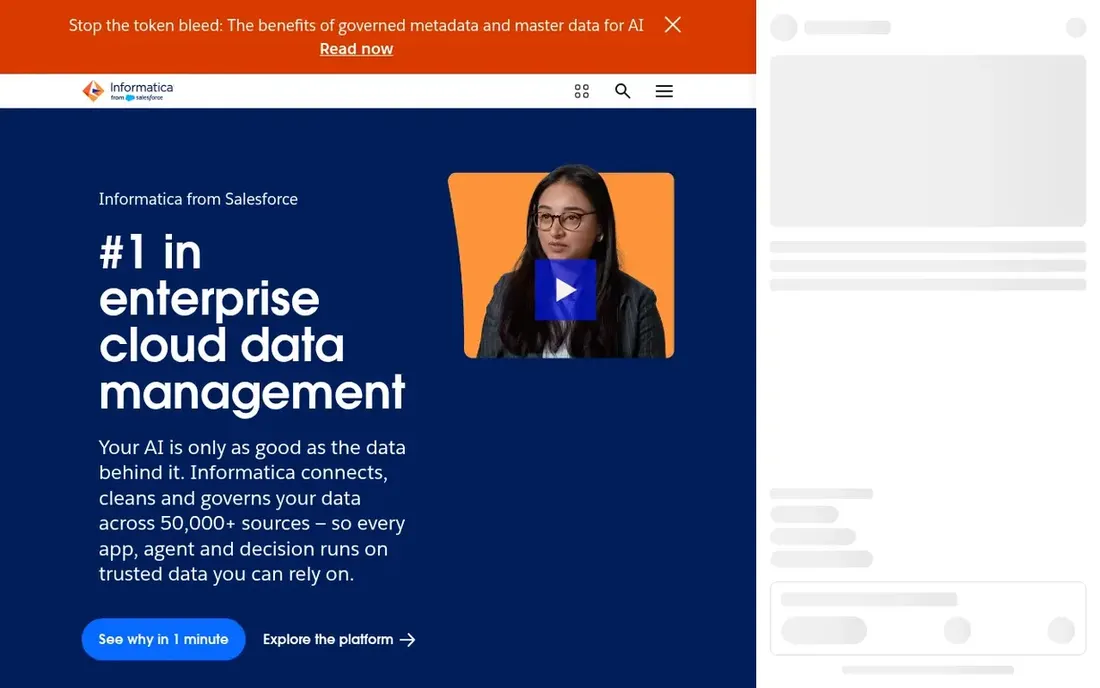
Choose Informatica Data Privacy Management for governance-linked de-identification at scale. Informatica Data Privacy Management is a privacy and masking offering within Informatica's enterprise cloud data management system, now part of Salesforce.
It is targeted at organizations that want de-identification, policy enforcement and metadata management to sit in one governed environment instead of in separate point tools. On top of that, the system's breadth is also its primary constraint: adoption usually involves planning across multiple modules and roles, which can slow time to value for narrow masking needs. Informatica Data Privacy Management does not show a starting price in this comparison, so check the vendor site for current pricing. On free options: Not stated.
The main drawbacks: Overlap with other Informatica modules to plan for.
- Suits within a wide cloud data management system
- Backed by Salesforce-owned data management portfolio
- Wide system can need significant setup
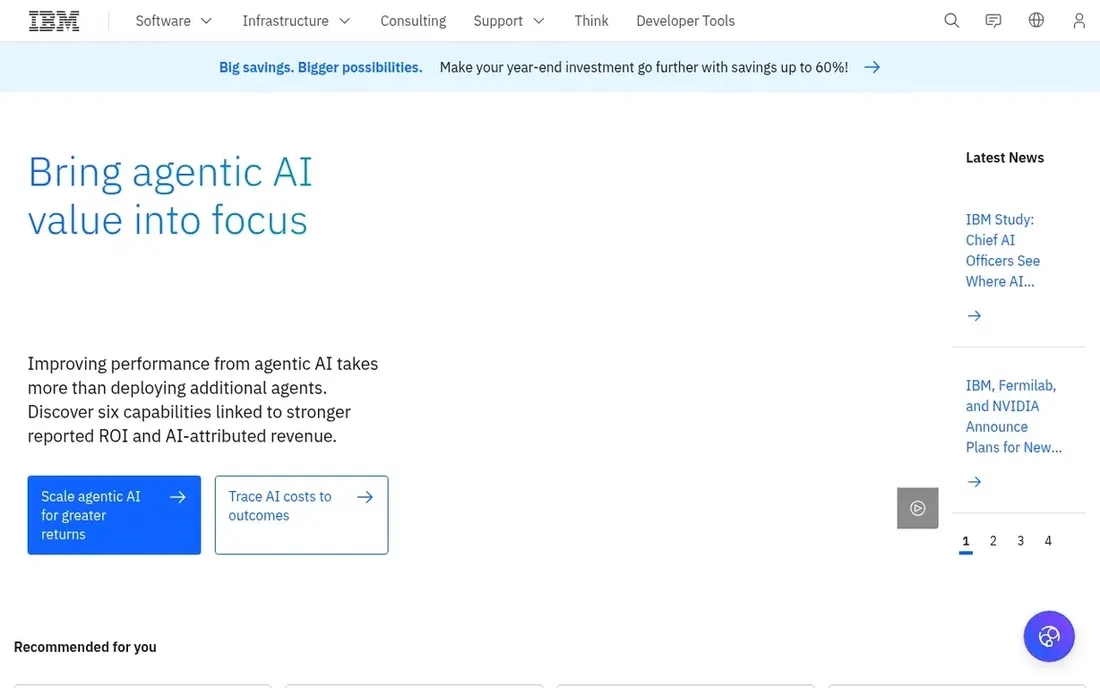
In short, IBM InfoSphere Optim is for masking across established enterprise data estates. It fits established enterprises with heterogeneous estates that require de-identification handled close to where sensitive production data already lives.
Worth adding: organizations without that footprint may prefer a standalone de-identification or synthetic data tool. IBM InfoSphere Optim does not show a starting price in this comparison, so check the vendor site for current pricing. On free options: Free trial.
Honest limits: Can be complicated to configure.
- Supports masking and data lifecycle tasks
- Suits hybrid cloud and mainframe environments
- Licensing tied to a wide IBM portfolio
Privitar
Best for: Privacy engineering within Informatica portfolio
Privitar was built for Privacy engineering within Informatica portfolio. Privitar is a data privacy technology that is now presented within Informatica's system following its acquisition. It is usually associated with policy-driven de-identification, pseudonymization and privacy engineering for analytics and data sharing.
Watch-outs: Needs governance maturity to use well.
From a buyer's view, teams seeking a standalone, narrowly scoped masking tool may find a lighter choice more appropriate. From a buyer's view, the move into the Informatica portfolio means buyers should confirm current packaging and integration details straight with the vendor. Privitar does not show a starting price in this comparison, so check the vendor site for current pricing. Free plan details: Not stated.
- Suited to policy-driven de-identification
- Now aligned with Informatica's data management product
- Portfolio transition may affect roadmap planning
How these tools were picked
For each of the 6 tools we noted price, free plan or trial, fit for data De-Identification tools for enterprise and the main limit, using vendor pages and documentation. Where a vendor does not publish a price, the entry says quote. Where a price depends on seats or billing term, the entry says so. We ordered the tools by general fit, then by how clearly pricing is shown, then by free access. A buyer with unusual needs may reorder them.
A buyer's checklist
- Confirm the entry price on the vendor page. For Immuta, Collibra, Informatica Data Privacy Management and others that means a quote rather than a fixed price.
- Test the free plan from Tonic.ai against your real workload before relying on it.
- Use real work to test the free trial from IBM InfoSphere Optim, rather than a demo project.
- Before choosing Tonic.ai, weigh its main limit: centred on synthetic data instead of wide governance.
- Before rolling out Privitar, verify the integrations your workflow depends on.
- Check whether Informatica Data Privacy Management bills monthly or annually, and what cancelling early costs.
FAQ
Do these tools publish their prices?
Not all of them. Immuta, Collibra, Informatica Data Privacy Management and others publish no starting price, so expect a quote request for those. The rest, Tonic.ai included, show a starting price, though seats and billing terms still change the final cost.
Do I need a governance system plus a de-identification tool?
De-identification tools transform or restrict data, but governance products for example Collibra or Informatica help track where sensitive data lives and which policies apply. Pairing them hands both execution and oversight.
What is the cheapest option for data De-Identification tools for enterprise in this list?
On published monthly entry prices, Tonic.ai is the lowest here at $29 per month. Entry price is only part of the cost, because seats, add-ons and billing terms can change the total.
Is Tonic.ai the right pick for everyone comparing data De-Identification tools for enterprise?
No single tool suits every team. Tonic.ai comes first because it fits realistic synthetic test data, while Immuta suits authorization and access control for data and Collibra suits governance context around de-identification. Match the tool to your own size, budget and workflow before deciding.
Can I try these tools before paying?
Often, yes. Tonic.ai has a free plan and IBM InfoSphere Optim offers a free trial. Use your own data and a real task during the test, and check what the free tier or trial limits before you rely on it.
Sources
- https://www.tonic.ai
- https://www.immuta.com
- https://www.collibra.com
- https://www.informatica.com
- https://www.ibm.com
- https://www.privitar.com