Choosing Cloud Infrastructure Monitoring Software for Remote Teams in 2026: 5 Options Compared
Best cloud infrastructure monitoring software for remote teams in 2026: 5 contenders with entry costs and free tiers. Strengths and weak spots are spelled out.
- Editor's choiceSolarWinds Observability
Straightforward hybrid IT observability
Starts at$2 per node a monthVisit solarwinds.comFull review - Great alternative
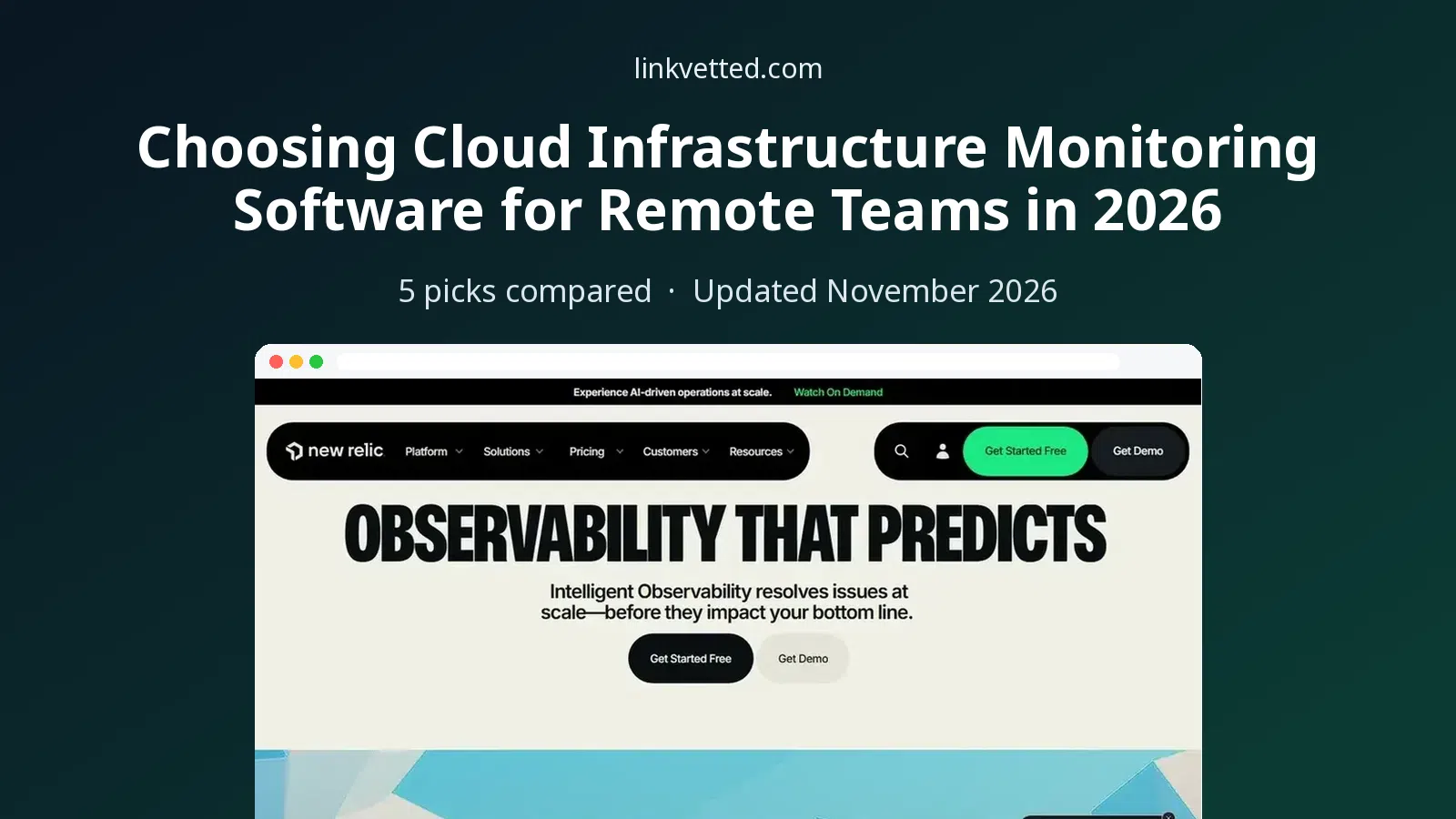
 New Relic
AI-assisted root cause analysis
Starts at$10 per user a monthVisit newrelic.comFull review - Also consider
 Datadog
Unified metrics across apps and services
Starts at$8 per committer a monthVisit datadoghq.comFull review
Direct answer
For straightforward hybrid IT observability, SolarWinds Observability is where this list starts. Listed starting prices: SolarWinds Observability from $2 per node a month, New Relic from $10 per user a month and Datadog from $8 per committer a month. For a different need, New Relic covers AI-assisted root cause analysis and Datadog covers unified metrics across apps and services. All 5 tools are compared below on price, free plan and limits.
TL;DR:
- This list starts with SolarWinds Observability, which is built for straightforward hybrid IT observability.
- LogicMonitor is the one to check for autonomous IT for complicated systems.
- The main caution on Datadog: numerous capabilities can mean a complicated setup.
- SolarWinds Observability is the lowest-priced starter here at $2 per node per month.
Last checked November 2026. Prices and plan details were read from the vendors' own pages in November 2026; vendors change plans often, so confirm the current price on the vendor site before you buy.
Quick comparison
| Tool | Best for | Starts at | Free plan? | |
|---|---|---|---|---|
| SolarWinds Observability | Straightforward hybrid IT observability | $2 per node a month | Free trial | Visit |
| New Relic | AI-assisted root cause analysis | $10 per user a month | Yes | Visit |
| Datadog | Unified metrics across apps and services | $8 per committer a month | Free trial | Visit |
 PagerDuty | Incident response and on-call automation | $21 per user a month | Yes | Visit |
 LogicMonitor | Autonomous IT for complicated systems | See website | Not stated | Visit |
Cloud Infrastructure Monitoring Software for Remote Teams, one by one
Choosing cloud infrastructure monitoring software for remote teams usually comes down to price, fit and limits. This LinkVetted guide sets 5 tools side by side on those three points, with the facts kept short and checkable.
SolarWinds Observability
Best for: Straightforward hybrid IT observability
SolarWinds Observability is designed for straightforward hybrid IT observability. Remote teams running a mix of on-premises and cloud infrastructure may appreciate a product that speaks to hybrid estates instead of assuming everything is cloud-native.
Strengths: capable and secure.
Trade-offs to know: Feature emphasis differs from pure cloud monitoring tools.
What you pay to start with SolarWinds Observability: $2 per node per month. Trial and free access: Free trial.
- Bundles database and service management reach
- Spans hybrid IT observability and management
- Hybrid IT focus may suit traditional estates more than cloud-native ones
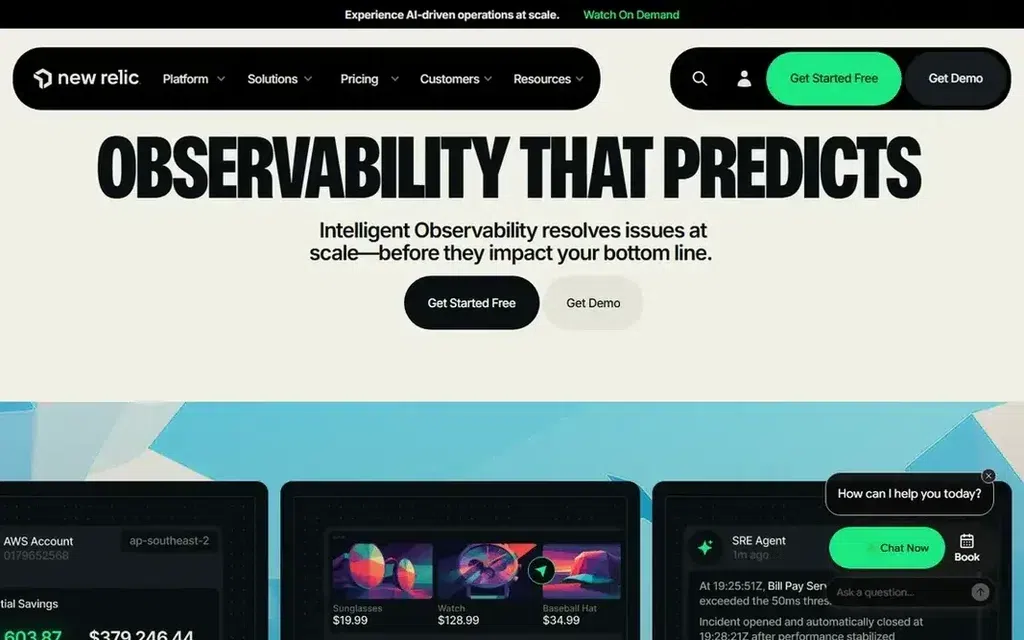
New Relic is built with AI-assisted root cause analysis in mind. New Relic describes itself as an AI-powered observability system that correlates telemetry across your whole stack so you can isolate root cause and cut MTTR.
Trade-offs to know: Telemetry correlation relies on consistent instrumentation.
Price to start with New Relic: $10 per user per month. A free plan is available with New Relic.
- AI-powered observability positioning
- Correlates telemetry across the whole stack
- Full-stack coverage can need setup effort
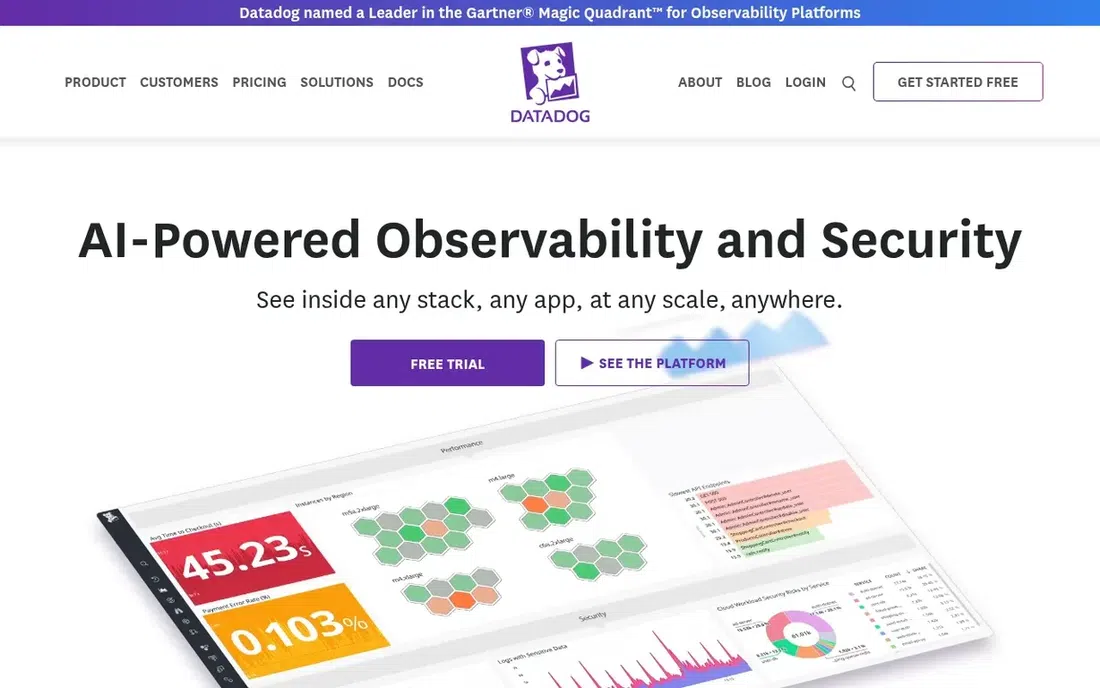
In short, Datadog is for unified metrics across apps and services. For remote teams, that shared single view cuts the back-and-forth that happens when observability data lives in separate tools.
The main drawbacks: Feature depth varies by integration.
Highlights: Wide cloud monitoring coverage.
The breadth that makes Datadog handy can also make initial configuration and continuing organization more involved, notably for smaller teams without a dedicated product owner. Datadog cost at the entry level: $8 per committer per month. On free options: Free trial.
- Fits distributed teams needing shared visibility
- Tools and services
- Many capabilities can mean a complicated setup
Choose PagerDuty for incident response and on-call automation. PagerDuty positions its AI-first Operations Platform around turning incidents into intelligence, helping teams automate, resolve and prevent critical issues from detection to resolution. From a buyer's view, for remote teams, that means on-call coordination and escalation do not rely on people being in the same room, which is commonly the hardest part of distributed incident response.
The main drawbacks: Value relies on integrating existing monitoring.
In practice, PagerDuty is not a substitute for the monitoring that creates signals. So it performs best alongside a metrics product rather than rather than one. Entry price for PagerDuty: $21 per user per month. Free access exists with PagerDuty.
- Aims to prevent critical issues recurring
- AI-first operations product for incidents
- Not a full metrics consolidation system
LogicMonitor was built for autonomous IT for complicated systems. LogicMonitor describes itself as the AI-first product for autonomous IT, enabling enterprises to operate complicated digital systems with greater resilience, efficiency and confidence.
On top of that, teams wanting more straightforward consolidated metrics may prefer Datadog, whereas those centred on incident workflow may favor PagerDuty. More specifically, remote teams managing sprawling environments may be drawn to the autonomous emphasis, which aims to cut the manual monitoring effort that distributed teams struggle to staff around the clock. Pricing for LogicMonitor is not stated here, so ask the vendor for current figures. As for free access: Not stated.
Drawbacks to consider: Autonomous positioning can need trust and tuning.
- AI-first product for autonomous IT
- Emphasizes resilience and efficiency
- Enterprise orientation may exceed smaller team needs
How we chose
What to confirm before you sign up
- Confirm the entry price on the vendor page. For LogicMonitor that means a quote rather than a fixed price.
- Read the fine print on the free plans from New Relic and PagerDuty; seat, project and feature caps differ.
- Take the trial from SolarWinds Observability and Datadog and push a live task through it before you pay.
- Read the limits listed for SolarWinds Observability first: hybrid IT focus may suit traditional estates more than cloud-native ones.
- Ask LogicMonitor whether prices are locked for the first term and what happens at renewal.
- Verify that exporting from Datadog is possible on your plan and covers all your records.
FAQ
How do these tools manage hybrid infrastructure?
SolarWinds Observability explicitly targets hybrid IT observability and management, which fits teams running both on-premises and cloud systems. Cloud-native systems like Datadog and New Relic also handle plenty of environments, but confirm integration support for your specific on-premises systems before committing.
Is SolarWinds Observability the right pick for everyone comparing cloud infrastructure monitoring software for remote teams?
No single tool suits every team. SolarWinds Observability comes first because it fits simple hybrid IT observability, while New Relic suits AI-assisted root cause analysis and Datadog suits unified metrics across apps and services. Match the tool to your own size, budget and workflow before deciding.
How are the cloud infrastructure monitoring software for remote teams ordered?
The order follows typical fit for cloud infrastructure monitoring software for remote teams, with SolarWinds Observability first and LogicMonitor last, then price clarity and free access. It is editorial judgement, not a score, so another team could rank the tools differently.
What is the cheapest option for cloud infrastructure monitoring software for remote teams in this list?
On published monthly entry prices, SolarWinds Observability is the lowest here at $2 per node per month. Entry price is only part of the cost, because seats, add-ons and billing terms can change the total. All 5 picks in this cloud infrastructure monitoring software for remote teams comparison list a starting price, free plan details and the main limits on their cards above.
Can I try these tools before paying?
Often, yes. New Relic and PagerDuty have a free plan and SolarWinds Observability and Datadog offer a free trial. Use your own data and a real task during the test, and check what the free tier or trial limits before you rely on it.
Sources
- https://www.solarwinds.com
- https://newrelic.com
- https://www.datadoghq.com
- https://www.pagerduty.com
- https://www.logicmonitor.com