Best Chaos Engineering Tools for Resilience Testing for 2026: Our 5 Vetted Picks
Best chaos engineering tools for resilience testing in 2026: 5 contenders with entry costs and free tiers. Prices and drawbacks included. Jump to the table.
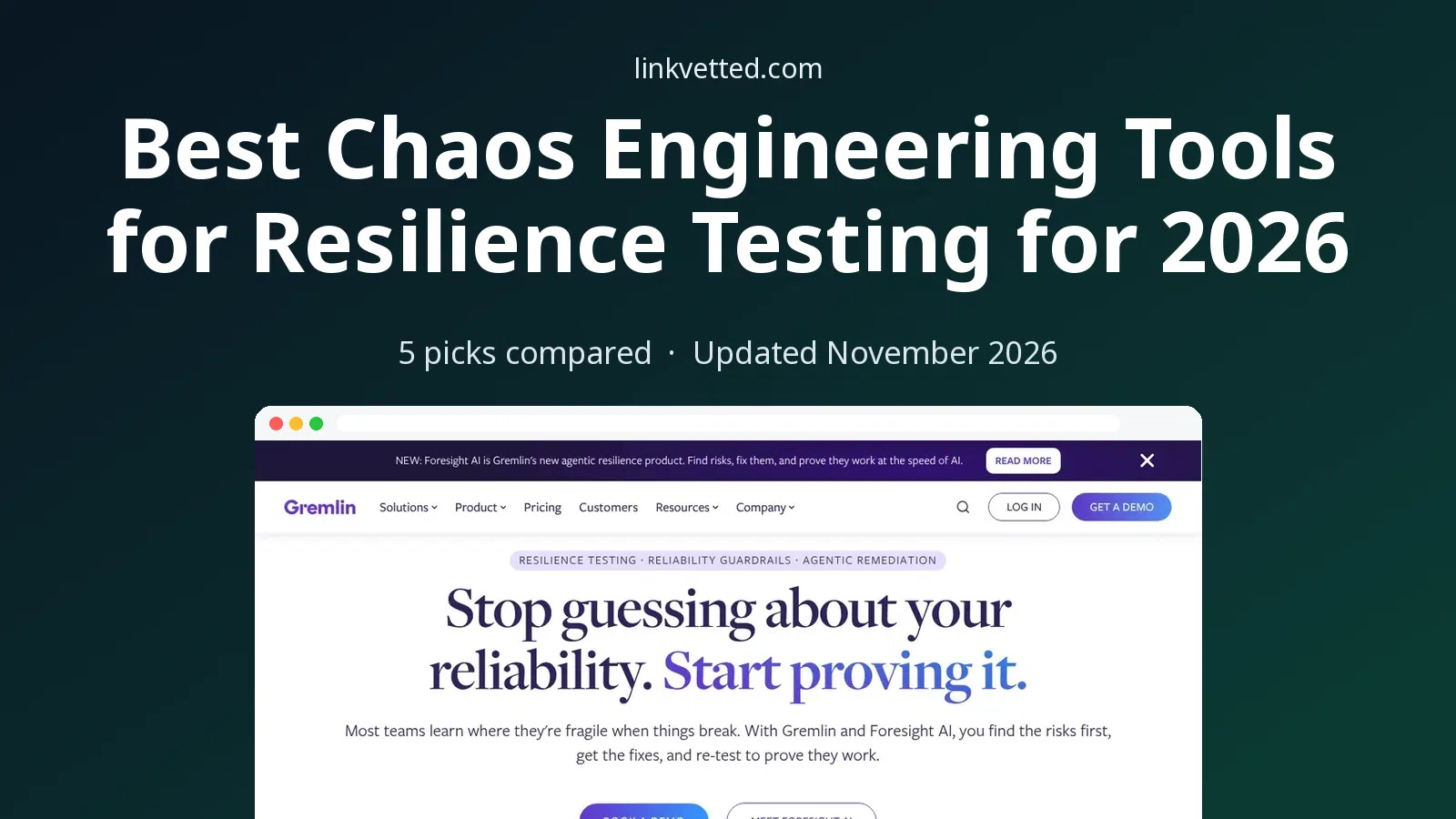
- Editor's choiceChaos Mesh
Chaos engineering for Kubernetes
Starts atPricing on requestVisit chaos-mesh.orgFull review - Great alternativeSteadybit
Easy-to-learn chaos engineering for teams
Starts atPricing on requestVisit steadybit.comFull review - Also considerGremlin
Enterprise reliability management and resilience testing
Starts atPricing on requestVisit gremlin.comFull review
Direct answer
This list puts Chaos Mesh first for Chaos engineering for Kubernetes. Alternatives: Steadybit for easy-to-learn chaos engineering for teams, and Gremlin for enterprise reliability management and resilience testing. The full list of 5 tools follows, with free plan facts. None of these vendors publish plan prices, so pricing is on request for every option.
TL;DR:
- The list opens with Chaos Mesh, aimed at Chaos engineering for Kubernetes.
- Chaos Mesh, AWS Fault Injection Service and the 3 others all sell by quote; expect sales conversations before you see a price.
- AWS Fault Injection Service stands alone as the one tool in this list with a free plan.
- A fair warning about Gremlin: may be complicated for small teams.
- AWS Fault Injection Service fits simulating real-world failures on AWS.
Last checked November 2026. Pricing on request: vendors did not publish plan prices when this guide was last checked (November 2026), so ask each vendor for a written quote.
Quick comparison
| Tool | Best for | Starts at | Free plan? | |
|---|---|---|---|---|
| Chaos Mesh | Chaos engineering for Kubernetes | Pricing on request | Not stated | Visit |
| Steadybit | Easy-to-learn chaos engineering for teams | Pricing on request | Free trial | Visit |
| Gremlin | Enterprise reliability management and resilience testing | Pricing on request | Free trial | Visit |
| Azure Chaos Studio | Chaos engineering for Azure applications | Pricing on request | Free trial | Visit |
| AWS Fault Injection Service | Simulating real-world failures on AWS | Pricing on request | Yes | Visit |
The full chaos engineering tools for resilience testing list
If you are comparing chaos engineering tools for resilience testing, this page covers 5 tools in one place: what each is best for, what it costs to start, whether it has a free plan, and the main limit to know about.
Chaos Mesh
Best for: Chaos engineering for Kubernetes
In short, Chaos Mesh is for Chaos engineering for Kubernetes. For a more general-purpose tool, consider Gremlin or Steadybit. Chaos Mesh is centred on Kubernetes, so it is not a good match for non-Kubernetes environments.
It also needs operational knowledge of Kubernetes and chaos engineering. From a buyer's view, Chaos Mesh is a feature-rich chaos engineering product for Kubernetes that lets teams to simulate several failures and test the resilience of their applications. It is open source and built to be Kubernetes-native, offering a broad set of chaos experiment types to help teams uncover weaknesses in their Kubernetes deployments. Chaos Mesh shows no starting price here, so confirm the cost on the vendor site. Free options: Not stated.
Points against: Kubernetes-specific.
- Supports various chaos experiment types
- Open source and Kubernetes-native
- Requires operational knowledge
Steadybit
Best for: Easy-to-learn chaos engineering for teams
Steadybit targets easy-to-learn chaos engineering for teams. Steadybit is a chaos engineering tool that concentrates on reliability testing with an easy-to-learn interface for teams. It helps reveal reliability risks early and supports building a culture of reliability through easy-to-run chaos experiments.
More specifically, Steadybit is made for teams looking for an approachable approach to chaos engineering. Even so, for teams prioritizing simplicity, Steadybit is a solid choice. Check the vendor site for Steadybit pricing; none is listed in this comparison. Free access: Free trial.
Where it is weaker: Commercial offering.
- Helps build a culture of reliability
- Reveals reliability risks early
- May lack some advanced features
Gremlin
Best for: Enterprise reliability management and resilience testing
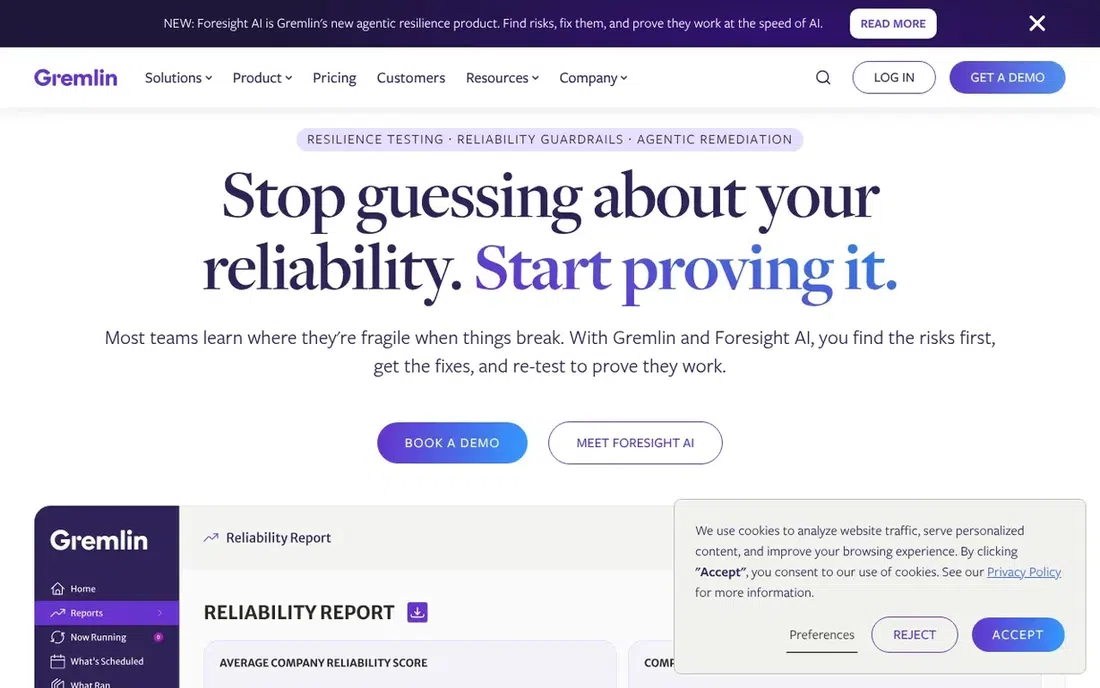
Pick Gremlin if this describes you: enterprise reliability management and resilience testing. Gremlin is a chaos engineering product that concentrates on enterprise reliability management and resilience testing. It helps teams identify where systems will fail, fix issues proactively, and demonstrate the results of their resilience efforts.
On top of that, Gremlin is aimed at organizations that require a structured approach to reducing downtime and protecting revenue through controlled experiments. Gremlin may be more than small teams need, especially those just starting with chaos engineering. Its enterprise focus means it could need more setup and process than light alternatives. Check the vendor site for Gremlin pricing; none is listed in this comparison. Trial and free access: Free trial.
Where it falls short: Primarily commercial offering.
- Helps teams see where systems will fail
- Focus on proving resilience results
- May be complicated for small teams
Azure Chaos Studio
Best for: Chaos engineering for Azure applications
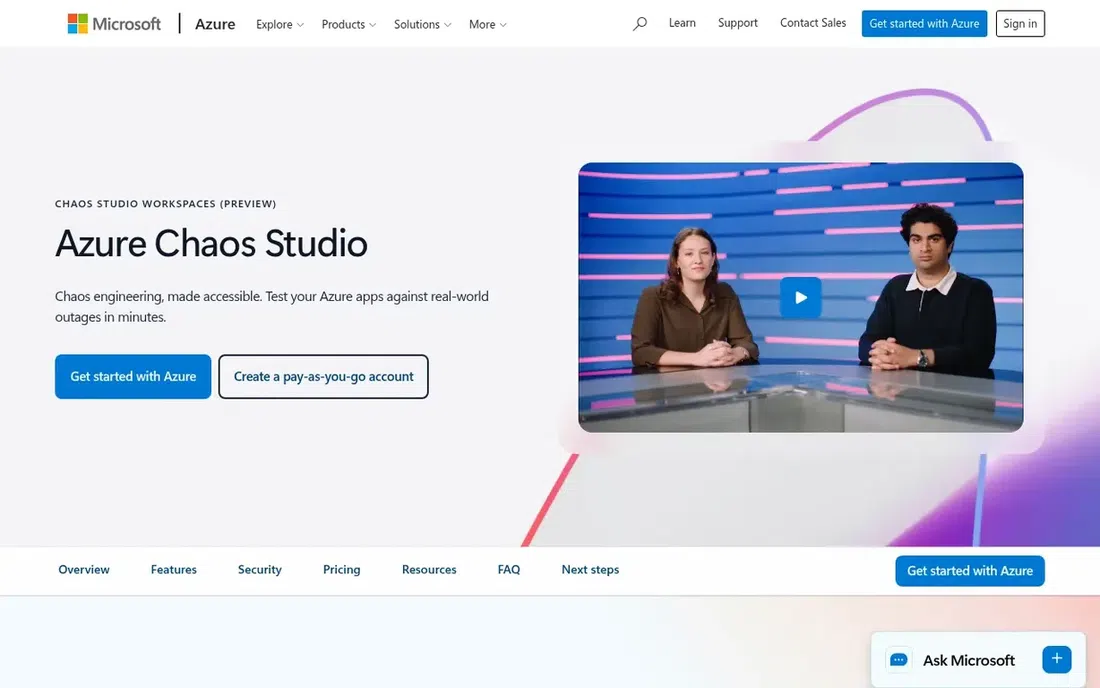
Azure Chaos Studio serves Chaos engineering for Azure applications. Teams unfamiliar with Azure may need time to learn the product. Azure Chaos Studio is designed primarily for Azure applications, so it may not be the best fit for multi-cloud or hybrid environments.
Points against: Centred on Azure workloads.
More specifically, for broader cloud support, consider Gremlin or AWS Fault Injection Service. In practice, Azure Chaos Studio makes chaos engineering accessible by allowing teams to test Azure applications against real-world outages straight from the portal or through an AI agent. Azure Chaos Studio shows no starting price here, so confirm the cost on the vendor site. Free access: Free trial.
- Accessible from the Azure portal
- Supplies a report for every run
- May require Azure familiarity
AWS Fault Injection Service
Best for: Simulating real-world failures on AWS
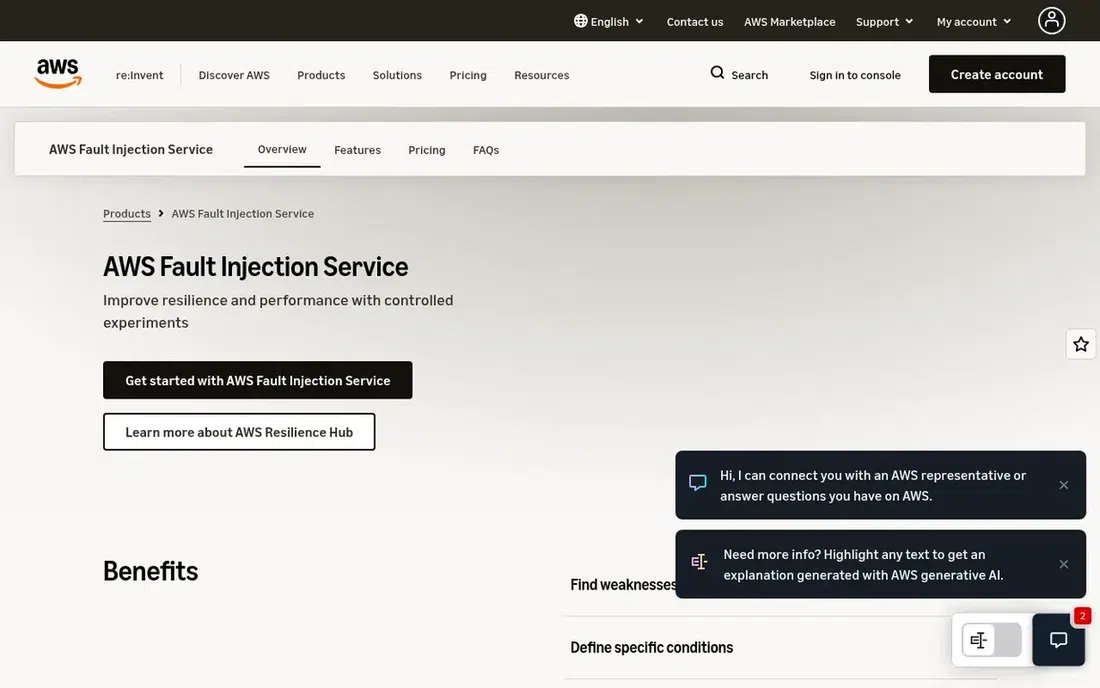
AWS Fault Injection Service serves simulating real-world failures on AWS. AWS Fault Injection Service is a resilience testing tool that helps teams produce real-world conditions to uncover hidden bugs, monitor blind spots, and discover performance bottlenecks. It is made for AWS users who want to test their applications against realistic failure scenarios without leaving the AWS ecosystem.
This service is tightly coupled to AWS, so it is not a good match for multi-cloud or on-premises environments. Worth adding: if you need cross-platform support, consider Gremlin or Steadybit. Teams without deep AWS knowledge may face a ramp-up time. No starting price is listed for AWS Fault Injection Service here; confirm pricing on the vendor site. AWS Fault Injection Service has a free plan.
The main drawbacks: Needs AWS expertise.
- Builds real-world conditions for testing
- Helps uncover hidden bugs and blind spots
- Restricted to AWS environments
How we built this list
LinkVetted looked at what each vendor publishes: pricing, plan limits, feature coverage for chaos engineering tools for resilience testing and stated drawbacks. No hands-on testing is claimed. Prices and plan limits come from vendor pages and can change, so confirm them on the vendor site before you buy. Tools are placed by general fit for chaos engineering tools for resilience testing, with price clarity and free access as tie-breakers. A different team can reasonably rank them differently.
Questions to settle before buying
- Request quotes from Chaos Mesh, AWS Fault Injection Service and the others; the list shows no fixed prices.
- Test the free plan from AWS Fault Injection Service against your real workload before relying on it.
- Take the trial from Steadybit, Gremlin and Azure Chaos Studio and push a live task through it before you pay.
- Read the limits listed for Chaos Mesh first: Kubernetes-specific.
- Before rolling out Gremlin, verify the integrations your workflow depends on.
- Ask Chaos Mesh about contract length, onboarding fees and user minimums before you sign.
FAQ
How are the tools for chaos engineering tools for resilience testing ordered?
Chaos Mesh sits first and AWS Fault Injection Service last because the order follows typical fit for chaos engineering tools for resilience testing, then price clarity and free access. It is a judgement call, so read each profile for fit and limits.
How do I get started with chaos engineering?
Then choose a tool that suits your environment, begin with straightforward experiments in a controlled setting, and gradually increase complexity as you build confidence.
Do these tools publish their prices?
No. None of the tools, from Chaos Mesh to AWS Fault Injection Service, shows a fixed starting price here, so budget time for quotes.
Which options for chaos engineering tools for resilience testing have a free plan?
AWS Fault Injection Service is the only tool in this list with a free plan. Free plans usually cap users, projects or features, so check the limits on the vendor page. Several others offer a trial instead.
Can I use several chaos engineering tools together?
For instance, you might use a cloud-specific service for AWS and an open-source tool for Kubernetes. Just ensure they integrate well with your workflows.
Can I try these tools before paying?
Often, yes. AWS Fault Injection Service has a free plan and Steadybit, Gremlin and Azure Chaos Studio offer a free trial. Use your own data and a real task during the test, and check what the free tier or trial limits before you rely on it.
Sources
- https://chaos-mesh.org
- https://steadybit.com
- https://www.gremlin.com
- https://azure.microsoft.com/en-us/products/chaos-studio
- https://aws.amazon.com/fis