Best A/B Testing Software in 2026: 8 Tools Compared
Best A/B testing software in 2026: compare 8 A/B testing tools for websites, apps, personalization, stats, pricing and team workflows before you choose.
- Editor's choice
 Optimizely
Enterprise web and product testing
Starts atSee websiteVisit optimizely.comFull review - Great alternative
 VWO
Conversion testing and insights
Starts atSee websiteVisit vwo.comFull review - Also consider
 AB Tasty
Testing and personalization
Starts atSee websiteVisit abtasty.comFull review
TL;DR:
- Optimizely and VWO suit larger teams that need web and product experimentation at scale, though both now use quote based pricing.
- Convert and GrowthBook suit teams that want published pricing, privacy controls or an open source option.
- AB Tasty suits teams that want testing plus personalization, while Statsig and PostHog suit product teams that test inside apps.
- Check traffic limits, statistical methods and integration needs before you buy, since a tool that fits a marketing site may not fit a product team.
Quick comparison
| Tool | Best for | Starts at | Free plan? | |
|---|---|---|---|---|
| Optimizely | Enterprise web and product testing | See website | No | Visit |
| VWO | Conversion testing and insights | See website | No | Visit |
| AB Tasty | Testing and personalization | See website | No | Visit |
 Convert | Transparent pricing for agencies | $299 per month | Free trial (15 days) | Visit |
 GrowthBook | Open source product testing | Free | Yes | Visit |
 Statsig | Product experimentation at scale | Free | Yes | Visit |
 PostHog | Product analytics and testing | Free | Yes | Visit |
 Kameleoon | Personalization and testing | See website | No | Visit |
The best A/B testing software
We compared test types, visual editors, statistical engines, targeting, integrations and pricing transparency for each tool. A/B testing covers website tests, app tests and feature tests, so we included tools for marketing teams and product teams.
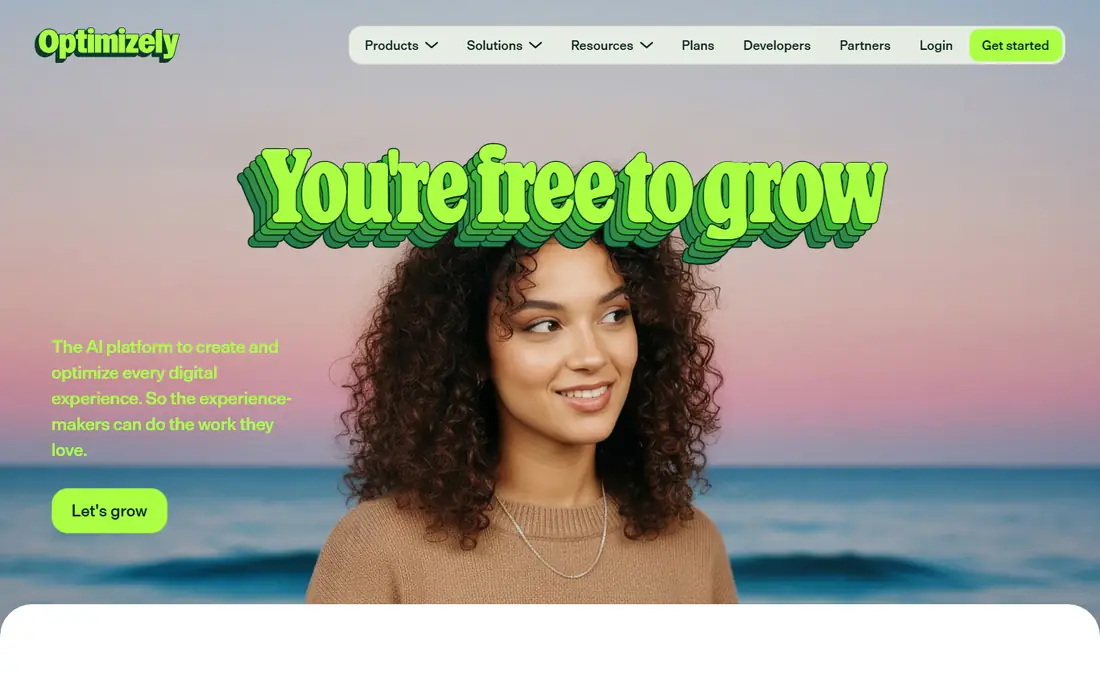
Optimizely is a leading enterprise experimentation platform, covering web experimentation, feature experimentation, personalization and content. Marketing teams can run visual tests on pages, while product teams can run server-side tests and feature flags. The stats engine, governance controls and integrations suit large teams with many tests running at once.
The main barrier is cost and complexity. Optimizely does not publish list prices, and contracts are typically enterprise scale, so small teams should look at Convert, GrowthBook or PostHog first. Implementation also takes planning, especially for feature testing. For a large organization with a serious experimentation program, Optimizely remains a benchmark choice.
- Web and feature experimentation in one platform
- Strong stats engine
- Personalization
- Enterprise controls and support
- Pricing is quote based and high for small teams
- Implementation takes time
- Some features need developer help
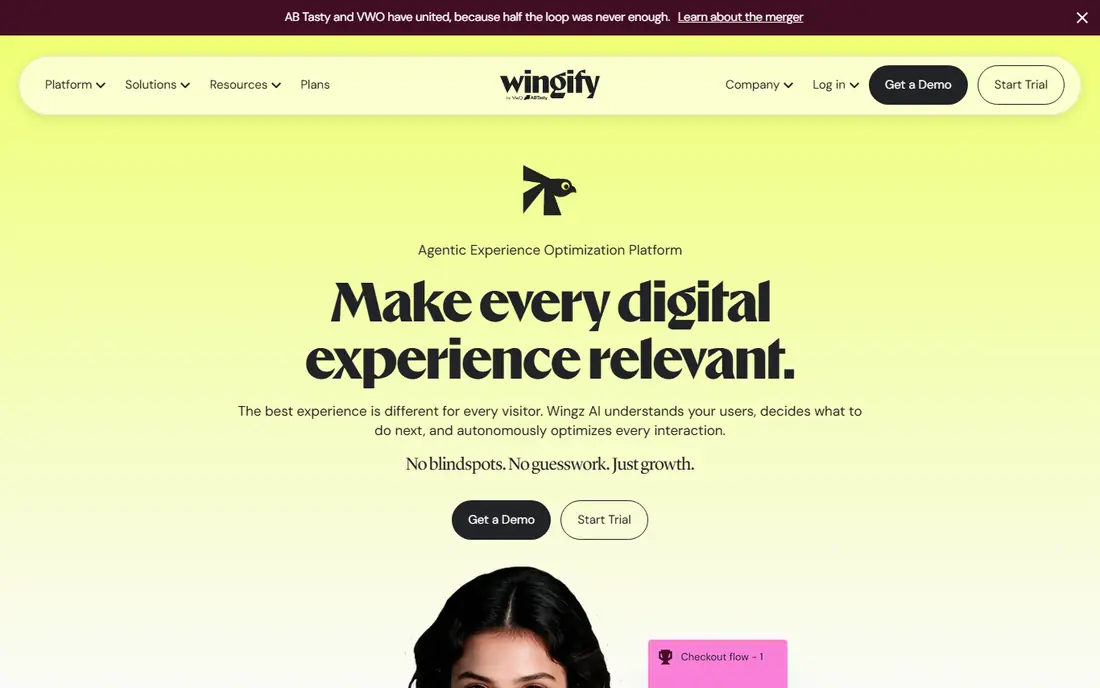
VWO, from Wingify, is a conversion optimization platform that combines testing with behavior insights. Marketers can build A/B, split URL and multivariate tests with a visual editor, then use heatmaps, session recordings and funnels to understand why a variant won. Personalization tools let teams show different content to different segments without a separate tool.
VWO previously published prices, but its pricing page now directs buyers to quote based tiers, so small teams should ask for a clear quote for their traffic level. Costs rise with monthly visitors, so high traffic sites need to budget carefully. For marketing teams that want testing plus insights in one place, VWO is a strong, well rounded option.
- A/B, split URL and multivariate testing
- Heatmaps and recordings
- Personalization
- Visual editor for marketers
- Pricing is now quote based
- Costs rise with traffic
- Some advanced features need higher tiers
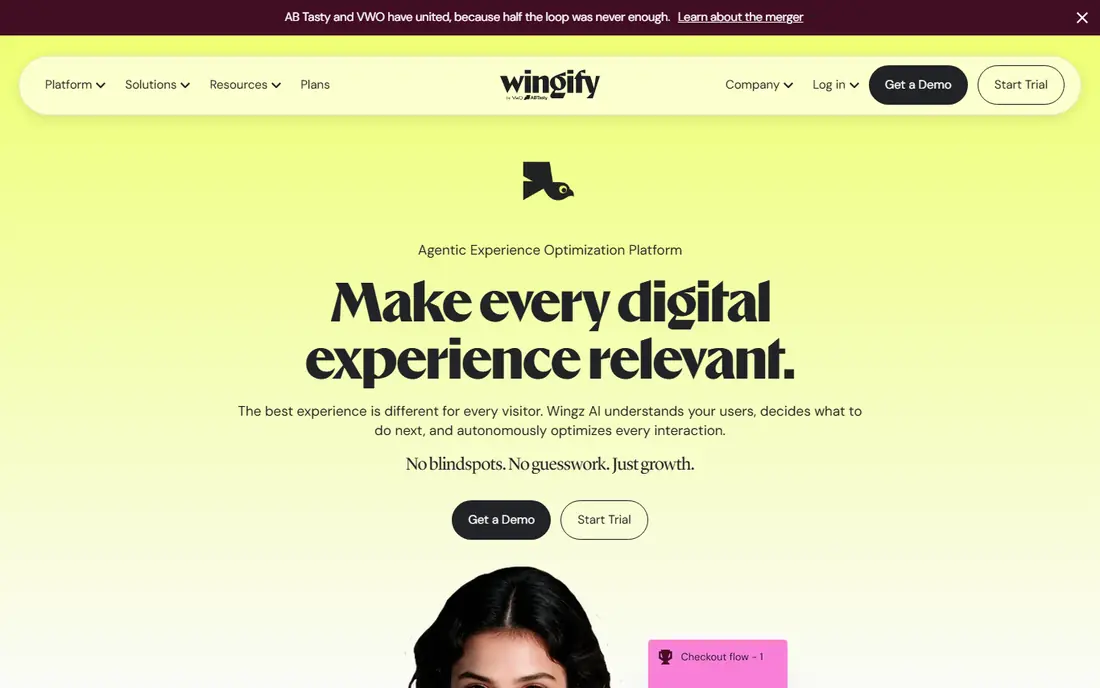
AB Tasty combines experimentation with personalization and recommendations, which suits teams that want to test and then tailor content to segments. A visual editor helps marketers build tests without code, while AI features suggest test ideas and help analyze results. The platform also supports feature management for product teams.
AB Tasty is quote based and enterprise focused, so it is not a low cost starter tool. Teams should expect a sales process and implementation help, especially for personalization. If your goal is to move from simple tests to personalized experiences, AB Tasty offers a clear path in one platform.
- A/B, split and multivariate testing
- AI test ideas
- Personalization and recommendations
- Visual editor
- Pricing is quote based
- Enterprise focus
- Setup and training take time
Convert Experiences stands out for published pricing in a market where many rivals hide prices. Growth starts at $299 per month billed annually for 100,000 tested users per month, with a 15-day trial, and higher tiers add more users and features. The platform supports A/B, split URL, multivariate and full-stack testing, with a privacy focused approach that appeals to agencies and regulated teams.
Convert has fewer built-in behavior analytics than VWO, so teams may pair it with a separate heatmap tool. It is also not cheap for very small sites, though the price is clear and predictable. For agencies and mid-size teams that value transparency, privacy and solid testing tools, Convert is an easy recommendation.
- Published pricing
- Privacy focused
- A/B, split and multivariate testing
- Many integrations
- Agency tools
- Growth plan starts at $299 per month billed annually
- Fewer behavior insights than VWO
- Enterprise features cost more
GrowthBook is an open source experimentation platform for product teams. It combines feature flags with A/B testing, lets teams define metrics and run experiments from code, and offers a cloud version for teams that do not want to self-host. The open source model gives control over data and deployment, which appeals to technical teams and privacy conscious companies.
GrowthBook is less marketer friendly than VWO or AB Tasty, since many tests need developer help and there is no rich visual page editor. Self hosting also needs technical skill, though the cloud plan removes that burden. For product teams that want transparent stats, feature flags and a low starting cost, GrowthBook is a strong choice.
- Open source option
- Feature flags and experiments
- Strong stats and metrics
- Developer friendly
- Self hosting needs technical skill
- Visual editor is limited for marketers
- Support depends on plan
Statsig is built for product experimentation at scale, with feature gates, experiments, analytics and session replay tools. Product teams can roll out a feature to a small group, measure impact on key metrics, and expand or roll back based on data. A free tier helps small teams start, while paid plans scale with event volume.
Statsig is less suited to marketing page tests, where a visual editor matters more than code-based flags. Pricing rises with usage, so high event products should model costs carefully. For app and product teams that test features, pricing logic and in-app flows, Statsig is a modern and capable platform.
- Product experiments and feature gates
- Strong analytics
- Free tier for small teams
- Scalable for large products
- Marketing page tests need other tools
- Pricing rises with events
- Learning curve for non-technical users
PostHog combines product analytics with A/B testing, heatmaps, session recordings, feature flags and surveys. That breadth helps product teams understand user behavior and test changes without buying many separate tools. A free tier and an open source option make it easy to start, and usage based pricing scales with product size.
PostHog is a product suite first, so marketing teams who want a simple visual page editor may prefer VWO or Convert. Usage based pricing also needs monitoring as events grow. For product teams that want analytics and testing together, PostHog offers strong value and a single source of truth for product data.
- Analytics, heatmaps, recordings and experiments in one tool
- Free tier
- Open source option
- Developer friendly
- Testing is part of a larger suite
- Marketing visual editor is limited
- Usage based pricing needs monitoring
Kameleoon is a personalization and experimentation platform for marketing and product teams. It supports A/B, split and multivariate tests, plus personalization, AI recommendations and detailed targeting by segment, device and behavior. Enterprise controls, security features and support suit regulated industries and large sites.
Kameleoon is quote based and enterprise focused, so small teams should expect a sales process and a higher budget. Its community and integration range are smaller than Optimizely or VWO, though its core testing tools are solid. For teams that want testing plus personalization with strong targeting, Kameleoon deserves a shortlist spot.
- A/B testing and personalization
- AI powered recommendations
- Strong targeting
- Enterprise controls
- Pricing is quote based
- Enterprise focus
- Smaller community than larger rivals
How we picked these
We compared official feature pages, pricing pages, test types, statistical methods and integration lists for each tool. We favored tools in active use today, with clear A/B testing functions and a public pricing or quote process. We left out discontinued tools, pure analytics tools with no testing, and tools with only a marketing page and no clear product.
We also noted the shift toward quote based pricing in 2026, as VWO and AB Tasty moved under Wingify and Optimizely kept enterprise pricing. That shift matters for buyers, so we flag published prices only where a vendor still publishes them, and use See website where pricing is quote based.
How to choose an A/B testing tool
Start with your test type. Marketing teams need a visual editor, split URL tests and behavior insights. Product teams need feature flags, server-side tests and metric definitions. A tool that excels at one may be weak at the other, so do not buy on brand alone. List your top three test types, your traffic level and your main integrations, then shortlist tools that cover all three.
Stats, traffic and workflow
Check the statistical method, guardrails against early stopping, and sample size tools. A tool that lets you call a winner too early can mislead decisions. Check traffic limits and overage rules, since some tools pause tests when limits are hit. Finally, test workflow: who builds tests, who approves them, and how results are shared. A tool that only developers can use will slow a marketing team, while a tool with no code controls will frustrate a product team.
Privacy, speed and cost
Check data handling, privacy compliance and where data is stored, especially for EU users or regulated industries. Test page speed impact, since a heavy testing script can slow pages and skew results. On cost, model your traffic and event volume for a year, including overages, and ask for a written quote. A low starter price can rise fast once traffic grows, so total cost matters more than the first month price.
FAQ
What is the best A/B testing tool overall?
For marketing teams, VWO and Convert are strong all-round choices, with VWO adding behavior insights and Convert adding published pricing. For product teams, GrowthBook, Statsig and PostHog are strong choices. For enterprise scale, Optimizely remains a benchmark, though its pricing is quote based.
What is the best free A/B testing tool?
GrowthBook, Statsig and PostHog all offer free tiers or open source options, which suit small teams and startups. Free tiers have traffic or event limits, so check those limits against your site or app volume. For a simple marketing test, a free tier may be enough to learn the process before you pay.
How much does A/B testing software cost?
Costs vary widely. Convert Growth starts at $299 per month billed annually, while enterprise tools such as Optimizely, VWO and AB Tasty use quote based pricing that can run into tens of thousands per year. Product tools often use free tiers plus usage based pricing, so model your traffic before you compare.
What is split testing vs A/B testing?
Split testing and A/B testing are often used for the same idea: showing different versions to different visitors and comparing results. Split URL testing is a specific type where visitors are sent to separate page URLs, while A/B testing can also change elements on the same page. Multivariate testing changes several elements at once to find the best combination.
How long should an A/B test run?
A test should run until it reaches a reliable sample size and covers full weekly cycles, including weekdays and weekends. Running a test for only a day or stopping it early when one variant leads can produce false results. Use the tool's sample size calculator and wait for a clear, stable result before you ship a winner.
Do I need a developer to run A/B tests?
It depends on the tool and test type. Visual editors in VWO, AB Tasty and Convert let marketers build many page tests without code. Product tests, feature flags and server-side experiments usually need developer help, which is why tools such as GrowthBook and Statsig are built for product teams.