Best Calendar Method Apps for Women in 2026: 8 Products Compared
Compare the best calendar method apps for women, with cycle tracking, fertility signs, and honest notes on reliability and when to seek clinician advice.
- Editor's choice
 Clue
Science-based cycle tracking
Starts atFreeVisit helloclue.comFull review - Great alternative
 Flo
Cycle tracking plus health content
Starts atFreeVisit flo.healthFull review - Also consider
 Natural Cycles
Temperature-based contraception
Starts at$149.99 per yearVisit naturalcycles.comFull review
TL;DR:
- Calendar apps estimate fertile days from past cycles, and they work best with regular cycles and consistent logging.
- Temperature and cervical mucus signs give more information than dates alone, so apps that track them are more useful.
- Calendar methods are less reliable than other forms of contraception, so do not rely on them alone to prevent pregnancy without advice.
- Natural Cycles is the only app on this list cleared by the FDA as a contraceptive, and it still requires daily temperature logging.
- Privacy policies differ a lot, so check data sharing, deletion options, and where your data is stored before logging sensitive details.
Quick comparison
| Tool | Best for | Starts at | Free plan? | |
|---|---|---|---|---|
| Clue | Science-based cycle tracking | Free | Yes | Visit |
| Flo | Cycle tracking plus health content | Free | Yes | Visit |
| Natural Cycles | Temperature-based contraception | $149.99 per year | No | Visit |
 Fertility Friend | Detailed charting | Free | Yes | Visit |
 Ovia Fertility | Trying to conceive guidance | Free | Yes | Visit |
 Glow | Community and cycle insights | Free | Yes | Visit |
 Kindara | Fertility awareness charting | Free | Yes | Visit |
 Stardust | Simple tracking with horoscope features | Free | Yes | Visit |
The best calendar method apps for women
Calendar method apps use the dates of past periods to estimate ovulation and fertile days. Some add temperature, cervical mucus, and test results to refine those estimates. A short note on safety: calendar methods are less reliable than other contraception, and predictions can be wrong, especially with irregular cycles. If avoiding pregnancy matters, check with a clinician about more reliable options.
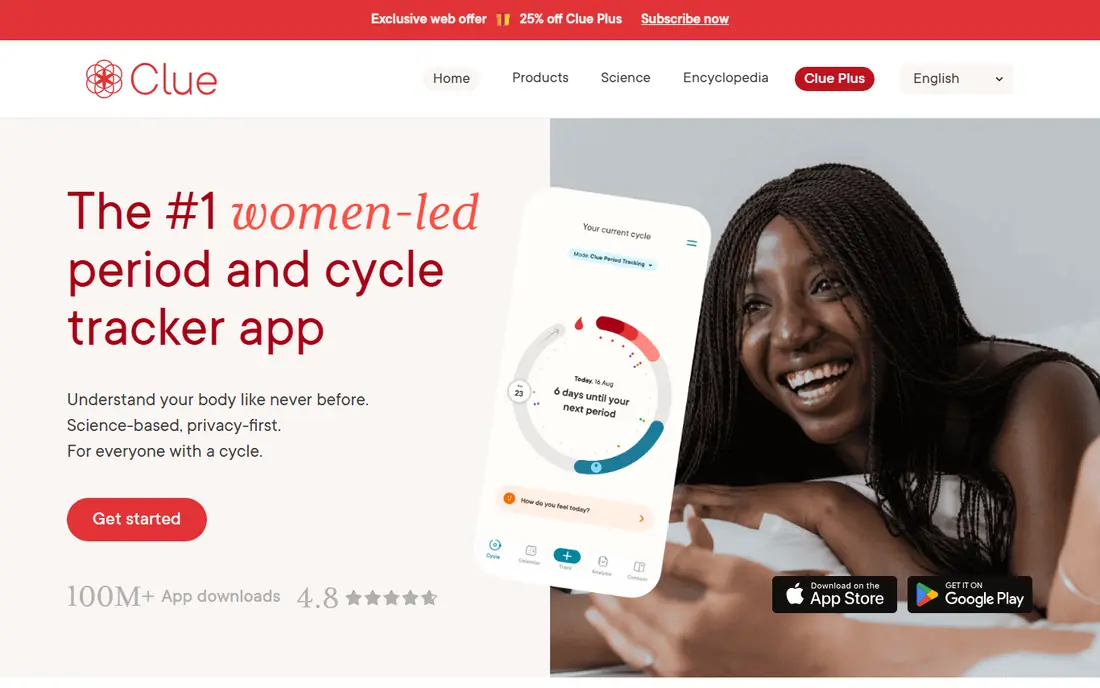
Clue is a good starting point for anyone who wants a calm, clear cycle tracker without a lot of clutter. You log period dates, symptoms, and optional fertility signs, and Clue builds predictions from your own history over time. The calendar view makes it easy to see past cycles and the estimated fertile window at a glance. The limit is important. Clue standard tracking is not contraception, even though a separate Clue Birth Control feature received FDA clearance in 2021. Do not use ordinary cycle predictions alone to avoid pregnancy. Clue works best as a health record and a learning tool, paired with advice from a clinician if contraception is the goal.
- Clean cycle and calendar views
- Strong privacy position based in Berlin
- Clue Plus at $39.99 per year for deeper insights
- Standard tracker is not birth control
- Advanced modes need a paid plan
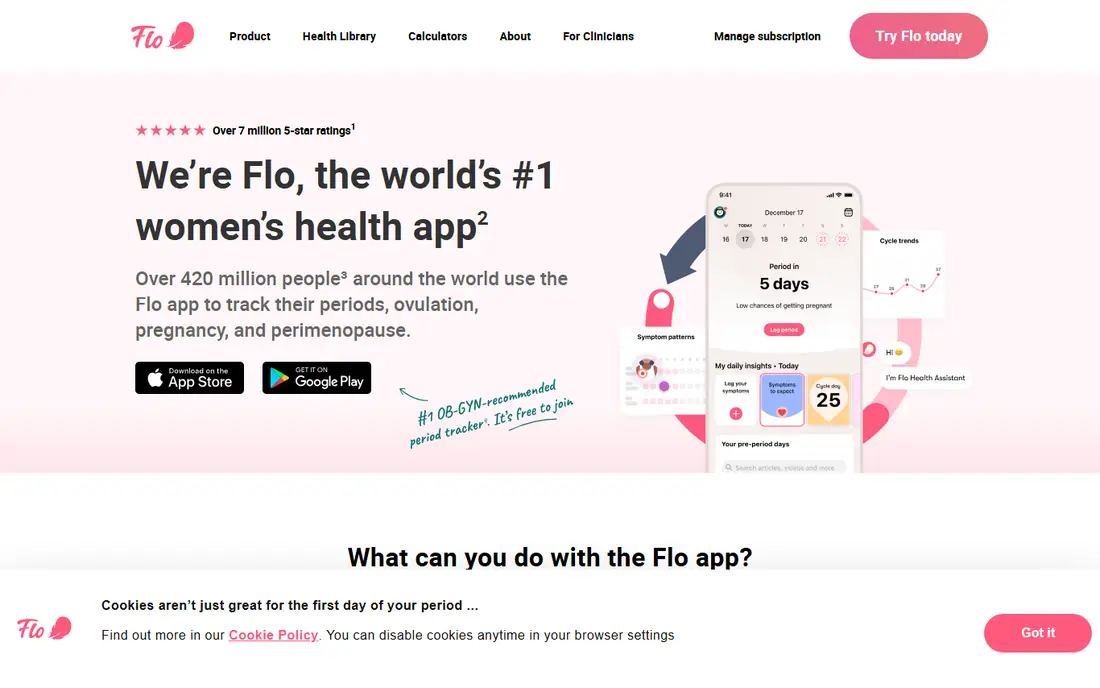
Flo pairs cycle predictions with a wide set of articles, symptom logs, and health insights, which suits users who want education alongside tracking. You can log periods, symptoms, mood, and other signs, and Flo adjusts predictions as more cycles are added. The app is available on iOS and Android, with a free core version. Flo is not contraception, and its predictions are estimates, not guarantees. Read the current privacy policy before entering sensitive data, and check what can be deleted. If you want a straightforward tracker with lots of reading material, Flo is a strong choice, but treat its fertile window as a guide, not a safe or unsafe label.
- Large library of health articles
- Symptom and mood logging
- Premium around $47.99 to $59.99 per year
- Premium features are needed for deeper insights
- Past privacy concerns mean you should read the current policy
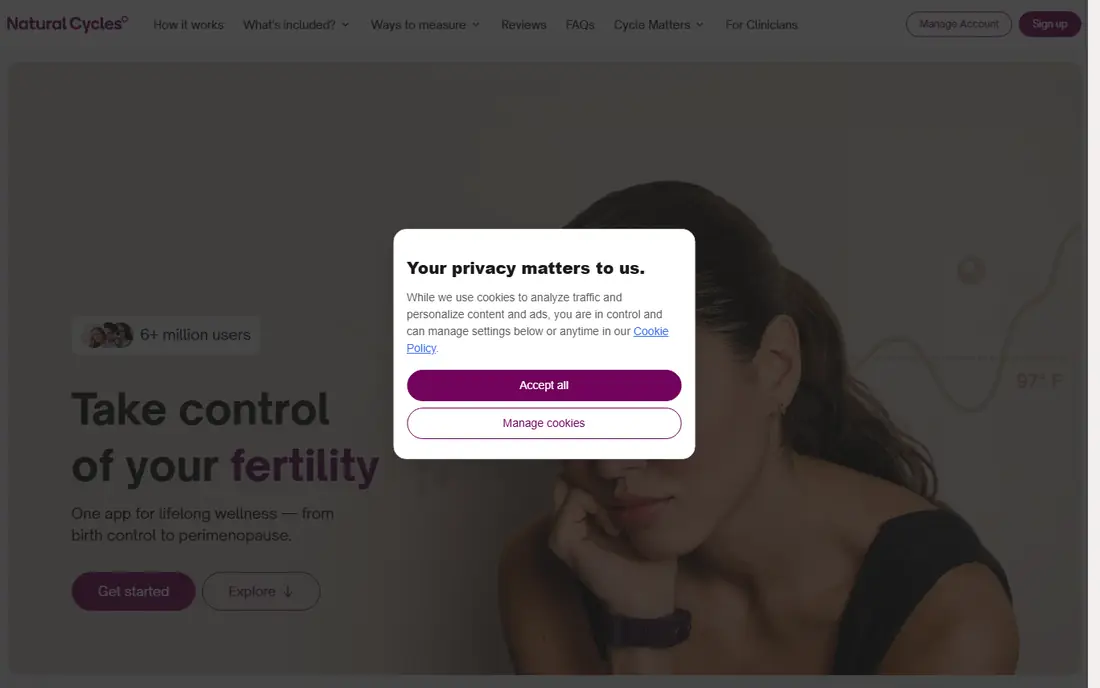
Natural Cycles stands apart because it is cleared by the FDA as a contraceptive app, based on basal body temperature rather than calendar dates alone. You measure temperature each morning, log it in the app, and the algorithm gives red days (use protection or abstain) and green days. The annual plan, listed at $149.99 per year, can include a wearable band in some offers. That clearance does not make it foolproof. Missed temperatures, illness, travel, and irregular cycles can affect results, and you must follow the red and green day guidance closely. Natural Cycles is the closest option on this list to a calendar method used for contraception, but it still needs daily effort and a clear understanding of its limits. Talk to a clinician before relying on it.
- FDA-cleared as a contraceptive method
- Uses daily basal body temperature
- Separate mode for planning pregnancy
- No free tier
- Requires consistent daily temperature logging
- Less suited to very irregular cycles
Fertility Friend is the choice for users who want to see their own data in detail. It charts basal body temperature, cervical mucus, ovulation tests, and cycle patterns, with tools to spot ovulation and review past cycles. Educational lessons explain how to read charts, which helps if you are learning fertility awareness methods properly. The app is less polished than Clue or Flo, and the number of settings can feel overwhelming at first. Premium VIP membership, listed around $45.99 per year, adds advanced analysis. Fertility Friend is not contraception on its own, and its value comes from consistent, careful logging rather than a simple calendar prediction.
- Detailed basal body temperature charts
- Supports symptothermal tracking
- Free core charting
- Interface looks dated
- Learning curve is steep for new users
Ovia Fertility focuses on people trying to conceive, with a daily fertility score, cycle predictions, and reminders for logging. You can track periods, temperature, cervical mucus, and test results, and the app offers articles and tips tied to where you are in your cycle. The core app is free, which makes it easy to try without a subscription. As with other trackers, Ovia estimates ovulation and does not confirm it. Irregular cycles, stress, and illness can shift ovulation, so the fertile window should be treated as a planning aid. Ovia works best when combined with ovulation tests or temperature logging, and with clinician advice if conception does not happen after several months.
- Free core tracking
- Daily fertility score and reminders
- Trying-to-conceive guidance
- Predictions are estimates
- Interface includes many health and lifestyle features
Glow combines period and ovulation tracking with a large community, where users share experiences and ask questions. You can log cycles, symptoms, and fertility signs, and Premium adds advanced charts, cycle analysis, and forecasts. The free version covers basic tracking well enough for many users. Glow is explicit that its app is intended as an aid for conception, not for contraception. That honesty matters, because community tips are not medical advice. Use Glow for tracking and support, and do not rely on its predictions alone to prevent pregnancy.
- Free core tracking
- Community forums
- Cycle analysis in Premium
- Premium needed for advanced charts
- Glow states its app is not for contraception
Kindara keeps the focus on fertility awareness charting, with clear charts for temperature, cervical mucus, and cycle days. It works with any basal body thermometer, so you do not need to buy a specific device, although Kindara has sold its own Wink thermometer in the past. The app suits users who want to learn their own signs rather than rely on calendar math alone. Kindara is less feature-rich than Flo or Glow, and it does not offer the same library of articles or community tools. That simplicity is a strength for dedicated charting, but it may feel thin if you want broader health tracking. As with all trackers here, it is not a substitute for clinician advice on contraception.
- Simple fertility awareness charts
- Works with any basal body thermometer
- Cervical mucus tracking
- Fewer lifestyle features than larger apps
- Premium needed for some advanced tools
Stardust offers straightforward period and cycle tracking with a friendly design and horoscope-style features that some users enjoy. Logging is quick, predictions update with more cycles, and mood and symptom tracking add context beyond dates. The free version covers the basics for casual tracking. Stardust is not the best pick for detailed fertility awareness work, since it lacks the deep temperature and mucus charting of Fertility Friend or Kindara. Check its privacy policy and data sharing settings before logging sensitive information, as with any US-based health app. Use it for simple cycle awareness, and seek clinician advice for contraception or fertility concerns.
- Easy cycle logging
- Friendly design
- Cycle and mood tracking
- Less detailed fertility charting than specialist apps
- Privacy practices need a careful read
How we picked these
We compared official app pages, app store listings, privacy policies, and public reviews for cycle and fertility apps that use calendar dates, temperature, or fertility signs. We gave weight to apps with clear explanations of how predictions work, honest limits about contraception, and usable free tiers. We excluded apps that only track periods without any fertile window estimate, and we kept Natural Cycles separate because of its FDA clearance.
How to use a calendar method app more safely
A calendar app is only as good as the data you put in, and even then it is an estimate. Log period start dates on time, add temperature or mucus signs when the app supports them, and give the app at least three cycles before judging its predictions.
Combine signs, not just dates
Dates alone assume a regular cycle and a fixed ovulation day, which is not true for many people. Temperature shifts after ovulation, cervical mucus changes before it, and ovulation tests can add another signal. Apps that let you log all three give a fuller picture than a calendar-only estimate.
Know the limits for contraception
Calendar methods are less reliable than other contraception, including condoms, hormonal methods, and IUDs. If pregnancy would be a serious problem, do not rely on an app prediction alone. Talk to a clinician about options that fit your health, budget, and preferences, and ask how fertility awareness methods compare in typical use.
Protect your data
Cycle data is sensitive. Before logging, read the privacy policy, check whether data is sold or shared with advertisers, and confirm you can delete your account and data. Apps based in the EU, such as Clue, operate under GDPR, while US apps follow different rules. Use a strong password, turn off unnecessary sharing, and avoid logging details you would not want shared.
FAQ
Are calendar method apps reliable for avoiding pregnancy?
No, not on their own. Calendar methods are less reliable than other contraception, because ovulation can shift with stress, illness, travel, and cycle changes. Natural Cycles is FDA-cleared as a contraceptive when used exactly as directed, but it still requires daily temperature logging and following red day guidance. Check with a clinician for more reliable options.
Can a calendar app predict ovulation exactly?
No app can predict ovulation exactly from dates alone. Apps estimate a fertile window based on past cycles and, in some cases, temperature and other signs. The window is a guide for planning, not a confirmed ovulation date. Ovulation tests and temperature charting can narrow the window, but they do not guarantee accuracy.
Which app is best for irregular cycles?
Apps that use your actual signs, such as Fertility Friend and Kindara, handle irregular cycles better than fixed calendar math. Natural Cycles also uses temperature data, though very irregular cycles can still be hard to predict. Give any app several cycles of consistent logging, and seek clinician advice if cycles are often very short, very long, or absent.
Is my cycle data private in these apps?
Privacy varies by app and by country. Read each privacy policy for data sharing, advertising, and deletion options before you log sensitive details. Clue and Natural Cycles publish clear no-sale positions under EU rules, while US apps have different legal duties. Delete data you no longer need, and use account settings to limit sharing.
Should I talk to a clinician before using a fertility app?
Yes, if you are using an app for contraception, trying to conceive without success after several months, or noticing irregular, painful, or absent periods. A clinician can explain fertility awareness methods, check for conditions that affect cycles, and suggest more reliable contraception or fertility testing when needed. Apps are tracking tools, not medical advice.