The 6 Best Basic Web Framework in 2026, Ranked
Need the best basic web framework? We compare 6 tools on cost, free access and who each suits. Every pick gets a straight assessment. Current for November 2026.
- Editor's choiceExpress
Minimal Node.js APIs and services
Starts atPricing on requestVisit expressjs.comFull review - Great alternativeLaravel
Expressive PHP web applications
Starts atPricing on requestVisit laravel.comFull review - Also considerRuby on Rails
Convention-driven database-backed apps
Starts atPricing on requestVisit rubyonrails.orgFull review
Direct answer
If you need minimal Node.js APIs and services, Express is the first tool to look at here. Alternatives: Laravel for Expressive PHP web applications, and Ruby on Rails for Convention-driven database-backed apps. All 6 tools are compared below on fit, free plan and limits. None of these vendors publish plan prices, so pricing is on request for every option.
TL;DR:
- Top of the list is Express, which targets minimal Node.js APIs and services.
- None of the 6 tools, from Express to Flask, has a free plan, so budget for a subscription or use a trial.
- Flask fits small Python apps and prototypes.
- No starting price is shown for any of the 6 tools, Express and Flask included, so plan time for sales calls.
Last checked November 2026. Pricing on request: vendors did not publish plan prices when this guide was last checked (November 2026), so ask each vendor for a written quote.
Quick comparison
| Tool | Best for | Starts at | Free plan? | |
|---|---|---|---|---|
| Express | Minimal Node.js APIs and services | Pricing on request | Not stated | Visit |
| Laravel | Expressive PHP web applications | Pricing on request | Not stated | Visit |
| Ruby on Rails | Convention-driven database-backed apps | Pricing on request | Not stated | Visit |
| Django | Structured Python projects with deadlines | Pricing on request | Not stated | Visit |
| Next.js | Full-stack React web apps | Pricing on request | Not stated | Visit |
| Flask | Small Python apps and prototypes | Pricing on request | Not stated | Visit |
The full basic web framework list
Choosing basic web framework usually comes down to price, fit and limits. This LinkVetted guide sets 6 tools side by side on those three points, with the facts kept short and checkable.
Express
Best for: Minimal Node.js APIs and services
For minimal Node.js APIs and services, Express is a natural candidate. Next.js or Laravel may be better when you prefer an integrated framework with more built-in structure.
More specifically, for APIs and light services, Express keeps the starting point straightforward and lets the project grow on your terms. For everyday use, the minimal core means you make more decisions yourself, which can slow teams that want batteries included. Express does not show a starting price in this comparison, so check the vendor site for current pricing. Free plan details: Not stated.
Where it falls short: Few built-in features.
- Unopinionated design
- Minimalist core
- Needs assembling your own stack
Laravel
Best for: Expressive PHP web applications
For Expressive PHP web applications, Laravel is a natural candidate. Teams that value readable code and an integrated toolkit frequently find Laravel a natural fit for new projects.
Where it falls short: Needs PHP knowledge.
More specifically, if you work in JavaScript or Python, Next.js or Django may align better with your existing skills and tooling. As for the details, Laravel describes itself as a framework for building modern web apps and AI agents, with expressive syntax and built-in tools meant to help teams ship rapidly. Check the vendor site for Laravel pricing; none is listed in this comparison. Free plan details: Not stated.
- Expressive syntax
- Built-in tools included
- Large framework surface to learn
Ruby on Rails
Best for: Convention-driven database-backed apps
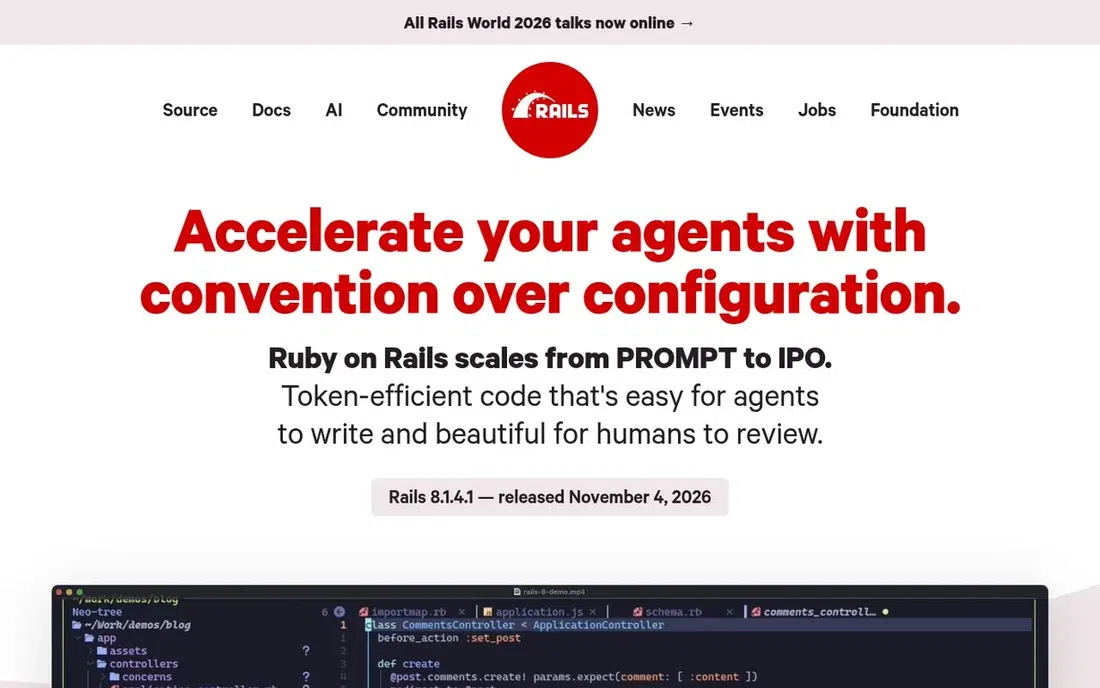
In short, Ruby on Rails is for Convention-driven database-backed apps. Consider Django if you prefer Python, or Express if you want a minimal core with libraries of your choice. Rails assumes familiarity with Ruby and rewards teams that accept its defaults; groups with heavy investment in other languages may find the switch expensive.
In daily use, Ruby on Rails is a full-stack web application framework written in Ruby that follows the Model View Controller pattern. Its homepage emphasizes convention over configuration and says it comes with everything needed to build modern database-backed web apps. No starting price is listed for Ruby on Rails here; confirm pricing on the vendor site. On free options: Not stated.
Where it falls short: Needs Ruby knowledge.
- Comes with what you have to build
- Convention over configuration
- Opinionated defaults may not fit every team
Django
Best for: Structured Python projects with deadlines
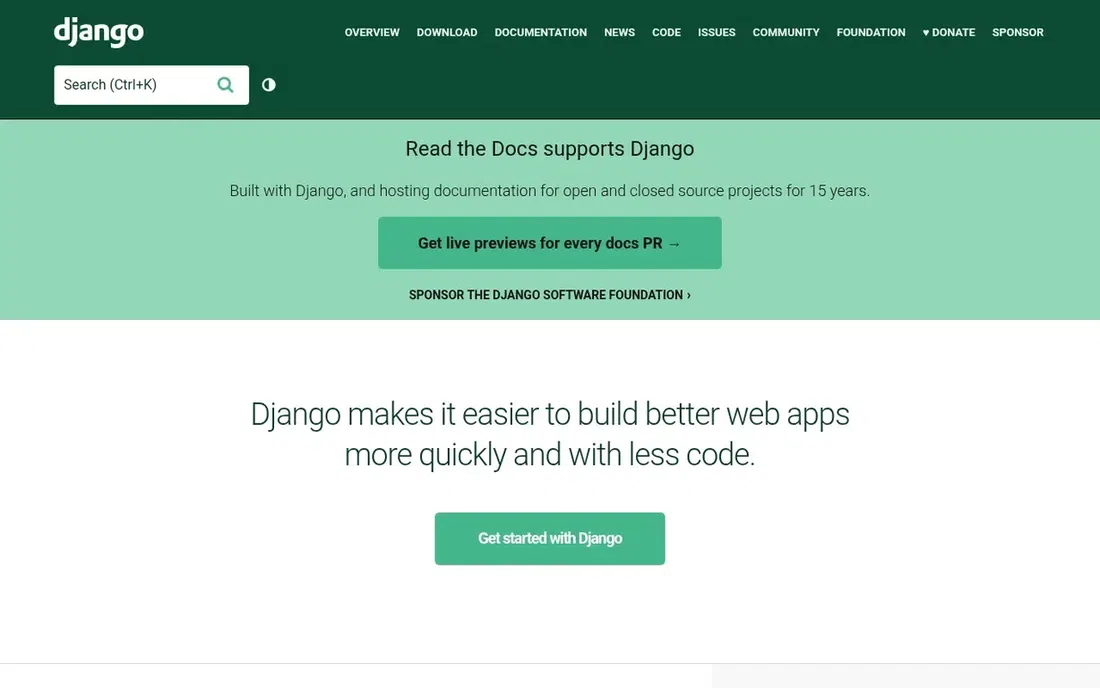
Django makes the most sense for structured Python projects with deadlines. Django's structured approach can feel heavy for small scripts or straightforward APIs, and it needs comfort with Python.
Watch-outs: Needs Python knowledge.
Developers already working in Python frequently reach for Django when they need a dependable foundation instead of a minimal core. Django does not show a starting price in this comparison, so check the vendor site for current pricing. Trial and free access: Not stated.
- Well documented
- Mature Python framework
- Opinionated structure
Next.js
Best for: Full-stack React web apps
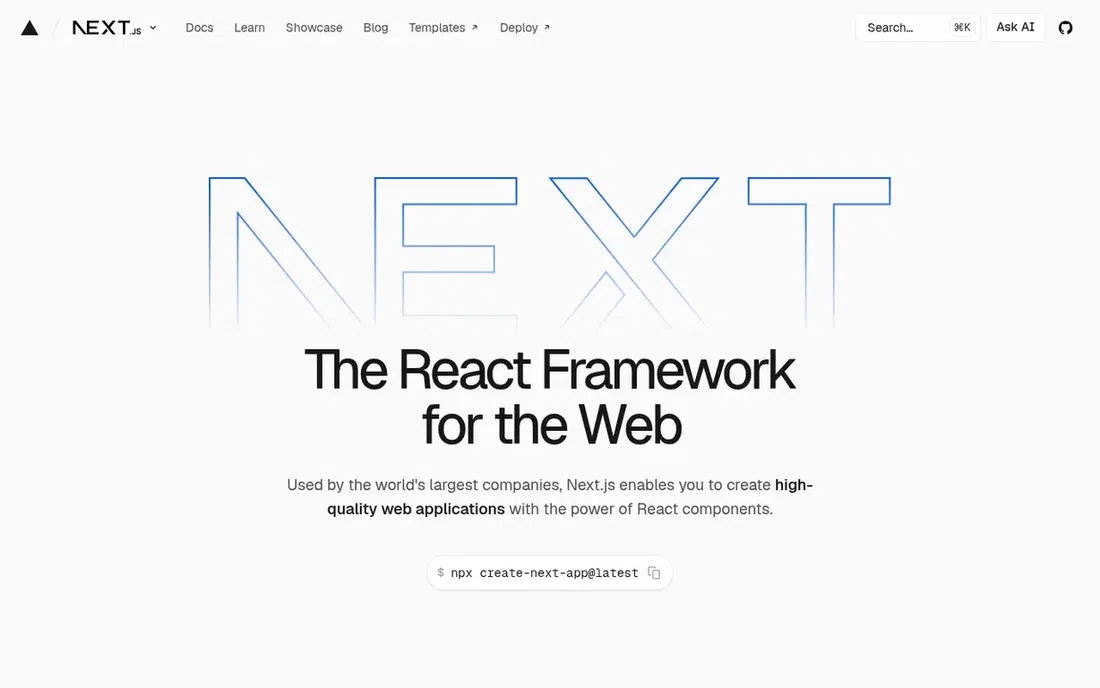
Next.js is aimed squarely at full-stack React web apps. Next.js is a full-stack React framework maintained by Vercel, targeted at developers who want to build web applications around React components. Worth adding: if your project is component-driven and you expect to grow it over time, Next.js supplies a structured path without assembling numerous separate libraries.
Watch-outs: Numerous built-in concepts to learn.
In daily use, pick something lighter for example Express or Flask when your app is small and you prefer minimal structure over a complete framework. The React dependency is the primary limit: developers new to React face a steep ramp-up time, and more straightforward sites may not need the full-stack layer. Next.js shows no starting price here, so confirm the cost on the vendor site. Trial and free access: Not stated.
- Built on React
- Capable documentation
- Tied to React knowledge
Flask
Best for: Small Python apps and prototypes
For small Python apps and prototypes, Flask is a natural candidate. Flask is a light Python web framework documented with a straightforward getting-started path.
Downsides: Few built-in features.
From a buyer's view, developers learning Python web development commonly start with Flask since the core stays small and the structure stays adaptable. Flask leaves numerous concerns to extensions, so bigger projects may need more assembly work. No starting price is listed for Flask here; confirm pricing on the vendor site. As for free access: Not stated.
- Adaptable structure
- Straightforward to learn
- You add components yourself
How we built this list
Pre-purchase checklist
- Ask each vendor, from Express to Flask, for a written quote; none of them publishes a starting price.
- Before choosing Express, weigh its main limit: few built-in features.
- Check whether the features you need in Flask sit on the entry plan or only on higher tiers.
- A short pilot of Express with your real workflow tells you more than a feature table.
- Before you load data into Ruby on Rails, check what an export looks like and who can run it.
FAQ
How are the tools for basic web framework ordered?
The order follows typical fit for basic web framework, with Express first and Flask last, then price clarity and free access. It is editorial judgement, not a score, so another team could rank the tools differently.
Is Django or Flask better for Python web apps?
Django provides a structured, convention-driven framework suited to database-backed projects with deadlines. Pick Django when you want guidance and Flask when you want minimal structure.
Can I try these tools before paying?
Not by default. None of the tools, from Express to Flask, lists a free plan or a free trial here, so ask each vendor for a demo before committing.
Should I choose Next.js or Express for a JavaScript project?
Next.js is a full-stack React framework, so it suits component-driven applications that need more built-in capability. Express is minimalist and unopinionated, which fits small APIs and services where you want to choose your own libraries.
Do these tools publish their prices?
No. None of the tools, from Express to Flask, shows a fixed starting price here, so budget time for quotes.
Does any tool for basic web framework here have a free plan?
No tool in this list, Express and Flask included, has a permanent free plan. Trials and quotes are the usual route, so plan a short evaluation period.
Sources
- https://expressjs.com
- https://laravel.com
- https://rubyonrails.org
- https://www.djangoproject.com
- https://nextjs.org
- https://flask.palletsprojects.com