6 Best Augmented Reality Visualization Software for 2026, Vetted and Compared
Best augmented reality visualization software, compared. 6 tools with published prices, free plans and limits. Caveats come with every verdict. Choose faster.
- Editor's choiceARCore
Android AR experiences at world scale
Starts atSee websiteVisit developers.google.comFull review - Great alternativeARKit
IOS and iPadOS AR development
Starts atSee websiteVisit developer.apple.comFull review - Also consider
 Unity
Cross-platform AR and 3D visualization
Starts at$210.00 a monthVisit unity.comFull review
Direct answer
ARCore comes first here, mainly for Android AR experiences at world scale. Listed starting prices: Unity from $210.00 a month. For a different need, ARKit covers iOS and iPadOS AR development and Unity covers cross-platform AR and 3D visualization. Details, prices and limits for the rest of the 6 tools are below.
TL;DR:
- This list starts with ARCore, which is built for Android AR experiences at world scale.
- ARCore, Wikitude and the 4 others all need a premium plan or a trial, since no free plan is listed.
- Check the limits for Vuforia before you commit: can be complicated to set up.
- Wikitude suits cross-platform AR SDK for developers.
Last checked November 2026. Prices and plan details were read from the vendors' own pages in November 2026; vendors change plans often, so confirm the current price on the vendor site before you buy.
Quick comparison
| Tool | Best for | Starts at | Free plan? | |
|---|---|---|---|---|
| ARCore | Android AR experiences at world scale | See website | Not stated | Visit |
| ARKit | IOS and iPadOS AR development | See website | Not stated | Visit |
| Unity | Cross-platform AR and 3D visualization | $210.00 a month | Free trial | Visit |
| Vuforia | Enterprise AR with advanced tracking | See website | Not stated | Visit |
 8th Wall | Open source web-based AR | See website | Not stated | Visit |
| Wikitude | Cross-platform AR SDK for developers | See website | Not stated | Visit |
Augmented Reality Visualization Software, one by one
LinkVetted put together this guide to augmented reality visualization software for readers who want a clear shortlist without reading every vendor page. It compares 6 tools on starting price, free plans, who each one suits and where each one falls short.
ARCore
Best for: Android AR experiences at world scale
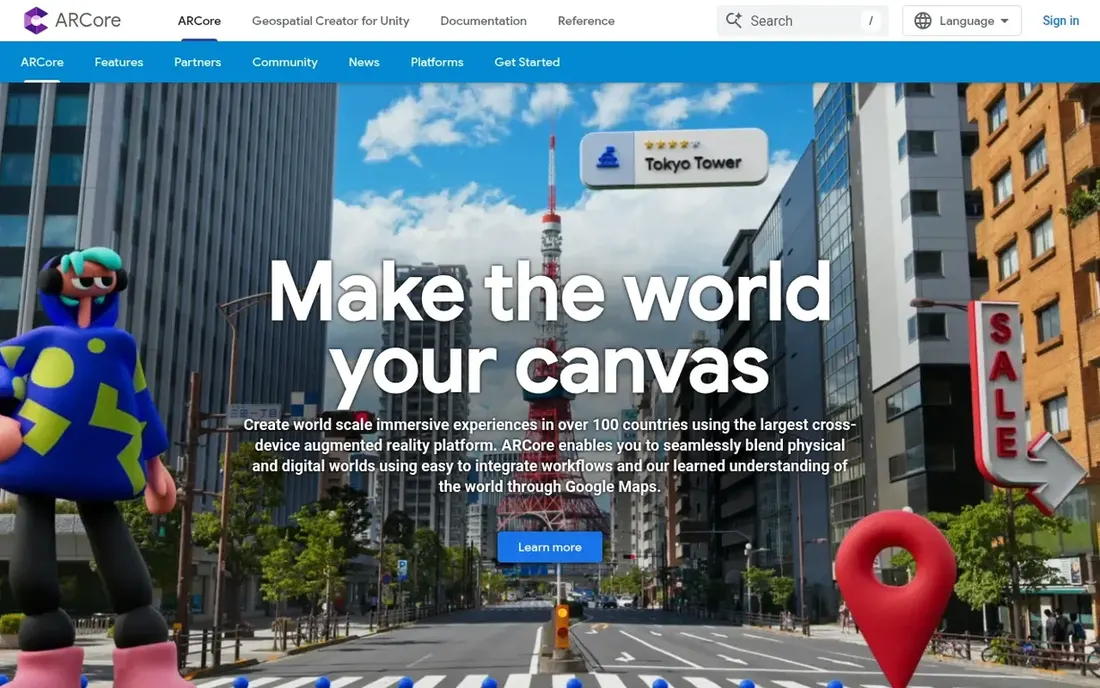
Choose ARCore for Android AR experiences at world scale. It supplies tools to produce world-scale, immersive AR that blends digital and physical worlds.
Points against: Restricted to Android devices.
ARCore is Android-only, so it is not a good match for cross-platform or iOS projects. ARCore does not show a starting price in this comparison, so check the vendor site for current pricing. Trial and free access: Not stated.
- Backed by Google's AR technology
- Native Android integration
- Needs Android development knowledge
ARKit
Best for: IOS and iPadOS AR development
ARKit targets iOS and iPadOS AR development. It suits iOS developers targeting Apple's large user base with native AR performance.
Choose ARKit when you are committed to the Apple ecosystem and want smooth integration. Check the vendor site for ARKit pricing; none is listed in this comparison. Free access: Not stated.
Drawbacks to consider: Apple products only.
- Access to Apple's AR tools
- High-quality motion tracking
- Needs Swift or Objective-C knowledge
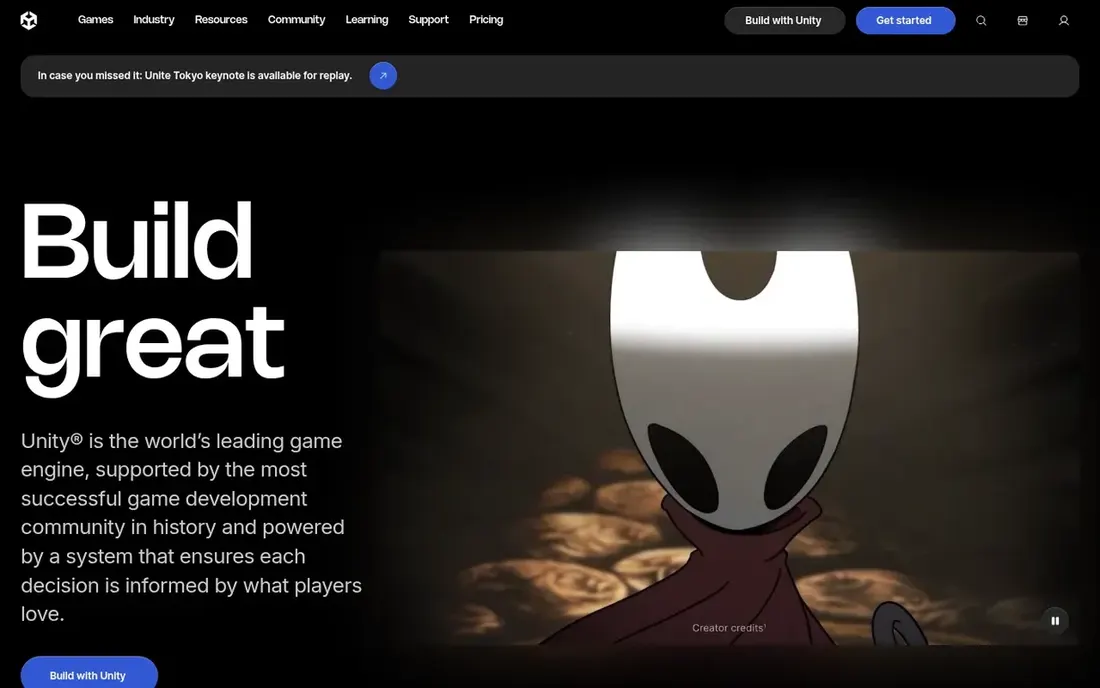
For cross-platform AR and 3D visualization, Unity is a natural candidate. Unity is a leading 3D game engine that also powers augmented reality visualization across mobile, PC, console, and XR systems. It gives you a thorough environment for building interactive AR scenes, from prototyping to deployment.
For everyday use, for light, web-based AR, a specialized SDK may be more appropriate. More specifically, Unity's breadth means it can be overkill for straightforward AR overlays, and new users face a ramp-up time. More specifically, choose Unity when you need a solid, cross-platform engine with capable 3D capabilities. The starting price for Unity: $210.00 per month. On free options: Free trial.
Drawbacks to consider: Steeper ramp-up time for beginners.
- Large ecosystem for development and deployment
- Capable 3D engine for immersive experiences
- Needs coding knowledge for advanced features
Vuforia
Best for: Enterprise AR with advanced tracking
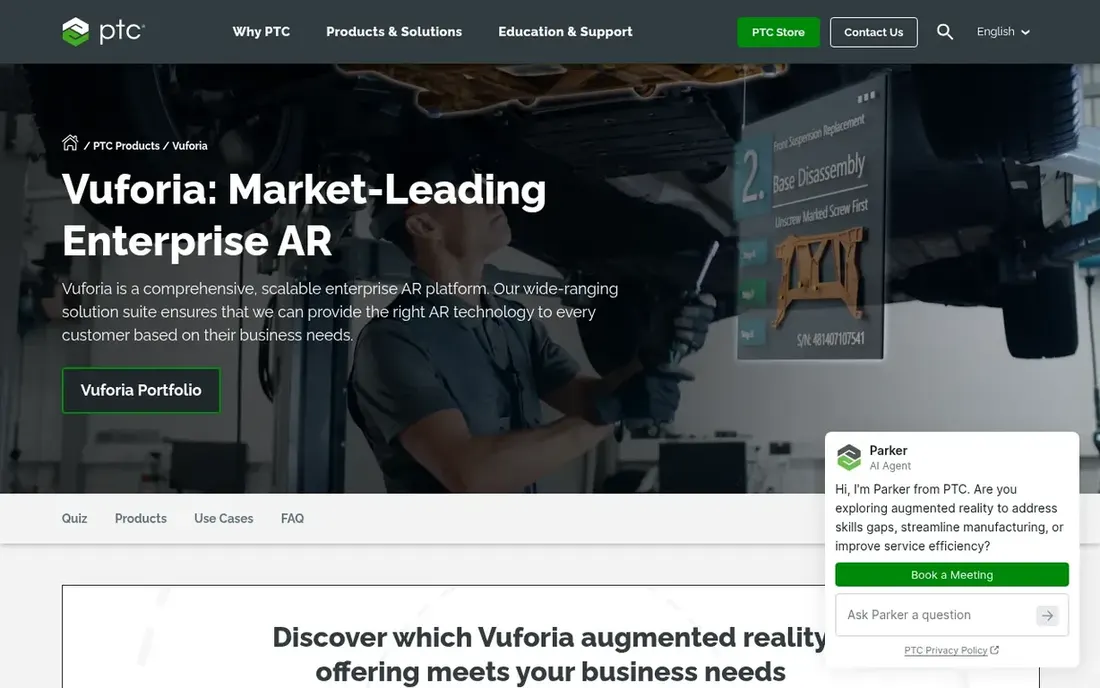
For enterprise AR with advanced tracking, Vuforia is a natural candidate. Vuforia's enterprise focus means it may be more complicated and expensive for small projects.
Vuforia is an enterprise augmented reality product from PTC, known for its expansive tracking capabilities. It makes it possible for companies to build AR options with image, object, and environment recognition. Pricing for Vuforia is not stated here, so ask the vendor for current figures. Free options: Not stated.
Points against: Can be complicated to set up.
- Expansive tracking capabilities
- Supports a set of AR use cases
- May need licensing for commercial use
8th Wall was built for open source web-based AR. 8th Wall is an open source product for building augmented reality and interactive 3D experiences on the web.
8th Wall concentrates on web AR, so it may not match the performance of native AR for complicated scenes. For device-specific features, native SDKs like ARCore or ARKit are better. No starting price is listed for 8th Wall here; confirm pricing on the vendor site. Free options: Not stated.
Trade-offs to know: Restricted to web capabilities.
- Open source and free
- No app install required
- May need web development skills
Wikitude
Best for: Cross-platform AR SDK for developers
Choose Wikitude for cross-platform AR SDK for developers. Wikitude is a cross-platform augmented reality SDK that lets developers build AR experiences for several products.
Drawbacks to consider: Documentation may be less deep.
It gives you image recognition, tracking, and geolocation features. In practice, Wikitude needs programming knowledge and may lack the deep community support of bigger engines. Check the vendor site for Wikitude pricing; none is listed in this comparison. On free options: Not stated.
- AR SDK with recognition features
- Cross-platform support
- Needs development expertise
How these tools were picked
The comparison looks at four things: starting price, free access, how well the feature set matches augmented reality visualization software, and the main limit of each tool. Prices and plan limits come from vendor pages and can change, so confirm them on the vendor site before you buy. The order reflects how well each tool fits the most common buying scenario for augmented reality visualization software, then price clarity, then free plan access. It is a starting point, not a verdict.
Things to verify first
- Get a written quote from ARCore, ARKit, Vuforia and others; the list shows no starting price for them.
- Use real work to test the free trial from Unity, rather than a demo project.
- Read the limits listed for ARCore first: restricted to Android devices.
- Compare total cost, not headline price: for 8th Wall, add extra seats, add-ons and any usage-based charges.
- See whether ARCore offers onboarding or training, and whether it is included in the price.
FAQ
What is augmented reality visualization software?
Augmented reality visualization software helps developers and creators build AR experiences that overlay digital content onto the real world. It usually contains tools for 3D rendering, tracking, and deployment across devices.
Can I try these options before paying?
Often, yes. Unity offers a free trial. Use your own data and a real task during the test, and check what the free tier or trial limits before you rely on it. All 6 picks in this Augmented reality Visualization software comparison list a starting price, free plan details and the main limits on their cards above.
What is the cheapest option for augmented reality visualization software in this list?
On published monthly entry prices, Unity is the lowest here at $210.00 per month. Entry price is only part of the cost, because seats, add-ons and billing terms can change the total. For the full picture, the cards above cover all 6 entries of this Augmented reality Visualization software list, including price, free plan and limits.
Do these tools publish their prices?
Not all of them. ARCore, ARKit, Vuforia and others publish no starting price, so expect a quote request for those. The rest, Unity included, show a starting price, though seats and billing terms still change the final cost.
Does any tool for augmented reality visualization software here have a free plan?
A permanent free plan is not offered by ARCore, Wikitude or the other tools here. Unity offer a trial. Plan a short evaluation period instead.
Can I build web-based AR without an app?
Yes, 8th Wall is an open source system for web-based AR that runs in browsers without app installation. It is right for reaching users through web links. Native SDKs like ARCore and ARKit need app development.
Sources
- https://developers.google.com/ar
- https://developer.apple.com/augmented-reality
- https://unity.com
- https://www.ptc.com/en/products/vuforia
- https://www.8thwall.com
- https://www.wikitude.com