Best Augmented Reality Companies in 2026: 8 Companies Compared
Compare the best augmented reality companies in 2026, from Apple and Meta to Magic Leap and Unity, with hardware, platforms, pricing and use cases compared.

- Editor's choice
 Apple
Premium mixed reality and visionOS apps
Starts atSee websiteVisit apple.comFull review - Great alternative
 Meta Reality Labs
Consumer mixed reality and social AR
Starts atSee websiteVisit meta.comFull review - Also consider
 Google
Android AR and ARCore development
Starts atSee websiteVisit google.comFull review
TL;DR:
- Apple and Meta lead consumer and mixed reality hardware, while Google and Unity lead the software platforms most developers actually build on.
- Magic Leap, Microsoft and PTC Vuforia are stronger for enterprise and industrial work, where hands-free guidance and training matter more than games.
- Niantic remains the standout for location-based AR, with a proven record in outdoor games and real-world mapping.
- Hardware choice locks you into an ecosystem, so pick the platform and developer tools first, then the headset that runs them well.
Quick comparison
| Tool | Best for | Starts at | Free plan? | |
|---|---|---|---|---|
| Apple | Premium mixed reality and visionOS apps | See website | No | Visit |
| Meta Reality Labs | Consumer mixed reality and social AR | See website | No | Visit |
| Google | Android AR and ARCore development | See website | Yes | Visit |
 Microsoft HoloLens | Enterprise mixed reality (legacy hardware) | See website | No | Visit |
 Magic Leap | Enterprise AR glasses | See website | No | Visit |
 Niantic | Location-based AR games and mapping | See website | No | Visit |
 PTC Vuforia | Industrial AR for manufacturing and service | See website | No | Visit |
 Unity | Cross-platform AR app development | See website | Yes | Visit |
The best augmented reality companies
We compared official hardware pages, developer platforms and enterprise case materials for AR companies with live products in 2026. The list mixes hardware makers, platform owners and industrial specialists, since no single company covers every AR use case well.
Apple approaches AR from two directions: Vision Pro for high-end mixed reality, and ARKit on iPhone and iPad for mass-market AR. Vision Pro offers sharp displays, eye and hand tracking and a growing set of productivity and entertainment apps, while ARKit lets developers place virtual objects in the real world on hundreds of millions of phones.
The main barrier is price and scale. Vision Pro costs far more than a phone-based AR experience, and the headset market is still small. For consumer apps, building with ARKit first and adding a Vision Pro version later is often the smarter order.
- High-quality Vision Pro hardware
- VisionOS developer tools
- Strong iPhone AR reach through ARKit
- High hardware price
- Limited enterprise focus
- Smaller headset install base than phones

Meta Reality Labs makes the Quest headsets and the Horizon platform, and it has invested heavily in AR glasses research alongside mixed reality. Quest devices offer color passthrough, hand tracking and a large app library at prices well below Vision Pro, which is why they dominate consumer headset sales.
For developers, Meta offers a mature store, developer tools and social features, but enterprise buyers should check device management, data handling and long-term support terms. Meta is the default consumer pick, yet it is not the automatic choice for regulated industrial work.
- Large Quest install base
- Lower headset prices
- Strong social and gaming content
- Privacy concerns for some buyers
- Enterprise tools are thinner
- Hardware cycles move fast
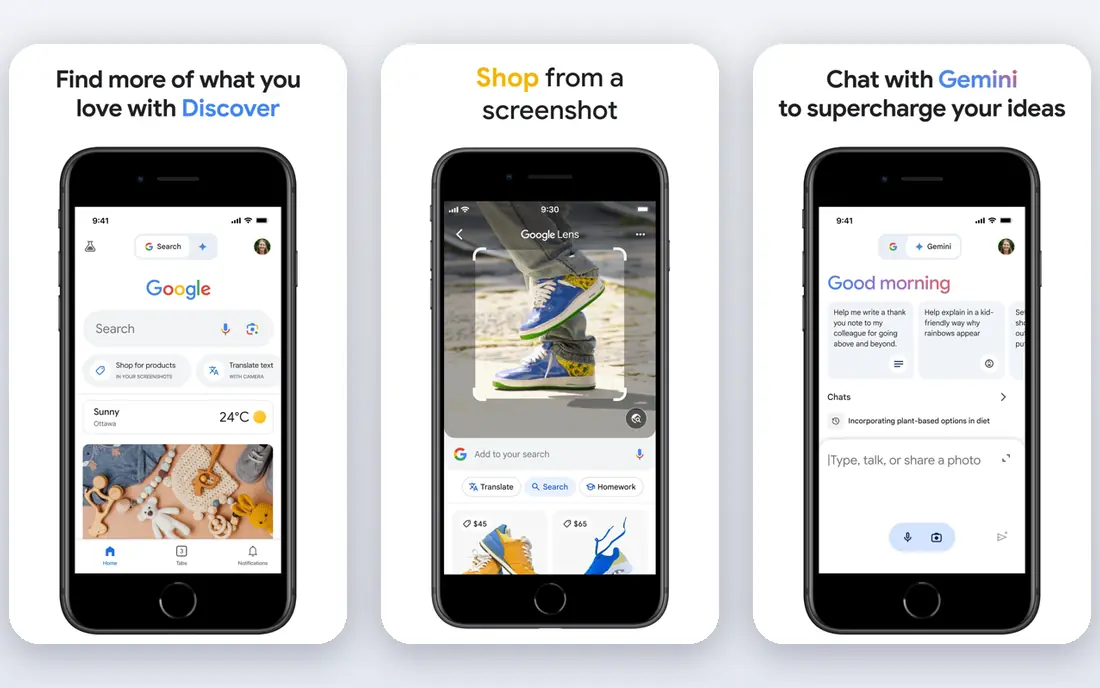
Google's AR strength is reach. ARCore powers AR features on a wide range of Android phones, from virtual furniture placement to navigation overlays, without requiring a headset. Its Android XR work aims to extend that reach to headsets and glasses, with Google services built in.
The weakness is consistency. Google has changed AR hardware plans more than once, so buyers should focus on ARCore and Android XR software support rather than betting on a single Google device. For phone-first AR, Google remains essential alongside Apple.
- ARCore reaches many Android phones
- Android XR platform
- Strong maps and search integration
- Hardware strategy has shifted several times
- AR glasses are still emerging
- Developer support varies by device
Microsoft HoloLens 2 was a landmark enterprise headset, used for remote assistance, training and guided maintenance in factories, hospitals and field service. Its integration with Dynamics 365 Guides made it easy to build step-by-step holographic instructions for workers.
Buyers in 2026 should treat HoloLens as legacy hardware. Microsoft has wound down new HoloLens production, so new projects should compare Magic Leap, Android XR devices and other enterprise headsets, while existing HoloLens users plan a migration path rather than expanding a fleet.
- Proven enterprise deployments
- Dynamics 365 Guides integration
- Strong industrial case history
- HoloLens hardware is discontinued
- Future support is limited
- Newer rivals offer better optics
Magic Leap 2 targets enterprise users who need AR glasses for long shifts, not entertainment. It offers a wide field of view for its class, dimming for bright environments and tools for healthcare, manufacturing and defense training. Hospitals and industrial teams use it for visualization, remote help and guided procedures.
The ecosystem is smaller than Meta or Apple, and prices reflect enterprise sales rather than consumer retail. For a focused enterprise deployment with a clear workflow, Magic Leap is a strong pick. For a general consumer app, it is the wrong starting point.
- Lightweight enterprise glasses
- Strong optics
- Healthcare and industrial focus
- Enterprise pricing
- Smaller app ecosystem
- Consumer content is limited
Niantic built its name on location-based games that blend the real world with virtual content, and its platform now offers mapping, localization and shared AR experiences for other developers. Its visual positioning system helps phones understand where they are in a real place, which is hard to replicate from scratch.
Developers building outdoor, tourism or city-scale AR should look closely at Niantic, especially where shared experiences across many phones matter. For indoor industrial work, PTC Vuforia or Magic Leap will usually fit better.
- Proven location AR games
- Real-world mapping platform
- Large outdoor player base
- Games business is hit-driven
- Enterprise tools are narrower
- Platform pricing is quoted
PTC Vuforia is the industrial workhorse of this list. It lets manufacturers turn CAD models into AR instructions, overlay assembly steps on real equipment, and give field technicians remote expert help. Integration with PTC product lifecycle tools is a real advantage for engineering teams.
The platform is built for factories and service teams, not consumer marketing, and pricing is quoted for enterprise use. If your goal is faster training, fewer assembly errors or better first-time fix rates, Vuforia deserves a pilot against Magic Leap and other industrial options.
- Strong CAD and model support
- Step-by-step work instructions
- Enterprise integrations
- Enterprise pricing
- Learning curve for complex models
- Phone and tablet use varies by device
Unity is where many AR apps are actually built. Its AR Foundation framework lets developers target ARKit, ARCore and headset platforms from one project, which saves time when an app must run on phones and headsets. A large asset store and developer community help small teams move fast.
Unity does not make AR hardware, so buyers still need a device strategy. Check the current license and runtime terms for your revenue level, since Unity has revised those terms in recent years. For most AR developers, Unity or Unreal is the practical starting point, with the platform choice following the target devices.
- Cross-platform AR Foundation tools
- Large developer community
- Strong 3D content pipeline
- Runtime fee terms have changed before
- Performance tuning takes skill
- Not a hardware maker
How we picked these
We compared official hardware, platform and developer pages, and we favored companies with live AR products, developer tools or enterprise deployments in 2026. We excluded pure concept firms and companies whose AR work is only a small research project. Hardware prices change often, so we list See website for headset and enterprise pricing.
How to choose an augmented reality company
Start with the user and the place. A factory worker needs hands-free glasses and clear instructions, a shopper needs phone AR that works in a browser or app, and a gamer needs a headset with strong content. Those three cases point to different vendors, and no single company wins all of them.
Next, check the developer path. Ask which SDKs, device management tools and content pipelines your team will use, and whether the app can move to another headset later. A platform with open standards and cross-platform tools reduces lock-in, even if the first headset is a single-vendor choice.
Finally, run a small pilot with real users in the real environment. Test lighting, movement, battery life and comfort over a full shift or session, not just a short demo. AR that looks good in a bright demo room can fail in a dim warehouse, a sunny street or a busy hospital ward.
Phone AR versus headset AR
Phone AR reaches the most people at the lowest cost, and it suits retail, tourism and marketing. Headset AR suits hands-free work, training and high-value visualization, but it costs more and needs device management.
Enterprise deployment checklist
Check device management, security updates, data handling, battery and charging, cleaning and repair, and user training. Those operational items decide whether a pilot becomes a lasting deployment or a drawer full of headsets.
FAQ
What is the best augmented reality company?
There is no single winner. Apple and Meta lead headsets, Google and Unity lead phone and cross-platform development, and Magic Leap and PTC Vuforia lead industrial work. Pick by use case, then by platform.
Is Microsoft HoloLens still available?
HoloLens 2 hardware has been discontinued, though existing devices and software support continue for current users. New enterprise projects should compare current Magic Leap, Android XR and other enterprise headsets instead.
What is the difference between AR and mixed reality?
AR overlays digital content on the real world, usually through a phone or glasses. Mixed reality goes further by anchoring digital objects to the real world so they behave as if they are really there, with occlusion and interaction.
Do I need a headset to build an AR app?
No. Phone-based AR through ARKit, ARCore or Unity AR Foundation reaches the most users and is the best starting point for most apps. Add a headset version only when hands-free use or high-end visualization justifies the cost.
Which AR platform is best for developers?
Unity with AR Foundation is the most flexible cross-platform choice, while native ARKit and ARCore give the deepest phone features on each platform. Most teams prototype in Unity, then optimize natively if needed.
Is AR useful for business, or just games?
AR is already useful in manufacturing, field service, healthcare training, retail and tourism, where guided instructions, visualization and remote help save time and errors. Games made AR famous, but industrial and retail uses are where many buyers see clear returns.