9 Best Apps for Saving and Investing in 2026
Compare the best apps for saving and investing, from Acorns and Betterment to Fidelity and SoFi, with fees, minimums, and plain guidance. for everyday use.
- Editor's choice
 Acorns
Spare-change investing
Starts at$4 per monthVisit acorns.comFull review - Great alternative
 Betterment
Goal-based automated investing
Starts at$5 per monthVisit betterment.comFull review - Also consider
 Robinhood
Simple self-directed trading
Starts atFreeVisit robinhood.comFull review
TL;DR:
- Acorns and Betterment suit hands-off savers, while Robinhood, Fidelity, and SoFi suit people who want to pick their own stocks and funds.
- Watch for monthly subscriptions on small balances, since a flat fee can take a larger share of a small account.
- Saving and investing are different jobs: a high-yield cash account protects short-term money, while investing suits longer-term goals.
- This article is general information only, not financial advice, and investing can lose money.
Quick comparison
| Tool | Best for | Starts at | Free plan? | |
|---|---|---|---|---|
| Acorns | Spare-change investing | $4 per month | Free trial | Visit |
| Betterment | Goal-based automated investing | $5 per month | No | Visit |
| Robinhood | Simple self-directed trading | Free | Yes | Visit |
 Fidelity | Full-service investing and research | Free | Yes | Visit |
 SoFi Invest | Banking plus investing | Free | Yes | Visit |
 Wealthfront | Automated portfolios | 0.25% per year | No | Visit |
 Charles Schwab | Broad investing and retirement | Free | Yes | Visit |
 Stash | Guided beginner investing | See website | Free trial | Visit |
 Public | Social and guided investing | Free | Yes | Visit |
The best apps for saving and investing
Saving apps help you set money aside, while investing apps help that money grow over time, with risk attached. We compared official feature pages, pricing pages, app listings, and public reviews, focusing on fees, minimums, account types, and how much guidance each app gives beginners.
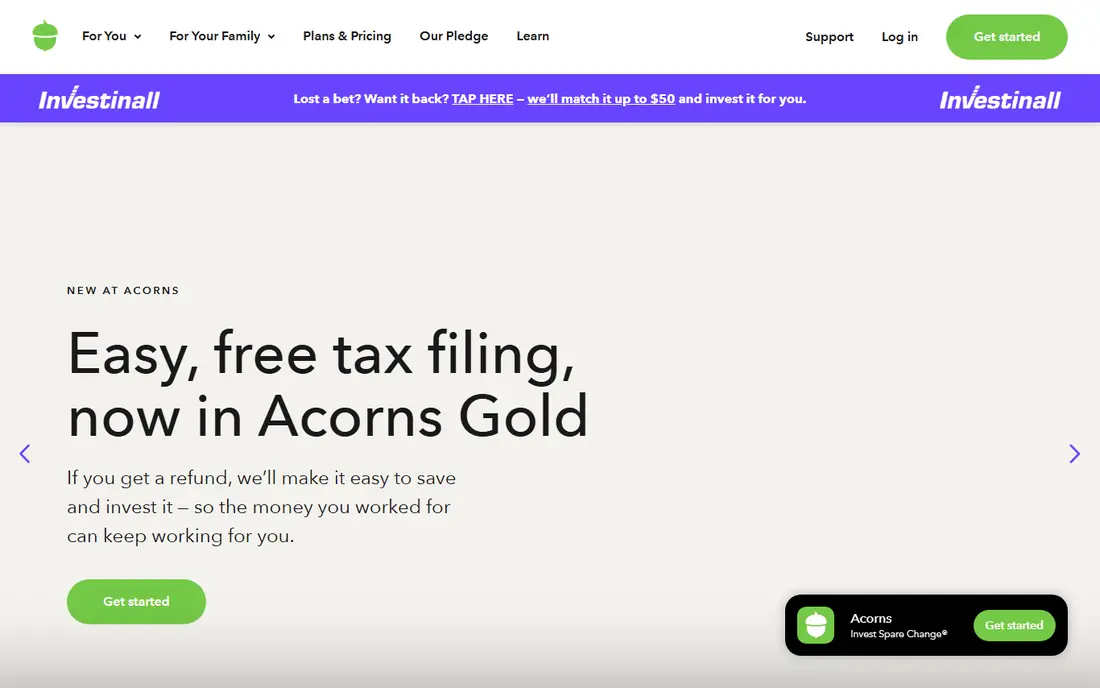
Acorns is built for people who struggle to save on purpose. Round-Ups invest the spare change from card purchases into a diversified portfolio, and recurring investments add a steady habit on top. That automation is the whole point: you save without deciding each week. The $4 per month Bronze plan is small in cash terms, but it matters on a $100 balance, where it equals a large annual share. Acorns also gives limited control over single stocks. If you want a hands-off start and you plan to build a balance over time, Acorns is a friendly first step.
- Automatic round-ups
- Simple portfolios
- Checking and retirement options on higher tiers
- Monthly fee can weigh on small balances
- Limited control over individual holdings

Betterment asks about your goal, time frame, and risk comfort, then builds and manages a portfolio for you. Automatic rebalancing keeps the mix on track, and qualifying accounts can use tax-loss harvesting. That structure suits savers who want a plan without picking funds themselves. Pricing depends on your setup, with a $5 monthly option or 0.25% per year under qualifying conditions, so read the current fee page before opening an account. Betterment is less suited to stock pickers. For goal-based, hands-off investing, it remains one of the clearest options.
- Goal-based portfolios
- Automatic rebalancing
- Tax-loss harvesting on qualifying plans
- No free plan
- Fee structure depends on deposits and balance
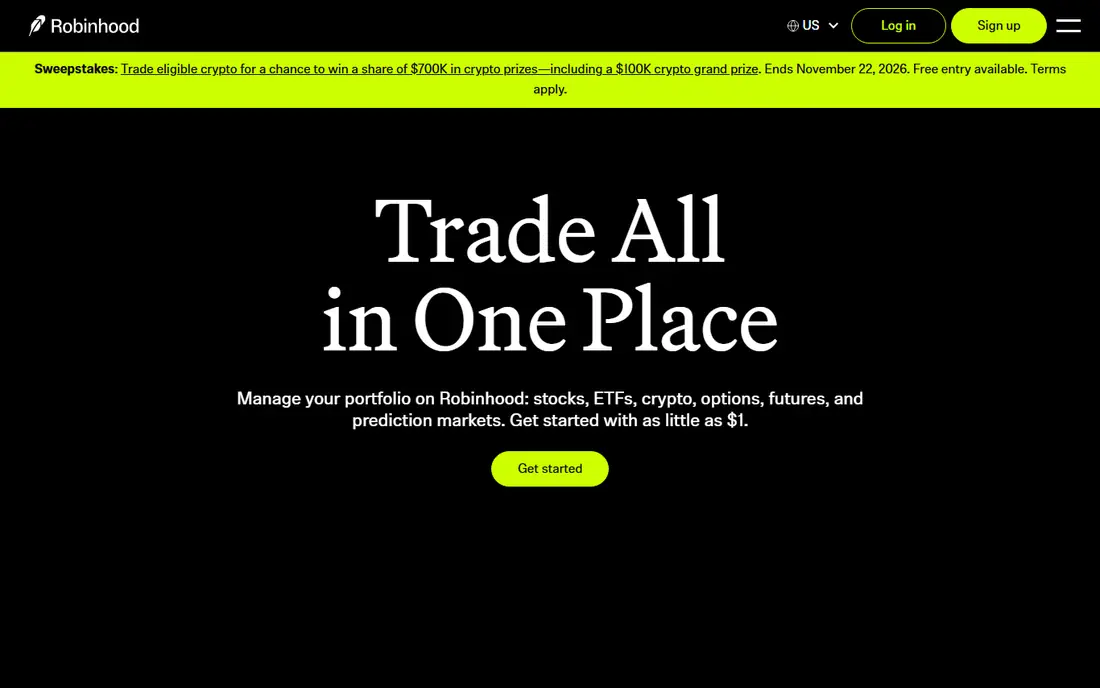
Robinhood made self-directed investing feel simple, with no-commission stock and ETF trades and fractional shares that let you start with $1. The app is fast, the trade screen is plain, and learning content helps new investors understand basic terms. For people who want to choose their own holdings, the low barrier is real. Research tools and retirement planning are thinner than at Fidelity or Schwab, and some features, such as larger instant deposits, sit behind the paid Gold subscription. Robinhood also does not offer mutual funds in the same way as full-service brokers. If you want control and simplicity, it is a good start, but pair it with your own research.
- No-commission stock and ETF trades
- Fractional shares from $1
- Simple app
- Limited research and retirement guidance
- Paid Gold adds features at extra cost
Fidelity covers almost every investing job in one place: brokerage, retirement accounts, low-cost index funds, and detailed research. Online U.S. stock and ETF trades carry no commission, and fractional shares let beginners start small. Retirement planning tools and educational content are stronger than at most app-first brokers. The breadth can feel dense at first, since the app and website carry many menus and account types. Some specialised services also carry separate charges, so check the fee schedule. If you want one account that can grow from a first trade to retirement planning, Fidelity is a solid long-term home.
- No-commission online stock and ETF trades
- Wide fund choice
- Strong research and retirement tools
- App can feel dense for absolute beginners
- Some services carry separate charges
SoFi Invest suits people who want banking and investing side by side. Checking and savings sit next to self-directed trading, and no-commission stock and ETF trades keep costs low. Free access to financial advisors by video chat is a useful extra that most app-first brokers do not offer. The all-in-one design can feel crowded if you only want investing, and robo-investing carries a 0.25% annual advisory fee, separate from self-directed trading. SoFi is newer than Fidelity or Schwab, which matters to some savers. If one app for cash and investments appeals to you, SoFi is convenient.
- Banking and investing in one app
- No-commission stock and ETF trades
- Free advisor access
- All-in-one app can feel crowded
- Robo-investing carries a separate advisory fee
Wealthfront builds a diversified portfolio from your risk profile and manages it for 0.25% per year, with a $500 minimum for its automated investing account. Tax-loss harvesting and automatic rebalancing are included, which helps long-term savers who do not want to manage trades. A cash account sits alongside investing for money you want to keep liquid. The minimum and the lack of single-stock picking will put off some beginners. Wealthfront suits savers with at least a few hundred dollars who want automation and a clear fee. For smaller starting amounts, Acorns or a free brokerage account may fit better.
- Automated diversified portfolios
- Tax-loss harvesting
- Cash account alongside investing
- $500 minimum for automated investing
- Less control over single holdings
Charles Schwab pairs a full-service brokerage with retirement planning, banking, and in-person support. Online stock and ETF trades carry no commission, and fractional share trading lets you start with small amounts. Research, screeners, and planning tools suit investors who want to learn as they go. The app feels more traditional than Robinhood or SoFi, which some younger savers may find less inviting. Certain advisory and specialised services also carry separate fees. If you value a long-established broker with broad support, Schwab is a dependable choice.
- No-commission online stock and ETF trades
- Strong retirement tools
- Wide branch and support network
- App feels more traditional than app-first rivals
- Some services carry separate fees
Stash guides beginners through investing with themed bundles, fractional shares, and plain-language lessons. That guidance helps people who feel stuck on what to buy first, since the app explains choices rather than leaving a blank trade screen. Banking features on some plans add saving tools alongside investing. Stash uses subscription tiers, so check the current price against your balance before subscribing. Advanced traders will want deeper research and order tools elsewhere. For a guided first year of investing, Stash is a supportive place to start.
- Guided portfolios and stock bundles
- Fractional shares
- Learning content built in
- Subscription pricing
- Fewer advanced tools than full brokers
Public combines no-commission stock and ETF trades with a community feed where investors share ideas and explain their thinking. Fractional shares keep starting amounts low, and built-in learning content helps new investors understand what they are buying. That social layer suits people who learn by watching others. Social feeds can also distract, and following other investors is not a strategy on its own. A paid Premium plan adds extra tools at an annual cost, so free users should check what they actually need. If discussion and guidance help you stay invested, Public is worth a look.
- No-commission stock and ETF trades
- Fractional shares
- Community and learning features
- Social features may distract some investors
- Premium plan adds cost for extra tools
How we picked these
We compared official feature pages, pricing pages, and app store listings, along with public reviews, and we kept only apps that are available and working in October 2026. We favoured apps with clear fees, low or no minimums, and a distinct fit, from spare-change automation to full-service brokerage. Where fees depend on balance, deposits, or plan tier, we noted that and pointed readers to the vendor fee page. We did not claim hands-on testing that did not happen. This article is general information only and is not financial advice.
How to choose a saving and investing app
Separate short-term cash from long-term investing
Money you need within a year or two, such as rent or an emergency fund, belongs in a savings or cash account, not in stocks. Investing suits goals several years away, where time can smooth out market falls. Many apps on this list offer both, but keep the two pots separate in your head, even if they sit in one app.
Compare the full fee, not just trades
No-commission trades do not mean no cost. Subscription fees, advisory percentages, fund expenses, and spreads all add up, and a flat monthly fee weighs most on small balances. Add up a year of fees at your expected balance, then compare apps on that total rather than on a single headline price.
Start small and automate
A recurring weekly or monthly investment, even a small one, beats waiting for the perfect moment. Set a regular amount you can sustain, turn on round-ups or recurring deposits if they help, and review your plan twice a year rather than reacting to daily market news. Investing can lose money, so only invest money you can leave alone for the long term.
FAQ
What is the best app to save money?
For automatic saving, Acorns round-ups and recurring investments help build a habit without daily decisions. For cash savings, a high-yield savings account inside a banking app such as SoFi may suit short-term goals better. Choose based on whether the money is for spending soon or for long-term growth.
What is the best app for beginner investors?
Acorns and Betterment suit hands-off beginners, while Fidelity and Robinhood suit beginners who want to pick their own holdings. Stash adds guidance for people who want explanations with each choice. Start with the style that matches how much control you want, not just the lowest fee.
How much money do I need to start investing?
Many apps let you start with $1 through fractional shares, while Wealthfront automated investing needs $500. Acorns and Betterment have no account minimum in the usual sense, but monthly fees apply. Check the current minimum and fee page before opening an account, since terms change.
Are investing apps safe?
Brokerage accounts at established firms are typically covered by SIPC protection up to legal limits for missing securities, but that does not protect against market losses. Cash accounts carry their own bank protections and terms. Read the account agreement, and remember that investing always carries risk.
Should I use a robo-advisor or pick my own stocks?
A robo-advisor suits savers who want a managed portfolio and automatic rebalancing without choosing funds. Self-directed trading suits people who enjoy research and accept the extra work and risk. Many investors use both: a managed core portfolio plus a small self-directed account for learning.
Is this article financial advice?
No. This article is general information about apps and features, not personal financial advice. Your goals, tax position, and risk comfort differ from other readers, so consider speaking with a qualified financial adviser before making investment decisions.