Best AI Investing Apps for Beginners in 2026: 8 Apps Compared
Compare the best AI investing apps for beginners, with simple research tools, fees, and clear risks before you invest any money today and buying tips.
- Editor's choice
 Magnifi
conversational investing research
Starts atFreeVisit magnifi.comFull review - Great alternative
 Composer
rules based strategies without coding
Starts atFreeVisit composer.tradeFull review - Also consider
 Acorns
starting small with round ups
Starts at$4 per monthVisit acorns.comFull review
TL;DR:
- Magnifi is the clearest conversational research tool for beginners, with a free tier for basic portfolio review.
- Acorns and Betterment suit new investors who want automated, diversified portfolios without picking single stocks.
- Composer is better for learners who want to test rules based strategies, but it needs more care than a simple robo advisor.
- AI suggestions are research aids, not guarantees, so check fees, diversification, and your own goals before you invest.
Quick comparison
| Tool | Best for | Starts at | Free plan? | |
|---|---|---|---|---|
| Magnifi | conversational investing research | Free | Yes | Visit |
| Composer | rules based strategies without coding | Free | Yes | Visit |
| Acorns | starting small with round ups | $4 per month | No | Visit |
 Wealthfront | automated diversified investing | See website | No | Visit |
 Betterment | goal based automated investing | See website | No | Visit |
 eToro | learning from other investors | Free | Yes | Visit |
 SoFi Automated Investing | low cost automated portfolios | Free | Yes | Visit |
 Intellectia AI | AI stock research and signals | See website | Free trial | Visit |
The best AI investing apps for beginners
We compared AI investing apps that explain holdings in plain language, help you research funds and stocks, and keep fees clear for new investors. This is not financial advice, and investing carries risk, including possible loss of money.
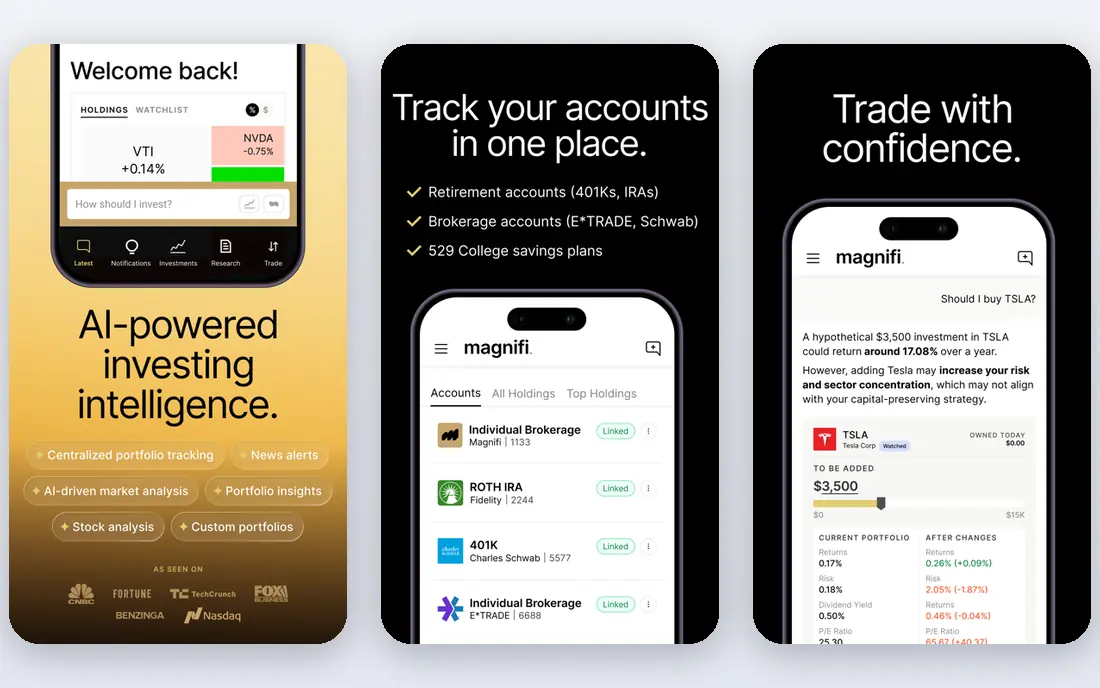
Magnifi lets a beginner ask a direct question, such as whether a portfolio is diversified, and get an answer tied to actual holdings rather than a generic article. We compared its official feature page and pricing page, and we weighed its strengths against its limits for everyday use. The field lines above give the headline facts, while the rest of this section explains who will get the most from it and where it falls short. Our view is that this option is worth a trial if its best fit matches your main need, but you should check the current price and free limits at checkout before you commit. If the main drawback would affect you every week, pick a rival from this list whose strengths line up better with how you work, read, or run your team.
- Ask questions in plain language about holdings and goals
- Portfolio view across linked brokerages
- Commission free trading in the app
- Premium research, forecasting, and scenario tools need a paid plan
- US only
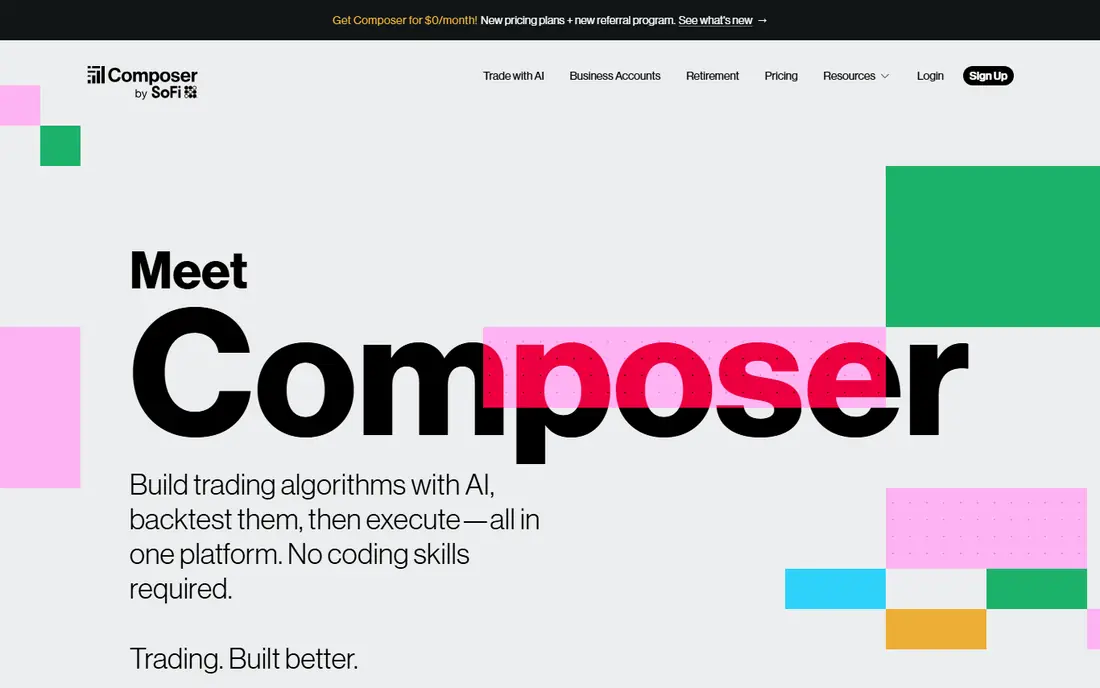
Composer suits curious beginners who want to learn how rules, rebalancing, and diversification interact, but it should be used with small amounts while you learn. We compared its official feature page and pricing page, and we weighed its strengths against its limits for everyday use. The field lines above give the headline facts, while the rest of this section explains who will get the most from it and where it falls short. Our view is that this option is worth a trial if its best fit matches your main need, but you should check the current price and free limits at checkout before you commit. If the main drawback would affect you every week, pick a rival from this list whose strengths line up better with how you work, read, or run your team.
- Build strategies with a visual editor
- Backtesting for historical comparison
- Automated trading on paid plans
- Automated trading needs a Trading Pass
- Backtests do not predict future returns
- Strategy risk can be high
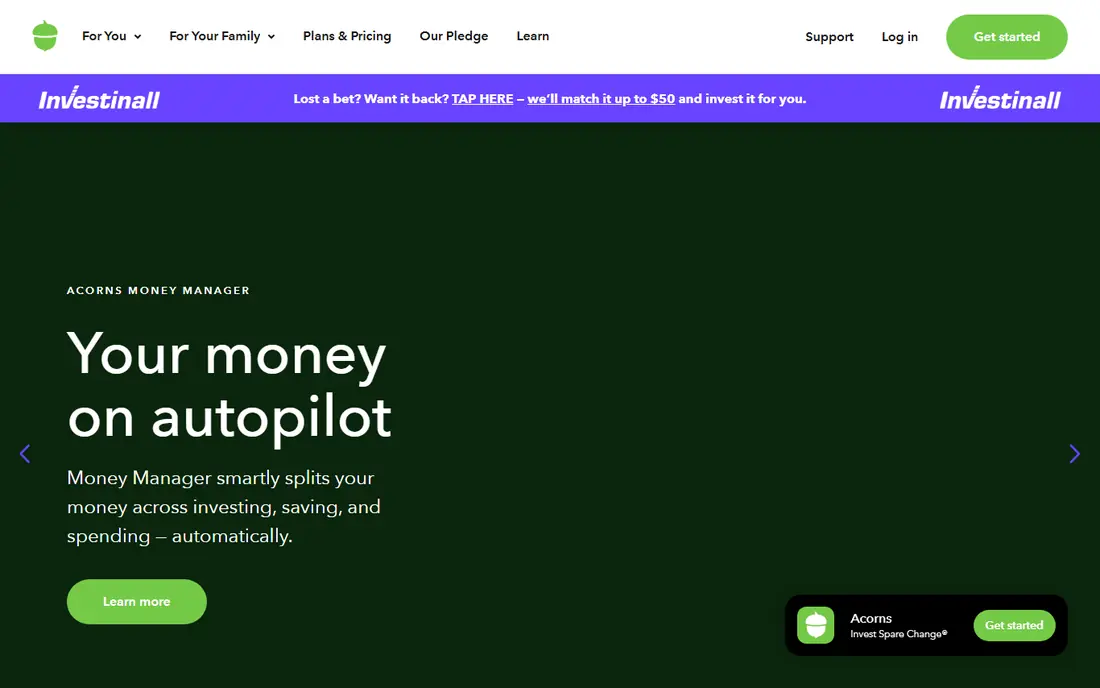
Acorns is a gentle entry point, because it builds a habit of investing regularly without asking you to pick individual stocks at the start. We compared its official feature page and pricing page, and we weighed its strengths against its limits for everyday use. The field lines above give the headline facts, while the rest of this section explains who will get the most from it and where it falls short. Our view is that this option is worth a trial if its best fit matches your main need, but you should check the current price and free limits at checkout before you commit. If the main drawback would affect you every week, pick a rival from this list whose strengths line up better with how you work, read, or run your team.
- Round ups turn spare change into investments
- Diversified ETF portfolios
- Retirement account options
- Monthly fee can be high relative to a very small balance
- Portfolio choice is limited by design
Wealthfront fits beginners who want a hands off, diversified portfolio and are comfortable paying an advisory fee for automation and rebalancing. We compared its official feature page and pricing page, and we weighed its strengths against its limits for everyday use. The field lines above give the headline facts, while the rest of this section explains who will get the most from it and where it falls short. Our view is that this option is worth a trial if its best fit matches your main need, but you should check the current price and free limits at checkout before you commit. If the main drawback would affect you every week, pick a rival from this list whose strengths line up better with how you work, read, or run your team.
- Automated portfolios with rebalancing
- Tax loss harvesting features
- Cash account options
- Advisory fee applies as a percentage of assets
- Advanced features need larger balances in some cases
Betterment helps beginners frame investing around a goal, such as retirement or a home deposit, rather than around a single stock tip. We compared its official feature page and pricing page, and we weighed its strengths against its limits for everyday use. The field lines above give the headline facts, while the rest of this section explains who will get the most from it and where it falls short. Our view is that this option is worth a trial if its best fit matches your main need, but you should check the current price and free limits at checkout before you commit. If the main drawback would affect you every week, pick a rival from this list whose strengths line up better with how you work, read, or run your team.
- Goal based portfolios for retirement, safety nets, and major purchases
- Automatic rebalancing
- Human advice options on some plans
- Fees vary by plan, so check the current pricing page
- Portfolio customization is limited compared with self directed trading
eToro can help a beginner see how other investors build portfolios, but it should be used for learning and small, careful steps, not as a shortcut to returns. We compared its official feature page and pricing page, and we weighed its strengths against its limits for everyday use. The field lines above give the headline facts, while the rest of this section explains who will get the most from it and where it falls short. Our view is that this option is worth a trial if its best fit matches your main need, but you should check the current price and free limits at checkout before you commit. If the main drawback would affect you every week, pick a rival from this list whose strengths line up better with how you work, read, or run your team.
- Copy trading and social features
- Stocks and ETFs with zero commission in the US
- Practice account options
- Copying another investor does not remove risk, and past performance does not predict future results
- Other fees can apply
SoFi Automated Investing suits beginners who want a simple, low fee automated portfolio alongside everyday banking tools, without managing trades themselves. We compared its official feature page and pricing page, and we weighed its strengths against its limits for everyday use. The field lines above give the headline facts, while the rest of this section explains who will get the most from it and where it falls short. Our view is that this option is worth a trial if its best fit matches your main need, but you should check the current price and free limits at checkout before you commit. If the main drawback would affect you every week, pick a rival from this list whose strengths line up better with how you work, read, or run your team.
- Automated diversified portfolios
- No advisory fee on the automated product in many cases
- Banking and planning tools in one app
- Portfolio choice is guided and limited
- Human advice and advanced planning may cost extra
Intellectia AI is best for a beginner who wants to practice research, compare stocks, and learn how analysts frame a thesis, before placing any trade. We compared its official feature page and pricing page, and we weighed its strengths against its limits for everyday use. The field lines above give the headline facts, while the rest of this section explains who will get the most from it and where it falls short. Our view is that this option is worth a trial if its best fit matches your main need, but you should check the current price and free limits at checkout before you commit. If the main drawback would affect you every week, pick a rival from this list whose strengths line up better with how you work, read, or run your team.
- Conversational AI research
- Stock screening and technical summaries
- Signals and watchlists
- It is a research tool, not a brokerage, so you still need an account elsewhere to trade
- Signals need independent checking
How we picked these
We compared official pricing pages, feature pages, and disclosures, and we focused on tools a beginner can actually understand and afford. We checked fees, minimums, diversification, whether the app trades for you or only offers research, and how clearly risks were explained. We favored apps with plain language, diversified defaults, and no promise of guaranteed returns. We also looked at user feedback in public reviews, but we treated single reviews with care, because experiences vary by device, region, and use case. Where pricing was unclear or varied by store, we wrote See website rather than guessing a figure, so you can check the current offer for your location.
How to choose an AI investing app as a beginner
Start with your goal and time horizon, not with a stock tip. Money you need soon should not be in volatile investments, while money for retirement can usually take more fluctuation. A diversified portfolio, often through broad ETFs, is a safer starting point than a single stock, and many robo advisors build that diversification for you automatically.
Read the fee in full before you fund an account. A monthly fee, an advisory percentage, fund expense ratios, spreads, and withdrawal fees can all add up, and a small fee matters more when your balance is small. If a price is not clear on the vendor site, treat that as a warning and ask support for the full fee schedule in writing.
Treat AI output as a research aid, not as advice. An AI tool can summarize filings, compare funds, and show scenarios, but it cannot know your tax situation, debts, or job security. Check any suggestion against a second source, look at what could go wrong, and avoid putting money you cannot afford to lose into a single idea, no matter how confident the tool sounds.
Keep a simple routine. Invest regularly if you can, review your portfolio a few times a year rather than daily, and rebalance or adjust only when your goal changes. If you feel pressure to trade often, or if losses cause real stress, pause, reduce risk, and consider speaking with a licensed financial adviser. This article is not financial advice.
FAQ
What is the best AI investing app for beginners?
Magnifi is a strong research pick, while Acorns and Betterment are stronger for hands off, diversified investing. Pick a research tool if you want to learn, and pick an automated portfolio if you want investing handled for you.
Are AI investing apps safe?
Reputable apps use regulated brokerages and custodians, but investing itself always carries risk, and no AI tool can remove market risk. Check regulation, fees, and security features, and never share login details outside the official app or site.
Can AI pick winning stocks for me?
No tool can reliably pick winners, and backtests or past signals do not guarantee future results. Use AI for research and comparison, diversify broadly, and be wary of any service that promises guaranteed returns.
How much money do I need to start?
Many apps in this list allow small starts, including fractional shares and round ups, so you can begin with a modest amount. Start small while you learn, and only increase contributions when you understand the fees and risks.
Is this financial advice?
No, this article is general information only and is not financial advice. Investing carries risk, including possible loss of principal, so consider your own goals and speak with a licensed adviser for personal decisions.