8 Best AI Investment Apps for Beginners
Find the best ai investment app for beginners, from automated portfolios to AI stock research, with fees, minimums, and risk notes with a clear risk warning.
- Editor's choice
 Betterment
Goal-based automated portfolios
Starts at$5 per monthVisit betterment.comFull review - Great alternative
 Wealthfront
Automated portfolios with planning tools
Starts atSee websiteVisit wealthfront.comFull review - Also consider
 Fidelity Go
Low-cost start inside Fidelity
Starts atFreeVisit fidelity.comFull review
TL;DR:
- Betterment, Wealthfront, Fidelity Go, Schwab, SoFi, and Vanguard suit beginners who want a managed portfolio, not stock picking.
- Fidelity Go and Schwab stand out on advisory fees, but check minimums and cash allocation terms.
- Acorns helps build a habit with round-ups, but a flat fee can weigh heavily on a small balance.
- Magnifi is a research tool, not a managed portfolio, so it suits learners, not hands-off beginners. This is not financial advice.
Quick comparison
| Tool | Best for | Starts at | Free plan? | |
|---|---|---|---|---|
| Betterment | Goal-based automated portfolios | $5 per month | No | Visit |
| Wealthfront | Automated portfolios with planning tools | See website | No | Visit |
| Fidelity Go | Low-cost start inside Fidelity | Free | No | Visit |
 Schwab Intelligent Portfolios | No advisory fee automated portfolios | Free | No | Visit |
 SoFi Automated Investing | Automated investing with human advisor access | See website | No | Visit |
 Acorns | Spare-change investing for first-time investors | See website | No | Visit |
 Magnifi | AI-assisted stock research for learners | See website | Free trial | Visit |
 Vanguard Digital Advisor | Low-cost automated investing from Vanguard | See website | No | Visit |
The best AI investment apps for beginners
AI investment apps for beginners fall into two groups. Automated investing apps build and rebalance a diversified portfolio for you, while AI research apps help you study stocks and ideas. This guide focuses mainly on automated apps, since they suit beginners best, with research tools noted where they fit. This is not financial advice, and investing carries risk, including loss of money.
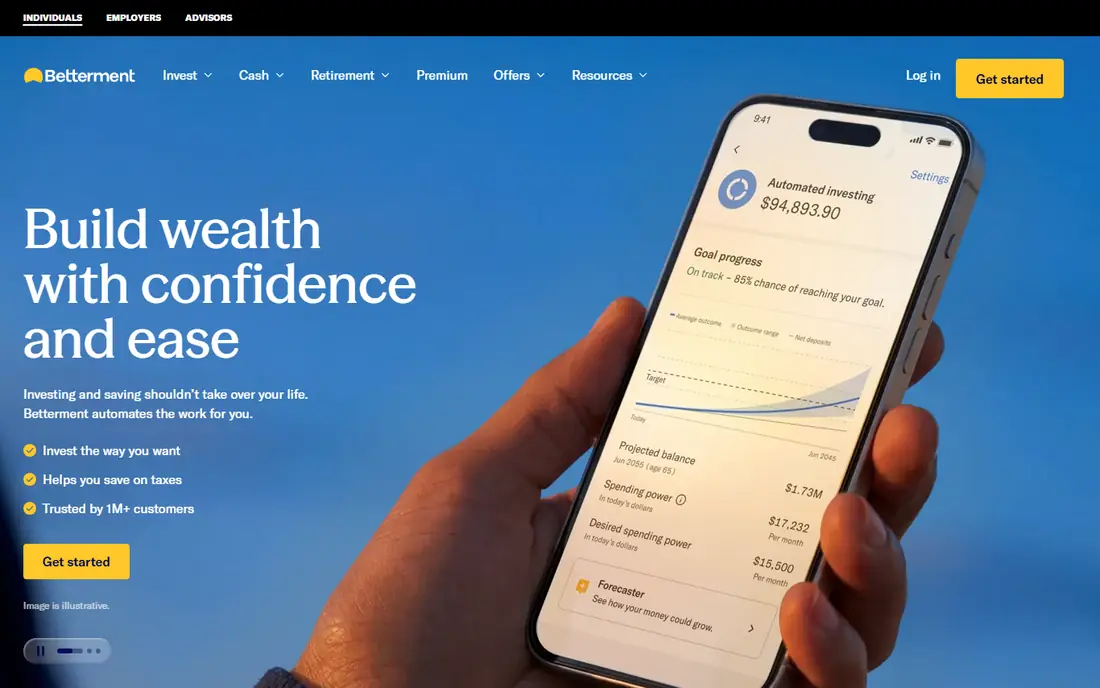
Betterment is a strong beginner pick for goal-based investing. You set a goal, such as retirement or a house fund, answer risk questions, and Betterment builds a diversified portfolio of funds and rebalances it. Tax-loss harvesting is a useful extra for taxable accounts. It can offset gains with losses in a disciplined way, which may improve after-tax results over time.
The fee structure needs attention. Smaller balances pay $5 a month unless you meet the recurring deposit or balance terms for the percentage fee, so check which fee applies at your balance.
- Goal-based portfolios
- Tax-loss harvesting
- Automatic rebalancing
- Lower balances pay a flat fee unless deposits qualify
- Human advice needs Premium
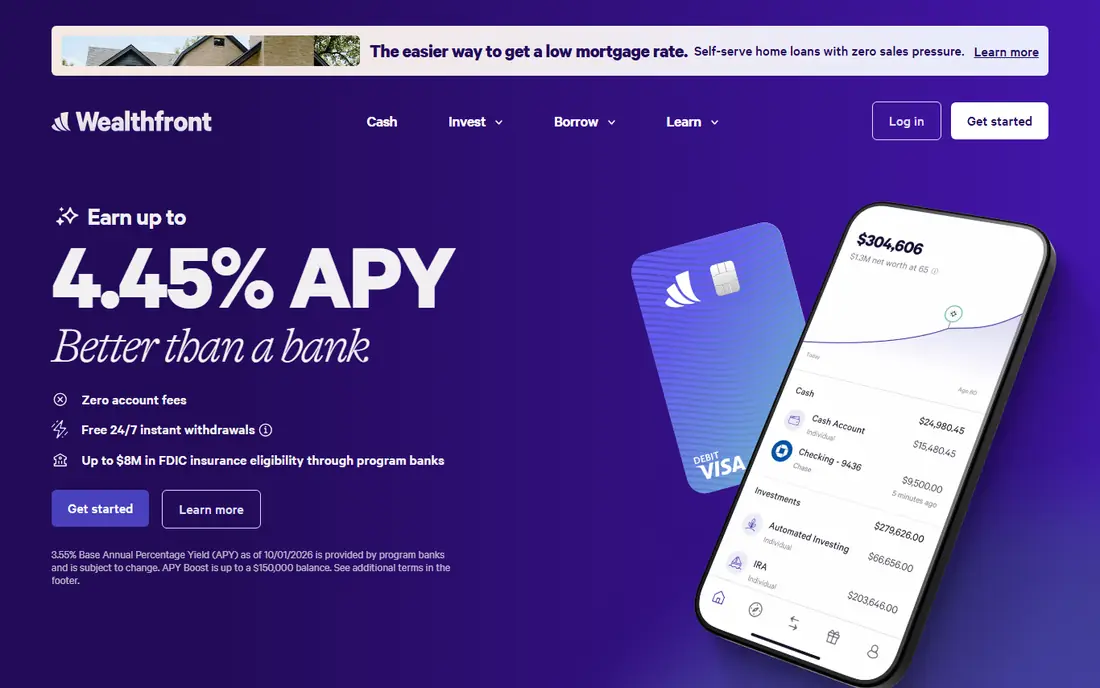
Wealthfront suits beginners who want automation plus planning. Its Path tool helps you model goals, while automated portfolios handle investing, rebalancing, and tax-loss harvesting. Daily tax-loss harvesting is the standout. It runs frequently in taxable accounts, which can add value over time compared with occasional harvesting.
There is no human advisor access, and a minimum applies to start investing. If you want to talk through a complex plan with a person, a hybrid service may fit better.
- Automated diversified portfolios
- Daily tax-loss harvesting
- Planning tools
- No human advisor access
- Minimum applies
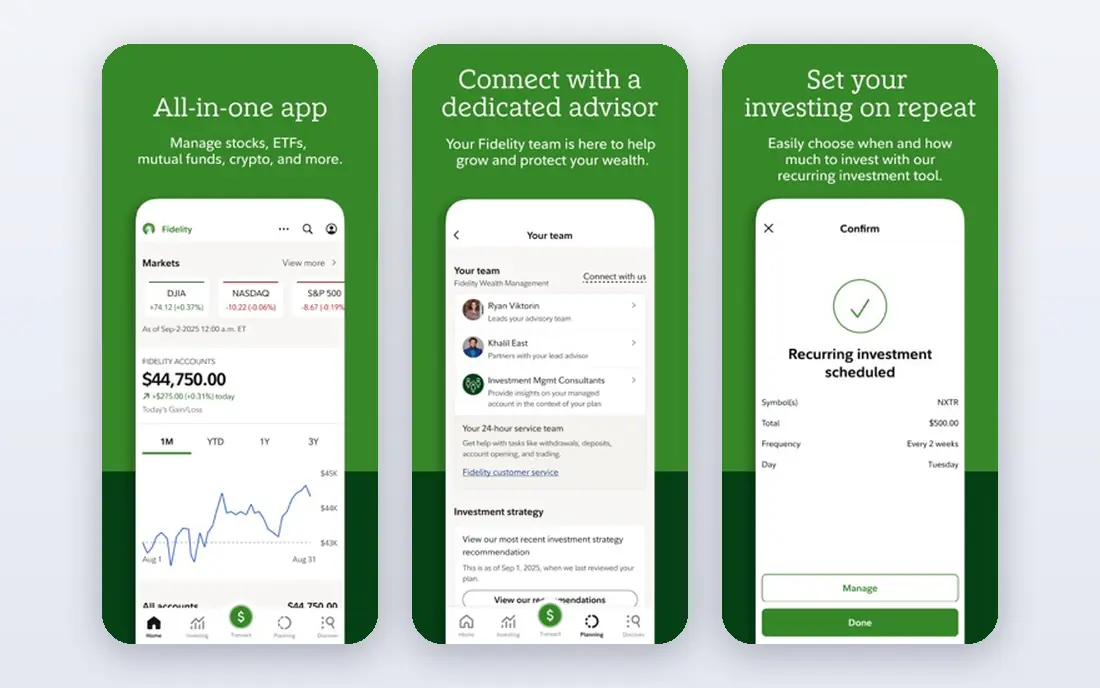
Fidelity Go is an easy entry point for beginners, especially if you already use Fidelity. There is no advisory fee on balances under $25,000, and you can start investing with a low minimum. Low cost at small balances is the appeal. Beginners can start without a monthly fee eating into a small account, while still getting a managed portfolio.
Above $25,000, an advisory fee applies, and human coaching is limited at lower balances. If you want regular human advice, check the thresholds before choosing.
- No advisory fee under $25,000
- Low minimum to start investing
- Fidelity support
- Advisory fee applies above $25,000
- Coaching is limited below higher balances
Schwab Intelligent Portfolios offers automated investing with no advisory fee, which makes it attractive for larger beginner balances. You answer risk questions, and Schwab builds and rebalances a portfolio. No advisory fee is the headline strength. Fund costs still apply, but you do not pay a separate percentage for management.
The $5,000 minimum is higher than many rivals, and portfolios include a required cash allocation. That cash can drag returns in rising markets, so understand the allocation before investing.
- No advisory fee
- Diversified portfolios
- Schwab banking link
- $5,000 minimum
- Cash allocation is required
SoFi Automated Investing suits beginners who want automation plus a person to talk to. You get a managed portfolio, and access to financial planners is included in the service. Human access is the differentiator. Many automated apps offer no planner access, while SoFi includes it, which helps when you have questions about goals or risk.
Fee and minimum terms should be confirmed on the SoFi site, since they can change. Fund costs inside the portfolio also vary, so look at total cost, not just the advisory fee.
- Automated portfolios
- Access to financial planners
- SoFi app integration
- Fee and minimum terms need checking
- Portfolio fund costs vary
Acorns is built for people who struggle to start. It rounds up card purchases to the nearest dollar and invests the spare change, plus recurring deposits if you set them. Round-ups are the habit builder. Small, automatic amounts add up without a large upfront deposit, which helps beginners who feel they have nothing to invest.
The flat monthly fee is the weakness for small balances. On a tiny account, that fee is a large percentage, so check the current plan price and your balance before committing.
- Round-ups invest spare change
- Recurring deposits
- Simple portfolios
- Flat monthly fee hits small balances
- Investment choice is limited
Magnifi is different from the automated apps above. It is an AI-assisted research tool that helps you search for stocks, ETFs, and themes, and screen ideas, rather than managing a portfolio for you. AI search is the strength. You can ask for ideas in plain language and explore holdings, themes, and risk factors, which helps learning.
It is not a managed portfolio, so you still make the final buy and sell decisions. Beginners should treat it as a study tool, not as a promise that an idea will perform well.
- AI search for stocks and ETFs
- Screening tools
- Portfolio insights
- Research tool, not a managed portfolio
- Needs investor judgment
Vanguard Digital Advisor
Best for: Low-cost automated investing from Vanguard
Vanguard Digital Advisor suits cost-conscious beginners who trust index investing. It builds an all-index portfolio based on your goal and risk level, and rebalances automatically. Low cost is the main draw. The advisory fee is lower than many rivals, and Vanguard fund costs are also typically low, which keeps total cost down.
A minimum applies to start, and human advice needs a higher balance. If you want frequent human guidance, a hybrid or premium service may suit you better.
- Low advisory fee
- All-index portfolios
- Vanguard fund costs
- Minimum applies
- Human advice needs higher balances
How we picked these
We compared official feature pages, pricing pages, and app store listings for each product, and checked privacy policies and public reviews where they helped explain limits. We favored products that exist and work today, fit the topic directly, and offer a clear use case, rather than padding lists with near matches.
We also weighed honest trade-offs. A low price means less if the free plan limits exports, a strong feature set means less if it only serves one region, and a high rating means less if the product does not serve the reader need in the headline. Where pricing was unclear or varied by plan, we wrote See website instead of guessing a number.
How to pick an AI investment app as a beginner
Start with how much automation you want. An automated portfolio app asks about your goal and timeline, then picks funds, invests deposits, and rebalances. A research app leaves picking to you, which suits learners who want to study stocks but adds risk if you act on a single AI suggestion.
Then check fees at your balance. A percentage fee looks small, but a flat monthly fee hits a small account harder. For example, a $5 monthly fee on a $1,000 balance is 6 percent a year before fund costs. Compare the fee model, not just the headline number, and add fund expense ratios.
Finally, check risk controls. Look for diversification, clear risk questions at signup, and easy ways to pause deposits or change your risk level. Avoid apps that push concentrated bets, borrowed money, or frequent trading as a beginner strategy, and remember that past performance does not predict future results.
FAQ
What is an AI investment app?
An AI investment app uses software to build portfolios, rebalance, harvest tax losses, or research stocks. Automated apps manage a diversified portfolio for you, while research apps help you study ideas. The term AI covers a range of tools, not one single method.
Is AI investing safe for beginners?
No investment is safe from loss, and AI does not remove market risk. Diversified automated portfolios reduce single-stock risk, but they can still fall in value. Start with money you can leave invested, and understand your risk level before depositing.
How much money do I need to start?
It varies. Some apps have no minimum or a low minimum, while Schwab Intelligent Portfolios needs $5,000 and Wealthfront and Vanguard have their own minimums. Check the current minimum on the provider site, since it can change.
Do robo-advisors beat picking stocks myself?
For most beginners, a diversified portfolio with regular deposits and rebalancing is a steadier approach than picking single stocks. Stock picking can outperform, but it can also underperform sharply, and it needs research and discipline.
What fees should I watch for?
Watch the advisory fee, fund expense ratios, and any flat monthly fee. A flat fee hits small balances hardest, while a percentage fee grows with your balance. Add all costs together to judge total price.
Is this financial advice?
No. This guide compares apps and fees, but it does not recommend an investment for your situation. Investing carries risk, including loss, and your goals, timeline, and tax situation affect the right choice. Consider independent financial advice if you are unsure.