Best AI Investment App in 2026: 8 Products Compared
Compare the best AI investment app in 2026, from automated portfolios to AI research tools, with fees, minimums, and risks explained in plain terms for readers.
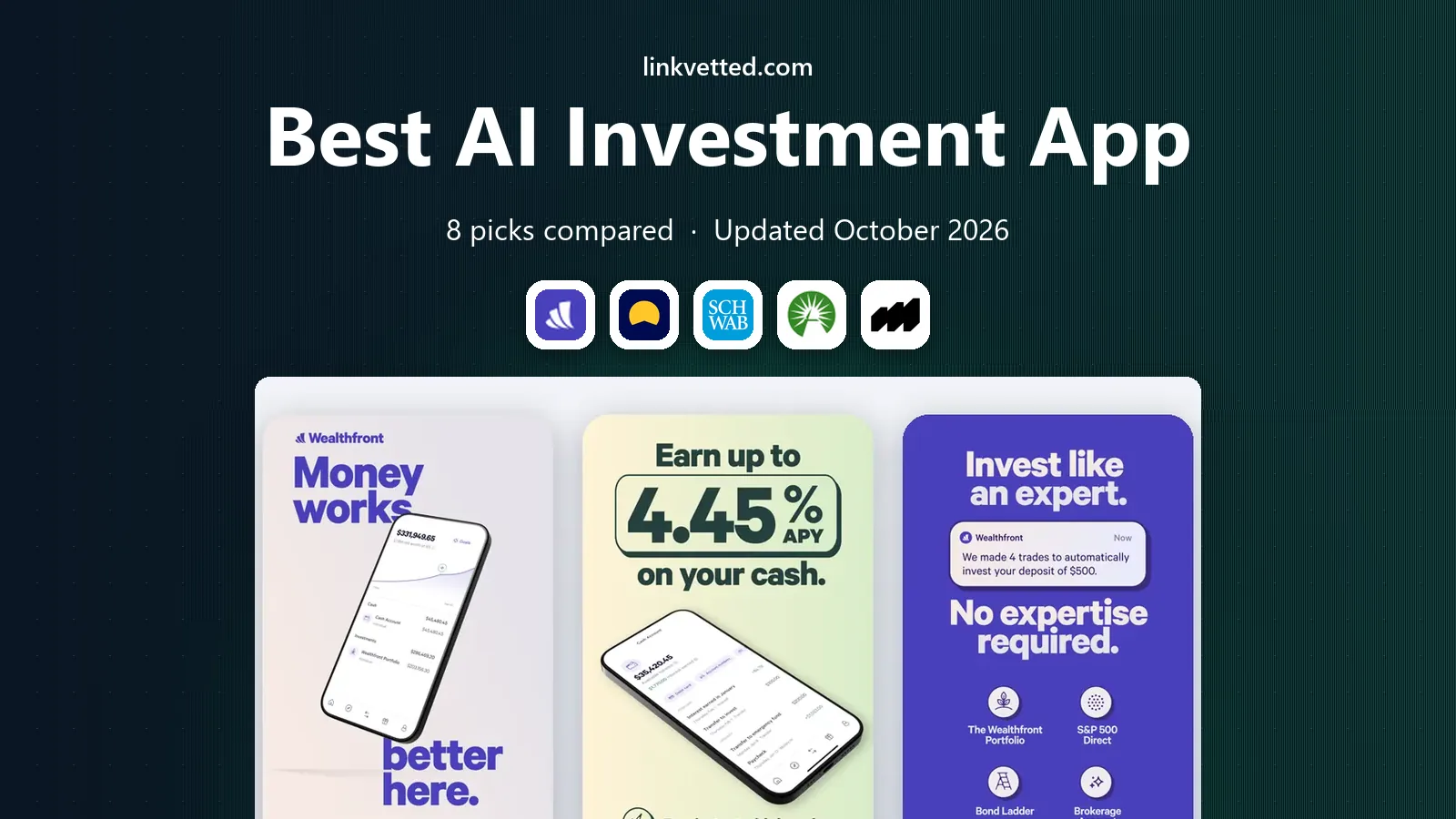
- Editor's choice
 Wealthfront
Tax-aware automated portfolios
Starts atSee websiteVisit wealthfront.comFull review - Great alternative
 Betterment
Goal-based automated investing
Starts atSee websiteVisit betterment.comFull review - Also consider
 Schwab Intelligent Portfolios
No-fee automated portfolios
Starts atSee websiteVisit schwab.comFull review
TL;DR:
- Automated portfolios from Wealthfront, Betterment, Schwab, and Fidelity Go suit investors who want diversification and rebalancing handled for them.
- Research tools such as Magnifi, Danelfin, Prospero, and Kavout suit investors who pick their own stocks and want AI help with analysis.
- Fees differ by model: some charge a percentage of assets each year, while research tools usually charge a monthly subscription.
- AI scores and forecasts are not guarantees, so check methods, costs, and risks before you invest any money.
Quick comparison
| Tool | Best for | Starts at | Free plan? | |
|---|---|---|---|---|
| Wealthfront | Tax-aware automated portfolios | See website | No | Visit |
| Betterment | Goal-based automated investing | See website | No | Visit |
| Schwab Intelligent Portfolios | No-fee automated portfolios | See website | No | Visit |
 Fidelity Go | Low-cost automated investing | See website | No | Visit |
 Magnifi | AI research for self-directed investors | See website | Yes | Visit |
 Danelfin | AI stock scores and analysis | See website | Yes | Visit |
 Prospero | Free AI trading signals | Free | Yes | Visit |
 Kavout | Quantitative stock scoring | See website | Yes | Visit |
The best ai investment app
AI investment apps fall into two groups: automated portfolios that invest for you, and research tools that help you decide. This is not financial advice. We compared both groups so you can see which type fits how you actually invest.
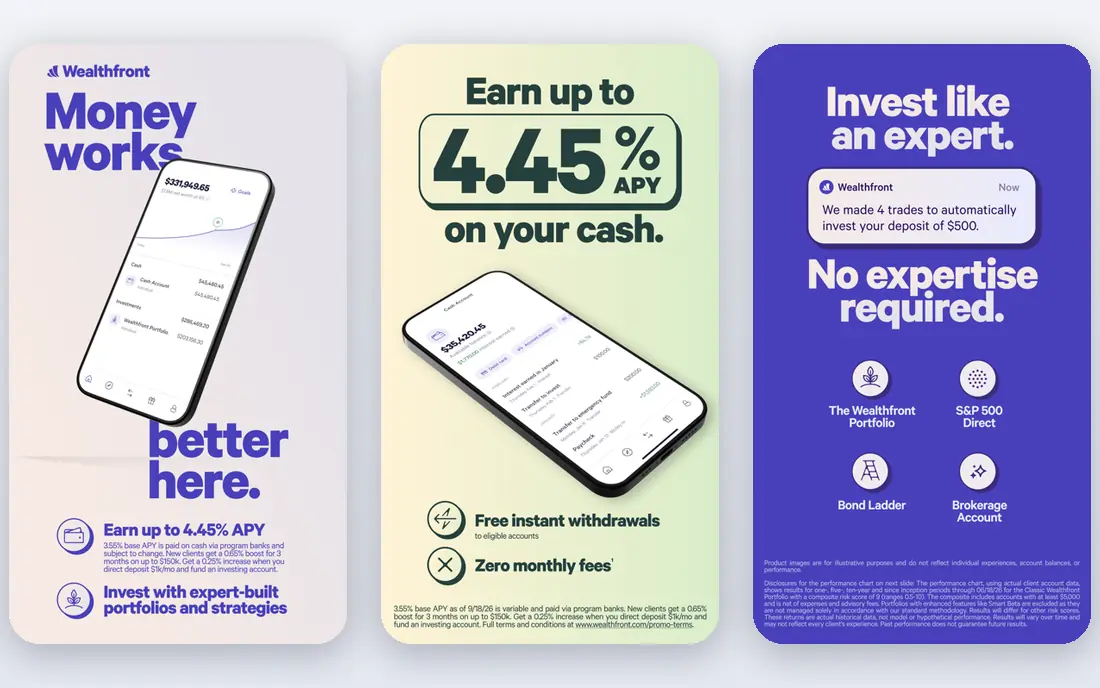
Wealthfront builds a diversified portfolio from your risk level and goals, then handles rebalancing and, on taxable accounts, daily tax-loss harvesting. The advisory fee is 0.25% per year, and planning tools help you model retirement, home buying, and college costs. The limits are balance-based. Automated investing needs $500 to start, and stock-level direct indexing, which can improve tax harvesting, needs $100,000. Hands-on stock pickers will also find limited control. If you want a low-maintenance portfolio with tax-aware handling, Wealthfront is a strong automated choice.
- Automated diversified portfolios
- Daily tax-loss harvesting on taxable accounts
- Financial planning tools
- $500 minimum for automated investing
- Direct indexing needs a much larger balance
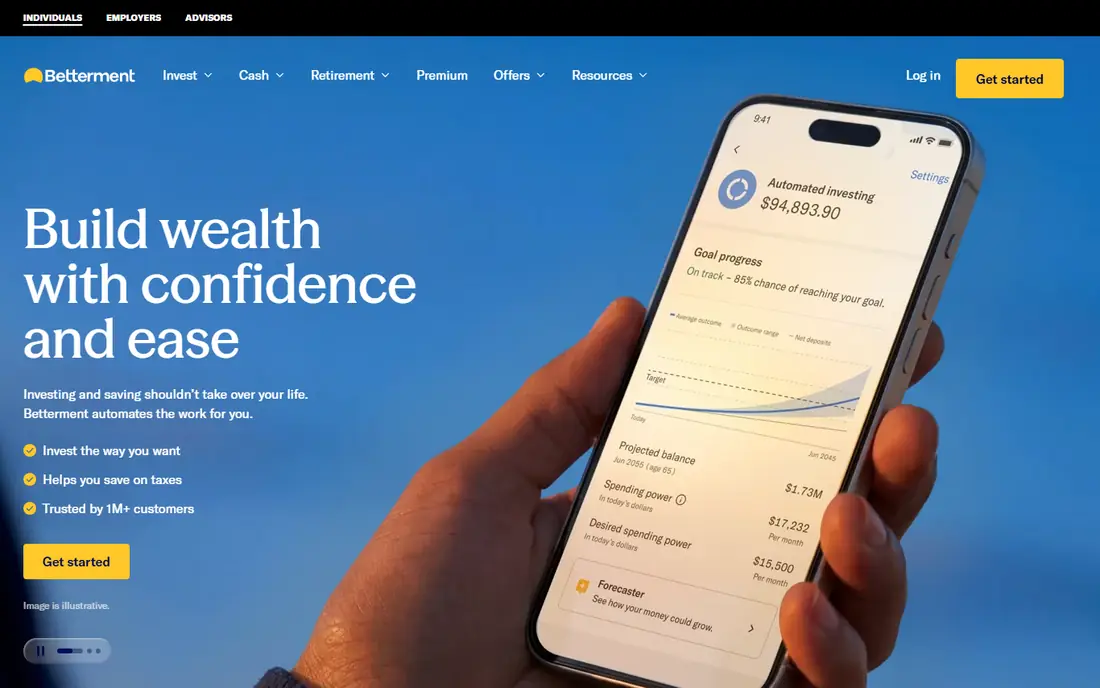
Betterment organizes investing around goals, such as retirement, a home deposit, or a travel fund, with a separate portfolio for each goal. That structure helps people who save for several aims at once. The digital fee is 0.25% per year, or $5 per month for smaller balances without qualifying recurring deposits. Human advice sits on Premium at 0.65% per year, with a $100,000 household minimum, so it is not part of the base plan. Betterment also offers fewer self-directed stock tools than a brokerage. If goal-based, hands-off investing appeals to you, Betterment is easy to start and easy to follow.
- Separate portfolios per goal
- Automatic rebalancing and tax-loss harvesting
- No minimum to open
- Small balances pay a flat $5 monthly fee unless deposits meet the threshold
- Human advice costs more
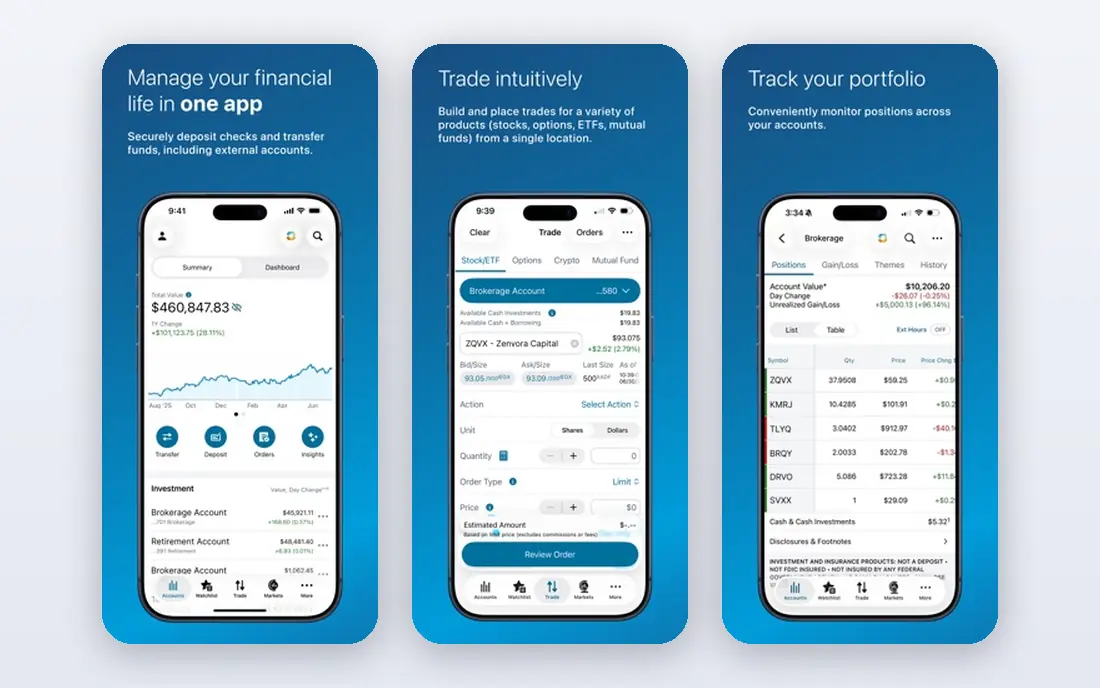
Schwab Intelligent Portfolios charges no advisory fee, which sets it apart from most robo-advisors. Portfolios use a range of ETFs across US and international stocks, bonds, real estate, and commodities, with automatic rebalancing. Tax-loss harvesting is available for larger balances. The trade-offs are the $5,000 minimum and a cash allocation held in every portfolio. That cash earns interest but does not grow like invested assets, so it acts as a drag in strong markets. If you have $5,000 to commit and want automated investing without a percentage fee, Schwab is worth a close look.
- No advisory fee
- Automatic rebalancing
- Access to a large ETF range
- $5,000 minimum to start
- Cash allocation is part of every portfolio
Fidelity Go suits beginners with smaller balances. There is no advisory fee under $25,000, and investing starts once your balance reaches $10. Portfolios use Fidelity funds with no expense ratio, which keeps fund costs low. Human coaching becomes available at higher balances. Costs change as you grow. At $25,000 and above, the advisory fee is 0.35% per year, which is higher than Wealthfront and Betterment at 0.25%. Tax-loss harvesting also needs a $25,000 balance. If you are starting small and want a trusted brand with no fee at first, Fidelity Go is a practical entry point.
- No advisory fee under $25,000
- Low-cost Fidelity funds
- Coaching on higher balances
- Advisory fee rises to 0.35% at $25,000 and above
- Tax-loss harvesting needs a higher balance
Magnifi works like an AI research assistant for investors who manage their own portfolios. You can ask plain questions about diversification, concentration risk, or low-cost ETF options, and link brokerage accounts to analyze your actual holdings. That helps self-directed investors spot gaps without giving control to an algorithm. It does not invest for you. You decide each trade, and full features need a paid subscription, with pricing to check on the vendor site. If you like picking investments yourself but want faster, data-led research, Magnifi is a useful copilot rather than a replacement for judgment.
- Natural language portfolio questions
- Brokerage account connections
- Research without handing over control
- You still make every trade decision
- Subscription needed for full features
Danelfin rates stocks and ETFs with AI scores based on technical, fundamental, and sentiment data, and shows the factors behind each score. Screening tools let you filter by score, sector, and other traits, which helps narrow a long watchlist to a shorter research list. Scores need careful handling. A high score is a model output, not a promise of returns, and models can be wrong, especially in fast-moving markets. A free tier lets you test the approach, with paid plans adding fuller coverage. If you want structured, score-based research, Danelfin is a clear, transparent starting point.
- AI scores for stocks and ETFs
- Probability-based analysis
- Screening and watchlist tools
- Scores are models, not predictions
- Full features need a paid plan
Prospero offers free AI-generated signals and analysis for active traders who want ideas without a monthly research subscription. The interface keeps signals and stock details easy to scan, which suits traders who review many names each day. Free does not mean risk-free. Signals are starting points for research, not instructions to buy, and you need your own rules for position size, stop losses, and diversification. There is also no automated portfolio to fall back on. If you trade actively and want free AI ideas to test against your own checks, Prospero is worth trying.
- Free AI signals and stock analysis
- Simple interface for active traders
- No subscription for core features
- Signals need your own risk checks
- No automated portfolio management
Kavout uses machine learning to score US stocks, with its Kai score summarizing technical and fundamental signals. Screening tools help you find stocks that match your criteria, and a free tier covers basic research. That makes it a handy second opinion when you are comparing a few names. Coverage is narrower than broader research platforms, with a US stock focus, and a score cannot replace checks on valuation, debt, earnings quality, and your own risk tolerance. Paid plans add more depth. If you want a quantitative check on US stocks before you decide, Kavout offers a focused, affordable route.
- Quantitative Kai scores for US stocks
- Screening tools
- Free tier for basic research
- Coverage focuses on US stocks
- Scores alone do not form a complete strategy
How we picked these
We checked official pricing and product pages, fee disclosures, and public 2026 comparisons for each platform, and read vendor documentation on portfolio methods, tax-loss harvesting rules, minimums, and AI scoring methods. We favored platforms that are actively available to US investors, that state fees and minimums clearly, and that cover both automated portfolios and self-directed research. We did not claim hands-on testing we did not do, and we treated AI scores as research inputs, not performance claims.
How to choose an AI investment app
First, decide whether you want automation or research. Automated portfolios suit investors who want diversification, rebalancing, and tax handling done for them. Research tools suit investors who enjoy choosing stocks and ETFs and want AI help with screening and analysis. Mixing the two without a plan often leads to overlapping portfolios and unclear risk. Next, add up total costs. Automated portfolios charge a percentage of assets plus fund expense ratios, while research tools charge a subscription. A 0.25% fee on $10,000 is $25 per year, before fund costs, while a $20 monthly research subscription is $240 per year regardless of balance. Small balances feel flat fees hardest, so run the math for your own amount. Finally, check risk controls. Look at how a portfolio handles market falls, how often it rebalances, whether tax-loss harvesting applies to your account type, and what happens if you need to withdraw money. For research tools, check how scores are built, how often they update, and whether the vendor publishes method details. This is not financial advice, and past model results do not predict future returns.
Automated portfolios versus research tools
Automated portfolios reduce decisions, which helps investors who might otherwise panic or delay. Research tools increase decisions, which helps investors who want control and are willing to research. Neither type removes market risk, and neither guarantees returns, so choose based on how much time and control you actually want.
Risks to keep in mind
All investing involves risk, including possible loss of principal. AI models can misread new market conditions, tax-loss harvesting only helps in taxable accounts, and cash allocations or fees can drag returns. Diversify, keep an emergency fund outside investments, and consider speaking to a qualified financial adviser for large or complex decisions.
FAQ
What is the best AI investment app for beginners?
Betterment and Fidelity Go are strong beginner options for automated investing, because they offer goal-based portfolios, low or no starting fees at small balances, and simple interfaces. Beginners who want to learn stock research can also try free tiers from Magnifi, Danelfin, or Prospero alongside a small automated portfolio.
Can AI really pick winning stocks?
AI can analyze large amounts of market data and surface patterns, but it cannot guarantee winners. Scores and signals are model outputs based on past data, and markets change in ways models may miss. Treat AI tools as research help, diversify, and avoid putting money you cannot afford to lose into any single signal.
How much do AI investment apps cost?
Automated portfolios usually charge 0.25% to 0.35% of assets per year, plus fund expense ratios, while Schwab charges no advisory fee but requires a $5,000 minimum. Research tools usually charge a monthly subscription, with free tiers available from several providers on this list.
Do robo-advisors handle taxes?
Many robo-advisors offer tax-loss harvesting on taxable accounts, which sells losing positions to offset gains, subject to wash-sale rules and account type. Betterment, Wealthfront, Schwab, and Fidelity Go each set different balance thresholds for this feature, so check the rules for your account before relying on it.
Should I use an AI app instead of a human adviser?
An automated portfolio can suit straightforward goals and smaller balances at lower cost. A human adviser may suit complex tax, estate, retirement, or business situations where personal advice matters. Some investors use both: an automated portfolio for core savings and an adviser for planning questions.