Best Automated AI Investing App in 2026: 8 Apps Compared
Looking for the best automated AI investing app? We compared 8 robo-advisors and AI investing apps for fees, automation, tax tools and honest risks today.
- Editor's choice
 Wealthfront
Hands-off portfolios with tax tools
Starts at0.25% per yearVisit wealthfront.comFull review - Great alternative
 Betterment
Goal-based automated investing
Starts at0.25% per yearVisit betterment.comFull review - Also consider
 Fidelity Go
Low-cost start for beginners
Starts atFree under $25,000Visit fidelity.comFull review
TL;DR:
- Wealthfront is our pick for most hands-off investors, thanks to automated portfolios, daily tax-loss harvesting and a 0.25 percent annual fee.
- Betterment suits goal-based investors who want clear buckets for retirement, a house deposit or a general fund.
- Fidelity Go is the best low-cost start for beginners, with no advisory fee on balances under 25,000 dollars.
- Magnifi is a research assistant, not a fully automated portfolio manager, so it suits investors who still want to choose trades.
- This is not financial advice. Investing carries risk, including loss of money, and past performance does not guarantee future results.
Quick comparison
| Tool | Best for | Starts at | Free plan? | |
|---|---|---|---|---|
| Wealthfront | Hands-off portfolios with tax tools | 0.25% per year | No | Visit |
| Betterment | Goal-based automated investing | 0.25% per year | No | Visit |
| Fidelity Go | Low-cost start for beginners | Free under $25,000 | Yes | Visit |
 Schwab Intelligent Portfolios | No advisory fee robo-advisor | $0 advisory fee | Yes | Visit |
 Magnifi | AI research for self-directed investors | Free | Yes | Visit |
 SoFi Invest | All-in-one banking and investing | Free | Yes | Visit |
 Acorns | Automated micro-investing | $3 per month | No | Visit |
 Public | AI context inside a brokerage | Free | Yes | Visit |
The best automated AI investing apps
Automated investing apps fall into two groups, and mixing them up leads to disappointment. Robo-advisors build and manage a portfolio for you, rebalancing as markets move. AI research apps help you analyse stocks and funds, but you still place the trades. We compared official pricing pages, feature pages and account terms, and we favoured apps with clear fees, diversified portfolios and honest notes about risk.
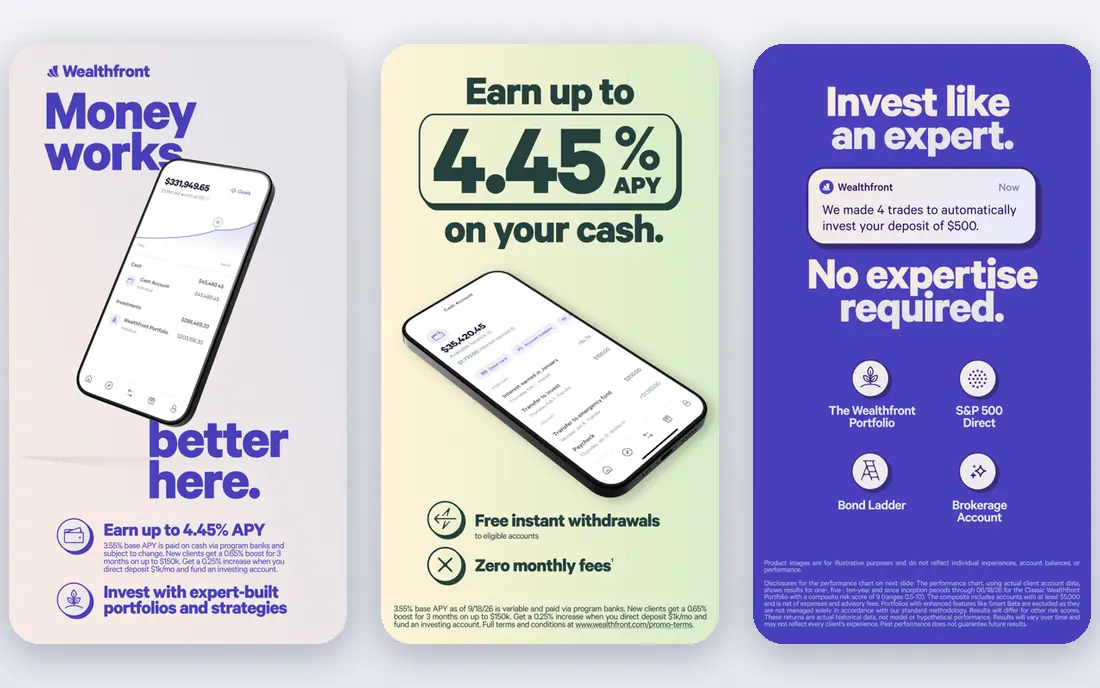
Wealthfront is our pick for most hands-off investors because it does the routine work well. You answer questions about goals and risk, it builds a diversified portfolio of low-cost funds, and it rebalances automatically. Daily tax-loss harvesting in taxable accounts can help offset gains, though tax benefits depend on your own tax situation.
The 500 dollar minimum is modest but real, and the 0.25 percent annual fee is charged regardless of market direction. Direct indexing, which holds individual stocks instead of funds for finer tax harvesting, needs a much larger balance. If you want a set-and-forget portfolio with strong tax tools, Wealthfront is hard to beat.
- Automated diversified portfolios
- Daily tax-loss harvesting
- Direct indexing for larger accounts
- 500 dollar minimum to start investing
- 0.25 percent fee applies even in flat years
- Cash account is separate from investing
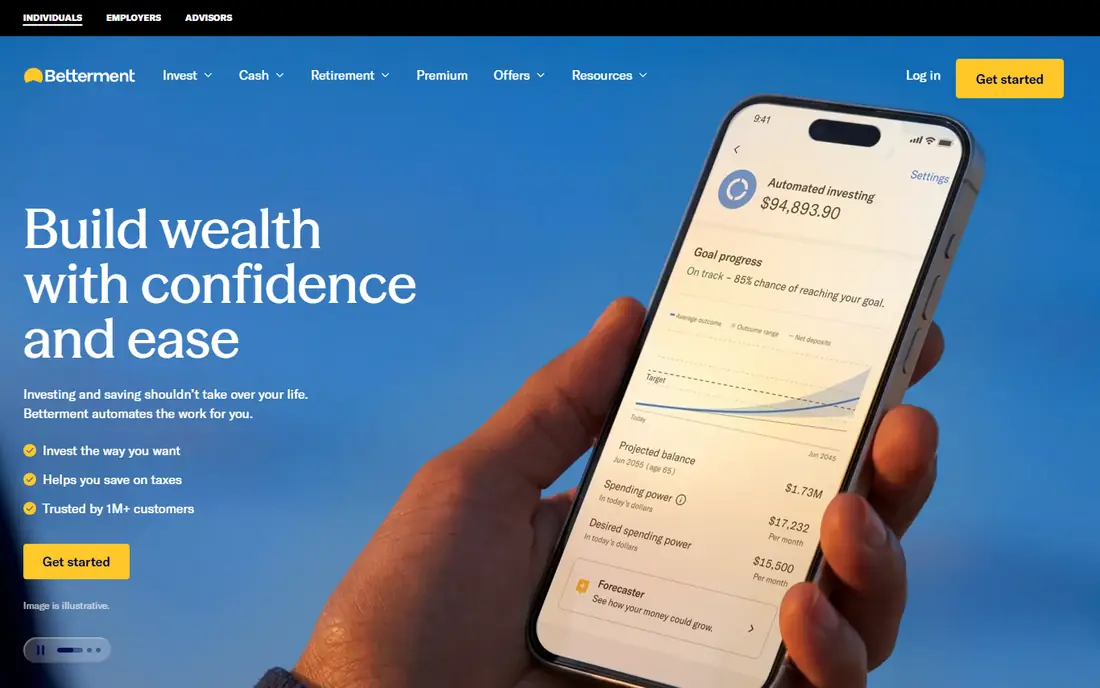
Betterment suits investors who think in goals rather than tickers. You can set up separate buckets for retirement, a house deposit, education or general wealth, each with its own risk level and time horizon. The app rebalances automatically and coordinates taxable and retirement accounts to place tax-heavy assets where they do least harm.
There is no minimum to open a digital plan, but the 0.25 percent fee still applies to small balances, so check if the fee makes sense for a very small starter amount. Premium advice at 0.40 percent per year adds human adviser access. For clear, goal-based automation, Betterment remains one of the most approachable choices.
- Clear goal buckets and planning tools
- Automated rebalancing
- Tax-coordinated portfolios across accounts
- No account minimum is offset by a fee on small balances
- Premium advice costs 0.40 percent per year
- Human advice is limited on the basic plan
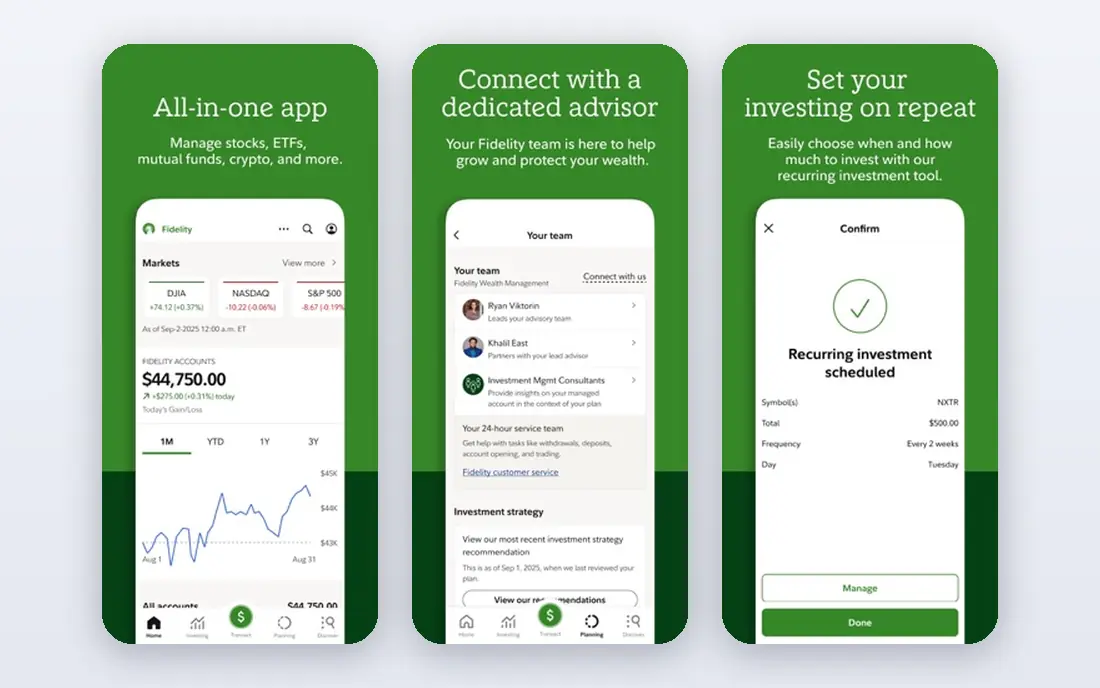
Fidelity Go is the best low-cost start for a beginner who wants automation without a monthly fee. There is no advisory fee on balances under 25,000 dollars, and the portfolios use Fidelity funds, some with no fund expense ratio. That makes it easy to start small and learn without watching fees eat a tiny balance.
Personalisation is more limited than at Betterment or Wealthfront, and the advisory fee of 0.35 percent per year applies once your balance passes 25,000 dollars. Tax-loss harvesting is also less central here. If low cost matters most and you are starting small, Fidelity Go is a sensible first robo-advisor.
- No advisory fee under 25,000 dollars
- Fidelity funds with no expense ratio on some portfolios
- Coaching available at higher tiers
- 10 dollar minimum, then limited personalisation
- Advisory fee applies above 25,000 dollars
- Fewer tax tools than Wealthfront
Schwab Intelligent Portfolios charges no advisory fee, which makes it stand out in this list. You still pay the underlying fund expenses, but there is no extra percentage for the robo-advisor itself. Integration with Schwab brokerage and banking accounts also makes it convenient if you already bank or invest with Schwab.
The 5,000 dollar minimum is higher than Fidelity Go or Betterment, and the portfolios hold a notable cash allocation, which can drag returns in strong markets. That cash also earns interest for Schwab, so read the cash disclosure before you commit. For larger starters who want no advisory fee, it is a strong option.
- No advisory fee and no account minimum fee structure
- Diversified ETF portfolios
- Schwab banking and brokerage integration
- 5,000 dollar minimum
- Cash allocation can be large
- Underlying fund fees still apply
Magnifi is different from the robo-advisors above, and that difference matters. It is an AI research assistant: you ask questions in plain language, compare funds and stocks, and analyse a portfolio you manage yourself. It does not build and rebalance a portfolio for you in the same hands-off way as Wealthfront or Betterment.
That makes Magnifi a good companion for self-directed investors, not a replacement for a robo-advisor. The free tier covers basic research, while the paid plan adds deeper tools. Treat its ideas as research to check, not as recommendations, and remember that AI analysis can be wrong, outdated or based on incomplete data.
- Conversational AI search for stocks and funds
- Portfolio analysis and ideas
- Free tier for basic research
- Not a fully automated portfolio manager
- Paid plan from 8.25 dollars per month billed annually
- Research is not advice
SoFi Invest suits people who want money in one place. You can hold a bank account, invest automatically, and use goal tools in a single app, with no advisory fee for automated investing. Fractional shares let you start with small amounts, which helps new investors build a habit.
Automation here is simpler than at Wealthfront or Betterment, with fewer tax optimisation tools. The app also promotes other SoFi products, which some users find distracting. If convenience and a single app matter more than advanced tax harvesting, SoFi Invest is a practical choice.
- Automated investing with no advisory fee
- Banking, lending and investing in one app
- Fractional shares and goal tools
- Automation is simpler than specialist robo-advisors
- Tax tools are more limited
- Product upselling can be distracting
Acorns is built for habit, not for advanced strategy. It rounds up everyday purchases and invests the spare change, plus any recurring amount you set, into a diversified portfolio. That low-friction approach helps people who struggle to save a lump sum, and the app adds banking and retirement options as you grow.
The monthly fee needs attention. At 3 dollars per month for the basic plan, the fee is a large share of a very small balance, so Acorns works best once round-ups and deposits add up. Portfolios are also simpler than specialist robo-advisors. If you need a nudge to start investing regularly, Acorns provides it well.
- Round-ups turn spare change into investments
- Automated diversified portfolios
- Banking and retirement add-ons
- Monthly fee can be high on a tiny balance
- Portfolios are simple
- No advanced tax-loss harvesting on basic plans
Public is a brokerage with an AI assistant, not a set-and-forget robo-advisor. You choose and place trades, while the AI tool, called Alpha, gives context on stocks, earnings and your holdings. That suits investors who want to stay involved but appreciate plain-language explanations alongside market data.
Because you manage the portfolio, discipline is on you. AI context can help you understand a company, but it is not a recommendation and it can miss risks. Read the order flow and fee disclosures, and check any AI claim against a primary source before trading. For active learners who want AI help inside a brokerage, Public is a useful option.
- Commission-free stock and ETF trades
- AI assistant for context on holdings
- Fractional shares and retirement accounts
- Not a fully automated robo-advisor
- AI answers need checking
- Payment for order flow disclosure deserves reading
How we picked these
We compared official pricing pages, fee schedules and feature pages for automated and AI investing apps available in the United States in October 2026. We favoured clear fees, diversified portfolios, automatic rebalancing and honest risk disclosures. We left out trading bots that promised market-beating returns, since no such tool has shown consistent, audited outperformance, and we left out apps that hid fees or minimums.
We did not claim hands-on testing that did not happen. Our comparison rests on published fees, features and account terms. This article is not financial advice. Investing carries risk, including loss of principal, and you should consider your goals, time horizon and risk tolerance, and talk to a qualified adviser if you need personal advice.
What to look for in an automated investing app
Start with fees and minimums, because they decide whether an app makes sense at your balance. A 0.25 percent annual fee is small on a large portfolio but noticeable on a few hundred dollars, while a flat monthly fee can be worse for tiny balances. Check the advisory fee, the underlying fund fees, and any fee for human advice, and add them together before you compare.
Next, check what is actually automated. A true robo-advisor builds a portfolio, rebalances it, reinvests dividends and, in taxable accounts, may harvest tax losses. A research app only gives ideas, and you do the rest. Both can be useful, but they solve different problems, so be clear which one you are buying.
Risk, diversification and tax tools
Good automated portfolios spread risk across stocks, bonds and sometimes other assets, based on your time horizon and risk tolerance. Answer the risk questionnaire honestly, since a portfolio that is too aggressive can lead to panic selling in a fall. In a taxable account, tax-loss harvesting and tax-coordinated placement can help after-tax returns, but they do not guarantee a gain and they depend on your tax situation.
AI claims to check carefully
Be sceptical of AI investing claims. A useful AI tool explains its data, shows its limits, and lets you check its sources. A weak one promises returns, hides its method, or pushes frequent trades. Frequent trading adds costs and taxes, and it rarely helps long-term investors. Prefer apps that automate discipline, such as rebalancing and regular deposits, over apps that promise clever stock picks.
FAQ
What is the best automated AI investing app for beginners?
Fidelity Go is a good low-cost start, with no advisory fee under 25,000 dollars and a simple automated portfolio. Betterment is a good step up if you want goal buckets and planning tools. Start small, set a regular deposit, and choose an app whose fees you understand.
Are robo-advisors safe?
Robo-advisors from established firms hold your assets with a custodian and use diversified portfolios, but investing itself is never risk-free. Your balance can fall, especially in a market downturn, and no app can prevent losses. Check that the firm is registered, read its disclosures, and keep an emergency fund separate from invested money.
How much does a robo-advisor cost?
Most robo-advisors in this list charge 0.25 percent per year, or no advisory fee with a minimum balance, plus underlying fund fees. Acorns charges a flat monthly fee, and Magnifi charges a subscription for research. Add advisory and fund fees together, and compare that total with the service you receive.
Can AI investing apps beat the market?
No app on this list should be bought on a promise to beat the market. Robo-advisors aim for diversified, disciplined market returns, not outperformance, and research AI helps you analyse ideas rather than guaranteeing winners. Be wary of any tool that claims consistent market-beating returns without audited evidence.
Should I use a robo-advisor or manage my own portfolio?
A robo-advisor suits investors who want automation, rebalancing and a clear plan without daily decisions. Managing your own portfolio suits investors who enjoy research and can stay disciplined in volatile markets. Many people use both: a robo-advisor for core retirement savings and a small brokerage account for learning.
What is the difference between Magnifi and Wealthfront?
Wealthfront is a robo-advisor that builds and manages a portfolio for you automatically. Magnifi is an AI research assistant that helps you analyse stocks, funds and a portfolio you manage yourself. Choose Wealthfront for hands-off automation, and Magnifi for research support alongside a brokerage account.