Best App for Sports Card Values in 2026: 8 Apps Compared
Find the best app for sports card values, with card scanners, sold price data and collection tracking compared for baseball, football and basketball collectors.
- Editor's choice
 CollX
Casual collectors who scan and trade
Starts atFreeVisit collx.appFull review - Great alternative
 Card Ladder
Serious collectors tracking portfolio value
Starts at$19.99 per monthVisit cardladder.comFull review - Also consider
 Ludex
Collectors with sports and trading cards
Starts atFreeVisit ludex.comFull review
TL;DR:
- CollX and Ludex suit quick scanning, while Card Ladder suits serious portfolio tracking from real sold sales.
- Always check sold listings, not asking prices, because a listed price is not proof that a card sold for that amount.
- Condition and grade change value more than any app estimate, so a PSA 10 price should never be used for a raw card.
- Free plans suit small collections, but large collections and full price history usually need a paid plan.
Quick comparison
| Tool | Best for | Starts at | Free plan? | |
|---|---|---|---|---|
| CollX | Casual collectors who scan and trade | Free | Yes | Visit |
| Card Ladder | Serious collectors tracking portfolio value | $19.99 per month | No | Visit |
| Ludex | Collectors with sports and trading cards | Free | Yes | Visit |
 SportsCardsPro | Collectors who want a simple price guide | See website | Yes | Visit |
 130point | Sellers who verify eBay sold prices | See website | Yes | Visit |
 PSA | Graded card owners and submitters | Free | Yes | Visit |
 Beckett | Collectors who want a long-running price guide | See website | No | Visit |
 Alt | Investors tracking high-value cards | See website | No | Visit |
The best apps for sports card values
We compared official pricing pages, feature lists, and public documentation for best app for sports card values, and we focused on what a regular buyer will actually use week to week. The list below mixes well-known leaders with strong smaller options, so you can match a tool to your budget and skill level, not just to brand fame.
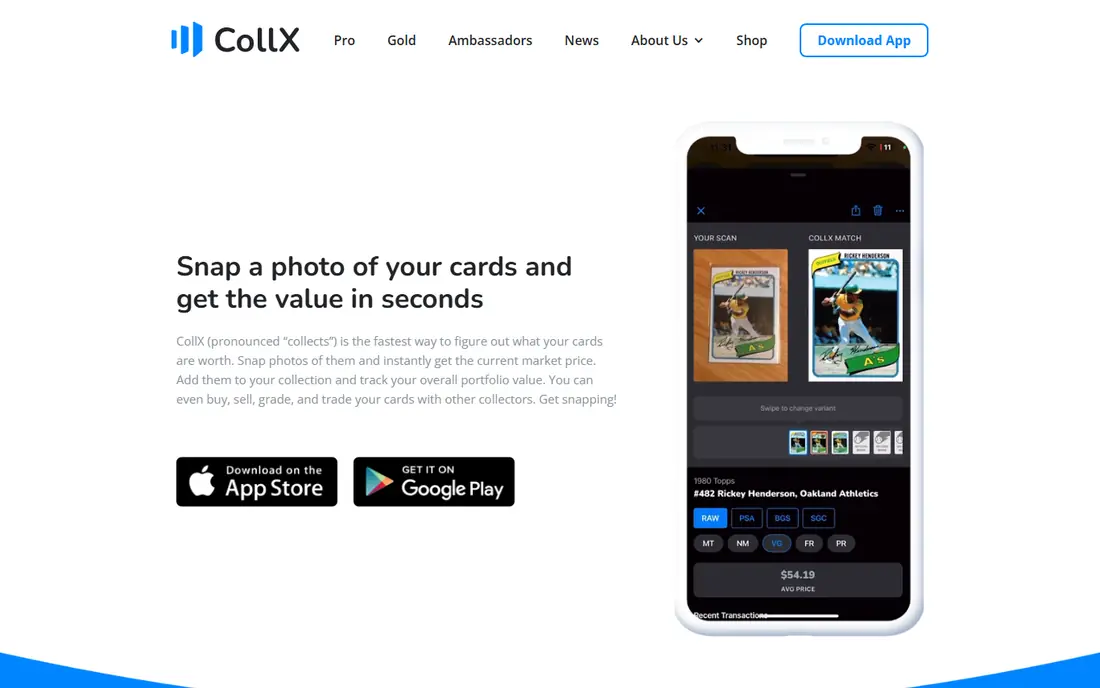
CollX is the easiest scanner for most casual collectors. Point a phone at a card, and it identifies the player, set, and card, then shows an estimated value and adds it to a collection.
The built-in marketplace is useful. A collector can list a scanned card without retyping details, which suits small trades and sales.
The catch is price accuracy. Estimates can run high, because they blend asking and sold data, so a collector should check sold listings before pricing a card to sell.
- Fast card scanning for sports and trading cards
- Built-in marketplace
- Collection tracking
- Price estimates can be high
- Paid plan needed for unlimited features
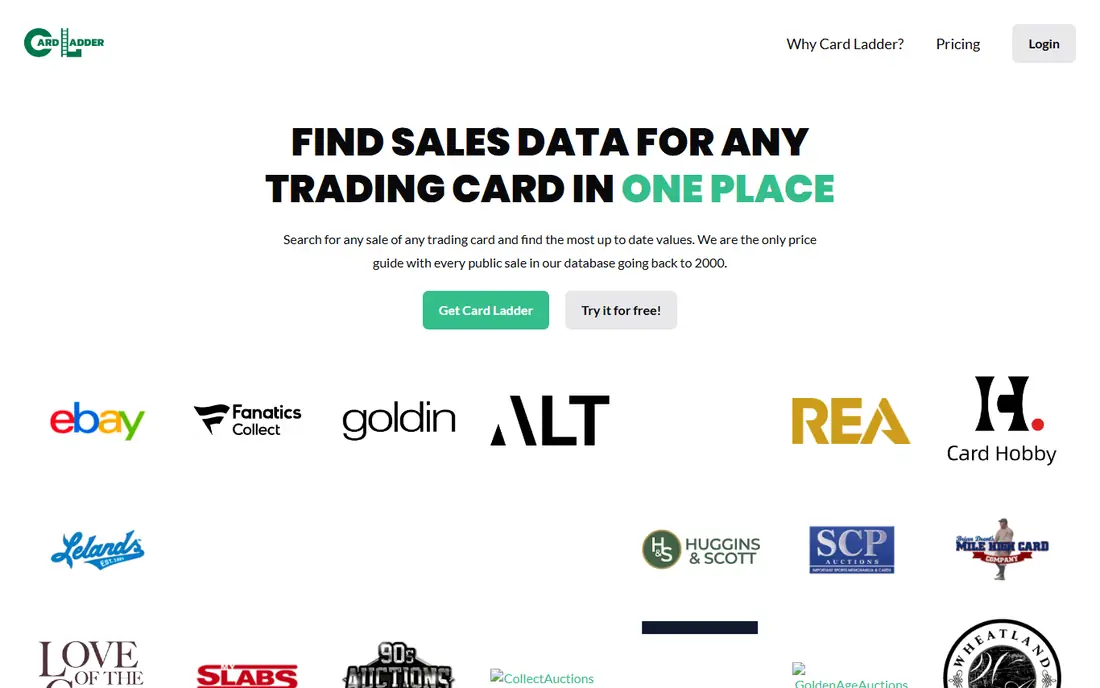
Card Ladder is the serious tracking tool here. It builds price history from actual sales, charts it over time, and totals a collection by card and grade.
For a collector making buy and sell decisions, that sold-sale basis matters. Charts show trends, not just a single estimate on one day.
The downside is cost and precision. The monthly price is high, and a collection total still assumes each card matches the grade priced, so raw cards need a separate check.
- Price history from real auction and eBay sales
- Portfolio charts
- Graded card tracking
- Highest price on this list
- Needs care to match grade and condition
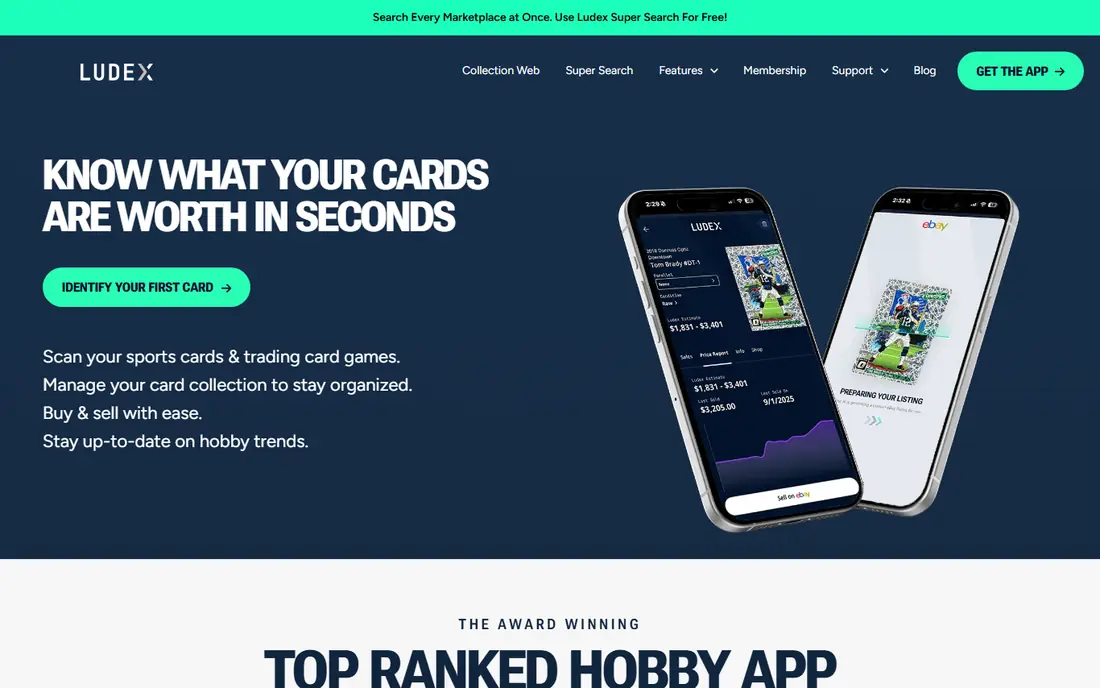
Ludex suits mixed collections. It scans sports cards and trading card games, pulls pricing from eBay sold data, and tracks a portfolio in one app.
Its sold-data approach is a strength. A value tied to completed sales is more useful than an asking price, especially for parallels and short prints.
The limit is the free tier. Scan limits arrive quickly for a large collection, and there is no built-in marketplace, so sales still need eBay or another channel.
- Card scanner for sports and trading cards
- EBay sold data
- Portfolio tracking and export
- Free plan limits scans
- No built-in marketplace for direct sales
SportsCardsPro is a straightforward price guide with collection tracking. Search a card, see a guide value, and add it to a collection without scanning hardware tricks.
For a collector who already knows their cards, that search model is fast. It avoids scan errors on parallels and focuses on the catalogue and value.
The catch is optimism. Guide values can run above recent sold prices, so a seller should still check eBay sold listings before setting a price.
- Large card database with price guide
- Collection tracking
- Web and app access
- Estimates can be optimistic
- Interface is simpler than scanner rivals
130point is the verification tool serious sellers use. It searches eBay sold listings, including best offer sales, so a collector can see what a card actually sold for.
That sold evidence is the point. A card listed for a high price is not a sale, while a 130point result shows a completed transaction with a date and price.
The limit is scope. It is a price research tool, not a full scanner and collection app, so many collectors pair it with CollX or Ludex for scanning.
- EBay sold listing search with filters
- Auction and best offer data
- Useful for pricing a sale
- No collection scanner in the same way as CollX
- Paid plan for full history
The PSA app is essential for graded card owners. It verifies a cert number, shows population data, and tracks submissions, so a buyer can check a slab before paying.
Population data helps pricing. If only a few copies exist at a grade, that scarcity is part of the value story, and the app makes it easy to check.
The catch is scope. PSA is not a general raw card price guide, and grading itself costs extra, so raw collectors still need a scanner or sold-price tool alongside it.
- Official grading population and cert verification
- Submission tracking
- Graded card price context
- Free app is not a full price guide for raw cards
- Grading fees are separate
Beckett is the long-running name in card pricing. Its guide and checklists cover many sports and sets, with graded and raw values in a familiar format.
For set builders, the checklist value matters. A collector can track which cards are owned and which are missing, alongside guide prices.
The downside is access and scanning. Full guide data needs a paid plan, and the app is less focused on fast phone scanning than CollX or Ludex.
- Long-running card price guide and checklist data
- Graded and raw coverage
- Hobby news and tools
- Paid access for full guide data
- App experience is less scanner focused
Alt suits collectors who treat high-value cards as assets. It tracks portfolios, shows sold history, and offers a marketplace and vault services for valuable cards.
For a large collection, the portfolio view and sold data help a collector see trends and decide when to sell, rather than relying on a single estimate.
The catch is focus and price. Full history needs a paid tier, and the platform is aimed at higher-value cards, so a casual set builder may find CollX or Ludex a better fit.
- Portfolio tracking with sold history
- Marketplace for high-value cards
- Vault and grading services
- Full history sits behind a paid tier
- Focused on higher-value cards, not casual sets
How we picked these
We started with products that exist and work today, and that truly fit best app for sports card values. We checked each vendor official homepage, pricing page, and feature list, and we left out products that were discontinued, that only partly fit the topic, or that had no clear official home. Where we could not verify a price, we wrote See website rather than guessing.
We also weighed fit for different buyers. A tool can be excellent for one person and wrong for another, so we looked at ease of use, core features, free options, and honest limits. That is why the list includes free tools, mid-priced tools, and enterprise options, instead of only the most famous names.
How to choose a sports card value app
Start with the job, not the feature list
Write down the one job you need done most often, and the one job you need done second. A tool that does those two jobs well will serve you better than a tool with a long feature list that misses your main need. Test that job in a free plan or trial before paying, and bring a real example from your own work, not just a demo file.
Check total cost and limits before you commit
Look past the headline price. Check seat costs, per-secret or per-site charges, renewal prices, and what happens when you hit a limit. A free plan that caps your main job is not really free, and a low monthly price that renews much higher can surprise you in year two. Read the pricing page and the limits page together.
Test the everyday workflow, not just the demo
A demo can hide friction. Try the steps you will repeat, such as adding a new item, sharing with a teammate, or exporting a file. If those steps feel slow or confusing in a trial, they will feel worse after a year of daily use. Ask a teammate to try the same steps, since a second view often catches problems the first user missed.
Plan for growth and for leaving
Choose a tool that can grow with you, but also check how you can export your data if you leave. A tool that locks your work inside a closed format can cost more later than a slightly pricier tool with open export. Keep a copy of your key data outside the tool, and note the export steps before you build a large project in it.
FAQ
What is the best option for best app for sports card values?
There is no single best option for every buyer, because best app for sports card values covers different budgets and skill levels. For most people, the first product on this list is a safe starting point, while a specialist need may point to a later product. Start with your main job, test a free plan or trial, and compare total cost before you commit.
Is there a free option for best app for sports card values?
Yes, several products on this list offer a free plan or a free trial, and we note that in the comparison table. A free plan is often enough for a small project or a test, but it may limit features, storage, or team size. Check the free limits before you build a large project on a free tier.
How much should I expect to pay?
Prices range from free to quote-based enterprise plans, and the right price depends on team size, volume, and features. A solo user can often start free or at a low monthly price, while a team or a business with strict controls will pay more. Compare the total annual cost, including seats and add-ons, not just the monthly headline.
How do I avoid picking the wrong tool?
Define your main job, test it in a trial, and check export options before you commit. Read recent user reviews for problems that affect your use case, and avoid tools that hide pricing or lock your data. If a tool feels confusing in a trial, it will rarely feel simpler after you pay.
Can I switch tools later if I change my mind?
In most cases, yes, but switching takes time, especially if you have built a large project or a large collection. Check export formats and migration guides before you start, and keep a backup of your key data. A tool with clear export options is safer than one that makes leaving hard.