8 Best Apps for Booking Multi-Modal Travel
Find the best app for booking multi-modal travel, from trains, buses, and flights in one search to flexible tickets and price alerts with connection tips.
- Editor's choice
 Omio
Booking trains, buses, and flights in Europe and beyond
Starts atFreeVisit omio.comFull review - Great alternative
 Rome2Rio
Comparing every way to get from A to B
Starts atFreeVisit rome2rio.comFull review - Also consider
 Trainline
European rail with bus and coach options
Starts atFreeVisit trainline.comFull review
TL;DR:
- Omio comes closest to booking several modes in one place for European trips, while Rome2Rio is best for discovering all possible modes.
- Trainline suits rail-first trips, and Wanderu and Busbud suit bus-heavy routes.
- Leave buffer time between separate tickets, since a missed connection usually means buying a new ticket.
- Compare the all-in journey cost, including baggage, reservations, and transfers, not just the headline fare.
Quick comparison
| Tool | Best for | Starts at | Free plan? | |
|---|---|---|---|---|
| Omio | Booking trains, buses, and flights in Europe and beyond | Free | Yes | Visit |
| Rome2Rio | Comparing every way to get from A to B | Free | Yes | Visit |
| Trainline | European rail with bus and coach options | Free | Yes | Visit |
 Wanderu | Bus and train booking in North America and Europe | Free | Yes | Visit |
 FlixBus | Low-cost coach travel across many countries | Free | Yes | Visit |
 BlaBlaCar | Carpooling and bus legs for flexible trips | Free | Yes | Visit |
 Kayak | Comparing flights with trains, buses, and cars | Free | Yes | Visit |
 Busbud | Bus booking across many countries | Free | Yes | Visit |
The best multi-modal travel booking apps
Multi-modal travel means combining trains, buses, flights, ferries, and rides into one trip. The apps below differ on a key point: some let you book several modes in one checkout, while others compare modes and send you to the operator to finish booking. Both approaches can work, but you should know which one you are using.
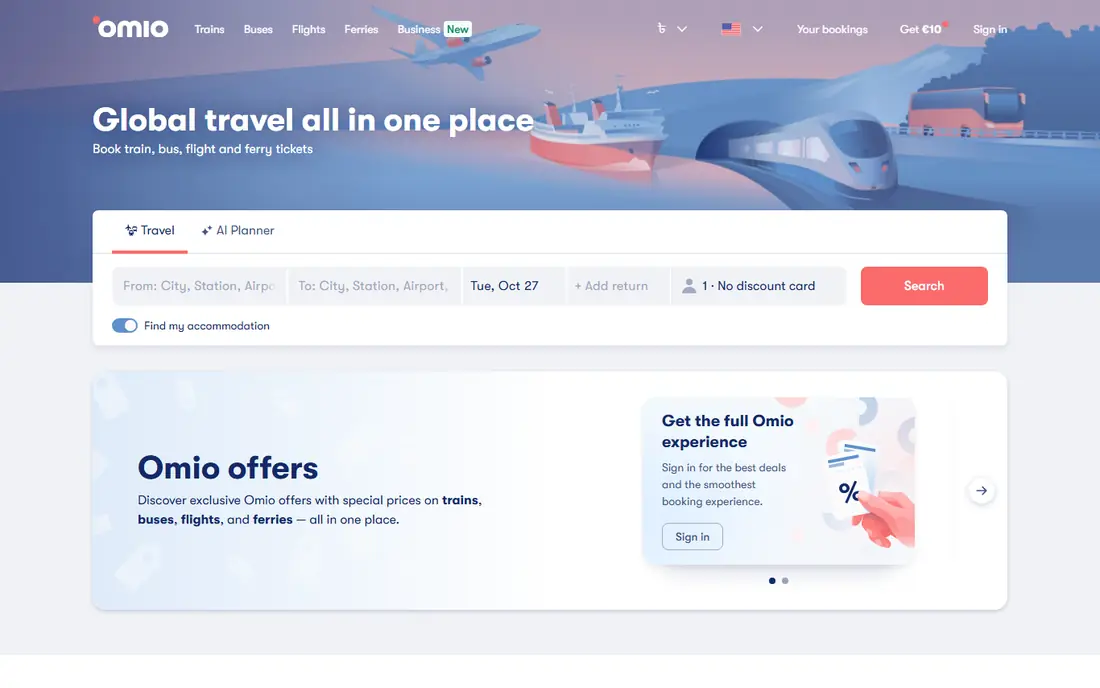
Omio is the closest to a one-stop multi-modal booking app for many European trips. You can compare trains, buses, and flights side by side, then book several legs without visiting each operator site separately. The side-by-side comparison is the strength. When a peak train costs more than a coach, Omio shows that gap at once, which helps budget travelers choose with eyes open.
Service fees can apply, and coverage is stronger in Europe than elsewhere. For trips outside its core regions, compare it with a local operator or another app.
- Books several modes in one place
- Side-by-side mode comparison
- Mobile tickets
- Service fees can apply
- Coverage varies outside Europe
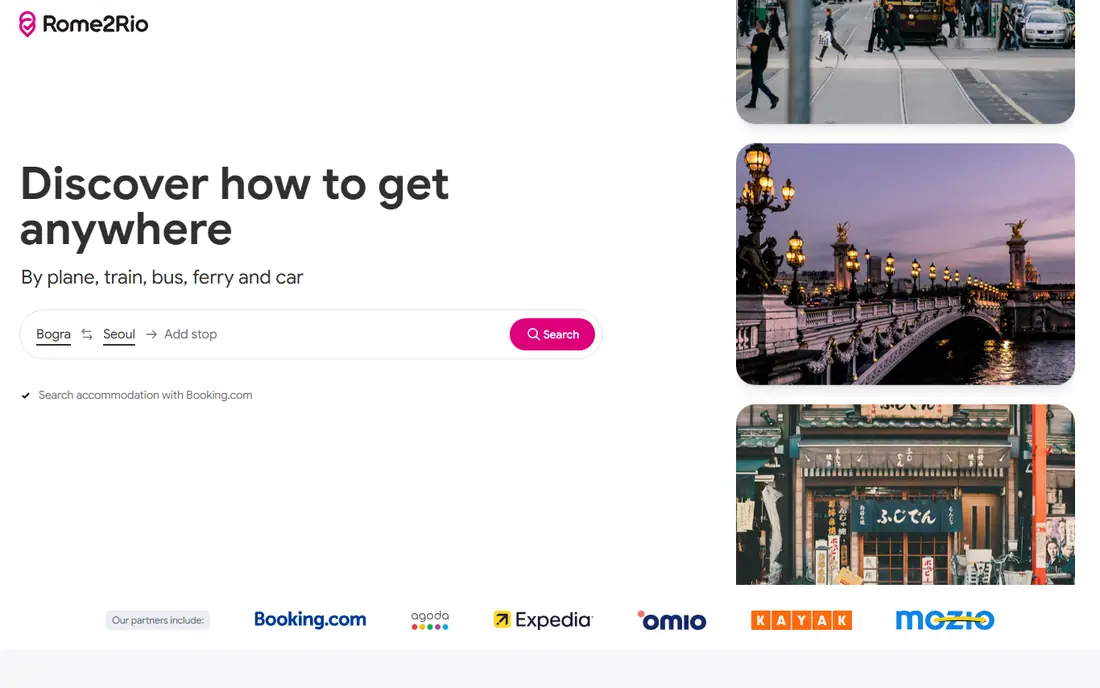
Rome2Rio is the best starting point when you do not know what modes are even possible. It maps door-to-door routes across trains, buses, ferries, flights, and driving, including combinations other apps miss. Its breadth is unmatched for discovery. A route that needs a train, a ferry, and a local bus appears as one journey, with times and fare estimates side by side.
The limit is booking. Rome2Rio usually sends you to an operator or partner to complete a purchase, so you may still hold separate tickets. Treat it as a planner first, and a booking tool second.
- Covers trains, buses, ferries, flights, and driving
- Door-to-door maps
- Huge operator list
- Mostly search and referral, not one-checkout booking
- Fares are estimates
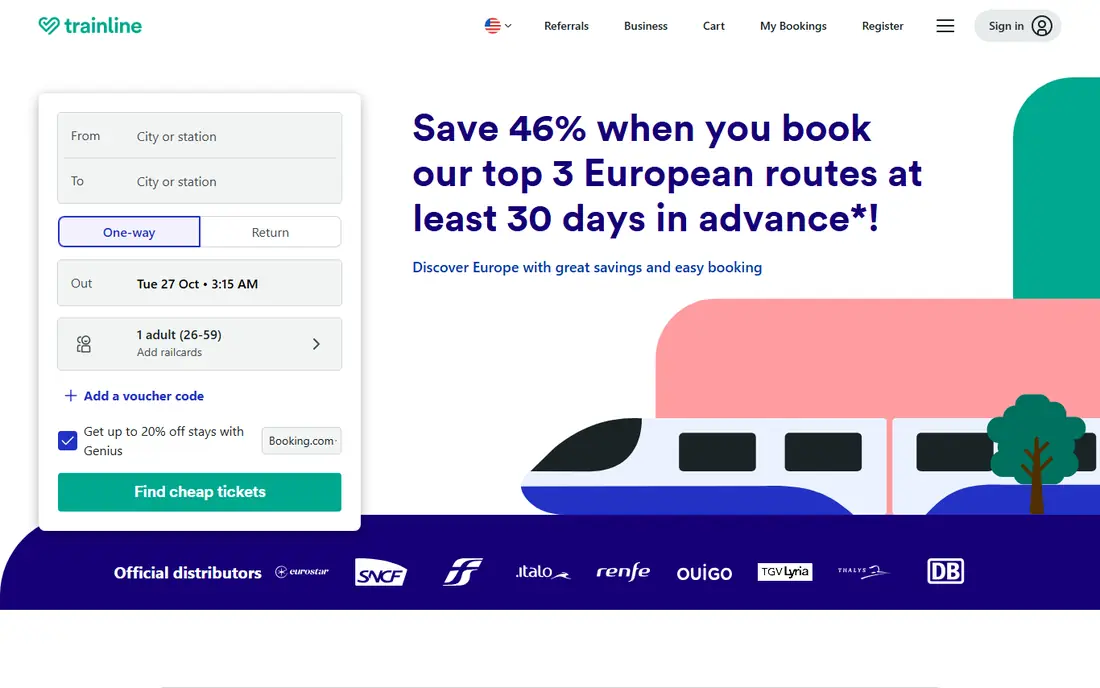
Trainline is the rail-first pick for Europe. It books trains across many countries in one app, with clear times, seat options, and mobile tickets, and it adds bus and coach choices where they fit. Split-ticketing in some markets is a useful feature. The app can find cheaper combinations of tickets for the same journey, which can cut rail fares without changing seats.
Its multi-modal range is narrower than Omio. If your trip mixes flights, ferries, and rail, you may need a second app to compare all modes.
- Clear rail booking
- Split-ticket savings in some markets
- Mobile tickets
- Multi-modal scope is narrower than Omio
- Fees can apply
Wanderu suits North American bus and train travelers who want one search across operators such as Amtrak, Greyhound, and FlixBus. You can filter by price, time, and departure point. Operator comparison is the draw. Instead of checking each bus company separately, you see several options together, which saves time on common routes.
Flights are not the focus, so air-plus-ground trips need another app. Coverage also varies by region, so check whether your route is well served before relying on it.
- Compares bus and train operators
- Price and time filters
- Simple booking
- No flights in most searches
- Coverage varies by region
FlixBus is a useful leg inside a multi-modal trip, especially for budget travel in Europe and North America. Its app sells coach tickets, shows live departure info, and stores mobile tickets. Low fares are the obvious strength, but the network matters too. On routes where trains are pricey, a coach leg can keep a longer trip affordable.
Coach travel is slower and less flexible than rail or air, and you are limited to FlixBus routes. Use it as one mode in a mix, not as the only option for every leg.
- Low fares
- Wide coach network
- App tickets and seat selection
- Coach travel is slower
- Routes are fixed to the FlixBus network
BlaBlaCar adds a mode that other apps miss: rides with other travelers heading the same way. In some markets it also sells bus tickets, which makes it a flexible extra leg. Carpooling can fill gaps where public transport is thin. A ride between two towns with no direct train can turn a difficult trip into a simple one.
Availability depends on other people traveling, so times and seats are less certain than a scheduled train. Check reviews, pickup points, and cancellation terms before booking.
- Carpool rides
- Bus booking in some markets
- Community reviews
- Availability depends on other travelers
- Times are less fixed than rail
Kayak is best for trips that start with a flight and add ground transport. You can compare flights, then check trains, buses, and rental cars for the rest of the journey, with price alerts for fare changes. Price alerts and flexible date tools are the strengths. If your dates can shift by a day or two, Kayak can surface cheaper combinations quickly.
It is mainly a comparison tool, so final booking often happens with a partner or operator. You may still hold separate tickets for each leg, so check connection protection carefully.
- Flight search plus car and train options
- Price alerts
- Flexible date tools
- Mostly comparison, not one-ticket multi-modal booking
- Fees vary by partner
Busbud focuses on bus travel across many countries, with schedules and tickets from a large operator list in one app. It is a strong leg for trips where bus is the cheapest or only ground option. Breadth of bus operators is the advantage. You can compare companies on the same route instead of visiting each site separately.
It does not cover flights or rail in most searches, so multi-modal trips need a planner such as Rome2Rio or Omio alongside it. Check service fees at checkout too.
- Wide bus operator list
- Clear schedules
- Mobile tickets
- No flights or rail in most searches
- Fees can apply
How we picked these
We compared official feature pages, pricing pages, and app store listings for each product, and checked privacy policies and public reviews where they helped explain limits. We favored products that exist and work today, fit the topic directly, and offer a clear use case, rather than padding lists with near matches.
We also weighed honest trade-offs. A low price means less if the free plan limits exports, a strong feature set means less if it only serves one region, and a high rating means less if the product does not serve the reader need in the headline. Where pricing was unclear or varied by plan, we wrote See website instead of guessing a number.
How to plan a multi-modal trip without stress
Start with connection time, not just total time. A trip that looks fast on paper can fail if a train arrives ten minutes before a ferry leaves and a delay eats that gap. Leave a buffer for separate tickets, since a missed connection on separate bookings usually means buying a new ticket.
Then check what one ticket actually covers. Some apps sell a single booking for several legs, while others sell separate tickets that happen to appear together. A single booking often gives better protection when a leg is delayed, while separate tickets give more choice but less cover.
Finally, compare the full journey, not just the headline fare. Add baggage fees, seat reservations, and transfer costs, and check arrival times at the final address, not just the station or airport. A slightly slower trip with a simple transfer often beats a faster trip with a tight, stressful change.
FAQ
What does multi-modal travel mean?
Multi-modal travel combines more than one transport mode in a single trip, such as a train plus a ferry, or a flight plus a bus. It also includes door-to-door planning, where local transport connects to long-distance legs.
Can I book a train, bus, and flight in one checkout?
Sometimes, depending on the app and route. Omio books several modes together for many European trips, while Rome2Rio and Kayak mainly compare modes and send you to operators to finish booking. Check whether you receive one booking or separate tickets.
Are separate tickets riskier than one booking?
Yes, when a delay affects a later leg. With one booking, the seller may rebook you. With separate tickets, a missed connection usually means buying a new ticket, so leave extra time between legs.
How much buffer time should I leave between legs?
It depends on the mode and station. For separate tickets, many travelers allow at least 45 to 60 minutes for a train-to-train change and longer for airport or ferry connections. Tight changes save time only when everything runs on schedule.
Do these apps include local transport at the destination?
Some show local options in route maps, but most focus on long-distance legs. Check a local transit app or the Rome2Rio map for the final stretch from a station or airport to your address.
Which app is best for a first multi-modal trip?
Start with Rome2Rio to see all possible routes, then use Omio or Trainline to book the main legs. That two-step approach gives you discovery plus a simpler booking path.