Best Corporate Travel Booking Platforms in 2026: 8 Tools Compared
We compared the best corporate travel booking platforms for 2026 on policy controls and support, to help teams find the best corporate travel booking tools.
- Editor's choice
 Navan
All in one travel, expense and cards
Starts atFree for travel on many plansVisit navan.comFull review - Great alternative
 Perk
Modern booking with cancellation flexibility
Starts atFrom $99 per month on Premium tiersVisit perk.comFull review - Also consider
 SAP Concur
Enterprise travel and expense with deep controls
Starts atSee websiteVisit concur.comFull review
TL;DR:
- Navan suits firms that want travel, expense and cards in one modern platform, with a free travel tier for many teams.
- Perk suits mid sized teams that want cancellation flexibility and a modern booking experience.
- SAP Concur suits large enterprises with complex approval and finance integration needs, despite a longer setup time.
- Agent backed platforms such as Amex GBT, BCD Travel and CWT suit firms with complex, high touch or crisis prone travel.
Quick comparison
| Tool | Best for | Starts at | Free plan? | |
|---|---|---|---|---|
| Navan | All in one travel, expense and cards | Free for travel on many plans | Free trial | Visit |
| Perk | Modern booking with cancellation flexibility | From $99 per month on Premium tiers | No | Visit |
| SAP Concur | Enterprise travel and expense with deep controls | See website | No | Visit |
 American Express Global Business Travel | Managed travel with global agent support | See website | No | Visit |
 BCD Travel | Enterprise travel management with high touch service | See website | No | Visit |
 CWT | Global travel management with negotiated rates | See website | No | Visit |
 Spotnana | Modern enterprise platform with broad inventory | See website | No | Visit |
 TravelBank | Cost conscious travel and expense for small firms | See website | No | Visit |
The best corporate travel booking platforms
Corporate travel booking platforms let staff book flights, hotels and cars inside company policy, while finance teams see spend and approvals in one place. The platforms below range from modern self service tools to large enterprise systems with agent support. We compared them on booking inventory, policy controls, expense links and support.
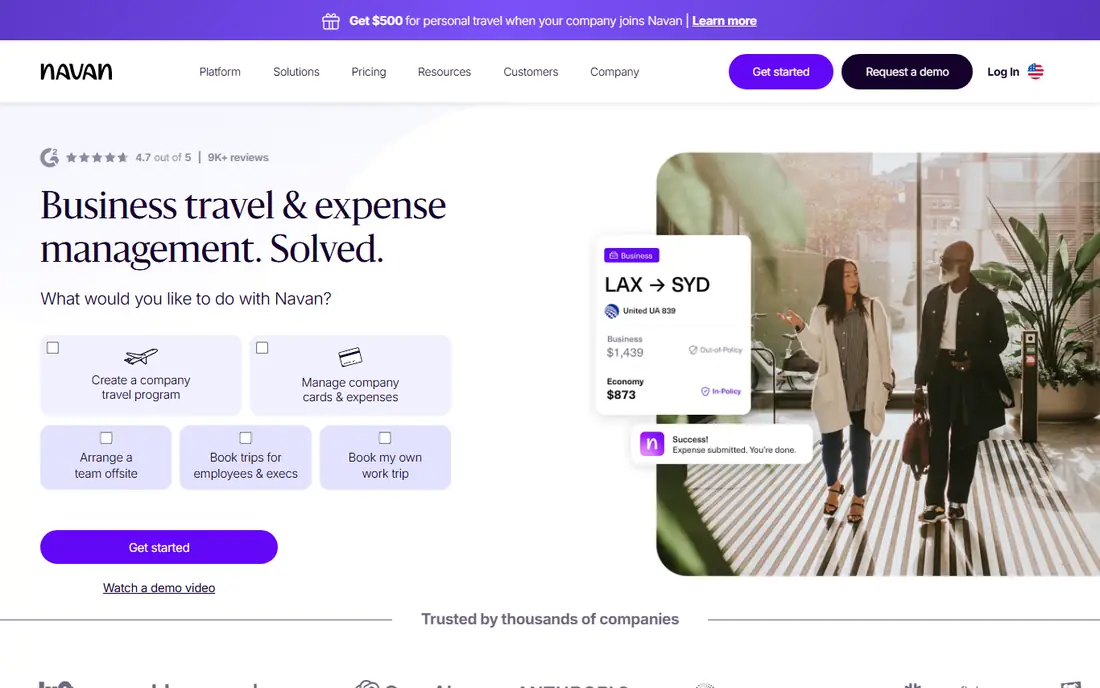
Navan suits firms that want to replace separate travel, expense and card tools with one platform. Its booking flow shows policy compliant options first, and expense capture links trips to spend, which reduces manual reconciliation for finance teams.
The catch is tiering, because expense pricing after the free user limit and full platform costs need a clear quote at your headcount before you compare it with a travel only tool. Before you commit, compare the written terms with at least two other options on this list, and ask what happens when a payment is late, a claim is disputed, or a plan changes. That short check often tells you more than any sales page.
- Travel booking free on Business plans in many listings
- Expense and card tools in one platform
- Policy controls and reporting
- Full expense pricing applies after free user limits
- Larger teams need demos and quotes
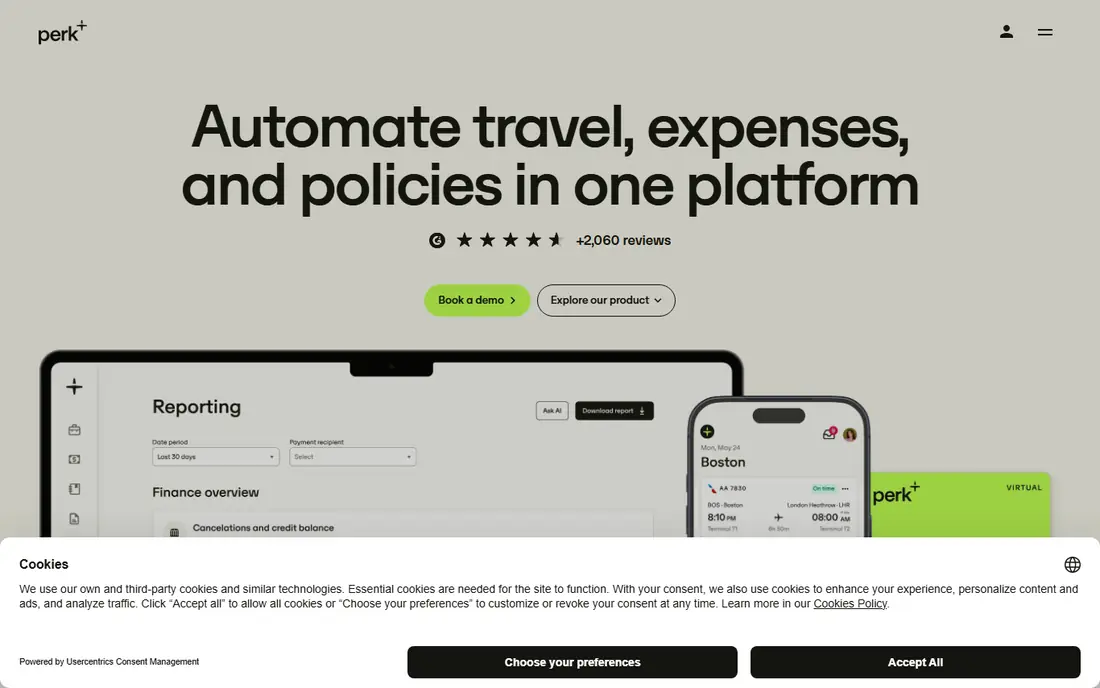
Perk suits mid sized teams that want a modern booking experience and flexible cancellation. Its cancellation cover can refund a large share of a cancelled trip in many cases, which helps teams whose plans change often.
The catch is fee stacking, because monthly fees plus per booking fees can add up for heavy travellers, so model total cost at your actual booking volume. Before you commit, compare the written terms with at least two other options on this list, and ask what happens when a payment is late, a claim is disputed, or a plan changes. That short check often tells you more than any sales page.
- Travel booking with chat based approvals
- Cancellation cover options
- Reporting and policy controls
- Per booking fees apply on some tiers
- Expense needs third party integration in many cases
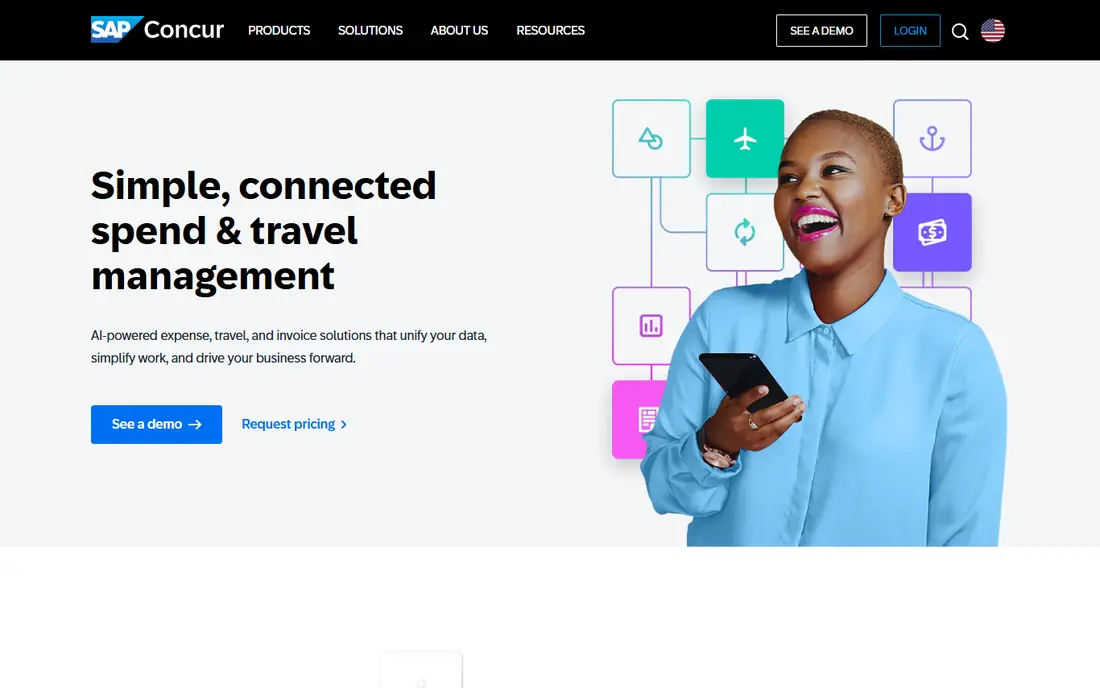
SAP Concur suits large enterprises with global travel programs and complex finance requirements. Its approval routing, policy controls and ERP links help large finance teams enforce rules and reconcile spend across many entities.
The catch is setup, because implementation can take months and traveller training matters, so smaller firms may find a modern self service tool faster to adopt. Before you commit, compare the written terms with at least two other options on this list, and ask what happens when a payment is late, a claim is disputed, or a plan changes. That short check often tells you more than any sales page.
- Deep policy and approval routing
- Strong finance and ERP integration
- Global reporting for large programs
- Long implementation times
- Booking experience can feel dated for travellers
American Express Global Business Travel
Best for: Managed travel with global agent support
American Express Global Business Travel suits multinationals that need managed travel, agent support and crisis help. Its global agent network helps travellers when flights cancel or plans change, with support that a pure self service tool cannot always match.
The catch is cost and fit, because managed programs suit larger travel volumes, so smaller firms should compare the total program cost with a self service platform first. Before you commit, compare the written terms with at least two other options on this list, and ask what happens when a payment is late, a claim is disputed, or a plan changes. That short check often tells you more than any sales page.
- Global travel management with agent support
- Negotiated rates in many programs
- Duty of care and traveller tracking
- Pricing is custom and often enterprise focused
- Self service experience varies by program
BCD Travel suits enterprises that want high touch service and consulting alongside booking tools. Its consultants help firms design travel policy, negotiate rates and manage traveller safety, which suits complex global programs.
The catch is that smaller firms may not need the full consulting layer, so ask which services are included in the quoted program and which are optional. Before you commit, compare the written terms with at least two other options on this list, and ask what happens when a payment is late, a claim is disputed, or a plan changes. That short check often tells you more than any sales page.
- Global travel management services
- Agent support and consulting
- Policy and reporting tools
- Pricing is custom
- Setup can be detailed for large programs
CWT suits large firms that want negotiated rates and global service coverage. Its scale helps firms secure corporate rates and manage travel across many countries, with payment tools that simplify supplier settlement.
The catch is program complexity, because a global managed program needs clear governance, so assign an internal travel owner before rollout. Before you commit, compare the written terms with at least two other options on this list, and ask what happens when a payment is late, a claim is disputed, or a plan changes. That short check often tells you more than any sales page.
- Global travel management
- Negotiated hotel and air rates in many programs
- Virtual payment options
- Pricing is custom
- Self service tools vary by program
Spotnana suits modern enterprises that want a current booking experience with enterprise controls. Its platform aims to give travellers a consumer like booking flow while keeping policy, approvals and reporting under finance control.
The catch is fit, because very small teams may find a simpler free or low cost tool enough, so compare implementation effort at your size. Before you commit, compare the written terms with at least two other options on this list, and ask what happens when a payment is late, a claim is disputed, or a plan changes. That short check often tells you more than any sales page.
- Modern booking platform for enterprises
- Broad travel inventory
- Policy controls and reporting
- Pricing is custom
- Best fit is enterprise rather than very small teams
TravelBank suits cost conscious startups and small firms that want travel and expense in one tool. Its finance led design helps small teams control spend without a large enterprise system, with booking and expense linked for reporting.
The catch is depth, because firms with complex international travel or large volumes may need a larger platform, so test inventory for your usual routes before signing. Before you commit, compare the written terms with at least two other options on this list, and ask what happens when a payment is late, a claim is disputed, or a plan changes. That short check often tells you more than any sales page.
- Travel and expense tools for small firms
- Policy controls
- Reporting for finance teams
- Inventory and feature depth are lighter than large platforms
- Pricing is often quoted
How we picked these
We compared official product pages, pricing pages and feature descriptions for platforms that book corporate travel in the United States and globally. We checked booking inventory, policy controls, approval workflows, expense links, support hours and whether pricing is published or quoted.
We favoured platforms that combine self service booking with clear policy controls and support when plans change. We left out consumer travel sites, because a corporate platform must enforce policy, track spend and support duty of care, not just find a cheap fare.
How to choose the best corporate travel booking tools
Start with travel volume, destinations and approval needs. A firm with ten travellers booking domestic trips needs a different tool from a firm with five hundred travellers across many countries. Ask each vendor for total cost at your booking volume, including monthly fees, per booking fees and support costs.
Policy, approvals and duty of care
Check how policy is enforced at booking, how approvals work for out of policy trips and how travellers are tracked in a disruption. A tool that only reports spend after the trip will not prevent out of policy bookings.
Inventory and traveller experience
Test the booking flow for your usual routes, including rail and hotel options, loyalty numbers and group bookings. A tool travellers avoid will push bookings back to consumer sites, which defeats policy control.
Expense and finance links
Ask whether expense capture, card reconciliation and ERP links are native or need a third party. A native link saves finance time, while a patchwork of integrations can create reconciliation work after every trip.
FAQ
What are the best corporate travel booking platforms?
The best corporate travel booking platforms depend on size. Navan and Perk suit modern mid sized teams, SAP Concur suits large enterprises, and Amex GBT, BCD Travel and CWT suit managed global programs. Compare total cost at your booking volume.
What is the best corporate travel booking tool for small businesses?
Navan and TravelBank suit small firms, because they offer lower entry costs and simpler setup than enterprise systems. Perk also suits small teams that want cancellation flexibility, though per booking fees need a check at higher volumes.
How much do corporate travel platforms cost?
Costs vary widely. Some offer free travel tiers, some charge $99 or more per month plus per booking fees, and enterprise platforms use custom pricing. Model monthly fees plus per booking fees at your real volume.
Do corporate travel platforms include expense management?
Some do, such as Navan and SAP Concur, while others focus on travel and link to expense tools. If expense capture matters, confirm whether it is native, included in your tier or an extra integration.
Can travellers book outside policy?
Most platforms flag or block out of policy options, with approval workflows for exceptions. Check whether the block is hard or soft, because a soft warning that travellers can ignore will not control spend.