Best Corporate Travel Management Tools in 2026: 8 Compared
Compare the best corporate travel management tools in 2026, with 8 platforms for booking, policy controls, expense, cards and duty of care in this guide.
- Editor's choice
 Navan
Travel, expense and cards in one platform
Starts atFreeVisit navan.comFull review - Great alternative
 TravelPerk
Flexible booking for SMBs and mid-market firms
Starts atFreeVisit travelperk.comFull review - Also consider
 SAP Concur
Large enterprises on SAP systems
Starts atSee websiteVisit concur.comFull review
TL;DR:
- Navan and TravelPerk offer the clearest entry pricing, while SAP Concur and Egencia suit larger, more complex programs.
- Brex and Ramp are strongest when travel must sit next to cards and expense controls.
- Spotnana suits tech-led firms, while TravelBank suits firms that want booking incentives.
- Model cost at your real trip volume, not just headcount, because booking fees and seat fees scale differently.
Quick comparison
| Tool | Best for | Starts at | Free plan? | |
|---|---|---|---|---|
| Navan | Travel, expense and cards in one platform | Free | Yes | Visit |
| TravelPerk | Flexible booking for SMBs and mid-market firms | Free | Yes | Visit |
| SAP Concur | Large enterprises on SAP systems | See website | No | Visit |
 Spotnana | Tech firms that want modern travel infrastructure | See website | No | Visit |
 Egencia | Mid-market firms that want TMC support | See website | No | Visit |
 Brex | Startups that want cards, expense and travel together | Free | Yes | Visit |
 Ramp | Finance teams that want unified spend control | Free | Yes | Visit |
 TravelBank | Firms that want rewards for under-budget booking | See website | Yes | Visit |
The best corporate travel management tools
We compared official feature pages, pricing pages, app store listings and public reviews for this guide on best corporate travel management tool. Each option below is a real product you can sign up for today, and we note the honest limits alongside the strengths.
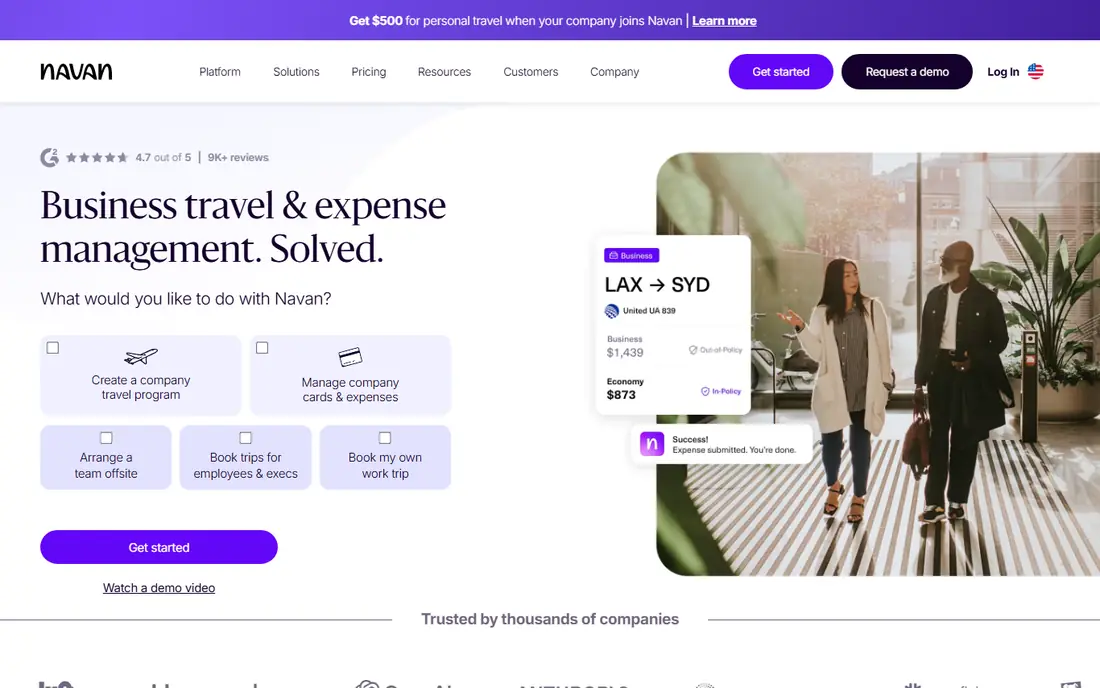
Navan is the simplest all-in-one pick for growth-stage firms. Its booking, expense and card tools share one view, which cuts the usual back-and-forth at month-end. In practice, that means you should judge it on the job you actually need done, not on the size of its feature list, because a long list can hide a weak core workflow.
For most buyers, the deciding question is fit rather than fame. Navan works best when its strengths line up with your daily routine, your budget and the tools you already use. Check the free option or trial first, look at the limits on the entry plan, and confirm that the parts you will use every week are included before you pay for a higher tier.
The catch is worth stating plainly. No tool here is perfect for every person, and the right choice often comes down to one trade-off you accept. If it touches your main use case, keep looking. If it only affects a rare feature, this is a strong pick.
- Travel booking free for smaller firms
- Integrated expense
- Corporate cards
- Enterprise pricing is custom above 300 employees
- Expense free tier is capped
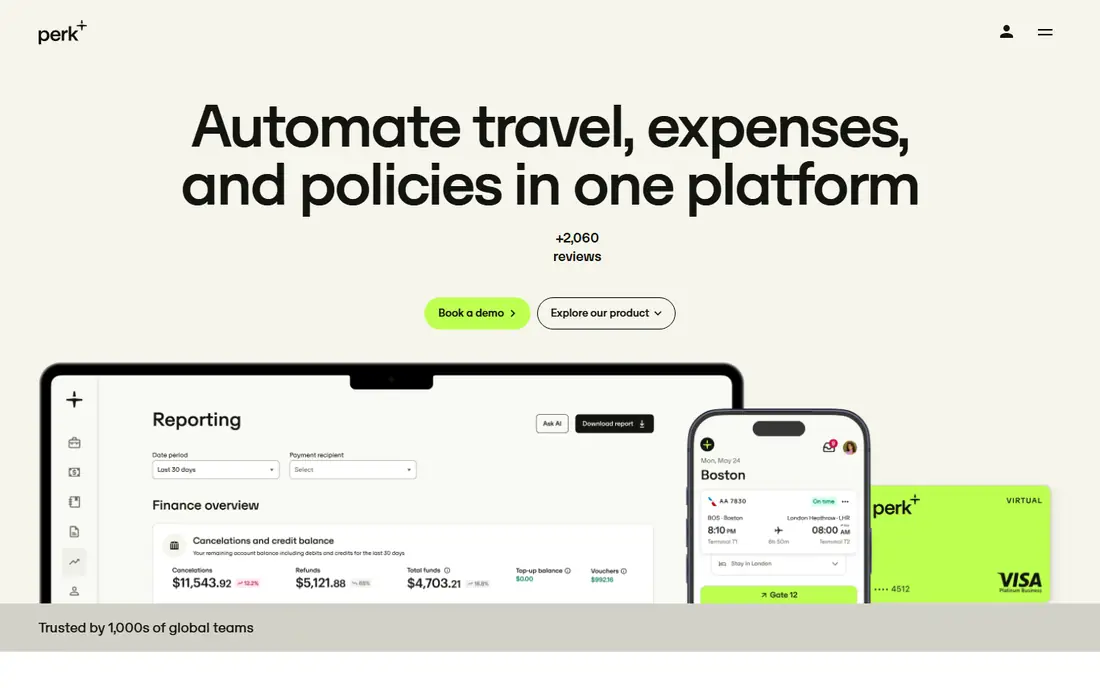
TravelPerk suits firms that want flexible booking without a heavy enterprise contract. Its cancellation cover and approval tools help managers control spend without slowing every trip. In practice, that means you should judge it on the job you actually need done, not on the size of its feature list, because a long list can hide a weak core workflow.
For most buyers, the deciding question is fit rather than fame. TravelPerk works best when its strengths line up with your daily routine, your budget and the tools you already use. Check the free option or trial first, look at the limits on the entry plan, and confirm that the parts you will use every week are included before you pay for a higher tier.
The catch is worth stating plainly. No tool here is perfect for every person, and the right choice often comes down to one trade-off you accept. If it touches your main use case, keep looking. If it only affects a rare feature, this is a strong pick.
- Starter plan with booking fees
- Flexible cancellation options
- Approval workflows
- Booking fees add up at scale
- Some features need higher tiers
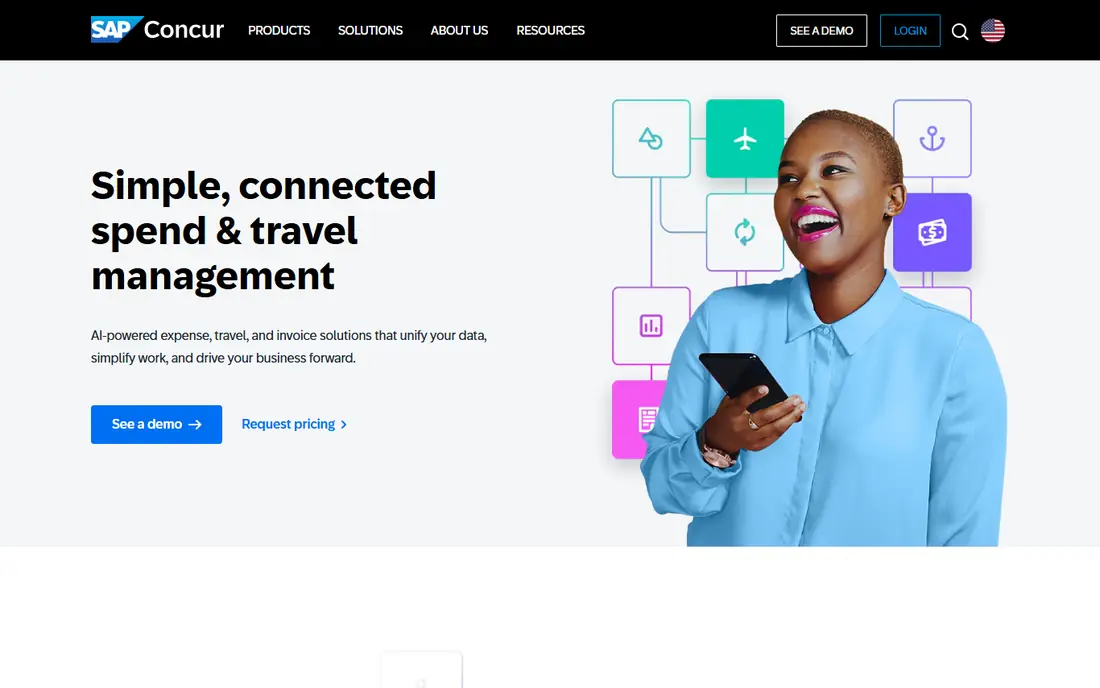
SAP Concur remains the enterprise standard for complex travel programs. Its policy controls and audit trail suit firms with strict rules, though smaller firms may find it heavy. In practice, that means you should judge it on the job you actually need done, not on the size of its feature list, because a long list can hide a weak core workflow.
For most buyers, the deciding question is fit rather than fame. SAP Concur works best when its strengths line up with your daily routine, your budget and the tools you already use. Check the free option or trial first, look at the limits on the entry plan, and confirm that the parts you will use every week are included before you pay for a higher tier.
The catch is worth stating plainly. No tool here is perfect for every person, and the right choice often comes down to one trade-off you accept. If it touches your main use case, keep looking. If it only affects a rare feature, this is a strong pick.
- Deep policy and approval routing
- Travel and expense in one system
- Global compliance
- Custom pricing
- Setup can take months
Spotnana is built as modern travel infrastructure rather than a legacy booking tool. Its API approach appeals to firms that want to connect travel to their own systems. In practice, that means you should judge it on the job you actually need done, not on the size of its feature list, because a long list can hide a weak core workflow.
For most buyers, the deciding question is fit rather than fame. Spotnana works best when its strengths line up with your daily routine, your budget and the tools you already use. Check the free option or trial first, look at the limits on the entry plan, and confirm that the parts you will use every week are included before you pay for a higher tier.
The catch is worth stating plainly. No tool here is perfect for every person, and the right choice often comes down to one trade-off you accept. If it touches your main use case, keep looking. If it only affects a rare feature, this is a strong pick.
- Cloud-native platform
- Open APIs
- Multi-supplier content
- Pricing is custom
- Best suited to firms with technical teams
Egencia pairs a consumer-style booking experience with travel management support. That mix suits mid-market firms that want help when a trip goes wrong, not just a booking form. In practice, that means you should judge it on the job you actually need done, not on the size of its feature list, because a long list can hide a weak core workflow.
For most buyers, the deciding question is fit rather than fame. Egencia works best when its strengths line up with your daily routine, your budget and the tools you already use. Check the free option or trial first, look at the limits on the entry plan, and confirm that the parts you will use every week are included before you pay for a higher tier.
The catch is worth stating plainly. No tool here is perfect for every person, and the right choice often comes down to one trade-off you accept. If it touches your main use case, keep looking. If it only affects a rare feature, this is a strong pick.
- Expedia inventory
- Amex GBT support network
- Price monitoring
- Pricing is custom
- Enterprise setup takes time
Brex is a strong pick for startups that already use its cards and expense tools. Adding travel to that same platform keeps spend controls in one place. In practice, that means you should judge it on the job you actually need done, not on the size of its feature list, because a long list can hide a weak core workflow.
For most buyers, the deciding question is fit rather than fame. Brex works best when its strengths line up with your daily routine, your budget and the tools you already use. Check the free option or trial first, look at the limits on the entry plan, and confirm that the parts you will use every week are included before you pay for a higher tier.
The catch is worth stating plainly. No tool here is perfect for every person, and the right choice often comes down to one trade-off you accept. If it touches your main use case, keep looking. If it only affects a rare feature, this is a strong pick.
- Free Essentials tier
- Corporate cards
- Travel booking and expense controls
- Premium travel features need a paid tier
- Card limits depend on business profile
Ramp suits finance teams that care as much about spend control as booking. Its card controls and receipt automation cut manual expense work after each trip. In practice, that means you should judge it on the job you actually need done, not on the size of its feature list, because a long list can hide a weak core workflow.
For most buyers, the deciding question is fit rather than fame. Ramp works best when its strengths line up with your daily routine, your budget and the tools you already use. Check the free option or trial first, look at the limits on the entry plan, and confirm that the parts you will use every week are included before you pay for a higher tier.
The catch is worth stating plainly. No tool here is perfect for every person, and the right choice often comes down to one trade-off you accept. If it touches your main use case, keep looking. If it only affects a rare feature, this is a strong pick.
- Free tier with cards, expense and travel
- Automated receipt matching
- Spend controls
- Plus plan adds a platform fee
- Advanced ERP links need paid tiers
TravelBank rewards travelers who book under budget, which can change booking habits. That incentive is unusual, and it suits firms that want to nudge savings without strict bans. In practice, that means you should judge it on the job you actually need done, not on the size of its feature list, because a long list can hide a weak core workflow.
For most buyers, the deciding question is fit rather than fame. TravelBank works best when its strengths line up with your daily routine, your budget and the tools you already use. Check the free option or trial first, look at the limits on the entry plan, and confirm that the parts you will use every week are included before you pay for a higher tier.
The catch is worth stating plainly. No tool here is perfect for every person, and the right choice often comes down to one trade-off you accept. If it touches your main use case, keep looking. If it only affects a rare feature, this is a strong pick.
- Travel and expense in one platform
- Rewards for booking under budget
- Approval workflows
- Pricing is custom for combined plans
- Expense features are narrower than some rivals
How we picked these
We started with products that exist, are currently offered and truly fit the topic, then we compared their official feature pages, pricing pages, app store listings and privacy pages. We gave weight to a clear free option or trial, honest pricing, a core workflow that works without many add-ons, and a track record of regular updates. We left out products that were discontinued, that did not fit the topic, or whose pricing and features we could not verify. Prices change, so check the vendor page linked in each block before you buy.
How to buy corporate travel software without a surprise bill
Start with the job you need done every week, then work backward to the plan that covers it. A tool that looks cheap on the entry tier can turn expensive once you add seats, extra projects or the features you actually use. Write down your must-have features, your nice-to-have features and your hard budget before you open a trial, and score each option against that list rather than against a marketing page.
Use the trial the way you will use the paid plan. Add a real project, invite a real teammate or client if the plan allows it, and test the exact workflow that matters most to you. Pay attention to how easy it is to export your work, cancel, and get help when something breaks. A smooth trial that hides export limits or support gaps is not a good sign for a long subscription.
Check the limits that are easy to miss. These include caps on projects, clients, prompts, reports or data volume, renewal prices after an intro offer, and features that only appear on a higher tier. If two options are close, pick the one with clearer pricing and simpler limits, because that is the one whose bill is least likely to surprise you later.
FAQ
What is the best best corporate travel management tool for beginners?
Start with a free plan or a short trial, and pick the option whose core workflow feels clear on day one. Beginners do best with a simple setup, plain pricing and good help pages, even if a more advanced tool has a longer feature list. You can move to a stronger plan later once you know which features you actually use.
Can I try a best corporate travel management tool option for free?
Many options on this list offer a free plan or a free trial, but the limits differ a lot. Check how many projects, clients, prompts or reports the free option allows, and whether a card is needed to start the trial. A free option that covers your main job is often enough to decide.
How much should I expect to pay?
Prices range from free to a sizable monthly subscription, and the right spend depends on how often you use the tool and how many people need access. Compare the full cost at your real usage level, including seats and add-ons, rather than the headline price on the pricing page. Check the vendor page before you buy, because prices and plan limits change.
How do I choose between similar options?
List the two or three features you will use every week, then check which plan includes them without an add-on. After that, weigh ease of use, support, export options and renewal price. The best choice is usually the one that covers your weekly workflow with the fewest compromises.
Are these options still available in 2026?
We checked the products on this list against their official pages and current listings for October 2026. Availability and pricing can still change, so confirm the plan details on the vendor website linked in each product block before you sign up.