Best Hotel Booking Apps in 2026: 8 Apps Compared
Compare the best hotel booking apps for deals, rewards, and last minute stays, including Booking.com, Expedia, Agoda, Kayak, Hopper, and Trivago for 2026 trips.
- Editor's choice
 Booking.com
Broadest hotel selection
Starts atFreeVisit booking.comFull review - Great alternative
 Expedia
Bundles and rewards
Starts atFreeVisit expedia.comFull review - Also consider
 Hotels.com
Hotel only rewards
Starts atFreeVisit hotels.comFull review
TL;DR:
- Booking.com offers the broadest hotel selection, while Expedia and Hotels.com share rewards that suit travelers who bundle trips.
- Agoda is strongest for Asia Pacific stays, while Kayak and Trivago are best for comparing the same hotel across many sellers.
- Hopper and HotelTonight suit different timing needs, with price predictions on one side and same day deals on the other.
- Free to download does not mean free to stay, so always check taxes, fees, and cancellation terms before you pay.
- Using one or two apps consistently usually earns more rewards than spreading bookings across every app on this list.
Quick comparison
| Tool | Best for | Starts at | Free plan? | |
|---|---|---|---|---|
| Booking.com | Broadest hotel selection | Free | Yes | Visit |
| Expedia | Bundles and rewards | Free | Yes | Visit |
| Hotels.com | Hotel only rewards | Free | Yes | Visit |
 Agoda | Asia Pacific stays | Free | Yes | Visit |
 Kayak | Rate comparison | Free | Yes | Visit |
 Hopper | Price predictions | Free | Yes | Visit |
 Priceline | Express deals | Free | Yes | Visit |
 Trivago | Comparing hotel rates | Free | Yes | Visit |
The best hotel booking apps
These eight apps cover direct booking, metasearch comparison, and last minute deals. We compared official feature pages, pricing and fee disclosures, app store listings, and public reviews to judge selection, rewards, and cancellation clarity.
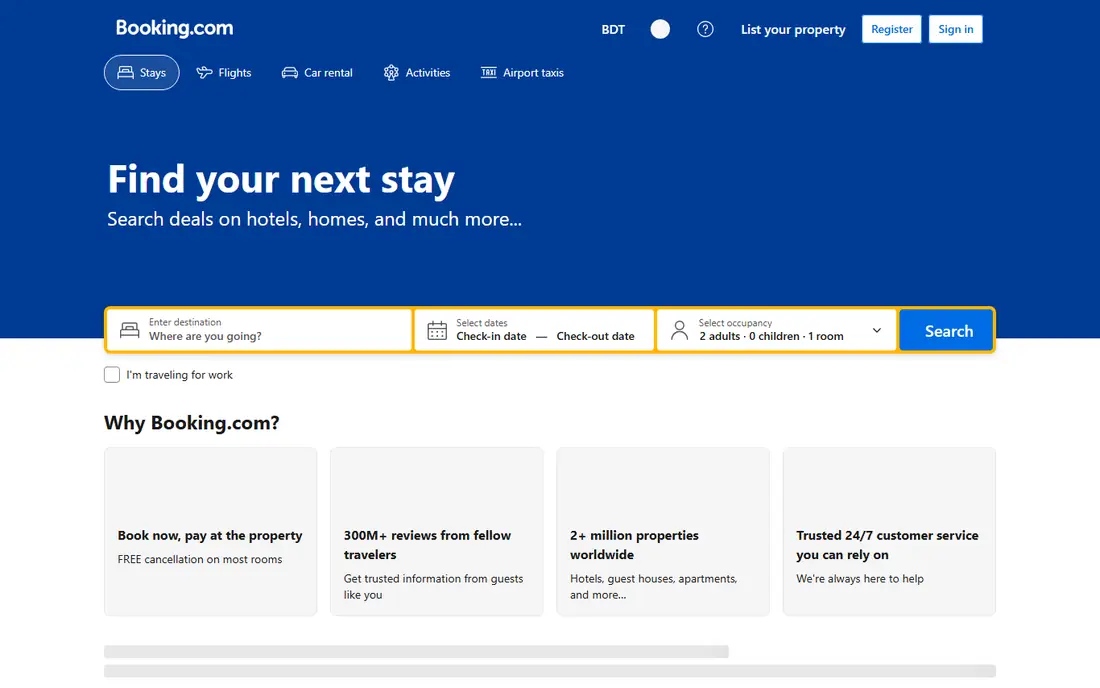
Booking.com is the default choice for many travelers because its inventory covers hotels, apartments, guesthouses, and resorts in most countries. Search filters for price, guest rating, property type, and cancellation policy help narrow a long list quickly, and many listings offer free cancellation up to a stated date. That flexibility matters when plans change. The Genius loyalty program adds discounts on selected stays as users book more, with higher tiers adding perks on some properties. The main catch is that not every listing shares the same terms, so two similar rooms can carry very different cancellation rules. Always read the policy for the exact room and dates before you confirm, and check the total with taxes and fees, not just the nightly headline price.
- Very large hotel inventory
- Many free cancellation options
- Genius loyalty tiers
- Cancellation terms vary by property
- Service fees and taxes can change the final total
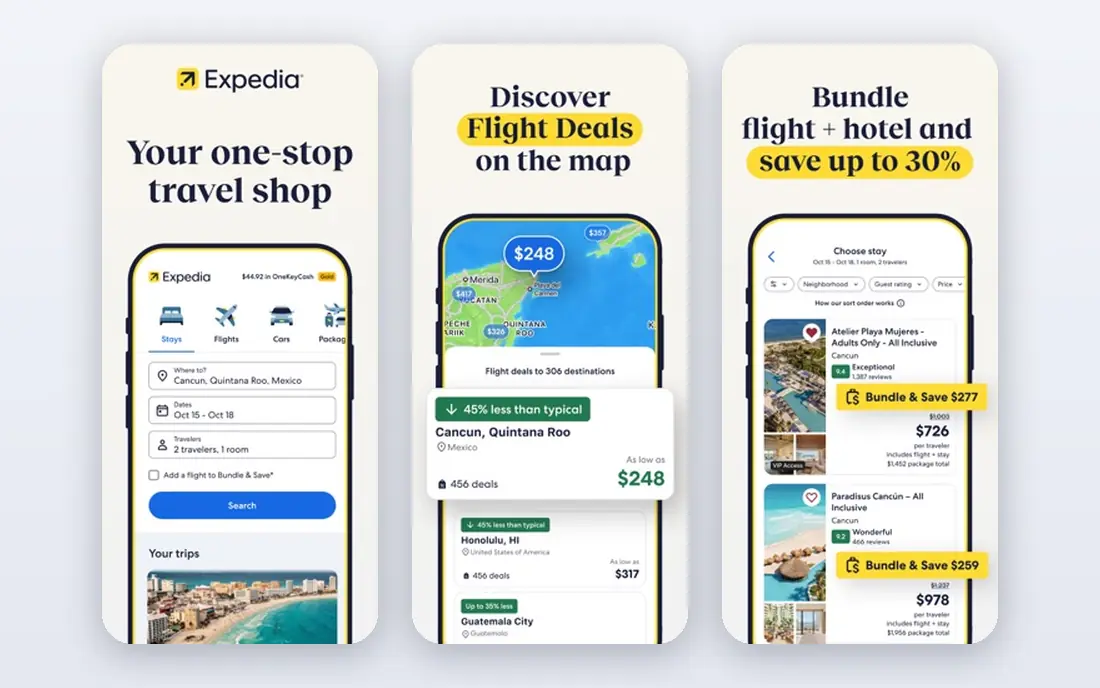
Expedia suits travelers who book a whole trip in one place. Flights, hotels, rental cars, and activities can sit in a single itinerary, and package pricing sometimes lowers the total compared with booking each part alone. The One Key rewards program spans Expedia, Hotels.com, and Vrbo, so points earned on one brand can help on another. That shared inventory is also a limit. Many rooms on Expedia also appear on Hotels.com and other Expedia Group sites, so the best deal may depend on which brand runs a promotion that week. Member prices and flash deals can help, but they are not universal. For travelers who bundle often and who want one rewards balance, Expedia is a strong main app, with a comparison check on Kayak or Trivago before paying.
- Bundles flights, hotels, and cars
- One Key rewards across Expedia brands
- Frequent member prices
- Same rooms often appear on sister sites
- Package savings vary by trip

Hotels.com keeps the focus on hotels, which makes the search and booking flow simpler than a full travel marketplace. Travelers who only need a room, and who do not want flight or car options cluttering the results, will find the cleaner layout helpful. The One Key program links rewards with Expedia and Vrbo, so loyal users still earn across brands. The downside is scope. A traveler booking a flight plus hotel package may get a better total on Expedia, even though the room itself is the same. Rewards also depend on stay value and program terms, so the return on a cheap stay is modest. Hotels.com is best as a hotel only companion app, especially for travelers who stay often and who prefer a straightforward room search.
- Hotel focused search
- One Key rewards
- Simple booking flow
- No flight bundling in the same checkout
- Rewards value depends on stay prices
Agoda, part of Booking Holdings, is especially strong across Southeast Asia, East Asia, and South Asia, with coverage from capsule hotels to villas and resorts. Travelers heading to Bangkok, Bali, Tokyo, or Singapore often find more local properties and regional promotions here than on US focused sites. Filters for area, price, and guest rating help sort a large regional list. Outside Asia Pacific, Agoda is still usable, but its edge is smaller and its inventory overlaps more with Booking.com. Support and cancellation handling can also vary by property and region, so reading the exact terms matters. For Asia focused trips, Agoda deserves a place beside Booking.com in any price check. For US or Europe only trips, it is a useful second check rather than a must have first stop.
- Deep Asia Pacific inventory
- Frequent regional deals
- Many property types
- Customer support experience varies by region
- Cancellation terms vary by listing
Kayak is a metasearch tool, which means it scans many booking sites and shows the same hotel at different prices in one view. That comparison is its main value. Price alerts track a chosen hotel or destination and notify users when rates change, and flexible date tools show cheaper nights nearby. For travelers who already know where they want to stay, Kayak often finds a lower total faster than checking sites one by one. The catch is that Kayak usually sends users to another site to complete the booking, so cancellation terms, support, and payment rules belong to that seller. A lower price from an unfamiliar seller may carry stricter terms than a slightly higher price direct from the hotel. Use Kayak to find the rate, then check the seller terms before you pay, and consider booking direct when the price gap is small.
- Compares many booking sites at once
- Price alerts
- Flexible date search
- Kayak does not sell most rooms itself
- Final terms depend on the seller you choose
Hopper built its name on price prediction for flights, and its hotel tools follow the same idea. The app shows whether prices are expected to rise or fall, lets users watch a hotel, and offers price freeze options on selected bookings for a fee. For travelers with flexible dates, watching a hotel for a week can reveal a better night to book. Predictions should be treated as guidance, not a promise. Hotel prices move with demand, events, and property decisions that no model can know with certainty. Freeze and protection features also add cost, so users should weigh the fee against the saving they hope to lock in. Hopper is best for flexible travelers who like alerts and who are comfortable booking in an app, rather than for travelers who need a firm price on a fixed date today.
- Price predictions and alerts
- Freeze options on some bookings
- App first design
- Predictions are estimates, not guarantees
- Some features add fees
Priceline offers standard hotel booking beside its well known Express Deals, where users pick a star rating, neighborhood, and price range, then learn the hotel name after paying. That trade can save money, especially in cities with many similar hotels in one area. For travelers who care more about area and quality tier than about a specific brand, the saving is real. The risk is fit. An Express Deal may place a traveler in a hotel that is fine but not ideal for their needs, such as distance from a meeting venue or lack of a desired amenity. Express Deals are also usually non refundable, so a changed plan costs the full amount. Use Priceline for published rates when you need a named hotel, and reserve Express Deals for flexible trips where area and star level matter more than the exact property.
- Published rates plus Express Deals
- Frequent discounts
- Broad US coverage
- Express Deals hide the hotel name until after payment
- Those deals are usually non refundable
Trivago, like Kayak, compares rates for the same hotel across many booking sites, which makes it useful for a final price check. A traveler who found a hotel on Booking.com or Expedia can search Trivago to see whether another seller lists the same room for less. The interface focuses on that single comparison, which keeps the task fast. Trivago does not sell most rooms directly, so the booking, cancellation, and support terms come from the seller selected. A cheaper rate with strict terms may be worse than a slightly higher rate with free cancellation. Trivago is best used as a comparison step, not as a sole booking source, and it pairs well with one main booking app that holds the traveler rewards balance.
- Compares one hotel across many sellers
- Clear price per night view
- Useful for deal checks
- Does not handle most bookings itself
- Deals depend on the seller chosen
How we picked these
We compared official feature pages, app store listings, fee and cancellation disclosures, and public reviews for each app, and we kept only apps that book or compare real hotel stays in October 2026. We favored apps with broad inventory, clear total pricing, usable price alerts, and a rewards or comparison feature that adds value beyond a basic search. We did not include rental only marketplaces, since this list focuses on hotel booking apps.
How to get a better hotel deal
Compare the total, not the nightly rate
Taxes, resort fees, and service charges can change the ranking of two similar listings. Check the final total for the full stay, including fees, before you choose. A lower nightly rate with a high resort fee may cost more overall than a slightly higher rate with fees included.
Check cancellation before you chase the lowest price
Free cancellation is worth money when plans can change. A non refundable deal saves money only if the trip happens as planned. For business trips, family trips, or weather sensitive travel, a flexible rate often beats a small saving on a strict rate.
Use rewards with a plan
Pick one main booking app and one comparison app, and stick with them for most stays. Rewards build faster with concentration, and managing five small balances helps no one. Check whether rewards apply to the room type and dates you actually book, since some discounted rates earn less.
FAQ
What is the best app for hotel deals?
Booking.com suits most travelers for selection and flexible terms, while Kayak and Trivago suit travelers who want to compare the same hotel across sellers. Agoda often wins for Asia Pacific stays, and Priceline Express Deals suit flexible travelers who accept a hidden hotel name for a lower price. The best deal depends on destination, dates, and cancellation needs.
Which hotel booking app has the best rewards?
Expedia and Hotels.com share One Key rewards, which helps travelers who book across those brands. Booking.com Genius tiers add discounts on selected stays as users book more. Rewards value varies by stay price and room type, so check program terms for your typical trip before choosing a main app.
Is it cheaper to book direct or through an app?
Sometimes direct booking matches or beats app prices, and direct bookings often earn full hotel loyalty points and clearer support. Apps can win with member prices, package deals, or regional promotions. Compare the total with taxes and fees on both routes for the exact room and dates before you decide.
What is the best app for last minute hotel bookings?
HotelTonight style same day deals are useful, and Hopper alerts can help flexible travelers watch prices, but among this list, Booking.com and Priceline often list same day availability with clear cancellation terms. For a truly last minute stay, check availability and check in time directly, since some properties limit same day check in hours.
Do hotel booking apps charge fees?
Most apps are free to download and search, but the stay total can include taxes, service charges, and property resort fees. Those charges vary by property and seller, so the final checkout total is the only reliable comparison. Read the fee breakdown before you pay, especially for resort stays.
Can I cancel a hotel booking made in an app?
Cancellation depends on the rate and property terms, not just on the app. Many listings offer free cancellation until a stated deadline, while Express Deals and other discounted rates are often non refundable. Check the deadline in your confirmation email and set a reminder before it passes if your plans may change.