8 Best Apps for Calorie Counting in 2026 Compared
Find the best app for calorie counting in 2026, from MyFitnessPal and Cronometer to Lose It, Yazio and MacroFactor, with pricing and honest limits now.

- Editor's choice
 MyFitnessPal
Largest food database
Starts atFreeVisit myfitnesspal.comFull review - Great alternative
 Cronometer
Micronutrient detail
Starts atFreeVisit cronometer.comFull review - Also consider
 Lose It
Simple weight loss tracking
Starts atFreeVisit loseit.comFull review
TL;DR:
- MyFitnessPal suits most people for food database size and device links, while Cronometer suits people who want detailed micronutrient data.
- Lose It and FatSecret are the easiest low cost starts, and MyNetDiary offers strong free tracking without ads on the free tier in published guides.
- MacroFactor suits experienced trackers who want adaptive targets, while Yazio and Lifesum suit people who also want fasting or diet plan tools.
- Free barcode scanning and photo logging vary by app and tier, so check what is free before you commit to a paid plan.
- Calorie counts are estimates, even in the best apps, so use them as a guide, and talk to a clinician before a major diet change.
Quick comparison
| Tool | Best for | Starts at | Free plan? | |
|---|---|---|---|---|
| MyFitnessPal | Largest food database | Free | Yes | Visit |
| Cronometer | Micronutrient detail | Free | Yes | Visit |
| Lose It | Simple weight loss tracking | Free | Yes | Visit |
 Yazio | Fasting and meal plans | Free | Yes | Visit |
 Lifesum | Diet plans and design | Free | Yes | Visit |
 MacroFactor | Adaptive macro coaching | $11.99 per month | Free trial | Visit |
 FatSecret | Generous free tracking | Free | Yes | Visit |
 MyNetDiary | Feature rich free tracking | Free | Yes | Visit |
The best apps for calorie counting
We compared official pricing pages, app store listings, and feature descriptions for calorie counting apps that are actively available in October 2026. The eight below cover free, low cost, and premium tracking, with different strengths for beginners, detailed trackers, and people following a named diet. This article is general information, not medical advice.
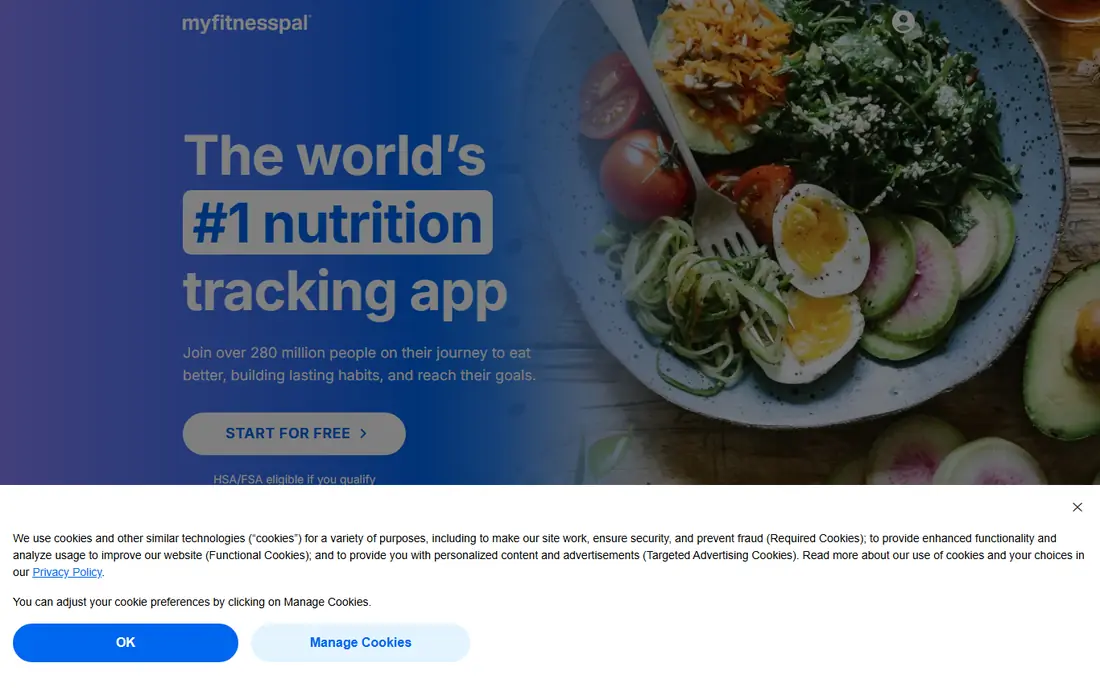
MyFitnessPal is our pick for most people starting calorie counting, mainly because its food database is so large that logging a packaged food or restaurant meal is usually fast. It also connects to many fitness trackers and health apps, so steps, workouts, and weight can sit alongside food in one view. For a beginner, that speed matters, because logging that takes too long is logging you will stop doing.
The catch is the paywall. Barcode scanning, voice logging, and Meal Scan have been Premium features in recent listings, with Premium at $19.99 per month or $79.99 per year in published guides. The free tier still allows basic logging, but if barcode scanning is essential for you, check the current Premium terms, or consider Cronometer or FatSecret, which offer free barcode scanning in their free tiers.
- Very large food database
- Broad device and app integrations
- Useful for US packaged foods and restaurant items
- Barcode scanning and some logging tools need Premium
- Ads on the free tier
- Premium price is higher than several rivals

Cronometer is the best calorie counting app for people who care about more than calories, including vitamins, minerals, and other nutrients. Its free tier tracks a wide nutrient set and includes barcode scanning in published guides, which makes it one of the strongest free options for careful trackers. If you follow a restricted diet, manage a health condition with your clinician, or simply want to know what your food actually contains, Cronometer gives you that depth.
That depth is also its drawback. The interface shows a lot of numbers, and a user who only wants a daily calorie total may find it busy. Gold pricing in published guides is $10.99 per month or $59.99 per year, which adds history, custom recipes, and other tools. For simple calorie counting, Cronometer still works, but you should be comfortable with a more detailed view.
- Detailed tracking for many nutrients
- Verified food data focus
- Free barcode scanning in published guides
- Depth can feel like overkill for a simple calorie goal
- Some history and custom features need Gold
- Interface is data dense
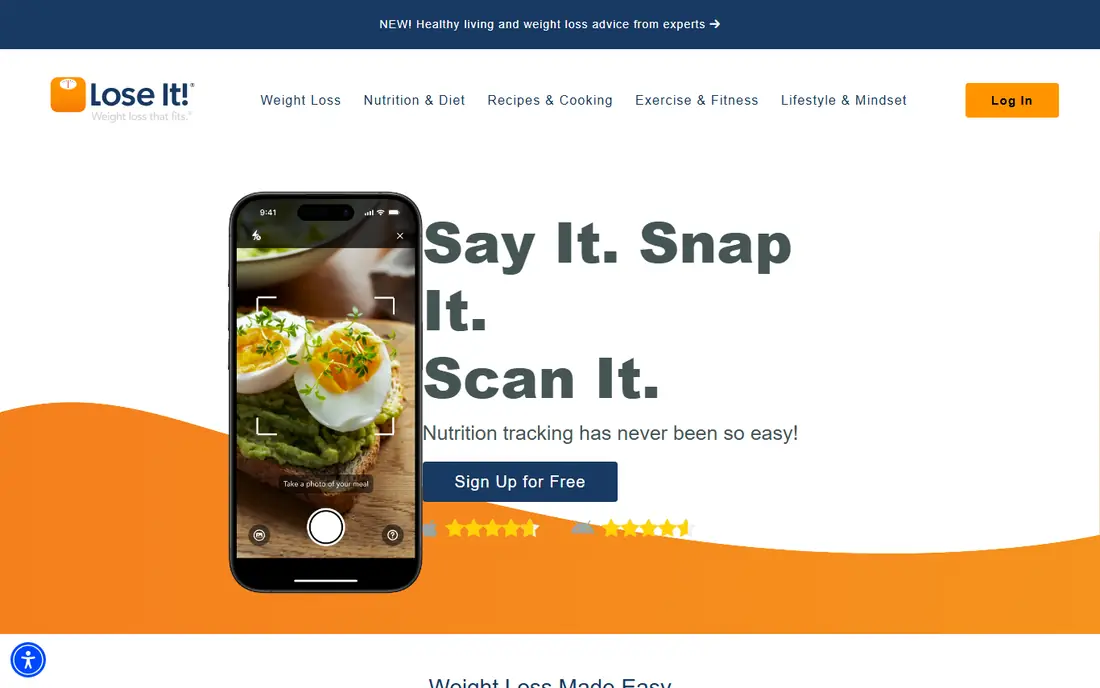
Lose It suits people who want a straightforward weight loss diary without a steep learning curve. Logging is quick, goals are clear, and weight tracking sits next to food, so progress is easy to see. Its visual style and challenges help some users stay consistent, especially in the first weeks when a new habit is forming.
The limit is the free tier. Barcode scanning, photo logging, and voice logging are Premium features in published listings, with Premium at $39.99 per year in some guides and $79.99 per year in others, so check the current app store price before you subscribe. If you are happy with search based logging, the free tier is useful. If you rely on barcode scanning, Cronometer or FatSecret may be better free starts.
- Simple, friendly logging
- Clear weight loss focus
- Photo and challenge features on Premium
- Barcode, photo, and voice logging are Premium in published listings
- Premium price has risen in recent guides
Yazio is a good pick if you want calorie counting plus intermittent fasting in one app. Its fasting timer, meal plans, and recipes sit alongside food logging, so you do not need a second app for fasting windows. The interface is clean, and the free tier covers basic calorie tracking and manual entry, which is enough to test the habit.
Pro features, including barcode scanning and AI photo logging, are paid in published guides, with Pro around $47.90 per year. Yazio also lacks a full web app in some listings, so check platform support if you log mainly on a computer. For fasting focused users, though, the combined tools are a real advantage over a calories only tracker.
- Intermittent fasting tools plus calorie tracking
- Recipe and meal plan library
- Clean interface
- Barcode and AI photo logging need Pro in published guides
- No web app in some listings
- Many planning tools are paid
Lifesum suits people who want calorie counting wrapped in a polished, lifestyle focused app, with diet plans and habit tracking alongside food. Its named diet plans, including keto and Mediterranean style plans in published descriptions, help users who want structure beyond a calorie target. The design is clean, and the daily Life Score gives a quick sense of overall habits.
The drawback is that much of that structure is paid. Diet plans, detailed recipes, and some coaching tools need Premium, with published guides listing Premium from around $9.99 per month or $49.99 per year, depending on the store and term. If you only need calorie counting, a simpler free app may do the same job for less. If design and diet structure help you stay consistent, Lifesum is worth a trial.
- Attractive design
- Named diet plans including keto and Mediterranean styles
- Life Score and habit tools
- Diet plans and recipes are Premium
- Free barcode value varies by listing
- Premium monthly price is higher than annual rivals
MacroFactor is our pick for experienced trackers who want targets that change with real results, rather than a fixed number set once at signup. Its algorithm reviews your logged food and weight over time, then adjusts calorie and macro targets each week. That approach suits lifters, athletes, and people who have tracked before and want coaching without a human coach.
The trade off is commitment. MacroFactor has no permanent free tier, with a trial in published listings and pricing at $11.99 per month or $71.99 per year. It also needs consistent, honest logging to adapt well, so gaps in food logs will weaken its recommendations. Beginners may prefer Lose It or MyFitnessPal first, then move to MacroFactor once daily logging is a habit.
- Adaptive calorie and macro targets that adjust with your data
- No ads
- Strong for experienced lifters and trackers
- No permanent free tier
- Needs consistent, complete logging to adapt well
- Less beginner friendly than Lose It
FatSecret is the best free calorie counting app for people who want barcode scanning and full macro tracking without paying. Its free tier includes barcode scanning, a recipe builder, a web dashboard, and community features in published guides, which is more generous than several rivals. For a budget conscious tracker, that free depth is hard to beat.
The catch is polish and ads. The free experience includes ads, and the interface is practical rather than beautiful. Premium pricing varies by country and store, with published guides listing a wide range, so check your app store price if you want an ad free experience. If free function matters more than design, FatSecret is an excellent starting point.
- Free barcode scanning and full macros in published guides
- Recipe builder and community
- Web dashboard included
- Ads on the free tier
- Premium price varies by country and store
- Design is functional rather than polished
MyNetDiary rounds out this list as a strong, often overlooked free tracker. Its free tier offers barcode scanning, macro tracking, and a large nutrient set, with no ads on free in published guides, plus staff verified foods that help with accuracy. For users who want Cronometer style depth with a simpler daily view, MyNetDiary is a good middle ground.
Premium adds an AI Coach and advanced planning, with published guides listing Premium around $59.99 per year and a higher Premium Plus tier. The design is less polished than Lifesum or Yazio, but the free feature set is strong. If you want a free tracker you can use long term without constant upsell pressure, MyNetDiary deserves a test alongside FatSecret and Cronometer.
- Free barcode scanning and many nutrients
- No ads on the free tier in published guides
- Staff verified food data
- AI Coach and advanced planning need Premium
- Design feels dated to some users
- Premium price varies by tier
How we picked these
We compared official pricing pages, app store listings, and feature descriptions for calorie counting apps available in the United States in October 2026. We kept apps that offer real food logging, not just coaching alone, and we mixed free, low cost, and premium options. We did not claim hands on testing, and we treated prices as published list prices that vary by store and term, so check the checkout screen before you subscribe.
Calorie and nutrient figures in any app are estimates, based on database entries that can vary by brand, portion, and preparation. Weighing food, checking labels, and logging consistently will improve accuracy more than switching apps. If you have diabetes, an eating disorder history, kidney disease, or another health condition, or if you are pregnant, talk to a clinician or registered dietitian before changing your diet or calorie target.
How to pick the best calorie counting app for you
Start with your goal and your patience for logging. If you want the fastest logging for packaged foods, MyFitnessPal is hard to beat, but check Premium barcode scanning needs. If you want free barcode scanning and nutrient detail, test Cronometer, FatSecret, and MyNetDiary side by side for a week. If you want adaptive coaching and you already log daily, MacroFactor is the stronger premium choice.
Then check the details that affect daily use. Look at whether the app has your most eaten foods, whether it syncs with your watch or scale, and whether the free tier covers the tools you actually use, such as barcode scanning or recipes. Set a realistic calorie target, log for at least two weeks before you judge results, and remember that a missed day is not a failed plan. The best calorie counting app is the one you will open after every meal, not the one with the most features.
Tips for more accurate logging
Weigh staple foods for a week to learn portion sizes, then estimate with more confidence. Log oils, sauces, and drinks, because those are easy to miss and can change a daily total. Use the same app and the same logging style for at least a month, so trends are comparable, even if single days are imperfect.
FAQ
What is the best app for calorie counting?
MyFitnessPal is our top all round pick for database size and device links, while Cronometer is best for micronutrient detail and MacroFactor is best for adaptive coaching. The best calorie counting app depends on your choice of free barcode scanning, detailed nutrients, or a simple weight loss diary. Test a free tier with your real meals before you pay.
What are the best calorie counting apps that are free?
Cronometer, FatSecret, and MyNetDiary offer the strongest free calorie counting in published guides, with free barcode scanning and macro tracking. Lose It, Yazio, Lifesum, and MyFitnessPal also offer free basic logging, but barcode or photo tools may need a paid tier. Start free, and only pay if a premium feature saves you real time each day.
What is the best calorie counting app for beginners?
Lose It and MyFitnessPal are the easiest beginner picks, because logging is simple and goals are clear. Lose It has a friendly weight loss focus, while MyFitnessPal has the largest food database. If you want free barcode scanning as a beginner, Cronometer or FatSecret may be easier to stick with, since those tools are free there.
Is MyFitnessPal or Cronometer better?
MyFitnessPal is better for database size, restaurant foods, and device integrations, while Cronometer is better for verified data and detailed micronutrient tracking. MyFitnessPal charges for barcode scanning on Premium, while Cronometer includes it free in published guides. Choose MyFitnessPal for breadth, and Cronometer for depth and accuracy focus.
Do calorie counting apps work for weight loss?
Calorie counting can help weight loss by making intake visible and by showing patterns over time, but no app guarantees results. Consistent logging, realistic targets, sleep, activity, and overall eating patterns all matter, and individual results vary. If you have a health condition or a history of disordered eating, talk to a clinician before using a calorie tracker.
How accurate are calorie counting apps?
Calorie counts are estimates, and accuracy depends on the database entry, portion size, and preparation method. Verified databases and weighed portions tend to be more accurate than user entered entries or guessed portions. Use trends over weeks, rather than a single day, to judge progress, and check labels for packaged foods when you can.