9 Best Alternatives to Adobe AEM in 2026
Compare the best alternatives to adobe aem for enterprise sites and headless delivery, with pricing, strengths and honest limits for each platform in 2026.

- Editor's choice
 Contentful
Enterprise headless content operations
Starts at$300 per monthVisit contentful.comFull review - Great alternative
 Sanity
Developer-led custom editorial experiences
Starts atFreeVisit sanity.ioFull review - Also consider
 WordPress VIP
Large WordPress sites with enterprise support
Starts atSee websiteVisit wordpressvip.comFull review
TL;DR:
- Contentful and Sanity are the leading headless options, with Contentful offering stronger out-of-the-box governance and Sanity offering deeper customisation.
- WordPress VIP and Drupal suit teams that want a traditional coupled CMS with full page control and a huge plugin and theme ecosystem.
- Sitecore XM Cloud is the closest like-for-like enterprise replacement for AEM, with similar scale and a similar enterprise price tag.
- Strapi is the best self-hosted option, since its open-source core costs nothing beyond your own hosting.
- Most enterprise platforms here price by quote, so request proposals on the same scope to compare fairly.
Quick comparison
| Tool | Best for | Starts at | Free plan? | |
|---|---|---|---|---|
| Contentful | Enterprise headless content operations | $300 per month | Yes | Visit |
| Sanity | Developer-led custom editorial experiences | Free | Yes | Visit |
| WordPress VIP | Large WordPress sites with enterprise support | See website | No | Visit |
 Sitecore XM Cloud | Enterprise digital experience at AEM scale | See website | No | Visit |
 Drupal | Flexible open-source sites with complex needs | Free | Yes | Visit |
 Strapi | Self-hosted headless CMS with full code control | Free | Yes | Visit |
 Storyblok | Marketing teams that want visual page building | See website | Yes | Visit |
 Optimizely | Experimentation and personalisation at scale | See website | No | Visit |
 Contentstack | Composable enterprise content delivery | See website | Free trial | Visit |
The best alternatives to Adobe AEM
We compared official feature pages, pricing pages, documentation and public reviews to find platforms that handle AEM's core work: multi-site publishing, structured content, localisation, asset management and delivery at scale.
Contentful is the safest headless move for a team leaving AEM, because its governance features work on day one. Editors get structured content types, scheduled publishing, multi-locale workflows and role-based permissions without custom development, and developers get stable REST and GraphQL APIs with SDKs for major frameworks. The marketplace covers translation, image optimisation and analytics tools.
The downside is price. The Basic plan starts at $300 per month, and larger deployments with compliance needs move to custom enterprise pricing that can reach tens of thousands per year. Teams with many occasional editors should also check how seats are counted. If governance and procurement fit matter most, Contentful earns its premium.
- Mature APIs and SDKs
- Strong roles, locales and scheduled publishing
- Large integration marketplace
- Costs rise fast at scale
- Content modelling can feel rigid
- Enterprise tiers are quote-based
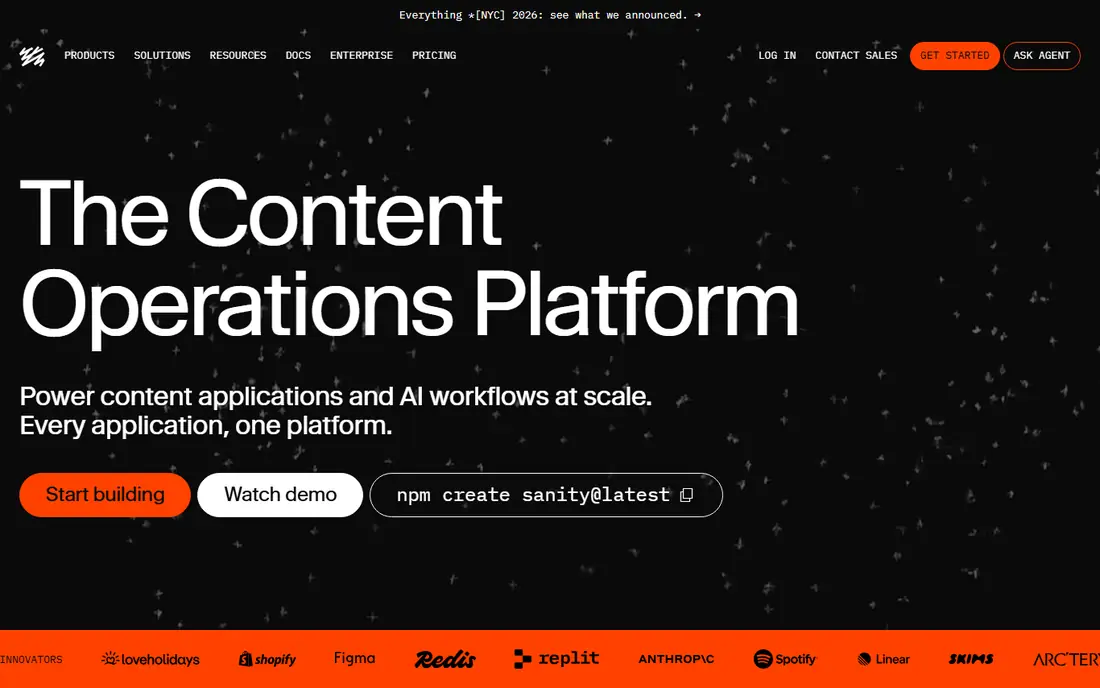
Sanity treats content as structured data in its Content Lake, and its Studio is an open-source React app that teams can shape to their exact editorial workflow. Real-time collaboration, custom input components and GROQ queries give developers unusual freedom, and the free tier covers small projects with a useful set of limits. Growth pricing starts at $99 per month in published comparisons.
That freedom is also the catch, since a good Sanity setup takes real engineering effort and governance features like advanced roles arrive on enterprise plans. High-traffic projects should model API, bandwidth and document overages before committing. For developer-led teams, Sanity is the most flexible platform here.
- Fully customisable editing studio built in React
- Real-time collaboration
- Structured content as queryable data
- Needs developer time to set up well
- Usage-based overages need modelling
- Governance depends on custom build
WordPress VIP takes the world's most widely used CMS and wraps it in managed hosting, security review and enterprise support. Editors keep the familiar WordPress experience, while the platform handles scaling, caching and updates for high-traffic sites. For teams whose editors already know WordPress, training costs stay low and hiring is easy.
Pricing is quote-based, which makes early budgeting harder, and VIP governs which plugins and code can run, so teams used to installing anything should expect review steps. It is also a coupled CMS first, so a headless build still needs a separate front end. For content-led sites at scale, it remains a strong AEM alternative.
- Familiar WordPress editing
- Managed hosting, security and scaling
- Huge theme and plugin ecosystem
- Quote-based pricing
- Plugin freedom is governed
- Headless use still needs front-end development
Sitecore XM Cloud is the closest direct rival to AEM in scope, offering content, personalisation, search and analytics in a composable SaaS platform. Organisations already running Sitecore or .NET stacks will find the ecosystem familiar, and the cloud delivery removes much of the infrastructure tuning that older on-premise platforms required. It suits multi-brand, multi-region operations.
The honest limit is that switching from AEM to Sitecore rarely saves money, since enterprise licensing and implementation effort are in a similar range. Teams should scope content migration, integrations and training before signing. If the goal is a like-for-like enterprise platform rather than a cheaper one, XM Cloud is the natural shortlist entry.
- Full digital experience suite including personalisation and commerce options
- SaaS delivery reduces infrastructure work
- Strong enterprise support
- Enterprise pricing comparable to AEM
- Implementation weight is significant
- Licensing model needs careful scoping
Drupal is free to license and remains one of the most flexible open-source CMS options for complex sites. Its content types, taxonomies, workflows and granular permissions handle government, university and media sites with many editors and content kinds. Multilingual support is strong, and the module ecosystem covers most common needs.
The cost shifts from licences to people, since hosting, security patching and upgrades fall to your team or agency. Implementation for enterprise-grade builds still commonly runs into five or six figures. For organisations with development capacity that want full control without licence fees, Drupal is hard to beat.
- Free open-source core
- Powerful content types, taxonomies and access control
- Strong multilingual support
- Needs developer expertise
- Hosting, security and updates are your responsibility
- Theming learning curve
Strapi is the only platform here that lets a team sidestep vendor pricing entirely by self-hosting the open-source core. Developers define content types, get REST and GraphQL APIs automatically, and keep data on their own infrastructure, which suits data-sovereignty requirements. Strapi Cloud exists for teams that prefer managed hosting.
The trade-off is operational responsibility: updates, backups and security are yours when self-hosting, and advanced roles and audit features sit on paid tiers. The admin panel is functional rather than beautiful. For developer teams that value ownership over polish, Strapi is the practical pick.
- Open-source core you can self-host
- Full control over data and code
- REST and GraphQL APIs out of the box
- Self-hosting overhead for updates and security
- Enterprise governance features are paid
- Admin panel is basic next to Sanity
Storyblok gives marketing teams a visual editor where pages are assembled from components with a live preview, which shortens the path from idea to published page. Content is delivered by API to any front end, and the component model keeps design consistent across a site. It is a good fit for marketing-led sites with many landing pages.
It is less strong for content that is not page-shaped, such as product data or deeply structured records, where Contentful or Sanity fit better. Published pricing covers starter tiers, while enterprise plans are quoted. If marketers, not developers, drive most publishing, Storyblok deserves a trial.
- Visual editor with live preview
- Component-based pages marketers can assemble
- Solid multi-language support
- Weaker for non-page structured content
- Enterprise pricing is quote-based
- Developer tooling is lighter than Sanity
Optimizely combines content management with experimentation, personalisation and commerce, which appeals to teams that test and tailor pages constantly. Editors can run experiments and target content variants without separate tooling, and the platform scales to large multi-site operations. It is a full digital experience platform, not just a CMS.
Breadth is also the weakness, since adopting the whole suite takes implementation effort and the price is quoted per deal. Teams that only need content delivery may find it more platform than necessary. For optimisation-led marketing teams, it is a distinctive AEM alternative.
- Content, commerce and experimentation in one suite
- Strong personalisation and testing tools
- Enterprise support
- Quote-based pricing
- Suite breadth adds implementation complexity
- Smaller headless community than Contentful
Contentstack is an API-first headless platform aimed squarely at enterprise buyers, with governance, roles and workflows suited to large content operations. Its composable approach lets teams pair it with best-of-breed commerce, search and front-end tools rather than taking one vendor's whole suite. Automation features help large teams move content through review and publishing reliably.
Pricing is quote-based, and teams wanting drag-and-drop page building will find it more developer-oriented than Storyblok or WordPress. For enterprises replacing AEM with a composable stack, Contentstack is a credible, well-supported choice.
- API-first composable architecture
- Mature enterprise governance
- Automation and marketplace integrations
- Quote-based pricing
- Presentation features are lighter than coupled CMS options
- Setup needs developer involvement
How we picked these
We compared official feature pages, pricing pages, documentation and public reviews, focusing on platforms that handle multi-site publishing, structured content, localisation and delivery at scale. We included both headless and traditional CMS options because AEM buyers split on that question, and we marked quote-based pricing honestly instead of repeating third-party estimates as facts. Tools that are no longer actively sold or maintained were left out.
Choosing between headless and traditional
Decide who builds the front end
Headless platforms deliver content by API, so you need front-end developers to build and maintain the website itself. Traditional platforms like WordPress VIP and Drupal render pages for you, which suits editor-led teams. Be honest about developer capacity before choosing, since a headless migration without front-end time stalls quickly.
Compare total cost, not licence cost
AEM replacements differ in where the money goes: licences, hosting, implementation or internal staff time. Free cores like Drupal and Strapi still cost real money to run well. Build a three-year total that includes implementation, hosting, support and the editors' time, then compare platforms on that figure.
Test migration with real content
Import a representative slice of your content, including your messiest pages, longest documents and most-translated sections, into each finalist. Check how links, media, metadata and permissions survive the move. Migration pain discovered in a pilot is cheap; discovered after signing is not.
FAQ
What is the best alternative to Adobe AEM?
There is no single winner, since the right choice depends on your team. Contentful suits enterprise headless teams that want governance on day one, Sanity suits developer-led teams, and WordPress VIP suits editor-led teams. Sitecore XM Cloud is the closest like-for-like enterprise replacement.
Is there a free alternative to Adobe AEM?
Yes. Drupal and Strapi are free open-source platforms, and Sanity and Contentful both offer free tiers for small projects. Free licensing does not mean free operation, since hosting, implementation and maintenance still cost money or staff time.
How much does it cost to replace Adobe AEM?
Costs vary widely. Headless starter plans run from free to around $300 per month, while enterprise platforms like AEM and Sitecore commonly start in six figures per year including implementation. Always request quotes on the same scope, including migration and support, before comparing.
Can I migrate content from AEM to another CMS?
Yes, usually through AEM's export tools and APIs, but expect cleanup work. Structured content migrates more cleanly than page layouts, and media, links and permissions need checking. Run a pilot migration with real content before committing to a timeline.
Do I need developers for a headless CMS?
Yes, headless platforms need front-end developers to build the website that displays the content. If your team has no developer capacity, a traditional CMS like WordPress VIP or Drupal, or a visual tool like Storyblok, will be easier to run day to day.