Best 360 Feedback Tools in 2026: 8 Tools Compared
We compared the best 360 feedback tools for 2026, covering multi rater reviews, anonymity, reporting and pricing for teams of every size and budget today.
- Editor's choice
 Culture Amp
Engagement plus 360 reviews
Starts atSee websiteVisit cultureamp.comFull review - Great alternative
 Lattice
Performance and 360 in one system
Starts at$4 per seat per monthVisit lattice.comFull review - Also consider
 15Five
Manager led feedback cycles
Starts at$4 per user per monthVisit 15five.comFull review
TL;DR:
- The best 360 feedback tools collect input from managers, peers and direct reports, then turn it into clear, usable reports without exposing individual raters.
- Culture Amp and Lattice suit larger teams that want 360 feedback inside a broader performance and engagement system.
- 15Five and Small Improvements suit smaller teams that want simpler, faster review cycles.
- Anonymity rules, rater guidance and follow up coaching matter more than fancy charts, so check those features before buying.
Quick comparison
| Tool | Best for | Starts at | Free plan? | |
|---|---|---|---|---|
| Culture Amp | Engagement plus 360 reviews | See website | No | Visit |
| Lattice | Performance and 360 in one system | $4 per seat per month | No | Visit |
| 15Five | Manager led feedback cycles | $4 per user per month | Free trial | Visit |
 Leapsome | Global people platform | See website | Free trial | Visit |
 Qualtrics 360 | Enterprise survey depth | See website | No | Visit |
 Spidergap | Dedicated 360 feedback | See website | No | Visit |
 Primalogik | Simple 360 and reviews | See website | No | Visit |
 Small Improvements | Scaling teams and simple reviews | $3 per user per month | Free trial | Visit |
The best 360 feedback tools
360 feedback, also called 360 degree feedback, gathers views on an employee from their manager, peers, direct reports and sometimes customers. Done well, it shows blind spots and strengths that a manager only review misses. The eight tools below handle that process at different scales, from dedicated 360 surveys to full performance platforms.
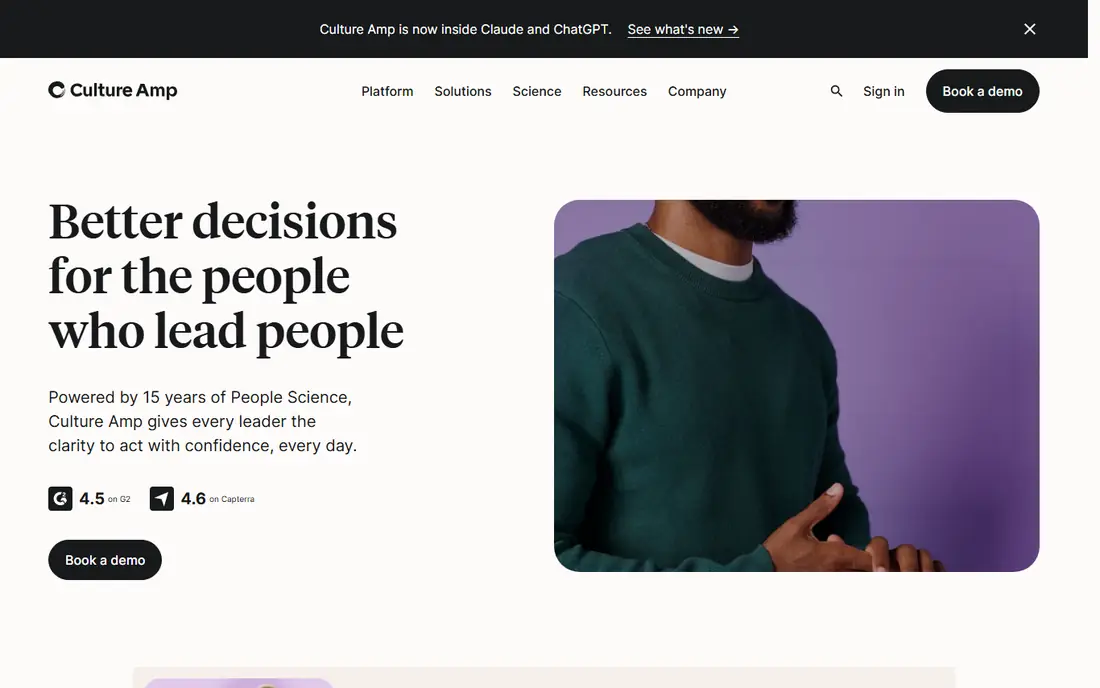
Culture Amp is best known for engagement surveys, and its performance tools include 360 feedback that draws on the same people science approach. Managers get reports that separate strengths from development areas, with benchmarks that add context to scores. HR teams can run engagement and review cycles in one place rather than in separate tools.
Culture Amp pricing is quoted, and implementation can take weeks, so it suits mid market and larger teams more than a ten person startup. For a company that already values survey rigor, it is a strong anchor for a feedback program.
- Strong survey design and benchmarks
- 360 reviews inside a broader people platform
- Clear reporting for managers
- Pricing is quote based
- Setup takes time for smaller teams
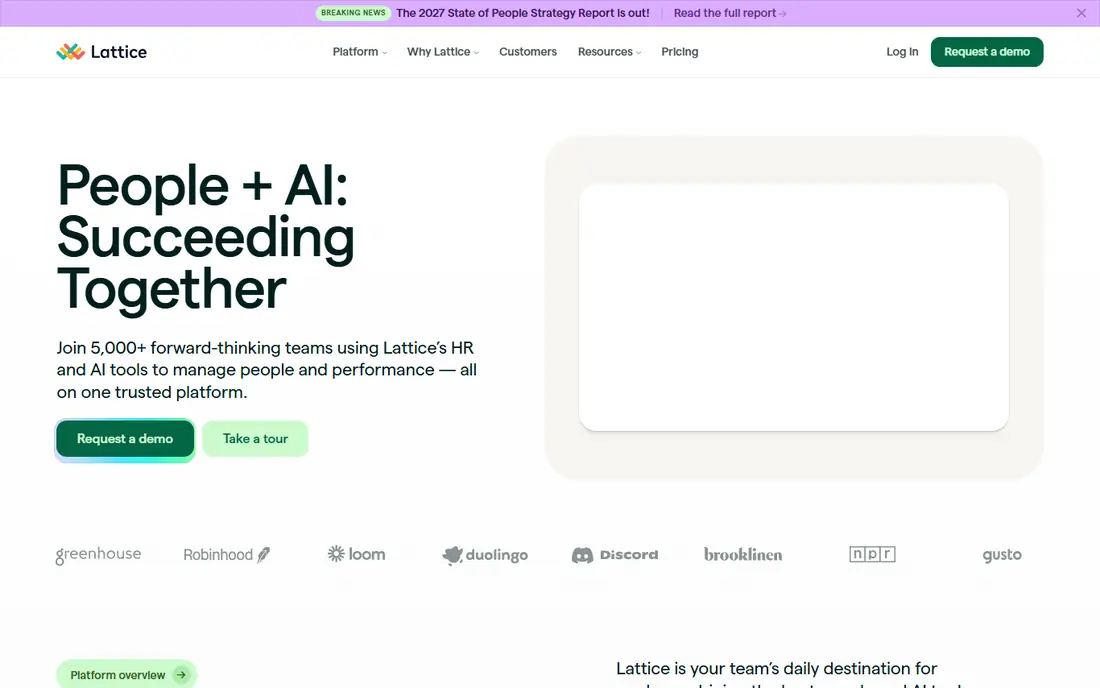
Lattice ties 360 feedback to performance reviews, goals and engagement surveys, so feedback does not sit apart from the rest of people management. Review cycles, peer feedback and manager summaries live in one workspace, which makes follow up easier. The Engagement module starts at $4 per seat per month billed annually, with a reported $4,000 annual minimum for the platform.
Lattice suits mid market teams that want one system for performance rather than several point tools. Small teams should check the minimum agreement carefully, since it can raise the effective per person cost.
- Reviews, goals and feedback in one system
- Clear 360 workflows
- Engagement module available
- Engagement starts at $4 per seat per month with a minimum annual agreement
- Full platform costs add up
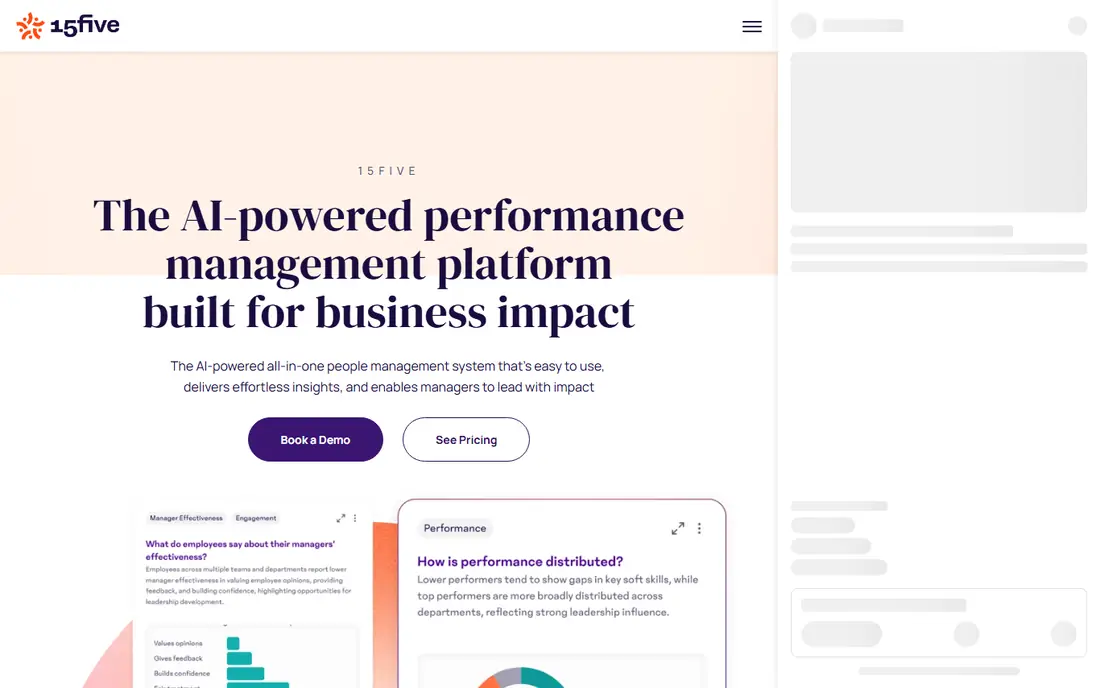
15Five is built around managers and continuous feedback. Weekly check ins, one on ones and recognition sit alongside formal reviews, and the Perform plan adds performance reviews, 360 degree feedback and goals at $11 per user per month. The Engage plan starts at $4 per user per month for surveys and analytics.
15Five fits teams that want managers to own feedback week to week, not just at review time. The catch is plan tiers, so confirm that the plan you quote includes the 360 features you need, not just surveys.
- Simple per user pricing
- Weekly check ins plus reviews
- 360 feedback on the Perform plan
- Full 360 and calibration features sit on higher plans
- Add ons raise costs
Leapsome combines performance reviews, 360 feedback, engagement surveys, goals and learning in a modular people platform. Global teams benefit from language and location support, and managers get a single view of feedback, goals and development. The platform runs on a shared employee record, which keeps review data consistent across modules.
Leapsome pricing is quoted and modular, so costs depend on which modules you choose. It suits mid market and larger teams that want one people platform, rather than a team that only needs a standalone 360 survey.
- Reviews, engagement, goals and learning in one platform
- Modular setup
- Good for global teams
- Pricing is modular and quoted
- HRIS foundation adds setup work
Qualtrics 360 brings enterprise survey power to multi rater feedback. HR teams can design detailed questionnaires, control anonymity rules, route reports and analyze results across teams and locations. That depth helps large companies with complex review programs and strict data requirements.
The trade off is complexity. A small team that needs a simple 360 cycle may find Qualtrics heavier than necessary, with more setup and admin time. Large enterprises with existing Qualtrics use will get the most value.
- Deep survey design and reporting
- Enterprise scale and security
- Flexible 360 workflows
- Pricing is quote based
- Complexity is high for simple review cycles
Spidergap does one job well: 360 feedback. Teams set up questionnaires, invite raters, protect anonymity and share reports that highlight strengths, gaps and suggested actions. Because it is not trying to be a full HR suite, setup is more focused than on a broad platform.
Spidergap suits companies that want a dedicated 360 program without buying a full performance system. Teams that later want engagement surveys or goal tracking will need another tool alongside it.
- Focused purely on 360 feedback
- Clear rater and report workflows
- Good for standalone programs
- Pricing is quoted
- No broader performance or engagement suite
Primalogik offers 360 feedback and performance reviews in a simpler package for small and midsize teams. Setup is faster than on enterprise platforms, and reports focus on usable feedback rather than complex analytics. That simplicity helps teams running their first or second 360 cycle.
Primalogik will not match Culture Amp or Qualtrics on benchmarks or deep analytics, but many teams do not need that depth. It is a practical pick when ease of use and a quick launch matter most.
- Straightforward 360 surveys and reviews
- Easy setup for smaller teams
- Clear reports
- Pricing is quoted
- Feature depth is less than enterprise platforms
Small Improvements suits scaling teams that want reviews, feedback, 1:1s and pulse surveys without enterprise complexity. Pricing starts at $3 per user per month, with surveys on a higher tier at $6 per user per month, and a 30 day trial lets teams test the workflow. The interface stays focused on the review cycle itself.
Small Improvements is a good fit for teams of 50 to 750 people that want structure without a heavy platform. Confirm that the plan you choose includes the 360 rater setup and anonymity controls your program needs.
- Published starting price of $3 per user per month
- Reviews, 1:1s and surveys in one simple system
- 30 day trial
- 360 depth varies by plan
- Larger enterprises may need more analytics
How we picked these
We compared official product pages, pricing pages and public documentation for 360 feedback software, and we favored tools that are actively sold and clearly support multi rater feedback with anonymity controls. We included broad performance platforms and dedicated 360 tools so different team sizes can shortlist from the same list. We did not claim hands-on testing, and we used See website wherever pricing is quoted rather than published.
How to run 360 feedback well
Start with purpose. Tell participants whether feedback supports development, performance decisions or both, since that choice changes how honest raters will be. Most teams get better results when the first cycle is development only, with no direct link to pay.
Protect anonymity and guide raters
Set a minimum rater count before results show, and give raters short guidance on specific, behavior based comments. Vague praise and vague criticism both waste the exercise. Managers should also get guidance on reading reports and holding a follow up conversation, since a report without a conversation rarely changes behavior.
Close the loop after results
Ask each person to pick one or two development actions and review progress in the next check in. Track whether feedback themes repeat across teams, and share aggregate themes without naming individuals. That follow through is what turns a survey into a feedback culture.
FAQ
What is the best 360 feedback software?
The best 360 feedback software depends on team size and scope. Culture Amp and Lattice suit larger teams that want feedback inside a performance system, while Spidergap and Primalogik suit dedicated or simpler programs. Small Improvements and 15Five suit scaling teams that want clear pricing and fast setup.
What is the best 360 degree feedback software for small teams?
Small Improvements and 15Five are strong for small teams, with published starting prices and simple review workflows. Primalogik also suits smaller teams that want a focused 360 tool. Start with a trial cycle and a small group before rolling out company wide.
How does 360 feedback work?
360 feedback collects ratings and comments from a manager, peers, direct reports and sometimes the employee themselves, then combines them into a report. Anonymity rules usually hide individual peer ratings to encourage honesty. The employee and manager then discuss strengths, gaps and development actions.
Is 360 feedback anonymous?
Peer and direct report feedback is usually anonymous in aggregate, while manager feedback is often named. Most tools set a minimum number of raters before showing a group score, so no single rater can be identified. Check anonymity settings before launch, since they affect trust and honesty.
How often should 360 feedback run?
Most companies run 360 feedback once or twice a year, with lighter check ins in between. Running it too often causes survey fatigue and thinner comments. Annual or semiannual cycles with regular manager check ins give feedback time to turn into real change.