Switching From Azure OpenAI? 5 Alternatives for 2026
Shortlisting Azure OpenAI alternatives? 5 products compared on cost, free access and ideal buyer. The weak spots sit next to the strengths. Read the profiles.
- Editor's choice
 Google Vertex AI
Gemini-centric agent development
Starts atSee websiteVisit cloud.google.comFull review - Great alternative
 Cohere
Private, configurable enterprise models
Starts atSee websiteVisit cohere.comFull review - Also consider
 Amazon Bedrock
Managed multi-model genAI on AWS
Starts atSee websiteVisit aws.amazon.comFull review
Direct answer
This list puts Google Vertex AI first for Gemini-centric agent development. Listed starting prices: Mistral AI from $14.99 a month. Cohere is better for private, customizable enterprise models, and Amazon Bedrock is better for managed multi-model genAI on AWS. The other 2 tools in the list cover narrower or pricier cases.
TL;DR:
- Number one here is Google Vertex AI, a fit for Gemini-centric agent development.
- What to know about Amazon Bedrock first: deepest value inside the AWS ecosystem.
- Only Mistral AI offers a free plan among these 5 tools.
- Mistral AI is the one to check for open-weight models you own.
Last checked November 2026. Prices and plan details were read from the vendors' own pages in November 2026; vendors change plans often, so confirm the current price on the vendor site before you buy.
Quick comparison
| Tool | Best for | Starts at | Free plan? | |
|---|---|---|---|---|
| Google Vertex AI | Gemini-centric agent development | See website | Not stated | Visit |
| Cohere | Private, configurable enterprise models | See website | Not stated | Visit |
| Amazon Bedrock | Managed multi-model genAI on AWS | See website | Not stated | Visit |
 IBM watsonx | Governed enterprise AI portfolios | See website | Not stated | Visit |
 Mistral AI | Open-weight models you own | $14.99 a month | Yes | Visit |
Azure OpenAI profiles
If you are comparing Azure OpenAI, this page covers 5 tools in one place: what each is best for, what it costs to start, whether it has a free plan, and the main limit to know about.
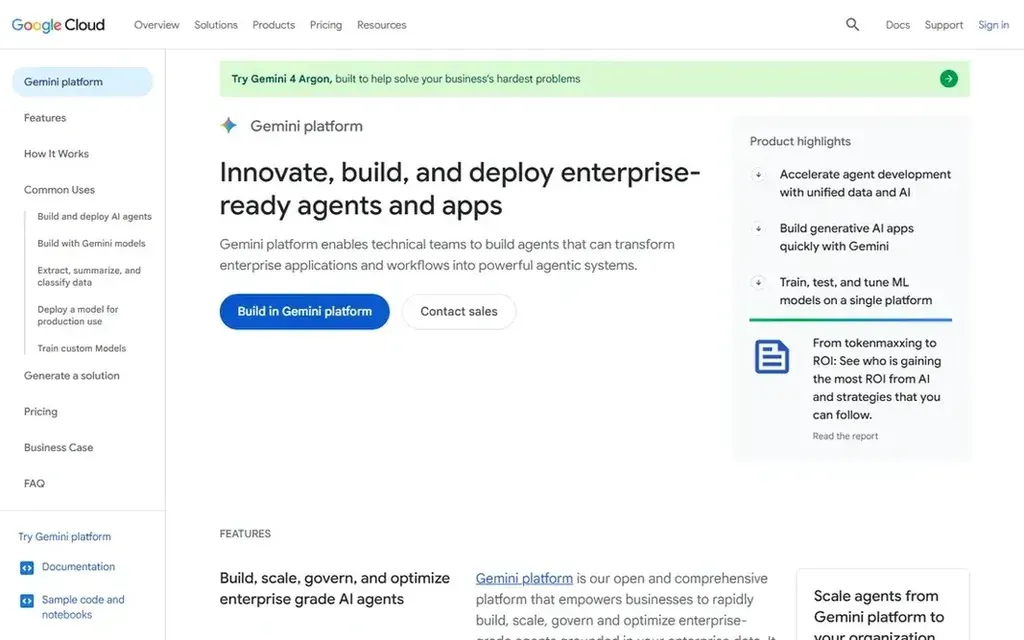
In short, Google Vertex AI is for Gemini-centric agent development. Google Vertex AI is presented as the Gemini system, a thorough environment for developers to build, scale, govern and optimize agents.
Downsides: Best fit for Google Cloud users.
Organizations standardized on another cloud may face additional integration work. More specifically, verify governance and optimization features against your requirements. This comparison lists no price for Google Vertex AI; ask the vendor. As for free access: Not stated.
- Focus on building and governing agents
- Thorough developer product
- Gemini focus may limit model variety
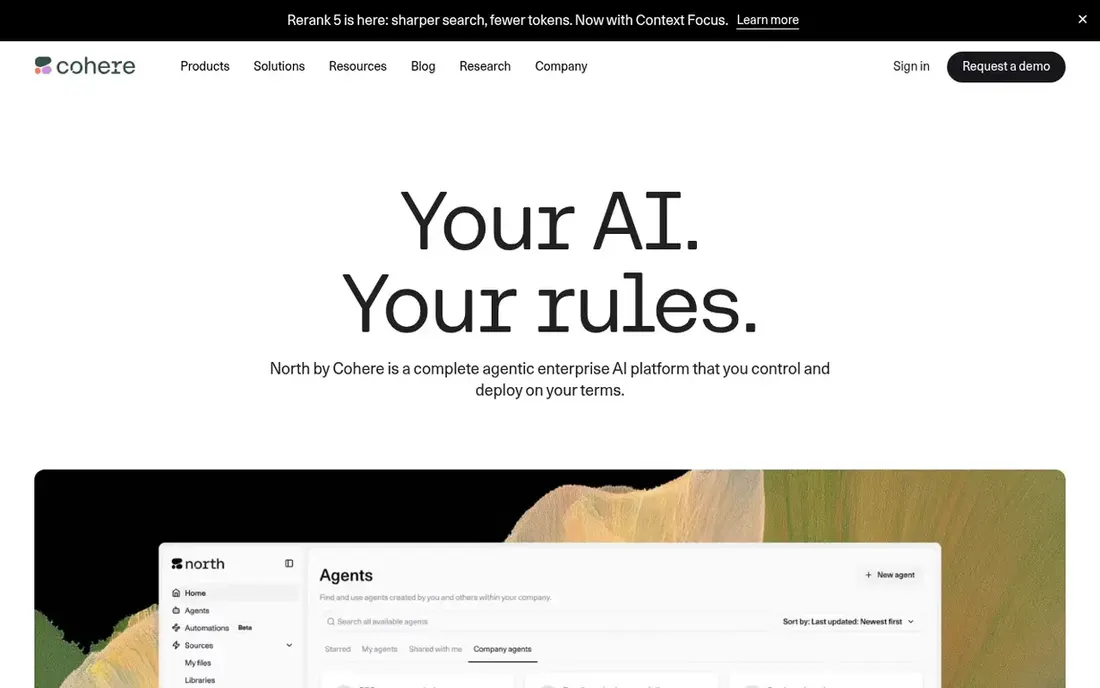
Pick Cohere if this describes you: private, configurable enterprise models. Cohere is more focused than the large cloud products.
So teams wanting a single vendor for storage, networking and AI may prefer a hyperscaler. Confirm deployment choices and data handling details straight with the vendor. Pricing for Cohere is not stated here, so ask the vendor for current figures. As for free access: Not stated.
Downsides: Customization work needs planning.
- Aims to turn fragmented data into insight
- Enterprise focus on privacy and security
- Narrower product scope than hyperscalers
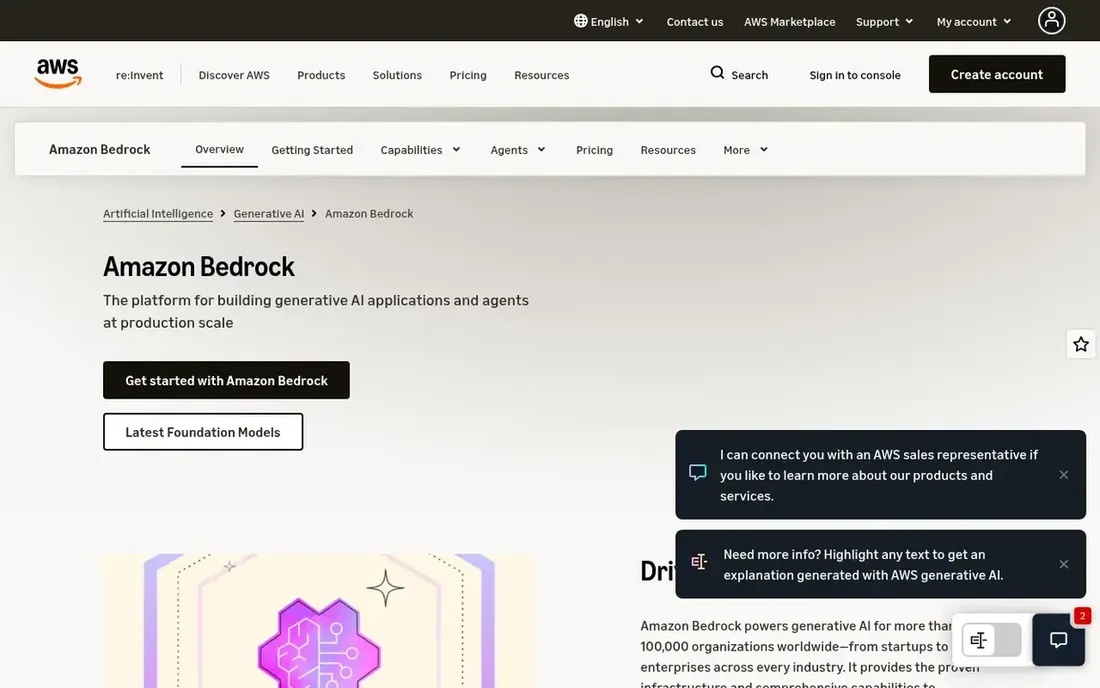
Choose Amazon Bedrock for managed multi-model genAI on AWS. It gives teams a single entry point to foundation models without running infrastructure themselves, and it suits organizations already standardized on AWS that want to add model choice to their stack.
Where it falls short: Deepest value inside the AWS ecosystem.
Also, the system is most comfortable when your data, identity and networking already live on AWS. This comparison lists no price for Amazon Bedrock; ask the vendor. Free options: Not stated.
- Suits teams already on AWS
- Managed access to several foundation models
- Model availability varies by region
IBM watsonx is built with governed enterprise AI portfolios in mind. It targets enterprises that want to accelerate adoption across the organization whereas keeping data and governance concerns central to the rollout.
Points against: Value relies on IBM ecosystem fit.
IBM watsonx shows no starting price here, so confirm the cost on the vendor site. Free access: Not stated.
- Geared toward enterprise-wide adoption
- Portfolio spanning build
- Wide portfolio can feel complicated
Mistral AI is built with open-weight models you own in mind. Owning and controlling models means accepting more operational responsibility than a completely managed API.
In practice, teams without machine learning capacity may find the ramp-up time steeper. On cost, Mistral AI starts like this: $14.99 per month. Mistral AI includes a free tier.
Downsides: Most useful for teams with ML capacity.
- Customize with Forge
- Frontier open-weight models
- You take on more operational control
Our selection method
LinkVetted used vendor pricing pages and product documentation as the base, then compared plans, free access and documented limits for 5 tools. Seat minimums, billing terms and add-ons can move the real cost, so the starting prices here are a guide and not a quote. The sequence is a judgement call: typical use case first, then pricing transparency, then free access. Use the profiles to check fit.
A buyer's checklist
- Confirm the entry price on the vendor page. For Google Vertex AI, Cohere, Amazon Bedrock and IBM watsonx that means a quote rather than a fixed price.
- Look at the free plan from Mistral AI closely: its caps decide whether it is usable for real work.
- Read the limits listed for Google Vertex AI first: Gemini focus may limit model variety.
- Price Cohere for your actual team size; headline prices rarely include add-ons or overage.
- Confirm the exact IBM watsonx plan that includes your must-have features.
FAQ
Which options for Azure OpenAI have a free plan?
Mistral AI is the only tool in this list with a free plan. Free plans usually cap users, projects or features, so check the limits on the vendor page.
How are the tools for Azure OpenAI ordered?
The order follows typical fit for Azure OpenAI, with Google Vertex AI first and Mistral AI last, then price clarity and free access. It is editorial judgement, not a score, so another team could rank the tools differently.
Can I try these tools before paying?
Often, yes. Mistral AI has a free plan. Use your own data and a real task during the test, and check what the free tier or trial limits before you rely on it.
What is the cheapest option for Azure OpenAI in this list?
On published monthly entry prices, Mistral AI is the lowest here at $14.99 per month. Entry price is only part of the cost, because seats, add-ons and billing terms can change the total.
Sources
- https://cloud.google.com/vertex-ai
- https://cohere.com
- https://aws.amazon.com/bedrock
- https://www.ibm.com/watsonx
- https://mistral.ai