Which Database Software Has the Best Portability in 2026: The 5 Best Options Side by Side
5 products for which database software has the best portability, ranked by fit, with starting costs and free tiers. Real limits included. Read before you buy.
- Editor's choice
 Oracle Database
Enterprise-grade portability with support
Starts atPricing on requestVisit oracle.comFull review - Great alternative
 PostgreSQL
Open-source server portability
Starts atPricing on requestVisit postgresql.orgFull review - Also consider
 SQLite
Embedded, file-based portability
Starts atPricing on requestVisit sqlite.orgFull review
Direct answer
If you need enterprise-grade portability with support, Oracle Database is the first tool to look at here. PostgreSQL is the stronger choice for open-source server portability, while SQLite suits embedded, file-based portability. The remaining 2 options are covered below with pricing notes and limits. None of these vendors publish plan prices, so pricing is on request for every option.
TL;DR:
- Oracle Database takes the first slot, best suited to enterprise-grade portability with support.
- MongoDB is the only tool of the 5 with a free plan.
- Pricing across the list, from Oracle Database to MongoDB, is by quote only.
- One limit worth knowing about PostgreSQL: complex setup for beginners.
Last checked November 2026. Pricing on request: vendors did not publish plan prices when this guide was last checked (November 2026), so ask each vendor for a written quote.
Quick comparison
| Tool | Best for | Starts at | Free plan? | |
|---|---|---|---|---|
| Oracle Database | Enterprise-grade portability with support | Pricing on request | Not stated | Visit |
| PostgreSQL | Open-source server portability | Pricing on request | Not stated | Visit |
| SQLite | Embedded, file-based portability | Pricing on request | Not stated | Visit |
 MySQL | Widely supported open-source database | Pricing on request | Not stated | Visit |
 MongoDB | Cloud-native document portability | Pricing on request | Yes | Visit |
The 5 tools in detail
This LinkVetted guide covers 5 options for which database software has the best portability. Each profile lists a starting price, free plan details, strengths and drawbacks, so you can drop poor fits quickly.
Oracle Database makes the most sense for enterprise-grade portability with support. Oracle Database is a multi-model database management system known for its enterprise features and scalability.
Pricing for Oracle Database is not stated here, so ask the vendor for current figures. Trial and free access: Not stated.
What to check first: Heavy resource requirements.
- Runs on several products
- Advanced features for enterprise
- Complicated licensing
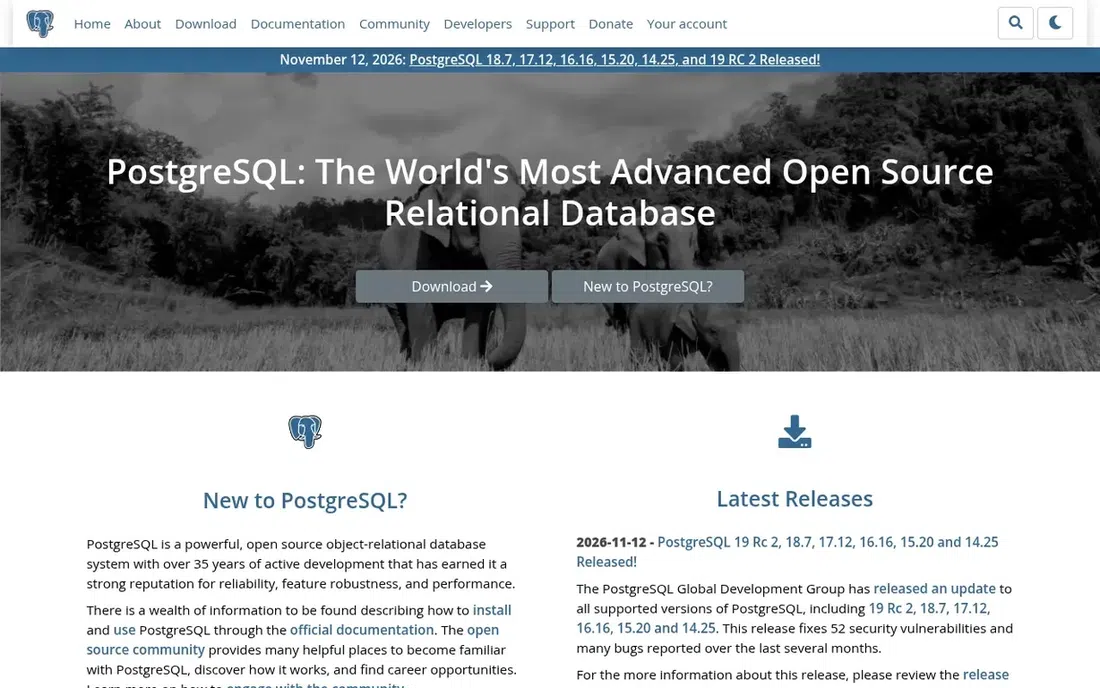
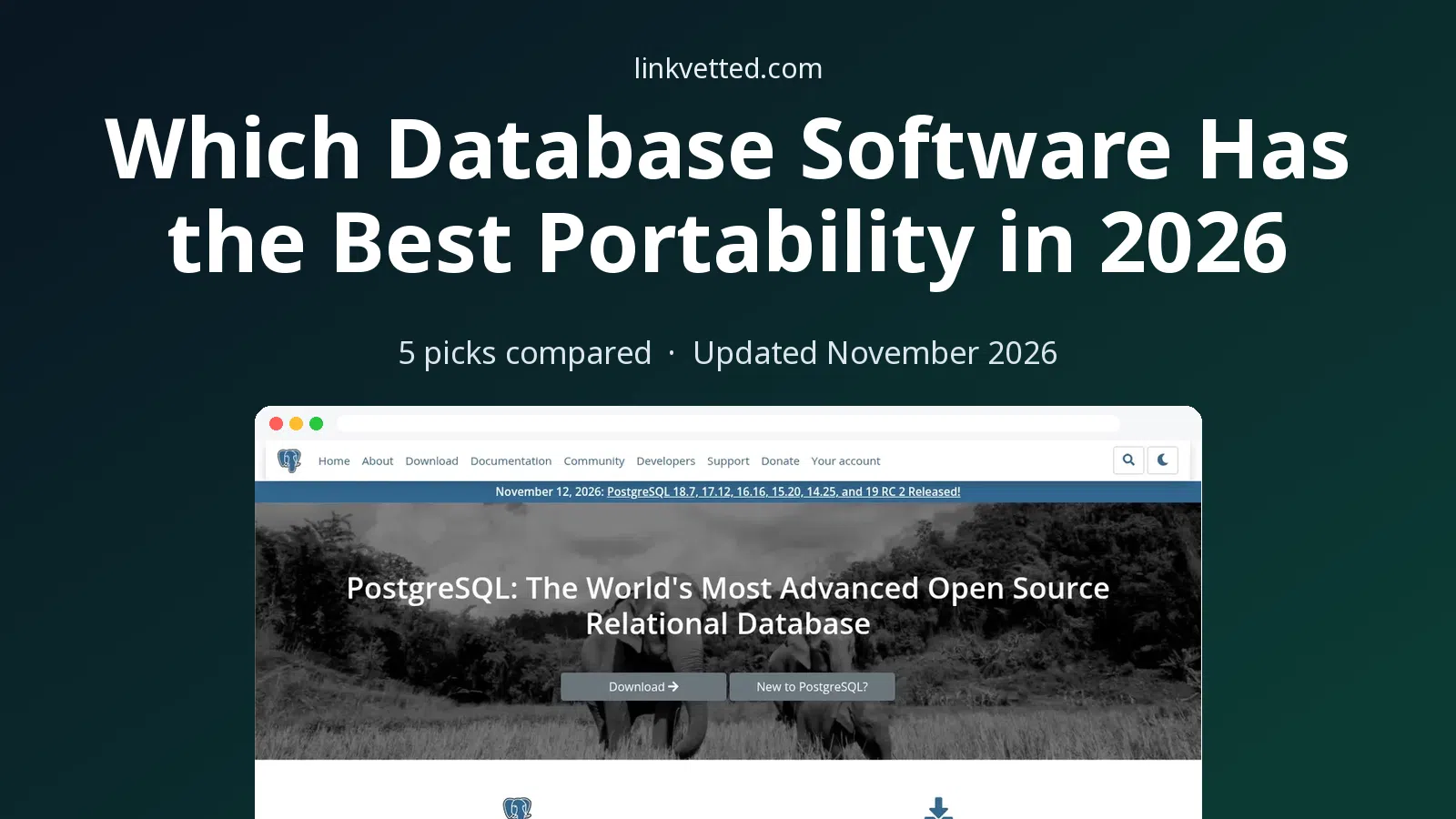
Pick PostgreSQL if this describes you: open-source server portability. PostgreSQL is a feature-rich open-source object-relational database system that emphasizes extensibility and standards compliance. It is portable across Linux, Windows, macOS, and several cloud products, and supports logical and physical replication for moving data between systems.
From a buyer's view, setting up and managing PostgreSQL needs more effort than file-based databases. It may be overkill for straightforward embedded use cases. No starting price is listed for PostgreSQL here; confirm pricing on the vendor site. As for free access: Not stated.
Downsides: Needs server management.
- Runs on all major OS
- Broad extension ecosystem
- Complicated setup for beginners
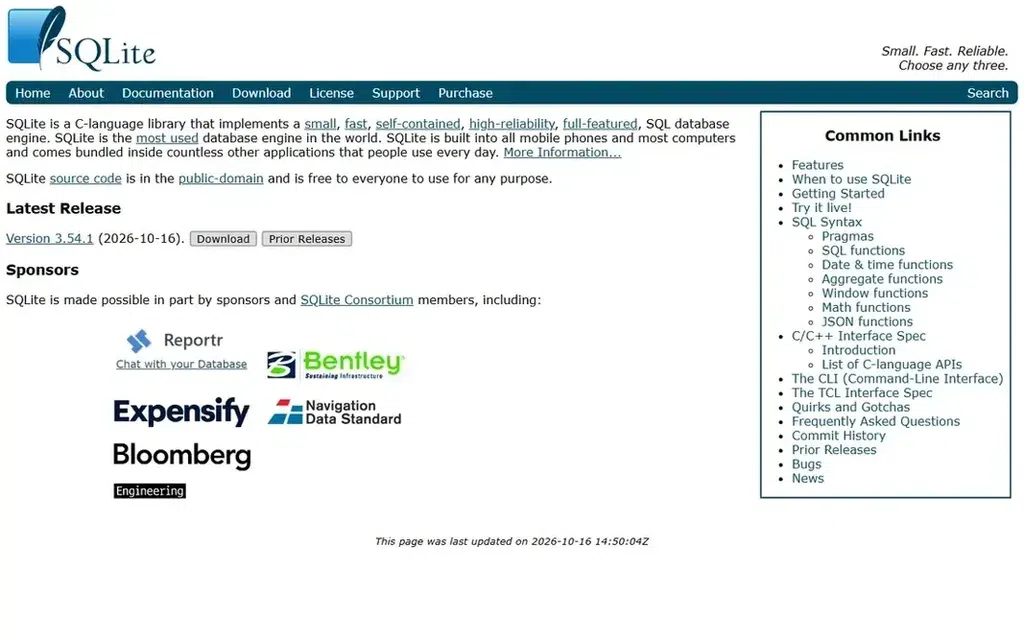
SQLite makes the most sense for embedded, file-based portability. SQLite is a self-contained, serverless database engine that keeps a whole database in a single cross-platform file. It is a strong match for applications that require to be portable across operating systems and devices, for example mobile apps, desktop software, and embedded systems.
Its zero-configuration nature makes it simple to bundle with software. That said, SQLite is not made for high concurrency or large-scale multi-user workloads. On top of that, if you need a database that supports numerous simultaneous writers or complicated access controls, consider a client-server database like PostgreSQL or MySQL instead. No starting price is listed for SQLite here; confirm pricing on the vendor site. Free access: Not stated.
Honest limits: Not for high-volume writes.
Where SQLite stands out: Runs on any product.
- Single-file database
- No server required
- Restricted concurrency
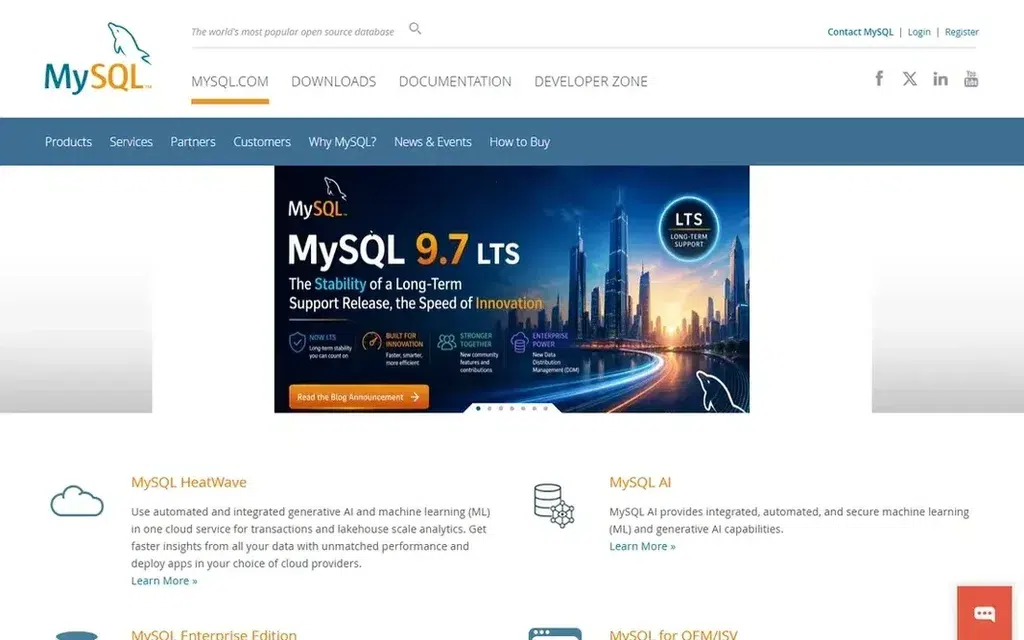
In short, MySQL is for widely supported open-source database. MySQL is a widely used open-source relational database management system known for its reliability and simplicity. It runs on numerous operating systems and is supported by most cloud providers, making it a portable choice for web applications.
Where it falls short: Some features vary by storage engine.
It is commonly chosen for its straightforward replication and broad hosting compatibility. MySQL's feature set can rely on the storage engine, and some advanced features may not be as portable across versions. If you need advanced SQL compliance or extensibility, PostgreSQL might be a better fit. No starting price is listed for MySQL here; confirm pricing on the vendor site. Trial and free access: Not stated.
- Wide system support
- Large community
- Licensing considerations for commercial use
MongoDB is a good fit for cloud-native document portability. MongoDB is a document-oriented NoSQL database built for scalability and adaptability. It provides portability across cloud providers and on-premises environments, with features like Atlas for multi-cloud deployments.
What to check first: Less suited for complicated transactions.
It is well-suited for applications that require to manage diverse and evolving data structures. Also, MongoDB may not be well suited to applications requiring complicated multi-document transactions or strict relational integrity. If you need a traditional relational database with capable ACID compliance, consider PostgreSQL or MySQL instead. This comparison lists no price for MongoDB; ask the vendor. MongoDB offers a free plan.
- Multi-cloud support
- Adaptable document model
- Needs schema design considerations
How the list was put together
Questions to settle before buying
- Ask each vendor, from Oracle Database to MongoDB, for a written quote; none of them publishes a starting price.
- Look at the free plan from MongoDB closely: its caps decide whether it is usable for real work.
- Read the limits listed for Oracle Database first: complicated licensing.
- Ask Oracle Database whether prices are locked for the first term and what happens at renewal.
- Test the integrations you rely on with MongoDB before committing; some connectors sit on upper tiers.
FAQ
Do these tools publish their prices?
No. None of the tools, from Oracle Database to MongoDB, shows a fixed starting price here, so budget time for quotes.
Which options for which database software has the best portability have a free plan?
MongoDB is the only tool in this list with a free plan. Free plans usually cap users, projects or features, so check the limits on the vendor page. For the full picture, the cards above cover all 5 entries of this which database software has the best portability list, including price, free plan and limits.
What should I consider for database portability in enterprise settings?
Databases like Oracle and SQL Server offer portability within their ecosystems but may have complicated licensing. Open-source choices like PostgreSQL supply greater adaptability and fewer restrictions.
Can I try these tools before paying?
Often, yes. MongoDB has a free plan. Use your own data and a real task during the test, and check what the free tier or trial limits before you rely on it. Prices, free plan details and limits for all 5 tools in this which database software has the best portability roundup sit on the individual cards above.
How are the tools for which database software has the best portability ordered?
The order follows typical fit for which database software has the best portability, with Oracle Database first and MongoDB last, then price clarity and free access. It is editorial judgement, not a score, so another team could rank the tools differently.
Sources
- https://www.oracle.com/database
- https://www.postgresql.org
- https://sqlite.org
- https://www.mysql.com
- https://www.mongodb.com