6 Best Web Development Providers for E-Commerce for 2026, Vetted and Compared
6 products for the top web development providers for E-commerce, ranked by fit, with starting costs and free tiers. Caveats come with every verdict. Facts only.
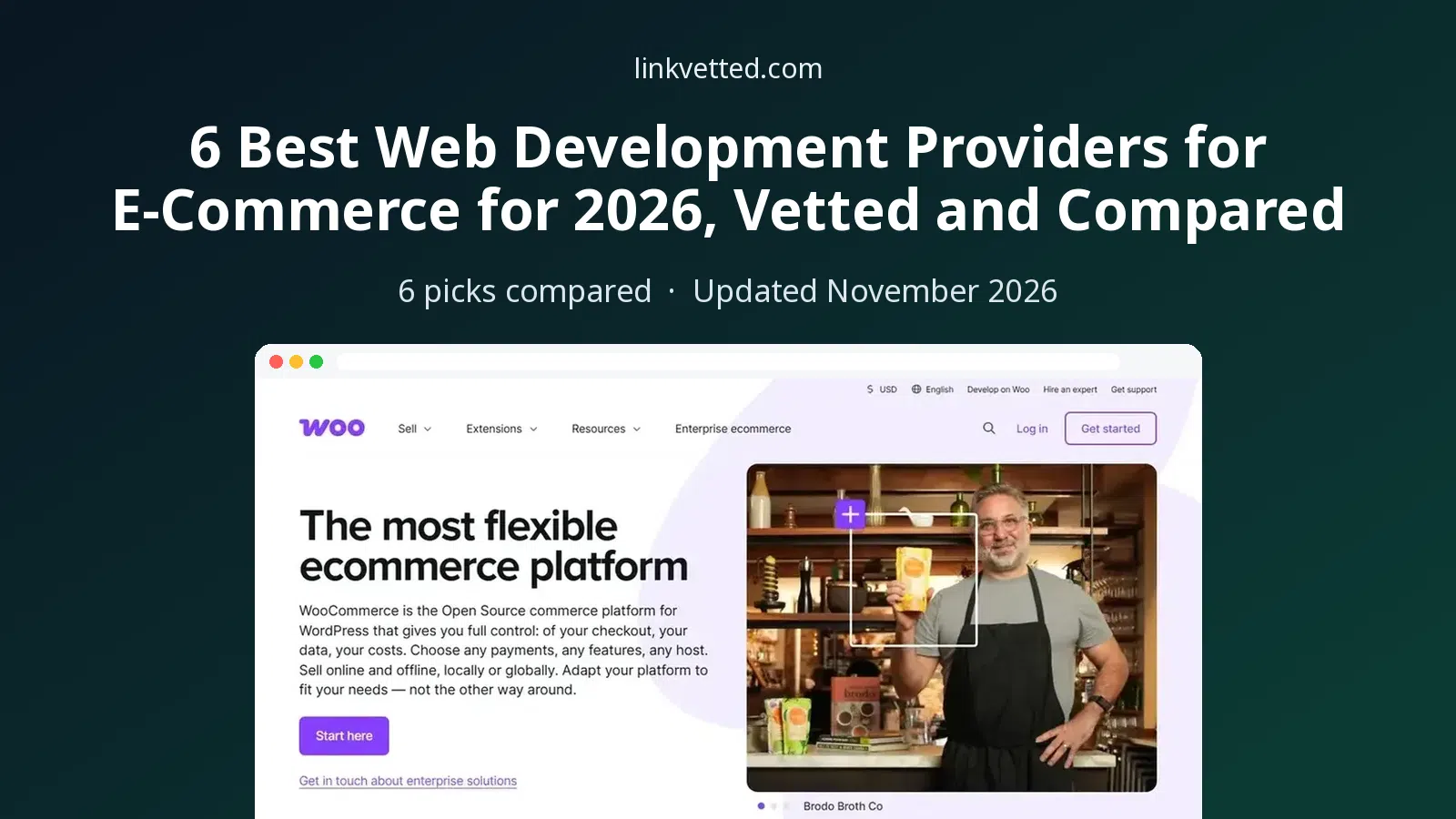
- Editor's choice
 WooCommerce
Open-source e-commerce for developers
Starts at$29 per monthVisit woocommerce.comFull review - Great alternative
 Adobe Commerce
Enterprise B2B and B2C e-commerce
Starts atSee websiteVisit business.adobe.comFull review - Also consider
 BigCommerce
Scalable commerce across brands and channels
Starts atSee websiteVisit bigcommerce.comFull review
Direct answer
This list puts WooCommerce first for open-source e-commerce for developers. Listed starting prices: WooCommerce from $29 per month, Shopify from $19 a month and Squarespace from $12 per month. For a different need, Adobe Commerce covers enterprise B2B and B2C e-commerce and BigCommerce covers scalable commerce across brands and channels. Details, prices and limits for the rest of the 6 tools are below.
TL;DR:
- This list starts with WooCommerce, which is built for open-source e-commerce for developers.
- Squarespace has the lowest monthly starting price in this list: $12 per month.
- Neither WooCommerce nor Squarespace, nor any of the other 4 tools, has a permanent free plan; trials and quotes are the norm.
- Squarespace is the one to check for design-focused small e-commerce sites.
- What to know about Shopify first: restricted customization without apps.
Last checked November 2026. Prices and plan details were read from the vendors' own pages in November 2026; vendors change plans often, so confirm the current price on the vendor site before you buy.
Quick comparison
| Tool | Best for | Starts at | Free plan? | |
|---|---|---|---|---|
| WooCommerce | Open-source e-commerce for developers | $29 per month | Not stated | Visit |
| Adobe Commerce | Enterprise B2B and B2C e-commerce | See website | Not stated | Visit |
| BigCommerce | Scalable commerce across brands and channels | See website | Not stated | Visit |
 Shopify | All-in-one commerce product for companies | $19 a month | Free trial | Visit |
 Salesforce Commerce Cloud | Integrated commerce within Salesforce ecosystem | See website | Not stated | Visit |
 Squarespace | Design-focused small e-commerce sites | $12 per month | Free trial | Visit |
6 options for web development providers for E-commerce in detail
Choosing web development providers for E-commerce usually comes down to price, fit and limits. This LinkVetted guide sets 6 tools side by side on those three points, with the facts kept short and checkable.
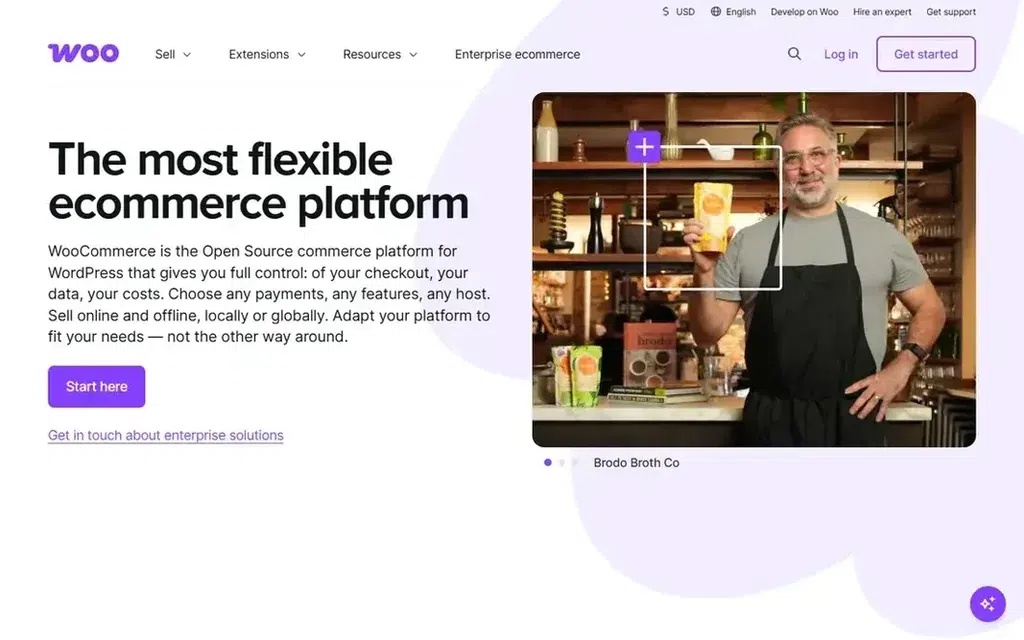
Choose WooCommerce for open-source e-commerce for developers. If you prefer a hands-off approach, a hosted option like Shopify or BigCommerce may be a better choice. It gives you full control over the store's code and data, making it a strong match for those who want to customize every aspect of their online shop.
Trade-offs to know: Self-hosted maintenance.
It integrates smoothly with WordPress, offering a familiar environment for numerous users. Even so, WooCommerce needs self-hosting and continuing maintenance, which can be a burden for users without technical skills. WooCommerce cost at the entry level: $29 per month. Free options: Not stated.
- Developer-friendly
- Open-source adaptability
- Needs WordPress knowledge
Adobe Commerce works best for enterprise B2B and B2C e-commerce. It is made for enterprises that require advanced customization and integration with other Adobe products.
This product suits large organizations with complicated requirements and dedicated development teams. Adobe Commerce shows no starting price here, so confirm the cost on the vendor site. As for free access: Not stated.
Honest limits: High complexity.
- AI-powered personalization
- Global scalability
- Needs dedicated resources

Where BigCommerce fits: scalable commerce across brands and channels. It is designed for businesses that require to run several storefronts and sales channels efficiently.
Where it is weaker: Less adaptable for small catalogs.
Check the vendor site for BigCommerce pricing; none is listed in this comparison. Free access: Not stated.
- Modern buying experiences
- Scalable foundation
- May need technical expertise

Shopify is aimed squarely at all-in-one commerce product for companies. It includes AI-powered tools and features to run every part of your business, from marketing to sales.
In practice, if you need broad custom development or prefer open-source control, consider alternatives like WooCommerce or Adobe Commerce instead. What you pay to start with Shopify: $19 per month. Trial and free access: Free trial.
Drawbacks to consider: Can become expensive as you scale.
- AI-powered tools
- All-in-one product
- Restricted customization without apps
Salesforce Commerce Cloud
Best for: Integrated commerce within Salesforce ecosystem
Salesforce Commerce Cloud targets integrated commerce within Salesforce ecosystem. Salesforce Commerce Cloud is a commerce option that integrates deeply with the Salesforce ecosystem, enabling businesses to unify customer data and deliver personalized shopping experiences. It is well-suited for enterprises already using Salesforce CRM and looking to extend their capabilities to e-commerce.
Where it is weaker: Steep ramp-up time.
That said, Salesforce Commerce Cloud includes a steep ramp-up time and may be pricey for smaller firms. More specifically, if you are not already invested in Salesforce, other systems like Adobe Commerce or BigCommerce might offer a more straightforward path. Check the vendor site for Salesforce Commerce Cloud pricing; none is listed in this comparison. On free options: Not stated.
- Scalable for enterprises
- Unified customer data
- High cost of entry
Squarespace is built with design-focused small e-commerce sites in mind. Squarespace is a website builder that lets users to produce a website and grow their business with configurable templates, AI website builder tools, and a domain name. It is well suited to creative professionals and small businesses that prioritize design and simplicity.
Honest limits: Restricted external integrations.
Even so, Squarespace supplies fewer integrations and less customization for developers compared with products like WooCommerce or Adobe Commerce. On top of that, if you need deep customization or advanced e-commerce features, consider other choices. Squarespace starts at: $12 per month. Free access: Free trial.
- AI website builder
- Beautiful templates
- Less configurable for developers
What went into this list
Pricing pages, product documentation and feature lists were the main sources, and every entry carries at least one honest drawback. Treat prices as a snapshot: vendors change plans often, so check the vendor site for the figure that applies today. The order reflects how well each tool fits the most common buying scenario for web development providers for E-commerce, then price clarity, then free plan access. It is a starting point, not a verdict.
Things to verify first
- Ask Adobe Commerce, BigCommerce and Salesforce Commerce Cloud for a written quote, since no starting price is shown.
- Use real work to test the free trial from Shopify and Squarespace, rather than a demo project.
- Before choosing WooCommerce, weigh its main limit: needs WordPress knowledge.
- Involve the people who will use Shopify daily; a short pilot beats a long feature checklist.
- List the apps you already depend on and check that BigCommerce supports each one on the plan you would buy.
FAQ
Can I try these tools before paying?
Often, yes. Shopify and Squarespace offer a free trial. Use your own data and a real task during the test, and check what the free tier or trial limits before you rely on it. Prices, free plan details and limits for all 6 tools in this web development providers for E-Commerce roundup sit on the individual cards above.
Do these tools publish their prices?
Not all of them. Adobe Commerce, BigCommerce and Salesforce Commerce Cloud publish no starting price, so expect a quote request for those. The rest, WooCommerce included, show a starting price, though seats and billing terms still change the final cost.
How are the tools for web development providers for E-commerce ordered?
The order follows typical fit for web development providers for E-commerce, with WooCommerce first and Squarespace last, then price clarity and free access. It is editorial judgement, not a score, so another team could rank the tools differently.
How does Salesforce Commerce Cloud compare to Adobe Commerce?
Both are enterprise-grade systems, but Salesforce Commerce Cloud integrates tightly with the Salesforce ecosystem, whereas Adobe Commerce is part of the Adobe Experience Cloud.
Is WooCommerce the right pick for everyone comparing web development providers for E-commerce?
No single tool suits every team. WooCommerce comes first because it fits open-source e-commerce for developers, while Adobe Commerce suits enterprise B2B and B2C e-commerce and BigCommerce suits scalable commerce across brands and channels. Match the tool to your own size, budget and workflow before deciding.
Sources
- https://woocommerce.com
- https://business.adobe.com/products/magento/magento-commerce.html
- https://www.bigcommerce.com
- https://www.shopify.com
- https://www.salesforce.com/commerce
- https://www.squarespace.com