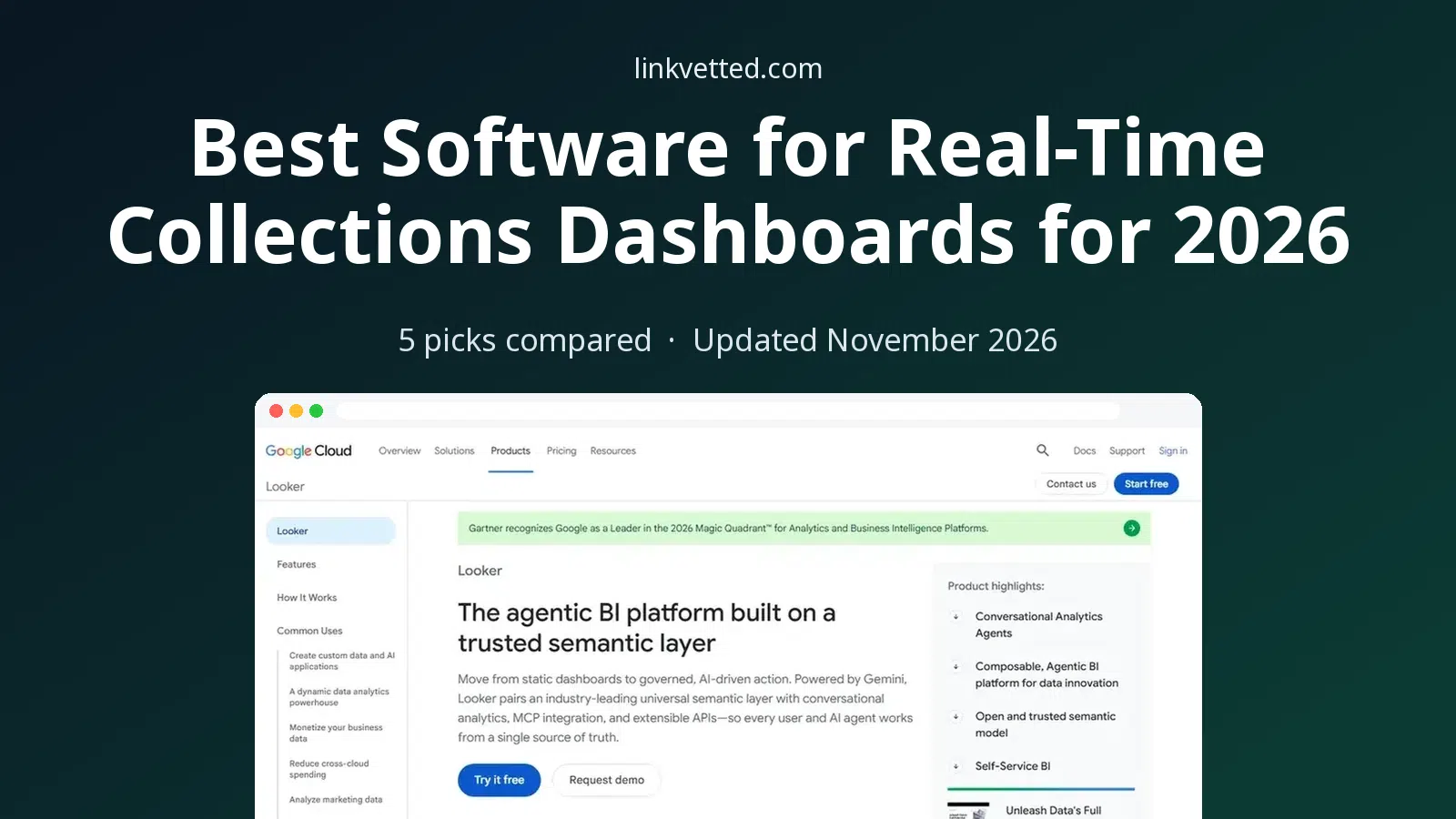
Best Software for Real-Time Collections Dashboards for 2026: Our 5 Vetted Picks
Top software for real-time collections dashboards: 5 contenders ranked by fit, with entry costs and free tiers. Concise write-ups of every option. Plain facts.
- Editor's choice
 Databox
Agencies and small teams tracking performance
Starts at$79 a monthVisit databox.comFull review - Great alternative
 Looker
Governed metrics and embedded analytics
Starts atSee websiteVisit looker.comFull review - Also consider
 Domo
Connecting and moving data across sources
Starts atSee websiteVisit domo.comFull review
Direct answer
If you need agencies and small teams tracking performance, Databox is the first tool to look at here. Listed starting prices: Databox from $79 a month, ThoughtSpot from $25 per user a month and Tableau from $15 per user per month. Looker is the stronger choice for governed metrics and embedded analytics, while Domo suits connecting and moving data across sources. All 5 tools are compared below on price, free plan and limits.
TL;DR:
- Databox sits first on this list: agencies and small teams tracking performance.
- The main caution on Databox: less suited to deep custom modeling.
- The lowest published monthly entry price here is $15 per user per month, from Tableau.
- Tableau is the one to check for wide data connectivity and visual exploration.
- Tableau is the only tool of the 5 with a free plan.
Last checked November 2026. Prices and plan details were read from the vendors' own pages in November 2026; vendors change plans often, so confirm the current price on the vendor site before you buy.
Quick comparison
| Tool | Best for | Starts at | Free plan? | |
|---|---|---|---|---|
| Databox | Agencies and small teams tracking performance | $79 a month | Free trial | Visit |
| Looker | Governed metrics and embedded analytics | See website | Not stated | Visit |
| Domo | Connecting and moving data across sources | See website | Free trial | Visit |
 ThoughtSpot | AI agents and automatic insight discovery | $25 per user a month | Free trial | Visit |
 Tableau | Wide data connectivity and visual exploration | $15 per user per month | Yes | Visit |
The best software for real-time collections dashboards
Short on time? The summary and table above give the quick view of 5 software for real-time collections dashboards, and the profiles that follow give the detail behind each entry.
Databox is aimed squarely at agencies and small teams tracking performance. Databox is an agentic analytics product for agencies and teams that merges performance data, business context and AI workflows so people and agents can act quicker.
Downsides: Less suited to deep custom modeling.
As for the details, live figures still rely on the integrations you link. Also, choose it when speed of setup and shared visibility matter more than broad custom modeling. The starting price for Databox: $79 per month. Free plan details: Free trial.
- Brings performance data and context together
- Geared toward agencies and teams
- Live metrics rely on source integrations
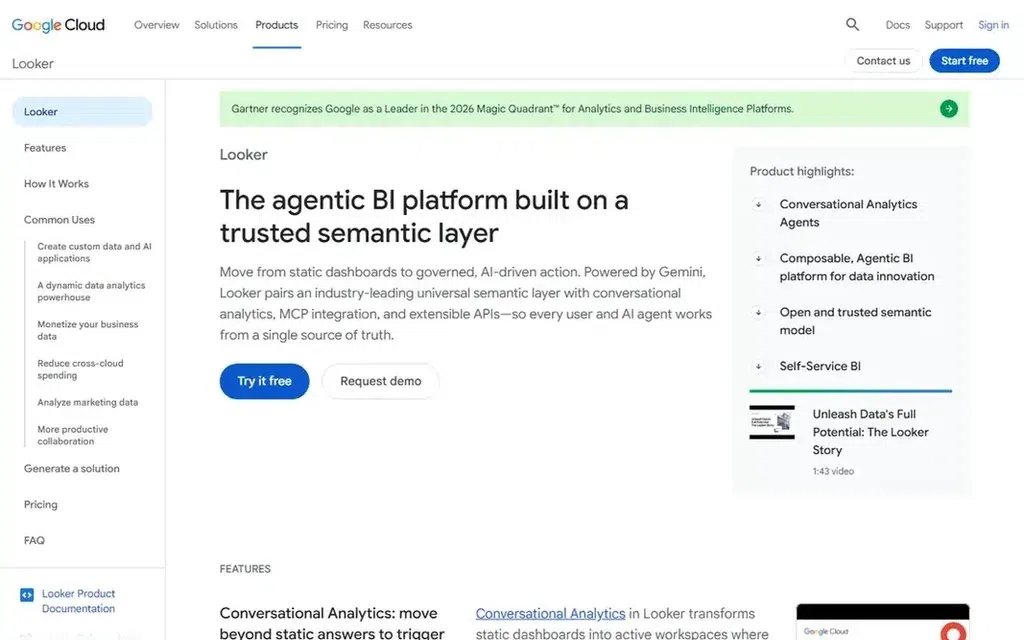
Choose Looker for governed metrics and embedded analytics. Looker is Google Cloud's agentic business intelligence and embedded analytics product. It brings together metrics through a trusted semantic layer and adds Gemini agents to support analysis.
From a buyer's view, for collections dashboards, the semantic layer keeps definitions like days past due consistent across every report, which cuts disputes over numbers. The semantic layer is capable but demands modeling discipline before dashboards deliver value. No starting price is listed for Looker here; confirm pricing on the vendor site. Free access: Not stated.
Trade-offs to know: Best value at bigger data organizations.
- Trusted semantic layer brings together metrics
- Embedded analytics from Google Cloud
- Semantic modeling requires upfront work
Domo serves connecting and moving data across sources. Domo describes itself around governed data for AI agents, with products to link and move data from any source, prepare it, and accelerate business-critical insights.
Live dashboards still rely on how pipelines are designed. For everyday use, the system handles a broad surface area, so teams should define which collections workflows they need before adopting it broadly. Check the vendor site for Domo pricing; none is listed in this comparison. Trial and free access: Free trial.
The main drawbacks: Wide feature set needs clear scoping.
- Prepares and expands data access
- AI and data products in one product
- Live views rely on data pipeline design
ThoughtSpot is a good fit for AI agents and automatic insight discovery. ThoughtSpot provides an agentic analytics platform built around AI agents, automatic insights and embedded intelligence, aiming to turn insights into action.
Watch-outs: Search-led workflows need user adoption.
The starting price for ThoughtSpot: $25 per user per month. As for free access: Free trial.
- Agentic analytics with AI agents
- Automatic insights surface patterns
- Live data relies on underlying models
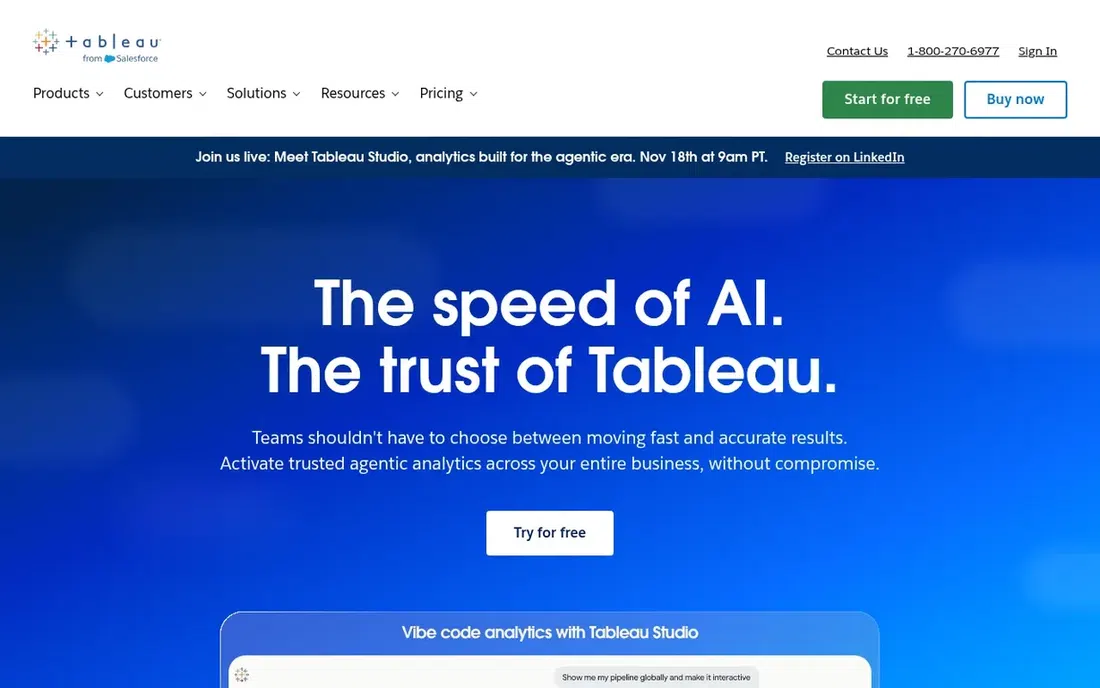
For wide data connectivity and visual exploration, Tableau is a natural candidate. Tableau is a business intelligence and analytics product aimed at seeing and understanding data. It links to almost any database, lets users build visualizations by dragging and dropping, and shares results with a click.
Honest limits: Advanced modeling needs skilled users.
The system assumes someone can prepare and maintain data sources, so live collections views rely on well-configured connections. In practice, for collections dashboards, that adaptability helps teams blend receivables, payment and aging data from multiple systems into one live view. As for the details, if you want a governed semantic layer managed centrally, Looker may suit better; if you want light agency reporting, Databox is more straightforward. The starting price for Tableau: $15 per user per month. Tableau has a free plan.
- Share dashboards with a click
- Drag-and-drop visualization building
- Live refresh relies on source setup
How the list was put together
Selection started from tools commonly considered for software for real-time collections dashboards, then narrowed to 5 that have clear pricing information or a clear quote process. Treat prices as a snapshot: vendors change plans often, so check the vendor site for the figure that applies today. Tools are placed by general fit for software for real-time collections dashboards, with price clarity and free access as tie-breakers. A different team can reasonably rank them differently.
Before you commit
- Ask Looker and Domo for a written quote, since no starting price is shown.
- Look at the free plan from Tableau closely: its caps decide whether it is usable for real work.
- Take the trial from Databox, Domo and ThoughtSpot and push a live task through it before you pay.
- Before choosing Databox, weigh its main limit: less suited to deep custom modeling.
- Pick one real project and run it in Looker first; a small pilot shows fit faster than a checklist.
- Confirm minimum seats and billing terms with Databox before you commit to an annual plan.
FAQ
Is Databox the right pick for everyone comparing software for real-time collections dashboards?
No single tool suits every team. Databox comes first because it fits agencies and small teams tracking performance, while Looker suits governed metrics and embedded analytics and Domo suits connecting and moving data across sources. Match the tool to your own size, budget and workflow before deciding.
What makes a collections dashboard truly real-time?
Live depends less on the dashboard tool and more on the data pipeline behind it. Confirm how commonly source systems are queried or synced, and whether the vendor supports live connections instead of scheduled extracts.
Can AI features replace traditional collections reporting?
AI agents and automatic insights, as described by ThoughtSpot, Looker and Databox, can accelerate question answering and pattern discovery. Most teams keep core dashboards and use AI as an additional layer.
What is the cheapest option for software for real-time collections dashboards in this list?
On published monthly entry prices, Tableau is the lowest here at $15 per user per month. Entry price is only part of the cost, because seats, add-ons and billing terms can change the total. Each of the 5 options in this software for Real-Time collections dashboards guide has its own card above with the price, free plan and limits.
Can I try these tools before paying?
Often, yes. Tableau has a free plan and Databox, Domo and ThoughtSpot offer a free trial. Use your own data and a real task during the test, and check what the free tier or trial limits before you rely on it.
Which software for real-time collections dashboards have a free plan?
Tableau is the only tool in this list with a free plan. Free plans usually cap users, projects or features, so check the limits on the vendor page. Several others offer a trial instead. All 5 picks in this software for Real-Time collections dashboards comparison list a starting price, free plan details and the main limits on their cards above.
Sources
- https://databox.com
- https://looker.com
- https://www.domo.com
- https://www.thoughtspot.com
- https://www.tableau.com