OpenPR Alternatives in 2026: 6 Options Vetted
A practical look at OpenPR alternatives for 2026, covering press release distribution tools, their entry prices, free plans and where each one fits.
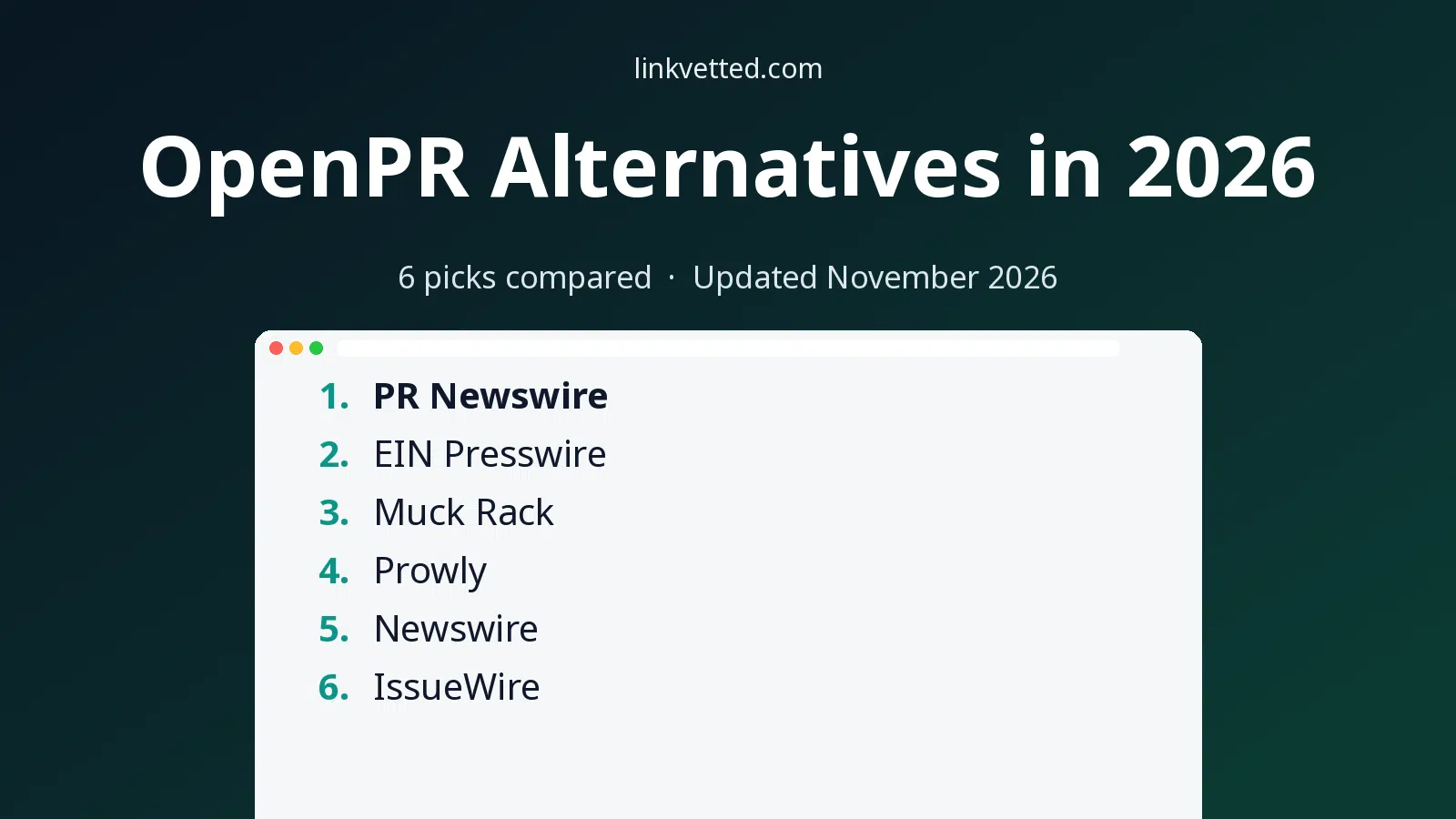
- Editor's choice
 PR Newswire
Broad, established wire distribution
Starts atSee websiteVisit prnewswire.comFull review - Great alternative
 EIN Presswire
Budget-conscious small businesses
Starts atSee websiteVisit einpresswire.comFull review - Also consider
 Muck Rack
Journalist research and media pitching
Starts atSee websiteVisit muckrack.comFull review
Direct answer
My first pick for most small teams is PR Newswire, because it is a long-established wire with broad syndication and clear documentation. For a lower-cost, self-serve option I point people to EIN Presswire, and for teams that want journalist-focused pitching alongside distribution I suggest Muck Rack. People look for OpenPR alternatives for reasons like limited reach, unclear reporting, few targeting options or a need for better media contacts, and this comparison is based on vendor documentation and public sources.
TL;DR:
- OpenPR alternatives are usually sought by teams that want broader syndication, clearer reporting or better journalist targeting than a basic free wire offers.
- PR Newswire suits teams that need wide distribution and established media relationships, and it publishes its options on its own site.
- EIN Presswire is a self-serve option that many small businesses use when budget matters more than prestige.
- Muck Rack and Prowly lean toward media databases and pitching workflow rather than pure wire distribution.
- Newswire and IssueWire are simpler, lower-cost routes for companies that mainly want a published release with basic reach.
Last checked November 2026. Plan prices are not quoted in this guide because they change often; see each vendor's own pricing page for current figures before you buy.
Quick comparison
| Tool | Best for | Starts at | Free plan? | |
|---|---|---|---|---|
| PR Newswire | Broad, established wire distribution | See website | Not stated | Visit |
| EIN Presswire | Budget-conscious small businesses | See website | Not stated | Visit |
| Muck Rack | Journalist research and media pitching | See website | Not stated | Visit |
 Prowly | PR workflow with a media database | See website | Free trial | Visit |
 Newswire | Simple, affordable distribution | See website | Not stated | Visit |
 IssueWire | Very small budgets and simple releases | See website | Not stated | Visit |
The best OpenPR alternatives compared
I compared these tools from vendor documentation and public sources, looking at what each one distributes, how it handles targeting and reporting, and where it tends to fit. I did not run hands-on tests, so treat this as a starting map rather than a lab result, and check current details on each vendor's site before you commit.
PR Newswire is one of the best-known press release distribution services, and it fits companies that want a release to reach a large set of outlets and journalists through an established network. It is often chosen by brands, agencies and public companies that need a recognizable wire behind an announcement.
For OpenPR alternatives, PR Newswire matters because reach and credibility are the usual reasons people move away from a free wire. You write the release, choose a distribution scope, add multimedia and targeting where offered, and the vendor handles syndication. Reporting then shows where the release appeared.
The limits are cost and complexity. A small business with a modest announcement may find the options and pricing hard to justify, and teams that mainly want a published link should look at simpler tools instead.
- Long-established wire with wide syndication
- clear distribution options
- media and journalist resources alongside releases
- Higher cost tier for small teams
- option set can feel complex
EIN Presswire is a self-serve press release distribution service from the EIN News group. It is aimed at small businesses, startups and independent organizations that want a release distributed without a large agency or a premium wire contract.
As an OpenPR alternative, it appeals to teams that want more control and a clearer submission process than a free wire, while keeping costs manageable. You submit the release, pick a category and any add-ons the vendor offers, and the release is distributed to its network.
The trade-off is prestige and consistency. Major outlets are less likely to pick up an EIN Presswire release than one from a top-tier wire, so it suits routine announcements rather than major news.
- Self-serve distribution
- aimed at small businesses and startups
- straightforward release submission
- Less prestige with major outlets
- reach varies by topic
Muck Rack is a PR software platform built around a journalist database, media monitoring and pitching tools. It fits PR teams that want to find the right reporters, build lists and track coverage rather than simply push a release out to a wire.
For OpenPR alternatives, Muck Rack represents a different approach: instead of paying for distribution, you pay for targeting. You search journalists by beat and outlet, save lists, send pitches and monitor mentions. That can produce more relevant coverage than a broad wire.
The limit is that it is not a distribution service in the classic sense. If your main need is a published release on a wire, Muck Rack is the wrong tool, and smaller teams may find the pricing aimed at agencies and larger departments.
- Large journalist database
- media monitoring and alerts
- pitching workflow in one place
- Not a pure wire
- pricing aimed at teams
Prowly is a PR platform that combines a media database, pitching, a branded newsroom and press release publishing. It is aimed at PR teams and agencies that want one place to manage contacts, outreach and owned media.
As an OpenPR alternative, Prowly helps because it moves beyond one-off distribution. You can build media lists, send pitches, publish releases to your own newsroom and track coverage, which suits teams that send releases regularly and want a repeatable process.
The limits are fit and cost. If you only publish a release a few times a year, the full workflow is more than you need, and the value depends on actually using the database and pitching features.
- Media database and pitching tools
- newsroom and release publishing
- coverage monitoring
- Value depends on using the full workflow
- not the cheapest entry point
Newswire is a press release distribution service aimed at small and mid-sized businesses, startups and agencies. It offers self-serve submission and a set of distribution and media tools around the release itself.
For teams weighing OpenPR alternatives, Newswire is a middle route: more structure and support than a free wire, without the cost and complexity of a top-tier service. You submit the release, choose distribution options and use the reporting to see where it landed.
The drawback is reach at the top end. It does not carry the same weight with major outlets as the largest wires, and optional add-ons can push the total up, so check what is included before you buy.
- Self-serve submission
- options for small businesses
- press release and media tools
- Fewer premium media relationships
- add-ons can raise the total
IssueWire is a press release distribution service aimed at small businesses, independent publishers and individuals who want a simple, low-cost way to publish a release. It is a practical option when the goal is to get an announcement online without a large budget.
As an OpenPR alternative, it fits teams that mainly want a published release and a basic footprint, rather than wide pickup from major media. The workflow is simple: write the release, choose a category and submit it through the vendor's system.
The limits are reach and reporting. It is not built for major announcements or detailed media targeting, so teams with bigger news should look at the larger wires above.
- Low-cost entry
- simple submission
- suits occasional releases
- Basic reporting and reach
- limited targeting
How I chose
I built this list from vendor documentation and public sources, looking at what each service distributes, how it handles targeting and reporting, and which type of team it seems designed for. I did not run hands-on tests, so I am describing documented features and positioning rather than my own trial results. Where a vendor does not publish clear details, I have said so rather than guessing.
The main filters were fit and limits. A tool earns a place if it solves a real reason people leave a free wire, such as broader syndication, better journalist targeting or a clearer workflow. I also noted drawbacks, because the right choice depends on budget, announcement frequency and whether you need distribution, pitching or both.
What to check before you buy
- Confirm what syndication is actually included, since "distribution" can mean very different networks depending on the vendor.
- Check whether reporting shows real placements or only a list of sites the vendor claims to reach.
- Ask whether multimedia, links and industry targeting cost extra, as add-ons often change the total.
- Check the terms on press release content and any restrictions on topics or claims.
- Confirm whether you get a media database or pitching tools, or only distribution, so you do not pay for features you will not use.
- Look at cancellation and renewal terms, especially for subscription-based PR platforms.
FAQ
Why do people look for OpenPR alternatives?
Common reasons include wanting broader syndication, clearer reporting, better industry targeting or access to journalist contacts. A free wire is useful for a basic footprint, but teams with regular announcements often need more control over where a release goes and how results are measured.
Is a paid wire always better than a free one?
No. A paid wire buys reach, targeting and reporting, but it only helps if the release is newsworthy and aimed at the right audience. A small local announcement may do fine on a low-cost service, while a funding round or product launch usually justifies a larger wire.
Do press release links help SEO?
Most wires mark links as nofollow, so do not expect direct ranking gains from distribution links. The value is in visibility, referral traffic and the chance of earned coverage. Treat distribution as PR, and build links through outreach and content instead.
Should I use a PR platform or a wire service?
Use a wire when you mainly need a release distributed. Use a platform like Muck Rack or Prowly when you want to research journalists, pitch them and track coverage over time. Many teams use both, with the platform for pitching and a wire for major announcements.
How do I pick between these OpenPR alternatives?
Start with your goal: broad reach, journalist targeting, or a simple low-cost release. Then check what each vendor includes at the entry level, read the reporting terms and confirm the total cost with any add-ons before you commit.
Sources
- https://www.prnewswire.com
- https://www.einpresswire.com
- https://muckrack.com
- https://prowly.com
- https://www.newswire.com
- https://www.issuewire.com