Outreach Alternatives in 2026: 8 Tools Compared
We compared outreach alternatives on sequences, calling, data, deliverability and price, so sales teams can replace Outreach with a much better fit in 2026.

- Editor's choice
 Salesloft
Closest enterprise replacement
Starts atSee websiteVisit salesloft.comFull review - Great alternative
 Apollo.io
Data plus sequences in one tool
Starts at$49 per user per monthVisit apollo.ioFull review - Also consider
 Reply.io
Multichannel SMB sequences
Starts at$49 per user per monthVisit reply.ioFull review
TL;DR:
- Salesloft is the closest enterprise replacement for Outreach, with similar depth and a similar sales-led buying process.
- Apollo.io suits teams that want prospect data and sequences in one tool, with a free plan to start.
- Reply.io, Klenty and Instantly suit smaller teams that want multichannel or high-volume email at lower cost.
- Mixmax is the lightest switch for teams that live in Gmail and want sequencing without a new platform.
- The best Outreach alternative depends on whether your main problem is price, calling, data, or ease of use.
Quick comparison
| Tool | Best for | Starts at | Free plan? | |
|---|---|---|---|---|
| Salesloft | Closest enterprise replacement | See website | No | Visit |
| Apollo.io | Data plus sequences in one tool | $49 per user per month | Yes | Visit |
| Reply.io | Multichannel SMB sequences | $49 per user per month | Free trial | Visit |
 Lemlist | Personalized email outreach | See website | Free trial | Visit |
 Mixmax | Gmail-native sequencing | Free | Yes | Visit |
 HubSpot Sales Hub | HubSpot CRM teams | Free | Yes | Visit |
 Klenty | Calling-heavy outbound teams | $50 per user per month | Free trial | Visit |
 Instantly | High-volume cold email | $47 per month | No | Visit |
The best Outreach alternatives
We compared sales engagement tools on sequences, email, calling, LinkedIn tasks, data, deliverability, CRM links and price. These outreach.io alternatives range from enterprise platforms to lean email tools, so the right pick depends on team size, channels and budget.

Salesloft is the most direct enterprise alternative to Outreach, with multichannel sequences, calling, analytics and coaching tools for revenue teams. If your team needs governed cadences, team reporting and integrations with a CRM, Salesloft covers that ground without a major drop in capability. It also suits mid-market to enterprise teams with ten or more reps who need structure.
The catch is that Salesloft does not solve the cost or complexity complaints that drive many Outreach exits. Pricing is quote-based, add-ons can raise the total, and admin work remains real. Choose Salesloft when you want a peer-level enterprise platform and have the budget and admin support for it, not when you want a much cheaper or simpler tool.
- Enterprise sequence, calling and analytics depth
- Strong coaching and pipeline tools
- Large integration set
- Quote-based pricing
- Implementation and admin work similar to Outreach
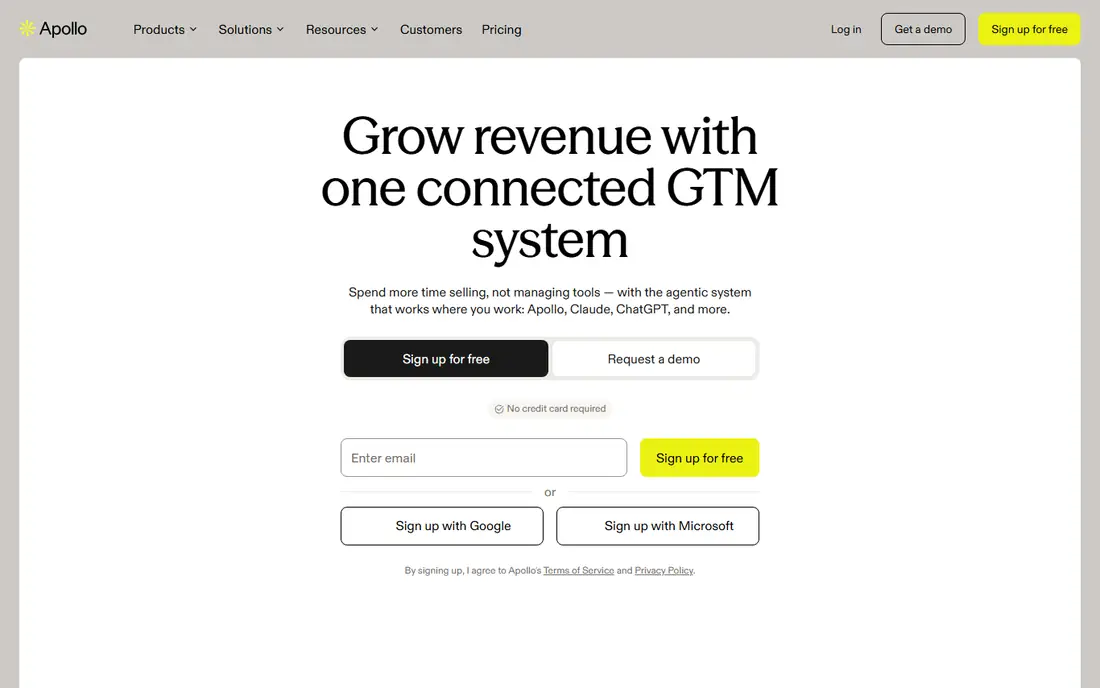
Apollo.io appeals to teams that spend too much time stitching data tools to engagement tools. It combines a B2B database with sequences, email, calling tasks and analytics, so a rep can find a prospect and start a sequence without switching systems. The free plan helps small teams test the workflow before paying.
Data quality is the main watch point. No database is perfect for every industry, so test Apollo on your actual target accounts before committing. Credit use also needs monitoring, since overages add cost. For startups and SMB teams that need data and outreach in one place, Apollo is often the best value in this list.
- Large B2B contact database
- Sequences, calling and analytics in one tool
- Free plan to start
- Credit limits and data quality vary by segment
- Paid plans start at $49 per user per month when billed annually
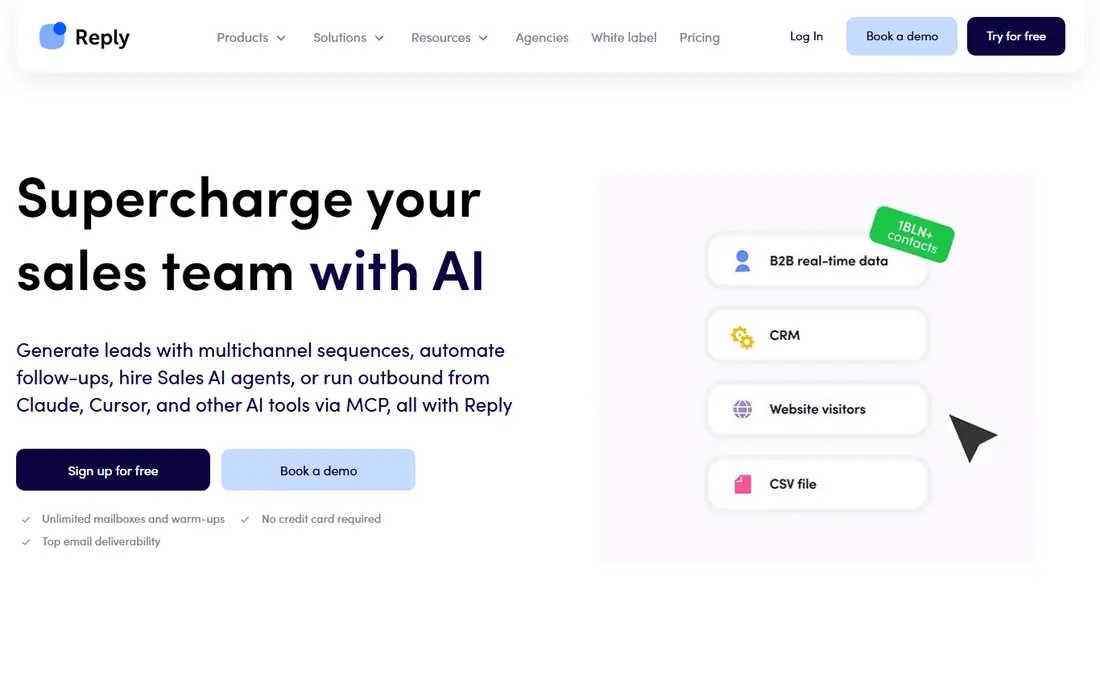
Reply.io suits SMB and mid-market teams that want multichannel sequences without enterprise pricing. Reps can build email, LinkedIn, call, SMS and WhatsApp steps in one sequence, and AI tools can help draft and adjust steps. That breadth helps teams that reach prospects on more than one channel.
Pricing needs a careful read, since plans differ by channel mix and volume, with entry plans reported from $49 per user per month. Teams that only send email may find a cheaper email-only tool, while teams that use several channels will get more value here. Trial Reply with a real sequence across two channels to judge whether the extra channels earn replies.
- Email, LinkedIn, calls, SMS and WhatsApp sequences
- AI sequence help
- Lower cost than enterprise tools
- Pricing varies by plan and channel
- Advanced features need higher tiers
Lemlist is built for teams that win on personalization rather than volume. It supports personalized images, video messages and custom landing pages, plus warm-up and deliverability features that help emails reach inboxes. Multichannel steps add LinkedIn and calls to email sequences, though calling is not its main strength.
Heavy calling teams should look at Klenty or Salesloft instead, since Lemlist lacks a native parallel dialer. Pricing also varies by plan, so confirm the current multichannel plan cost before budgeting. Choose Lemlist when your outreach relies on tailored messages and deliverability, and when your team sends fewer, better-targeted emails.
- Personalization with images and video
- Email warm-up and deliverability tools
- Multichannel steps
- No native parallel dialer for heavy calling
- Pricing has changed across plans
Mixmax is the lightest switch for teams that live in Gmail. Sequences, tracking, templates, scheduling and polls work inside the inbox, so reps do not need to learn a separate platform to start. The free tier covers basic tracking and templates, with paid SMB plans from around $29 per user per month in recent listings.
The limit is scope. Mixmax is not a full enterprise engagement platform, and teams that do not use Gmail gain less from it. It also lacks the deep analytics and governance of Salesloft or Outreach. Pick Mixmax when your team wants fast, Gmail-based outreach with minimal setup, and when a full platform would be more tool than you need.
- Works inside Gmail
- Tracking, templates and scheduling
- Free tier for basic use
- Gmail focus limits non-Gmail teams
- Advanced sequences need paid plans
HubSpot Sales Hub makes sense when HubSpot is already your CRM. Sequences, email tracking, calling and reporting live in the same system as contacts, deals and marketing data, which removes sync work and gives a clearer view of pipeline. Free CRM tools help small teams start, with paid Sales Hub seats adding sequences and automation.
The catch is that sequence depth and calling features are thinner than a dedicated engagement platform, and costs rise with seats, hubs and onboarding. Teams that do not use HubSpot should not adopt it only for sequences. For HubSpot teams, though, adding Sales Hub is often simpler and cheaper than keeping a separate engagement tool.
- Sequences inside HubSpot CRM
- Free CRM tools to start
- Unified reporting with marketing and service data
- Full sequence features need paid tiers
- Costs rise as seats and hubs grow
Klenty is built for outbound teams where calling drives results. Its native parallel and power dialers, plus a deliverability suite, help reps reach more prospects per hour without juggling a separate dialer tool. Multichannel sequences add email and LinkedIn tasks around calls, so the platform still covers a full cadence.
Pricing starts around $50 per user per month for Startup when billed annually, with dialer add-ons on some plans, so confirm the total for your calling setup. Klenty is less well known than Salesloft, which can matter for procurement, but its calling focus is a real advantage for phone-first teams. Trial it with your actual call lists and connection rates, not only with email sequences.
- Native parallel and power dialers
- Multichannel sequences
- Deliverability suite
- Less brand recognition than Salesloft
- Some features need add-ons
Instantly suits agencies and teams that send high volumes of cold email and care most about deliverability and cost per inbox. Its flat pricing, from around $47 per month for Growth, avoids per-seat costs that climb fast with large sending teams, and its warm-up and inbox health tools are central to the product. Multiple sending accounts and domains are easier to manage here than in a per-seat platform.
It is not a full replacement for Outreach if you need deep calling, coaching and pipeline analytics. Instantly is an email engine, not an enterprise engagement suite. Choose it when email volume and deliverability are the main job, and pair it with a CRM and a calling tool if those channels matter too.
- Flat pricing for high volume
- Unlimited warm-up and inbox tools
- Agency-friendly account handling
- Email-focused, not a full sales engagement platform
- No free plan
How we picked these
We compared vendor pricing pages, feature lists and public 2026 Outreach alternative comparisons. We required each tool to support sequences or cadences, email outreach, and CRM or reporting links, and to be currently available for US sales teams. We included enterprise, mid-market and lean tools, because Outreach users leave for different reasons, from price to calling to ease of use.
We noted where pricing is quote-based or has changed recently, rather than repeating a single old price as fact. Where sources disagreed on a plan price, we used the most recent public comparison figure and marked it as a starting point to confirm with the vendor.
How to switch from Outreach without losing pipeline
Start by naming why you are leaving. If price is the issue, a lean tool such as Instantly, Mixmax or Apollo may solve it. If calling is weak, Klenty is the better test. If data is the gap, Apollo helps most. If you need the same enterprise depth, Salesloft is the honest peer. A tool chosen for the wrong reason will disappoint even if it is good on its own terms.
Next, audit what you actually use in Outreach. List active sequences, templates, call scripts, integrations and reports, and mark which ones drive replies and meetings. Many teams find they use a small share of enterprise features, which makes a simpler tool viable. Migrate only the sequences that perform, and rewrite the rest rather than copying stale steps.
Then run a side-by-side trial with one team or pod. Give the new tool real prospects, real sequences and two weeks of sending, and compare reply rates, meeting rates, deliverability and rep time. Check CRM sync, bounce handling and unsubscribe compliance during the trial, since those details cause the most pain after a switch. Only move the full team once the trial team can run its full workflow without workarounds.
Finally, plan deliverability from day one. Warm up new sending domains and inboxes, keep lists clean, honor opt-outs, and follow anti-spam rules for cold outreach. A new tool does not fix a poor list or aggressive sending, and a damaged domain will hurt results on any platform. Set sending limits, monitor bounce and spam rates, and pause sequences that show warning signs.
FAQ
What is the best Outreach alternative for enterprise teams?
Salesloft is the closest enterprise alternative, with similar sequence, calling and analytics depth. It suits teams that need governed cadences and strong reporting. Expect quote-based pricing and admin work similar to Outreach, so it is a peer switch, not a low-cost simplification.
What are the best outreach.io alternatives for small teams?
Apollo.io, Reply.io and Mixmax suit small teams well. Apollo adds prospect data, Reply adds multichannel sequences, and Mixmax adds Gmail-native simplicity. Instantly also suits small teams focused on high-volume email. Trial two tools with real sequences before choosing, since ease of use varies by team habits.
Is there a free alternative to Outreach?
Apollo.io, Mixmax and HubSpot Sales Hub all offer free tiers, though sequence features are limited on free plans. Those tiers work for testing and for very small teams, but most growing teams need a paid plan for full sequences, calling and reporting. Check free plan limits for sequences, contacts and credits before relying on them.
Does Apollo.io replace both a database and Outreach?
For many SMB teams, yes. Apollo combines a B2B database with sequences, email and calling tasks, so it can replace a separate data tool and a basic engagement tool. Larger teams with complex governance, coaching and pipeline needs may still need a dedicated engagement platform alongside Apollo data.
How hard is it to migrate sequences from Outreach?
Migration difficulty depends on sequence complexity and integrations. Simple email sequences move quickly, while complex multichannel cadences with custom fields, triggers and reports take longer. Audit active sequences first, migrate only those that perform, and run a trial team on the new tool before moving everyone.