Webshop Platform in 2026: The 6 Best Options Side by Side
Best webshop platform, compared. 6 tools with published prices, free plans and limits. Every pick gets a straight assessment. Last reviewed November 2026.
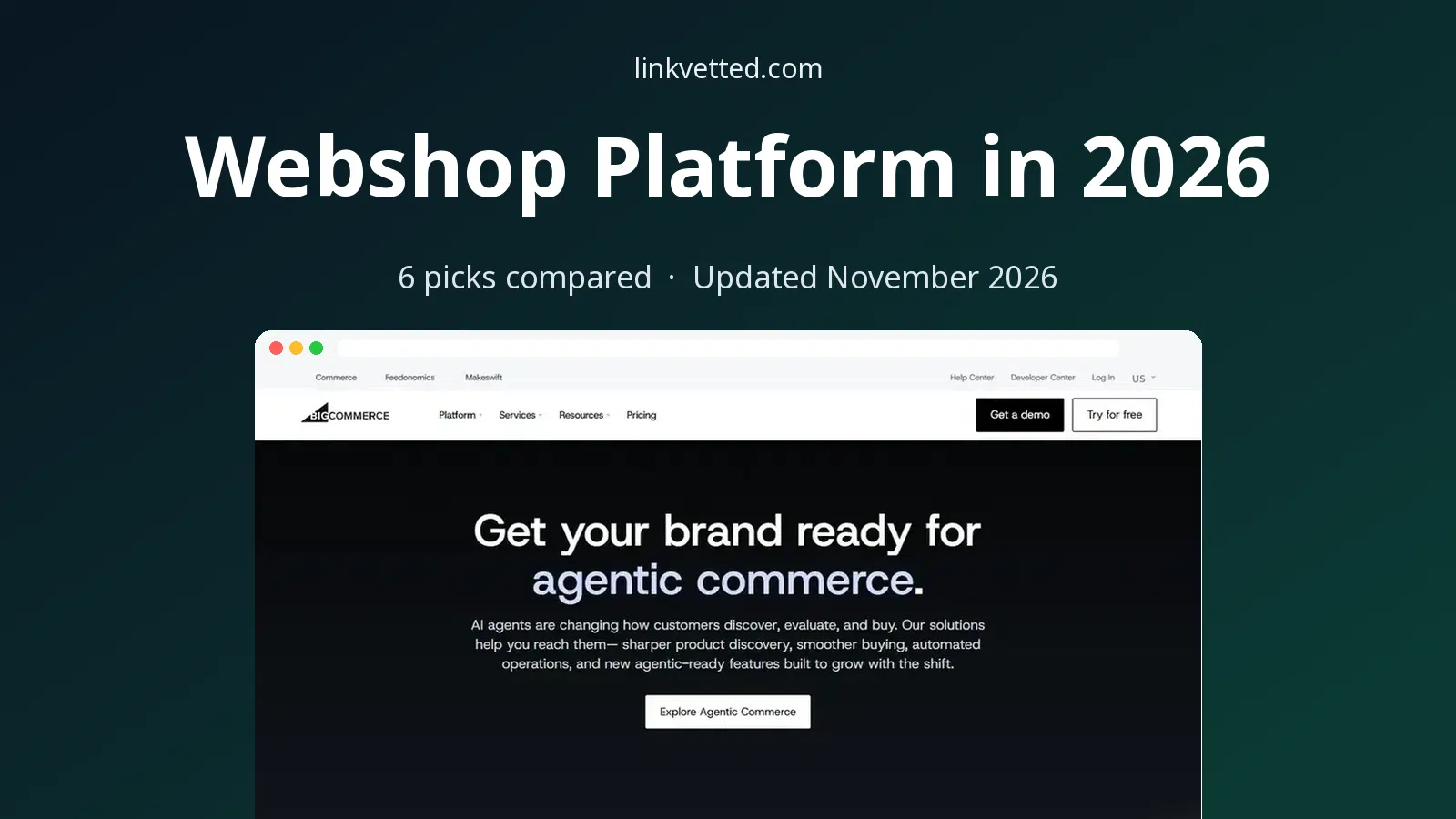
- Editor's choice
 Wix eCommerce
Configurable all-in-one site building
Starts atSee websiteVisit wix.comFull review - Great alternative
 BigCommerce
Scalable multi-channel commerce operations
Starts atSee websiteVisit bigcommerce.comFull review - Also consider
 Adobe Commerce
Enterprise B2B and B2C experiences
Starts atSee websiteVisit business.adobe.comFull review
Direct answer
Wix eCommerce is the first pick on this list for configurable all-in-one site building. Listed starting prices: Shopify from $19 a month and WooCommerce from $29 a month. BigCommerce fits scalable multi-channel commerce operations; Adobe Commerce fits enterprise B2B and B2C experiences. Details, prices and limits for the rest of the 6 tools are below.
TL;DR:
- Wix eCommerce is the opening pick, best for customizable all-in-one site building.
- None of the 6 tools, from Wix eCommerce to WooCommerce, has a free plan, so budget for a subscription or use a trial.
- Shopify is the lowest-priced starter here at $19 per month.
- The main caution on BigCommerce: feature depth may exceed small store needs.
Last checked November 2026. Prices and plan details were read from the vendors' own pages in November 2026; vendors change plans often, so confirm the current price on the vendor site before you buy.
Quick comparison
| Tool | Best for | Starts at | Free plan? | |
|---|---|---|---|---|
| Wix eCommerce | Configurable all-in-one site building | See website | Not stated | Visit |
| BigCommerce | Scalable multi-channel commerce operations | See website | Not stated | Visit |
| Adobe Commerce | Enterprise B2B and B2C experiences | See website | Not stated | Visit |
 Shopify | All-in-one hosted commerce for most firms | $19 a month | Free trial | Visit |
 Squarespace Commerce | Design-led keeps for products and services | See website | Not stated | Visit |
 WooCommerce | Open-source keeps on WordPress | $29 a month | Not stated | Visit |
The best webshop platform
LinkVetted put together this guide to webshop platform for readers who want a clear shortlist without reading every vendor page. It compares 6 tools on starting price, free plans, who each one suits and where each one falls short.
Wix eCommerce is aimed squarely at configurable all-in-one site building. Wix eCommerce is presented as an all-in-one ecommerce product with a completely configurable website builder, letting merchants build a store and then start selling in several places.
Look to a dedicated commerce system if you need deep B2B or composable architecture. Companies that want to shape their storefront visually without separate design tooling tend to find it a comfortable fit. Pricing for Wix eCommerce is not stated here, so ask the vendor for current figures. Free plan details: Not stated.
Downsides: Design freedom can slow down setup.
- All-in-one ecommerce system
- Sell across several channels
- Less suited to complicated enterprise needs

BigCommerce is designed for scalable multi-channel commerce operations. For a small shop with straightforward needs, the system's breadth may be more than required, and configuration can take more effort. For everyday use, a more straightforward hosted builder may be the better match if you want to launch rapidly with minimal setup.
In daily use, BigCommerce markets itself as commerce aimed at momentum, powering buying experiences across brands, regions and channels from a single scalable foundation. That positioning points to merchants planning to expand into new markets or sales channels without rebuilding their stack. BigCommerce does not show a starting price in this comparison, so check the vendor site for current pricing. Free plan details: Not stated.
The main drawbacks: Setup can involve more configuration.
- Single foundation across brands and regions
- Aimed at momentum and growth
- Feature depth may exceed small store needs
Adobe Commerce serves enterprise B2B and B2C experiences. Adobe Commerce, formerly known as Magento, is described as an AI-powered composable ecommerce product for B2B and B2C that provides personalized experiences at global scale. It targets bigger organizations with complicated catalogs, several business models and international operations.
The main drawbacks: Heavy setup for smaller merchants.
Also, smaller sellers are normally better served by a more straightforward hosted choice. Enterprises that require a composable foundation and deep personalization, and that have technical teams to support it, are the intended audience. Adobe Commerce does not show a starting price in this comparison, so check the vendor site for current pricing. Free access: Not stated.
- Designed for B2B and B2C at global scale
- AI-powered personalization features
- Needs technical resources

Shopify works best for all-in-one hosted commerce for most companies. Since Shopify is a hosted product, you work within its system instead of owning the full technical stack, and deeper customization can rely on apps or developer work.
Limits to weigh: Less control over the underlying stack.
What you pay to start with Shopify: $19 per month. Free options: Free trial.
- AI features targeted at quicker setup and growth
- Hosting and storefront tools in one product
- Custom needs may need added apps
Squarespace Commerce targets design-led keeps for products and services. The template-driven approach can limit deeper commerce customization, and very large or complicated catalogs may need more specialized tooling.
Downsides: Fewer deep commerce customizations.
Squarespace Commerce does not show a starting price in this comparison, so check the vendor site for current pricing. As for free access: Not stated.
- Services or content
- Refined design-oriented approach
- A good match for smaller catalogs
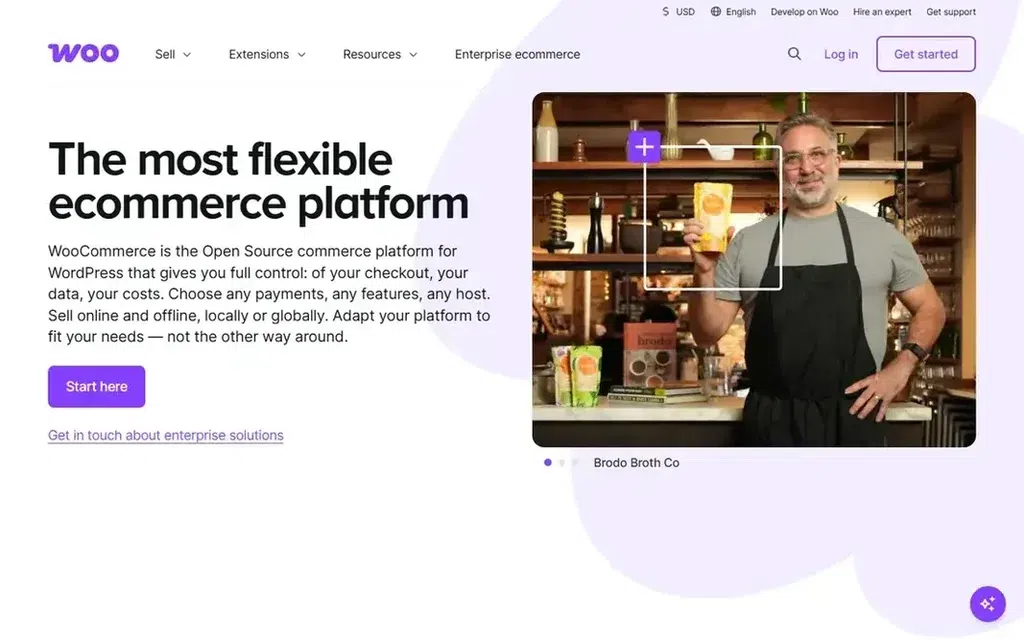
WooCommerce was built for open-source keeps on WordPress. WooCommerce describes itself as the open-source ecommerce system that helps merchants and developers build companies for the long term. It is closely tied to WordPress, which makes it a natural fit for site owners already using that system.
For everyday use, pick a hosted product instead if you would rather not run infrastructure or troubleshoot plugins yourself. Open source means you deal with hosting, updates and technical upkeep, which can demand time or developer help. What you pay to start with WooCommerce: $29 per month. Free options: Not stated.
Trade-offs to know: Hosting and maintenance are your responsibility.
- Open-source ecommerce system
- Pitched at merchants and developers alike
- Needs WordPress knowledge to handle
How we built this list
What to confirm before you sign up
- Get a written quote from Wix eCommerce, BigCommerce, Adobe Commerce and Squarespace Commerce; the list shows no starting price for them.
- Run a trial of Shopify with real work before paying for a year; your own workflow is the best test.
- Before choosing Wix eCommerce, weigh its main limit: design freedom can slow down setup.
- Look at the renewal terms for BigCommerce: auto-renewal, notice periods and price changes can matter more than the first-year price.
- Before rolling out Squarespace Commerce, verify the integrations your workflow depends on.
FAQ
Does open source matter for a webshop?
Open source, as with WooCommerce, provides you ownership of the store's code and data, but you take on hosting and maintenance. Hosted systems trade some of that control for convenience and managed infrastructure.
Is Wix eCommerce the right pick for everyone comparing webshop platform?
No single tool suits every team. Wix eCommerce comes first because it fits customizable all-in-one site building, while BigCommerce suits scalable multi-channel commerce operations and Adobe Commerce suits enterprise B2B and B2C experiences. Match the tool to your own size, budget and workflow before deciding.
How are the tools for webshop platform ordered?
Wix eCommerce sits first and WooCommerce last because the order follows typical fit for webshop platform, then price clarity and free access. It is a judgement call, so read each profile for fit and limits.
Which webshop product is best for a new store?
For most readers this guide would start with Wix eCommerce, built for customizable all-in-one site building. BigCommerce is the alternative for scalable multi-channel commerce operations, and Adobe Commerce for enterprise B2B and B2C experiences. The right answer depends on budget and workflow.
Do these tools publish their prices?
Not all of them. Wix eCommerce, BigCommerce, Adobe Commerce and Squarespace Commerce publish no starting price, so expect a quote request for those. The rest, Shopify included, show a starting price, though seats and billing terms still change the final cost.
What is the cheapest option for webshop platform in this list?
On published monthly entry prices, Shopify is the lowest here at $19 per month. Entry price is only part of the cost, because seats, add-ons and billing terms can change the total. All 6 picks in this Webshop platform comparison list a starting price, free plan details and the main limits on their cards above.
Sources
- https://www.wix.com/ecommerce
- https://www.bigcommerce.com
- https://business.adobe.com/products/magento/magento-commerce.html
- https://www.shopify.com
- https://www.squarespace.com/ecommerce
- https://woocommerce.com