Trustpilot Alternatives in 2026: 8 Review Platforms Compared
Compare 8 Trustpilot alternatives for collecting and managing customer reviews, including Reviews.io, Feefo, G2, Yelp, Birdeye, Podium, Yotpo, and Sitejabber.

- Editor's choice
 Reviews.io
Trustpilot-style reviews at lower cost
Starts at$29 per monthVisit reviews.ioFull review - Great alternative
 Feefo
Verified-purchase reviews only
Starts atSee websiteVisit feefo.comFull review - Also consider
 G2
B2B software reviews
Starts atSee websiteVisit g2.comFull review
TL;DR:
- Reviews.io is the closest Trustpilot-style replacement, with invitation-based reviews at a lower entry price.
- Feefo suits brands that want verified-purchase reviews only, with no open reviews.
- G2 and Yelp suit B2B software and local services, where buyers already search those platforms.
- Birdeye and Podium suit multi-location brands that need review management plus messaging.
Quick comparison
| Tool | Best for | Starts at | Free plan? | |
|---|---|---|---|---|
| Reviews.io | Trustpilot-style reviews at lower cost | $29 per month | No | Visit |
| Feefo | Verified-purchase reviews only | See website | No | Visit |
| G2 | B2B software reviews | See website | Yes | Visit |
 Yelp | Local consumer services in the US | Free | Yes | Visit |
 Birdeye | Multi-location review management | See website | No | Visit |
 Podium | Reviews via text messaging | See website | No | Visit |
 Yotpo | Ecommerce reviews plus loyalty | Free | Yes | Visit |
 Sitejabber | Consumer trust for online stores | See website | Yes | Visit |
The best Trustpilot alternatives
Trustpilot is well known for open customer reviews, but its paid plans are priced per domain and per year, which can be costly for small businesses. The alternatives below cover public review profiles, verified reviews, and review management, so you can pick based on where your customers already leave reviews.
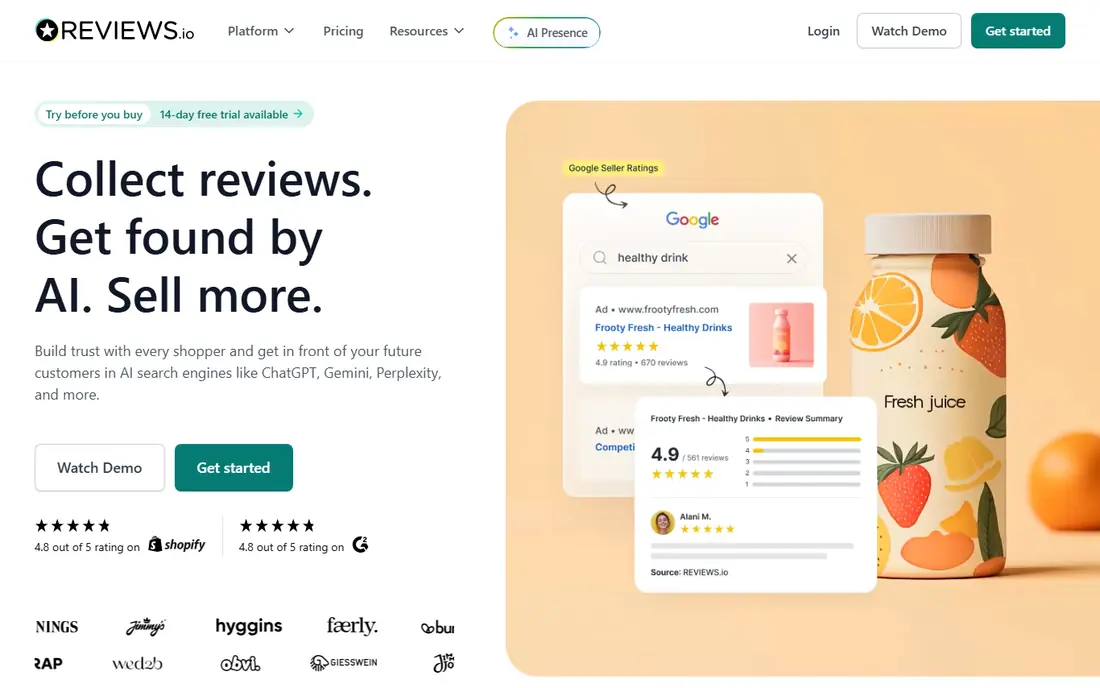
Reviews.io is the closest direct replacement for Trustpilot in this list, with invitation-based review collection, on-site widgets, and star ratings that can support Google seller ratings. Its entry plan at $29 per month in recent listings undercuts Trustpilot paid plans, and month-to-month billing avoids a long annual contract for many buyers. For an ecommerce brand that wants a public review profile and site widgets, Reviews.io is a practical switch.
The entry plan limits review invites, so high-volume stores will need a higher tier. Reviews.io also lacks Trustpilot brand recognition in some markets, which can affect click trust. If price and flexibility matter more than the Trustpilot name, Reviews.io is a strong pick. If brand recognition is essential, weigh that trade carefully.
- Invitation-based review collection
- Widgets and stars
- Google seller ratings support
- No free plan for full collection
- Entry plan limits invites

Feefo collects reviews only from verified purchasers, by invitation after a sale, which means no open reviews from people who did not buy. That verification appeals to brands that want credible ratings and fewer fake or mistaken reviews. Feefo also supports service and product ratings, with widgets for product pages and checkout trust signals.
The verification model is also a limit. Feefo has a smaller public profile than Trustpilot, and pricing is quote-based with no free collection tier. If verified reviews are your priority, Feefo is a strong alternative. If you want a large public review site that buyers already visit, a broader platform may work better.
- Invitation-only verified reviews
- No open reviews
- Service and product ratings
- Quote-based pricing
- No free collection tier
- Smaller public profile than Trustpilot
G2 is the review platform B2B software buyers actually visit, with public reviews, category rankings, and buyer intent data. A free profile lets a software company collect reviews, while paid plans add profile control, intent data, and promotion. For a SaaS company, a strong G2 presence can influence deals more than a general review site.
G2 suits B2B software only, so consumer brands and local services will not benefit in the same way. Paid pricing is custom, and ranking depends on review volume and recency. If you sell software, G2 belongs in your review strategy. If you sell consumer products, pick a consumer review platform instead.
- Public software reviews
- Buyer intent data
- Category rankings
- Review collection tools
- Custom pricing for paid profiles
- B2B software focus only
Yelp remains a key review site for local consumer services in the US, from restaurants to dentists and home services. A free business profile lets owners collect reviews, respond, and manage listing details, while paid ads are optional and separate. For a local business, Yelp reviews often appear where customers search, which makes them hard to ignore.
Yelp review filtering can frustrate owners when legitimate reviews are hidden, and the platform is strongest in the US. Paid features also require careful budgeting. If your customers search Yelp, claim and manage your profile first, even if you use another tool for requests. If your customers are B2B, Yelp will matter far less.
- Free business profile
- Large US consumer audience
- Review and listing management
- Paid ads are separate
- Review filtering can frustrate owners
- US focus
Birdeye helps multi-location brands monitor reviews across Google, Facebook, Yelp, and other sites from one dashboard, with listings management, AI-assisted replies, and messaging. That central view suits franchises, clinics, and retail chains that need consistent responses across locations. Its AI replies also save time for teams handling high review volume.
Pricing is quote-based and scales with locations, so small single-location businesses may find it costly. There is no free plan. If you manage many locations, Birdeye is a strong review management pick. If you need a public review profile, pair it with a collection platform or pick a different tool.
- Review monitoring across many sites
- Listings management
- AI replies
- Messaging
- Quote-based pricing
- No free plan
- Cost scales with locations
Podium centers on text messaging, letting local businesses request reviews by SMS and manage replies in a messaging inbox. That SMS-first approach suits service businesses whose customers respond faster to texts than emails. Podium also bundles messaging, calls, and payments in higher plans, which can replace several tools for a local team.
The entry cost is higher than simple review tools, and pricing is quote-based with no free plan. Podium is also a management tool more than a public review profile. If SMS requests drive your reviews, Podium is a strong pick. If you need a low-cost public profile, Reviews.io or Feefo may fit better.
- SMS review requests
- Messaging inbox
- Payments and calls in some plans
- Quote-based pricing
- Higher entry cost than simple review tools
Yotpo offers product reviews, ratings, and user photos for ecommerce stores, with loyalty and SMS tools in the same platform. Its free tier lets small Shopify stores start collecting product reviews, while paid plans scale with monthly orders. For an ecommerce brand that wants reviews on product pages plus loyalty, Yotpo keeps those tools together.
The free tier is limited, and paid pricing scales with orders, so costs rise as a store grows. Reviews are platform-hosted, which affects portability if you leave. If you run a Shopify store and want product reviews plus loyalty, Yotpo is a strong alternative. If you want a standalone public profile, Reviews.io may be simpler.
- Product reviews for Shopify and ecommerce
- Loyalty and SMS tools
- Widgets
- Free tier is limited
- Paid plans scale with orders
- Platform-hosted reviews
Sitejabber hosts public consumer reviews for online stores and services, with business profiles, review collection, and widgets for websites. It suits ecommerce brands that want a third-party trust signal without Trustpilot pricing, and it offers a free profile option for basic presence. For US consumer brands, Sitejabber provides a credible alternative profile.
Paid features use custom pricing, and Sitejabber has a smaller audience than Trustpilot in some markets, so brand recognition varies. If you want a public consumer profile at lower cost, Sitejabber is worth claiming. If your buyers search Trustpilot by name, the recognition gap may matter.
- Public consumer reviews
- Business profiles
- Review collection and widgets
- Custom pricing for paid features
- Smaller audience than Trustpilot in some markets
How we picked these
We compared official pricing pages, feature descriptions, and review collection models for platforms that host or manage customer reviews in 2026. We favored platforms with a clear collection model, such as open, invitation-only, or verified-purchase reviews, and we noted where pricing is per domain, per location, or custom. Prices change, so confirm the current plan before you commit.
How to choose a Trustpilot alternative
Start with where your customers already leave reviews. A local service lives on Google and Yelp, a software company lives on G2, and an online store lives on Trustpilot-style sites or product reviews. Next, check the collection model: open reviews, invitation-only, or verified-purchase only each affect credibility and volume. Finally, check ownership and portability: can you export reviews and keep widgets if you stop paying? Request reviews by email and SMS after each order or job, respond to every review, and keep the flow steady rather than asking in bursts. A short thank-you reply to positive reviews and a calm, specific reply to negative ones both show future buyers how you handle problems.
FAQ
Is Trustpilot free?
Trustpilot offers a free plan with limited review invitations and one user, while paid plans start at $99 per month per domain in recent listings. High-volume businesses usually need a paid plan.
What is the best Trustpilot alternative for ecommerce?
Reviews.io and Feefo are strong ecommerce alternatives, with Reviews.io closer to Trustpilot style and Feefo focused on verified purchases. Yotpo suits Shopify stores that want product reviews plus loyalty.
Should I collect reviews on Google instead?
Google reviews matter for local search, and every local business should claim a Google Business Profile. A third-party platform adds widgets, invitations, and management that Google alone does not provide.
Are verified reviews better?
Verified reviews reduce fake or mistaken reviews, because only purchasers are invited. Open reviews can bring more volume, but they also bring more moderation work.
Can I move reviews if I leave a platform?
Portability varies by platform. Some tools let you export reviews and keep widgets, while others host reviews on their own site. Check export terms before you commit.