6 Time Tracking Software for Universities Worth Shortlisting in 2026
Best time tracking software for universities in 2026: 6 contenders with entry costs and free tiers. With pricing notes and limits. Current for November 2026.
- Editor's choice
 Time Doctor
Visibility into distributed teams
Starts at$6.67 per user a monthVisit timedoctor.comFull review - Great alternative
 Toggl Track
Capacity planning for research teams
Starts atSee websiteVisit toggl.comFull review - Also consider
 Clockify
Straightforward timesheets across departments
Starts atSee websiteVisit clockify.meFull review
Direct answer
For visibility into distributed teams, Time Doctor is where this list starts. Listed starting prices: Time Doctor from $6.67 per user a month, ClickUp from $9 per user per month and Harvest from $9 per seat a month. Toggl Track fits capacity planning for research teams; Clockify fits straightforward timesheets across departments. Prices, free plans and limits for all 6 tools follow.
TL;DR:
- Time Doctor is the opening pick, best for visibility into distributed teams.
- Hubstaff suits productivity insights and payments.
- Clockify, ClickUp, Harvest: these are the 3 tools out of 6 that offer a free plan.
- For the cheapest start, look at Time Doctor: $6.67 per user per month.
Last checked November 2026. Prices and plan details were read from the vendors' own pages in November 2026; vendors change plans often, so confirm the current price on the vendor site before you buy.
Quick comparison
| Tool | Best for | Starts at | Free plan? | |
|---|---|---|---|---|
| Time Doctor | Visibility into distributed teams | $6.67 per user a month | Free trial | Visit |
| Toggl Track | Capacity planning for research teams | See website | Not stated | Visit |
| Clockify | Straightforward timesheets across departments | See website | Yes | Visit |
 ClickUp | All-in-one work management | $9 per user per month | Yes | Visit |
 Harvest | Project reporting and invoicing | $9 per seat a month | Yes | Visit |
 Hubstaff | Productivity insights and payments | $10 per seat a month | Free trial | Visit |
The 6 tools in detail
If you are comparing time tracking software for universities, this page covers 6 tools in one place: what each is best for, what it costs to start, whether it has a free plan, and the main limit to know about.
Time Doctor is a good fit for visibility into distributed teams. It helps leaders see what teams are working on, validate the process behind every hour, and get AI answers grounded in real data. This can suit university units with remote staff, distributed research collaborators or outsourced service teams where supervisors need a clearer picture of how time is spent.
Its monitoring orientation can raise privacy and governance questions in academic settings, so review policies before adopting it. For departments that just need timesheets, a lighter tracker is likely a better fit. Time Doctor cost at the entry level: $6.67 per user per month. Free access: Free trial.
Downsides: Monitoring features may raise privacy questions.
- Displays what teams are working on
- AI answers grounded in tracked data
- Heavier than straightforward timesheets
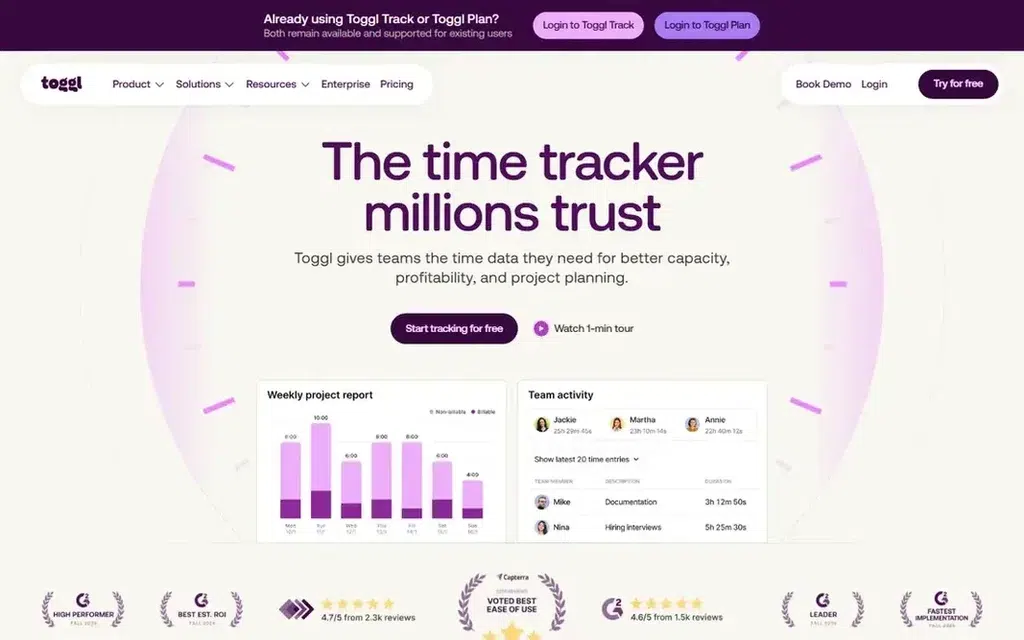
Toggl Track was built for capacity planning for research teams. Toggl Track is a time tracker and capacity planning tool.
It lets teams track employee time, plan capacity, run tasks and projects, and calculate profitability. In daily use, if your priority is payroll or invoicing instead of capacity planning, a different tool may fit better. Toggl Track does not show a starting price in this comparison, so check the vendor site for current pricing. Free access: Not stated.
Watch-outs: May be more than straightforward timesheets need.
- Profitability calculations included
- Supports tasks and projects
- Payroll handling is not the focus
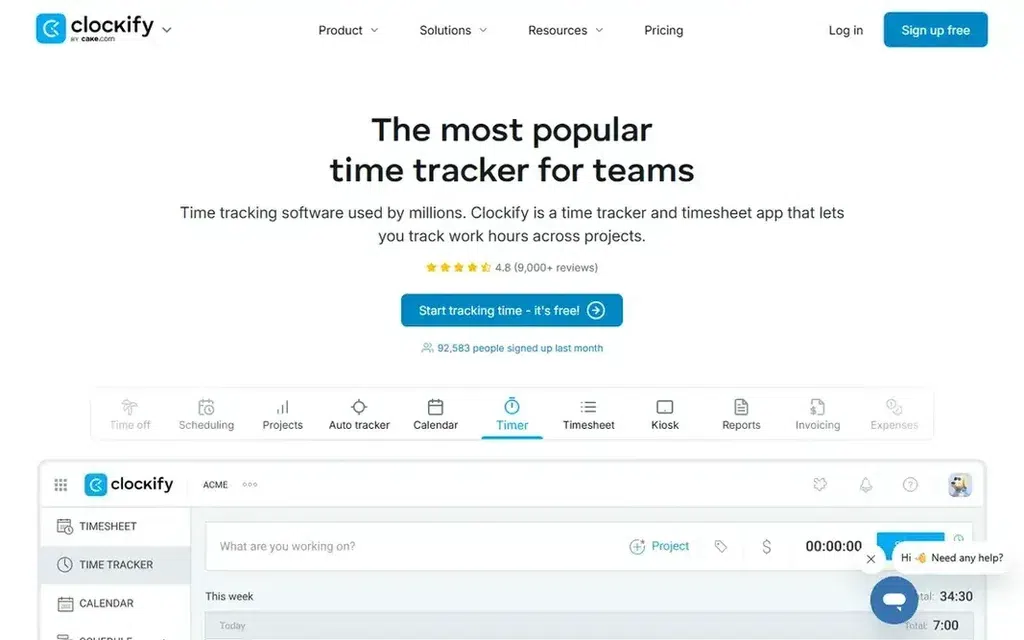
Clockify serves straightforward timesheets across departments. Consider another choice if your campus wants time tracking tightly tied to payroll or invoicing instead of standalone timesheets.
Watch-outs: Less suited to payroll-heavy setups.
It lets users log work hours across projects, which suits university departments that require consistent time records without a complicated setup. Check the vendor site for Clockify pricing; none is listed in this comparison. Clockify offers a free plan.
- Straightforward tracker and timesheet app
- Simple to roll out to plenty of users
- Advanced workforce features are restricted
ClickUp is a good fit for all-in-one work management. Universities can use it to organize projects and team workflows in one place, with time tracking as part of a broader work management setup.
Where it is weaker: Time tracking is one part of a wide suite.
What you pay to start with ClickUp: $9 per user per month. ClickUp offers a free plan.
- Can centralize project work
- Tasks, docs
- Setup can be complicated for straightforward needs
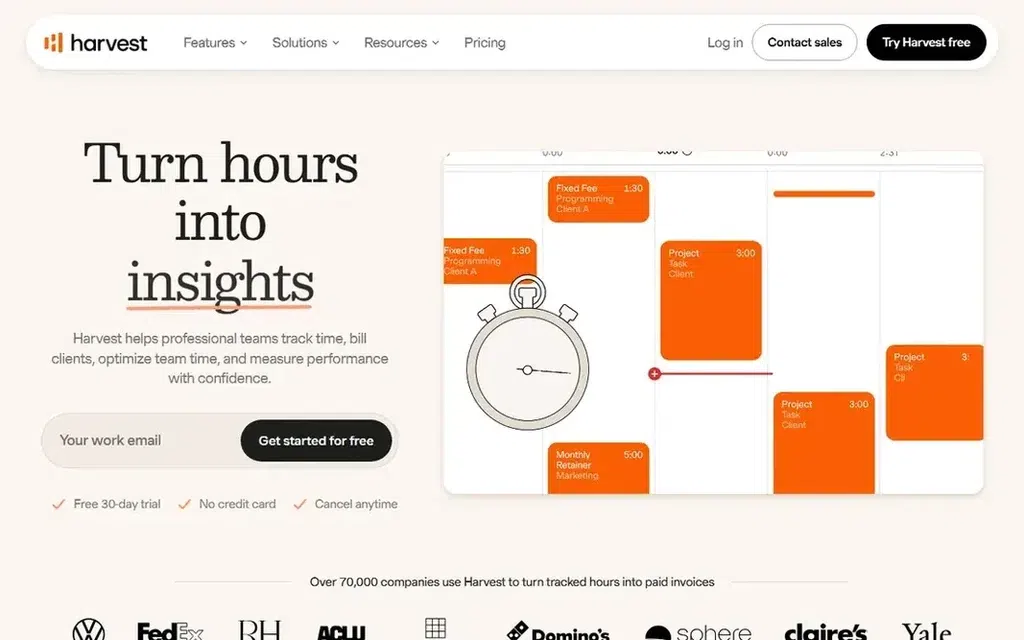
Think of Harvest for project reporting and invoicing. The invoicing emphasis may be unnecessary for purely internal timekeeping, and it is not a payroll product.
What you pay to start with Harvest: $9 per seat per month. Harvest has a free plan.
Drawbacks to consider: Invoicing focus may not fit internal use.
- Simplified online invoicing
- Time tracking with reporting
- Not a full payroll product
Hubstaff works best for productivity insights and payments. If your goal is straightforward project timekeeping, a lighter tool may be preferable. The productivity monitoring and payment features may be more than academic departments need, and some staff may find monitoring intrusive.
It tracks employee time, watches productivity, and turns approved hours into payments and insights, helping teams handle work, costs and performance. It can fit administrative and support teams at universities that require both time records and a way to link approved hours to payments. Entry price for Hubstaff: $10 per seat per month. Free options: Free trial.
Downsides: Payment features may go unused.
- Tracks employee time
- Turns approved hours into payments
- Monitoring may be intrusive for faculty
How the list was put together
We compared the tools on published pricing, free plan or trial availability, feature coverage for time tracking software for universities, and the limits each vendor documents. Figures are shown as the vendors publish them. Billing terms, seat minimums and add-ons can change the real cost. We ordered the tools by general fit, then by how clearly pricing is shown, then by free access. A buyer with unusual needs may reorder them.
What to check before you buy
- Ask Toggl Track and Clockify for a written quote, since no starting price is shown.
- Check what the free option really includes: Clockify, ClickUp and Harvest offer a free plan, and usage caps differ.
- Take the trial from Time Doctor and Hubstaff and push a live task through it before you pay.
- Read the limits listed for Time Doctor first: monitoring features may raise privacy questions.
- Let daily users try Time Doctor on real work; their feedback beats any feature checklist.
- Find out what support ClickUp includes on your plan, and whether onboarding help costs extra.
FAQ
Can I try these tools before paying?
Often, yes. Clockify, ClickUp and Harvest have a free plan and Time Doctor and Hubstaff offer a free trial. Use your own data and a real task during the test, and check what the free tier or trial limits before you rely on it.
Can time tracking tools deal with research and grant projects?
Multiple tools here organize tracked hours by project, which supports research and grant reporting. More specifically, Harvest layers on reporting and invoicing, whereas Toggl Track layers on capacity planning.
How do universities handle privacy with monitoring features?
Tools for example Time Doctor and Hubstaff contain productivity or monitoring capabilities, so review institutional policy before adopting them. Communicate plainly with staff and student workers about what is tracked.
Which options for time tracking software for universities have a free plan?
Clockify, ClickUp and Harvest offer a free plan in this list. Free plans usually cap users, projects or features, so check the limits on the vendor page. Several others offer a trial instead.
How are the tools for time tracking software for universities ordered?
Time Doctor sits first and Hubstaff last because the order follows typical fit for time tracking software for universities, then price clarity and free access. It is a judgement call, so read each profile for fit and limits.
What is the cheapest option for time tracking software for universities in this list?
On published monthly entry prices, Time Doctor is the lowest here at $6.67 per user per month. Entry price is only part of the cost, because seats, add-ons and billing terms can change the total. For the full picture, the cards above cover all 6 entries of this time tracking software for Universities list, including price, free plan and limits.
Sources
- https://www.timedoctor.com
- https://toggl.com/track
- https://clockify.me
- https://clickup.com
- https://www.getharvest.com
- https://hubstaff.com