Semantic Layer Tools in 2026: The 6 Best Options Side by Side
Best semantic layer tools: 6 contenders ranked by fit, with entry costs and free tiers. Read the caveats before you buy. A comparison table is included.
- Editor's choiceAtScale
Universal metric delivery across BI and AI
Starts atSee websiteVisit atscale.comFull review - Great alternativeStarburst Galaxy
Managed Trino SQL analytics across data
Starts at$0.50 per creditVisit starburst.ioFull review - Also consider
 Cube
AI-native and embedded analytics
Starts at$40 per developer a monthVisit cube.devFull review
Direct answer
If you need universal metric delivery across BI and AI, AtScale is the first tool to look at here. Listed starting prices: Starburst Galaxy from $0.50 per credit, Cube from $40 per developer a month and dbt Semantic Layer from $100 per user a month. Starburst Galaxy is the stronger choice for managed Trino SQL analytics across data, while Cube suits AI-native and embedded analytics. The full list of 6 tools follows, with prices and free plan facts.
TL;DR:
- AtScale is the opening pick, best for universal metric delivery across BI and AI.
- 2 of 6 tools offer a free plan: Starburst Galaxy, Cube.
- The main caution on Cube: embedded focus may not fit pure internal BI.
- For BI and embedded analytics with governed metrics, Looker is worth a look.
Last checked November 2026. Prices and plan details were read from the vendors' own pages in November 2026; vendors change plans often, so confirm the current price on the vendor site before you buy.
Quick comparison
| Tool | Best for | Starts at | Free plan? | |
|---|---|---|---|---|
| AtScale | Universal metric delivery across BI and AI | See website | Not stated | Visit |
| Starburst Galaxy | Managed Trino SQL analytics across data | $0.50 per credit | Yes | Visit |
| Cube | AI-native and embedded analytics | $40 per developer a month | Yes | Visit |
| dbt Semantic Layer | Dbt-centric metric governance | $100 per user a month | Free trial | Visit |
 Dremio | Open lakehouse for AI and analytics | See website | Not stated | Visit |
 Looker | BI and embedded analytics with governed metrics | See website | Not stated | Visit |
6 semantic layer tools in detail
This LinkVetted guide covers 6 semantic layer tools. Each profile lists a starting price, free plan details, strengths and drawbacks, so you can drop poor fits quickly.
AtScale
Best for: Universal metric delivery across BI and AI
In short, AtScale is for universal metric delivery across BI and AI. AtScale positions itself as a universal semantic layer for AI and analytics.
Worth adding: adoption usually assumes a governed warehouse and some system engineering effort. AtScale does not show a starting price in this comparison, so check the vendor site for current pricing. Free plan details: Not stated.
The main drawbacks: Needs warehouse governance maturity.
- One metric defined once
- Computed in the warehouse
- Enterprise-oriented setup
Starburst Galaxy
Best for: Managed Trino SQL analytics across data
In short, Starburst Galaxy is for managed Trino SQL analytics across data. It suits teams needing a high-performance query layer over a data lakehouse, frequently as the compute foundation beneath analytics and semantic tooling.
Galaxy is a query and lakehouse system instead of a semantic layer itself, so metric governance must come from another tool. Price to start with Starburst Galaxy: $0.50 per credit. You can start on Starburst Galaxy without paying.
What to check first: Query engine focus instead of metric modeling.
- Quick SQL analytics across distributed data
- No infrastructure management
- Not a dedicated semantic layer
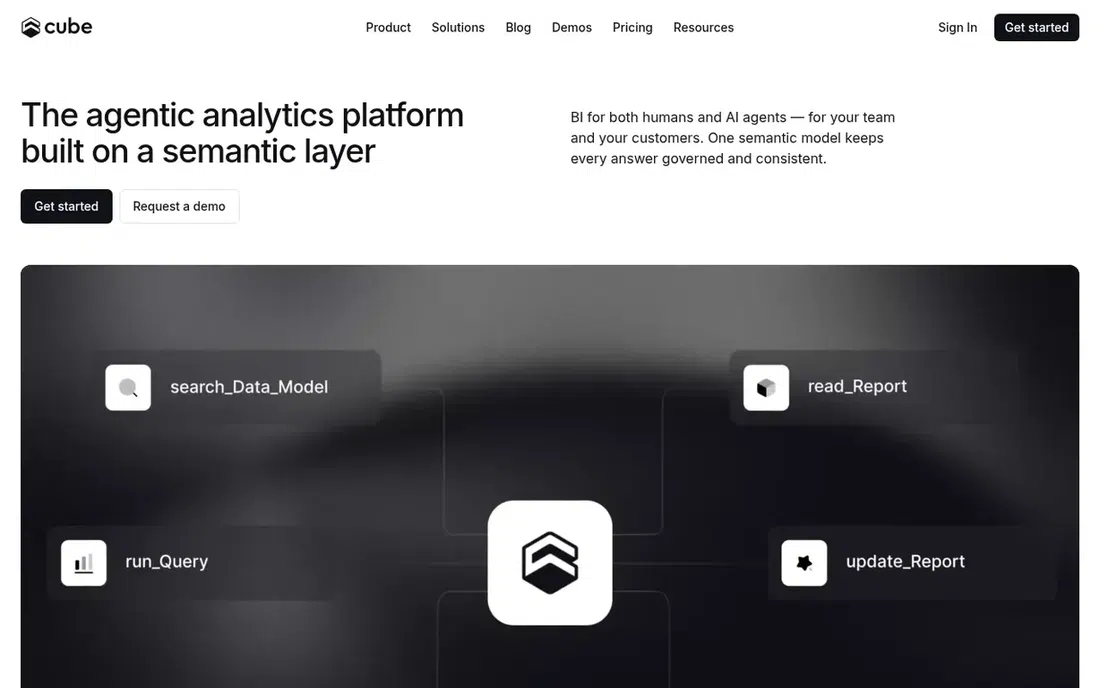
Cube targets AI-native and embedded analytics. Cube is an agentic analytics system built on a semantic layer. It targets AI-native business intelligence and embedded analytics, giving teams and customers answers they can trust.
Consider Looker for a broader BI system or AtScale for universal metric delivery across numerous tools. Since Cube emphasizes embedded and AI-native use cases, organizations seeking a classic BI semantic layer may find other choices more direct. Price to start with Cube: $40 per developer per month. Cube includes a free tier.
Where it is weaker: Embedded focus may not fit pure internal BI. Where it shines: Semantic layer foundation.
- AI-native business intelligence
- Embedded analytics for customer-facing apps
- Needs developer involvement
dbt Semantic Layer
Best for: Dbt-centric metric governance
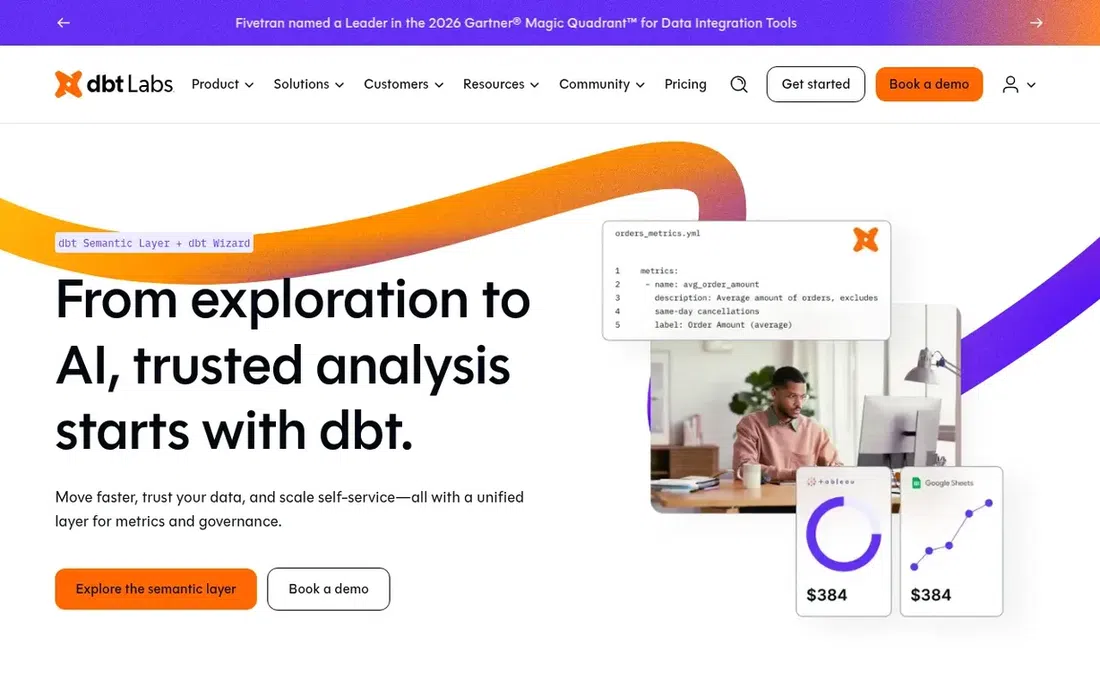
dbt Semantic Layer serves dbt-centric metric governance. The system assumes familiarity with dbt projects and modeling conventions, so teams outside that ecosystem may find adoption slower.
Entry price for dbt Semantic Layer: $100 per user per month. As for free access: Free trial.
Trade-offs to know: Less suited to non-dbt data stacks.
- Provides governed insights across tools
- Metrics defined once in dbt
- Tied to dbt modeling workflows
Choose Dremio for open lakehouse for AI and analytics. Dremio is an open, high-performance data lakehouse system built to accelerate AI and analytical workloads across enterprise data.
Reasons to shortlist it: Works across enterprise data.
Trade-offs to know: Semantic layer capabilities are not its core pitch.
Dremio's core strength is the lakehouse, not governed metric definitions, so a dedicated semantic layer is still needed for consistency. Dremio does not show a starting price in this comparison, so check the vendor site for current pricing. Free plan details: Not stated.
- Accelerates AI and analytical workloads
- Open
- Lakehouse focus, not metric governance
Choose Looker for BI and embedded analytics with governed metrics. Looker is Google Cloud's agentic business intelligence and embedded analytics system.
It brings together metrics with a trusted semantic layer and Gemini agents, aiming to combine governed definitions with AI-assisted exploration. For everyday use, Looker's modeling approach needs deliberate upfront design, and the product suits best within Google Cloud environments. Check the vendor site for Looker pricing; none is listed in this comparison. Trial and free access: Not stated.
Honest limits: Modeling needs dedicated effort.
- Gemini agents for AI assistance
- Trusted semantic layer
- Google Cloud ecosystem alignment
How we chose
For each of the 6 tools we noted price, free plan or trial, fit for semantic layer tools and the main limit, using vendor pages and documentation. Where a price is missing, the vendor does not list one publicly or ties it to a quote. Always confirm before budgeting. Order on the page follows fit for the typical buyer first, then price transparency and free access. Your own requirements should decide the final pick.
Questions to settle before buying
- Get a written quote from AtScale, Dremio and Looker; the list shows no starting price for them.
- Read the fine print on the free plans from Starburst Galaxy and Cube; seat, project and feature caps differ.
- Run a trial of dbt Semantic Layer with real work before paying for a year; your own workflow is the best test.
- Before choosing AtScale, weigh its main limit: enterprise-oriented setup.
- The entry price of AtScale is only the starting point; model the full cost with seats and extras.
- See whether Looker offers onboarding or training, and whether it is included in the price.
FAQ
Is AtScale the right pick for everyone comparing semantic layer tools?
No single tool suits every team. AtScale comes first because it fits universal metric delivery across BI and AI, while Starburst Galaxy suits managed Trino SQL analytics across data and Cube suits AI-native and embedded analytics. Match the tool to your own size, budget and workflow before deciding.
Do these tools publish their prices?
Not all of them. AtScale, Dremio and Looker publish no starting price, so expect a quote request for those. The rest, Starburst Galaxy included, show a starting price, though seats and billing terms still change the final cost.
What is the cheapest option for semantic layer tools in this list?
On published monthly entry prices, Cube is the lowest here at $40 per developer per month. Entry price is only part of the cost, because seats, add-ons and billing terms can change the total. All 6 picks in this semantic layer tools comparison list a starting price, free plan details and the main limits on their cards above.
What does a semantic layer actually do?
A semantic layer defines business metrics once and serves them consistently to BI tools, AI systems, and applications. It centralizes logic so different consumers see the same numbers, reducing conflicting definitions across teams.
How do I choose between a semantic layer and a lakehouse?
A semantic layer governs metric definitions, whereas a lakehouse like Dremio or Starburst Galaxy offers storage and query performance. Plenty of organizations use both, with the semantic layer sitting above the lakehouse to deliver trusted metrics.
Can I try these options before paying?
Often, yes. Starburst Galaxy and Cube have a free plan and dbt Semantic Layer offers a free trial. Use your own data and a real task during the test, and check what the free tier or trial limits before you rely on it. For the full picture, the cards above cover all 6 entries of this semantic layer tools list, including price, free plan and limits.
Sources
- https://www.atscale.com
- https://www.starburst.io/platform/starburst-galaxy
- https://cube.dev
- https://www.getdbt.com/product/semantic-layer
- https://www.dremio.com
- https://cloud.google.com/looker