5 Best Reporting Software for Ecommerce Brands for 2026, Vetted and Compared
5 products for the best reporting software for ecommerce brands, ranked by fit, with starting costs and free tiers. The catches are listed up front. No hype.
- Editor's choiceGlew
Unified commerce data analysis
Starts at$250 a monthVisit glew.ioFull review - Great alternative
 Lifetimely
Shopify profit and retention analytics
Starts at$149 per monthVisit lifetimely.ioFull review - Also consider
 Tableau
Enterprise-grade visual analytics
Starts at$15 per user per monthVisit tableau.comFull review
Direct answer
Glew leads the list, best for unified commerce data analysis. Listed starting prices: Glew from $250 a month, Lifetimely from $149 per month and Tableau from $15 per user per month. Look at Lifetimely for Shopify profit and retention analytics, and at Tableau for enterprise-grade visual analytics. The full list of 5 tools follows, with prices and free plan facts.
TL;DR:
- The list opens with Glew, aimed at unified commerce data analysis.
- Tableau has the lowest monthly starting price in this list: $15 per user per month.
- Looker Studio fits adaptable, free dashboard building.
- Tableau is the only tool of the 5 with a free plan.
Last checked November 2026. Prices and plan details were read from the vendors' own pages in November 2026; vendors change plans often, so confirm the current price on the vendor site before you buy.
Quick comparison
| Tool | Best for | Starts at | Free plan? | |
|---|---|---|---|---|
| Glew | Unified commerce data analysis | $250 a month | Free trial | Visit |
| Lifetimely | Shopify profit and retention analytics | $149 per month | Free trial | Visit |
| Tableau | Enterprise-grade visual analytics | $15 per user per month | Yes | Visit |
 Domo | Governed data for AI insights | See website | Free trial | Visit |
 Looker Studio | Adaptable, free dashboard building | See website | Not stated | Visit |
Our 5 reporting software for ecommerce brands
Choosing reporting software for ecommerce brands usually comes down to price, fit and limits. This LinkVetted guide sets 5 tools side by side on those three points, with the facts kept short and checkable.
Glew
Best for: Unified commerce data analysis
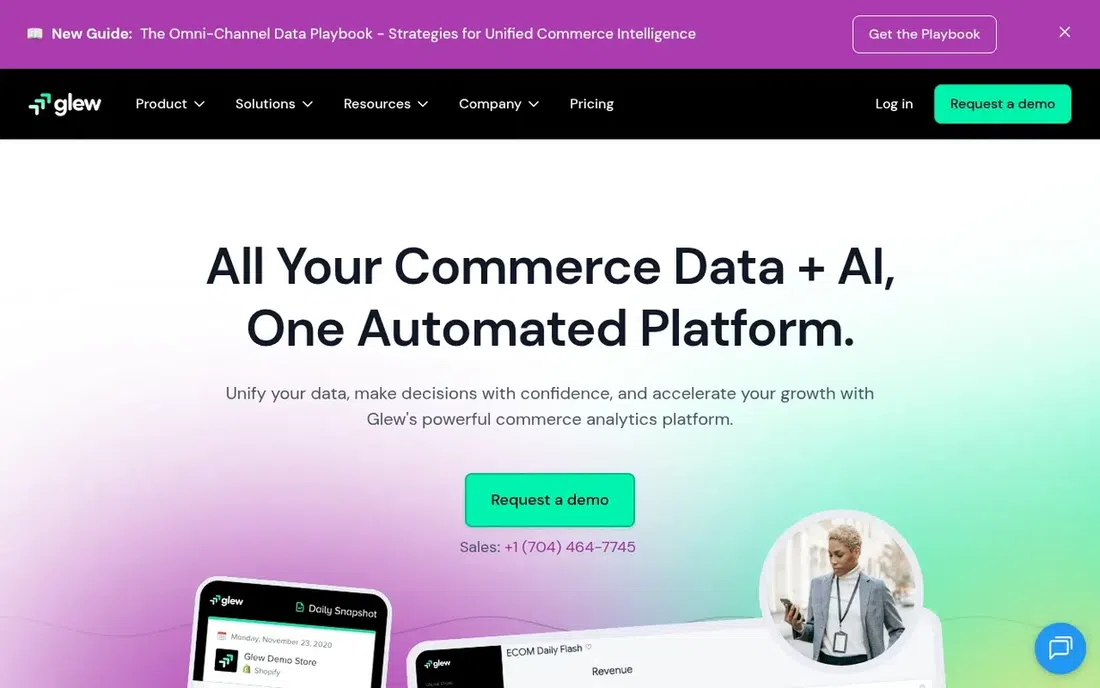
Glew is built with unified commerce data analysis in mind. Glew is an all-in-one commerce data system that unifies, examines, and optimizes commerce data to support data-driven decisions.
Watch-outs: Demo request required.
Beyond that, Glew needs requesting a demo to begin, which may slow evaluation. Glew cost at the entry level: $250 per month. Trial and free access: Free trial.
- Supports data-driven decisions
- Brings together commerce data
- May be more than small brands need
Where Lifetimely fits: Shopify profit and retention analytics. Lifetimely is made for Shopify, so it may not fit brands on other products or those needing wide business intelligence.
In practice, a general BI tool or a multi-channel commerce system would be better for those cases. Worth adding: Lifetimely supplies profit analytics for Shopify keeps, tracking profit and loss, customer acquisition cost to lifetime value ratios, and retention. What you pay to start with Lifetimely: $149 per month. As for free access: Free trial.
Points against: Narrower scope than full BI systems.
- Profit and loss tracking
- Customer CAC:LTV and retention
- Made for Shopify keeps
In short, Tableau is for enterprise-grade visual analytics. Tableau is a business intelligence and analytics system that helps users see and understand data through visualizations.
Points against: Can be complicated for beginners.
It links to almost any database and permits drag-and-drop creation of charts and dashboards, making it a fit for ecommerce brands with diverse data sources and a need for deep analysis. Tableau starts at: $15 per user per month. Tableau offers a free plan.
- Simple sharing
- Drag-and-drop visualizations
- Pricing may be high for small brands
Choose Domo for governed data for AI insights. Domo provides a product for governed data and AI agents, helping organizations connect, prepare, and expand data access for exploration and insights.
Honest limits: Enterprise-oriented.
For everyday use, brands with straightforward reporting needs might find more straightforward tools more economical. More specifically, Domo is enterprise-focused and may be overkill for smaller ecommerce operations. Pricing for Domo is not stated here, so ask the vendor for current figures. On free options: Free trial. What Domo does well: Prepares and expands data access.
- AI and data products
- Links and moves data from any source
- May need implementation support
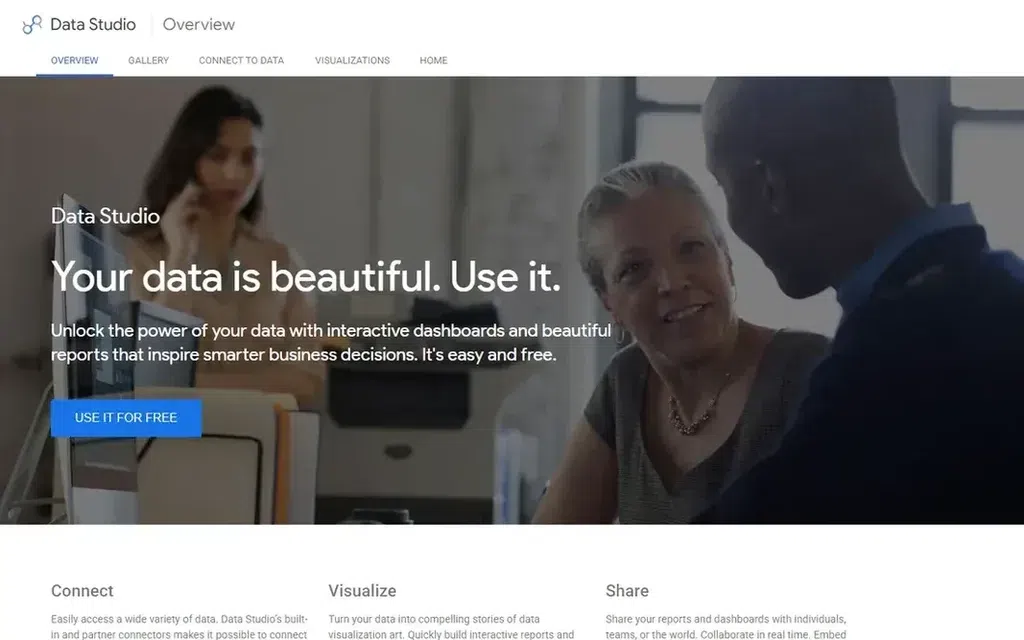
Looker Studio is designed for adaptable, free dashboard building. The trade-off is that Looker Studio is general-purpose, so it lacks prebuilt ecommerce metrics like profit or customer lifetime value.
Honest limits: Needs setup and data modeling.
From a buyer's view, if you need commerce-specific reporting without heavy setup, a dedicated ecommerce analytics tool may be a better fit. Pricing for Looker Studio is not stated here, so ask the vendor for current figures. On free options: Not stated.
- Free to use
- Links to numerous data sources
- Less ecommerce-specific from day one
How we built this list
The comparison looks at four things: starting price, free access, how well the feature set matches reporting software for ecommerce brands, and the main limit of each tool. Plan names, prices and limits change often. Treat the figures here as a starting point and verify them with the vendor. Order on the page follows fit for the typical buyer first, then price transparency and free access. Your own requirements should decide the final pick.
What to check before you buy
- Confirm the entry price on the vendor page. For Domo and Looker Studio that means a quote rather than a fixed price.
- Look at the free plan from Tableau closely: its caps decide whether it is usable for real work.
- Use real work to test the free trial from Glew, Lifetimely and Domo, rather than a demo project.
- Read the limits listed for Glew first: demo request required.
- Check the integration list for Tableau against the tools you run today, and note which ones need a higher plan.
- Pick one real project and run it in Looker Studio first; a small pilot shows fit faster than a checklist.
FAQ
Which options for reporting software for ecommerce brands have a free plan?
Tableau is the only tool in this list with a free plan. Free plans usually cap users, projects or features, so check the limits on the vendor page. Several others offer a trial instead. All 5 picks in this reporting software for ecommerce brands comparison list a starting price, free plan details and the main limits on their cards above.
How are the tools for reporting software for ecommerce brands ordered?
The order follows typical fit for reporting software for ecommerce brands, with Glew first and Looker Studio last, then price clarity and free access. It is editorial judgement, not a score, so another team could rank the tools differently.
Can I try these tools before paying?
Often, yes. Tableau has a free plan and Glew, Lifetimely and Domo offer a free trial. Use your own data and a real task during the test, and check what the free tier or trial limits before you rely on it.
Is a free tool like Looker Studio enough for ecommerce reporting?
Even so, it lacks prebuilt ecommerce metrics, so you may have to build custom calculations or combine it with other tools for profit and customer analytics.
What should an ecommerce brand look for in reporting software?
Look for connectors to your sales channels and marketing systems, metrics relevant to ecommerce like profit and retention. A level of complexity your team can deal with.
Do these tools publish their prices?
Not all of them. Domo and Looker Studio publish no starting price, so expect a quote request for those. The rest, Glew included, show a starting price, though seats and billing terms still change the final cost.
Sources
- https://www.glew.io
- https://www.lifetimely.io
- https://www.tableau.com
- https://www.domo.com
- https://lookerstudio.google.com