Best Regulatory Intelligence Platforms for 2026: Our 5 Vetted Picks
Weighing the best regulatory intelligence platforms? We lined up 5 products by cost, free access and fit. Real limits included. Reviewed in November 2026.
- Editor's choiceAscent
Regtech tools with expert insights
Starts atPricing on requestVisit ascentregtech.comFull review - Great alternativeLexisNexis Regulatory Compliance
Building a structured compliance framework
Starts atPricing on requestVisit lexisnexis.comFull review - Also consider
 CUBE
AI-native global regulatory intelligence
Starts atPricing on requestVisit cube.globalFull review
Direct answer
Ascent is the first pick on this list for Regtech tools with expert insights. If your case is different, LexisNexis Regulatory Compliance suits building a structured compliance framework and CUBE suits AI-native global regulatory intelligence. The other 2 tools in the list cover narrower or pricier cases. None of these vendors publish plan prices, so pricing is on request for every option.
TL;DR:
- The list opens with Ascent, aimed at Regtech tools with expert insights.
- Every tool from Ascent to Compliance.ai works by quote, with no list price shown.
- For automating compliance obligations and workflows, Compliance.ai is worth a look.
- The main caution on Ascent: less wide than large GRC suites.
- None of the 5 tools, from Ascent to Compliance.ai, has a free plan, so budget for a subscription or use a trial.
Last checked November 2026. Pricing on request: vendors did not publish plan prices when this guide was last checked (November 2026), so ask each vendor for a written quote.
Quick comparison
| Tool | Best for | Starts at | Free plan? | |
|---|---|---|---|---|
| Ascent | Regtech tools with expert insights | Pricing on request | Not stated | Visit |
| LexisNexis Regulatory Compliance | Building a structured compliance framework | Pricing on request | Not stated | Visit |
| CUBE | AI-native global regulatory intelligence | Pricing on request | Not stated | Visit |
| Thomson Reuters Regulatory Intelligence | Deep regulatory content with monitoring | Pricing on request | Not stated | Visit |
| Compliance.ai | Automating compliance obligations and workflows | Pricing on request | Not stated | Visit |
The 5 tools in detail
LinkVetted put together this guide to regulatory intelligence platforms for readers who want a clear shortlist without reading every vendor page. It compares 5 tools on starting price, free plans, who each one suits and where each one falls short.
Ascent
Best for: Regtech tools with expert insights
In short, Ascent is for Regtech tools with expert insights. Ascent positions itself as a partner for regulatory technology, offering tools and expert insights pitched at simplifying compliance and improving efficiency.
Watch-outs: Less wide than large GRC suites.
More specifically, teams wanting a focused vendor relationship instead of a sprawling suite may prefer it. Consider it when regulatory efficiency is the core goal and you are comfortable assembling a stack instead of buying one suite. Pricing for Ascent is not stated here, so ask the vendor for current figures. As for free access: Not stated.
- Regulatory technology focus
- Pairs tools with expert insight
- Fit relies on regulatory scope
LexisNexis Regulatory Compliance
Best for: Building a structured compliance framework
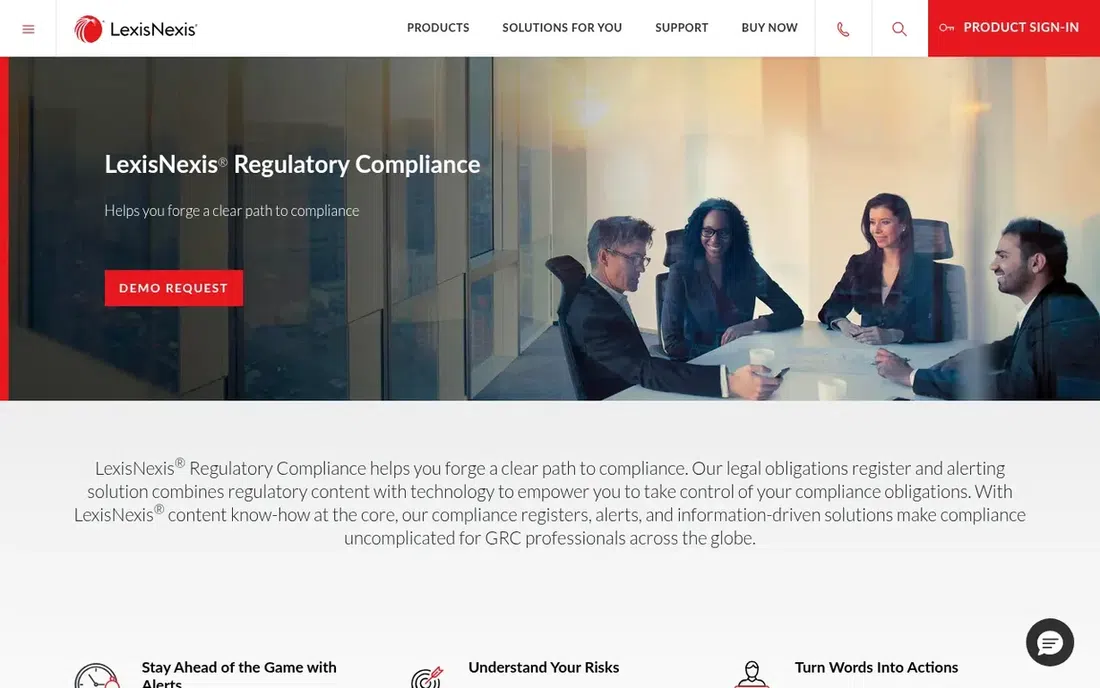
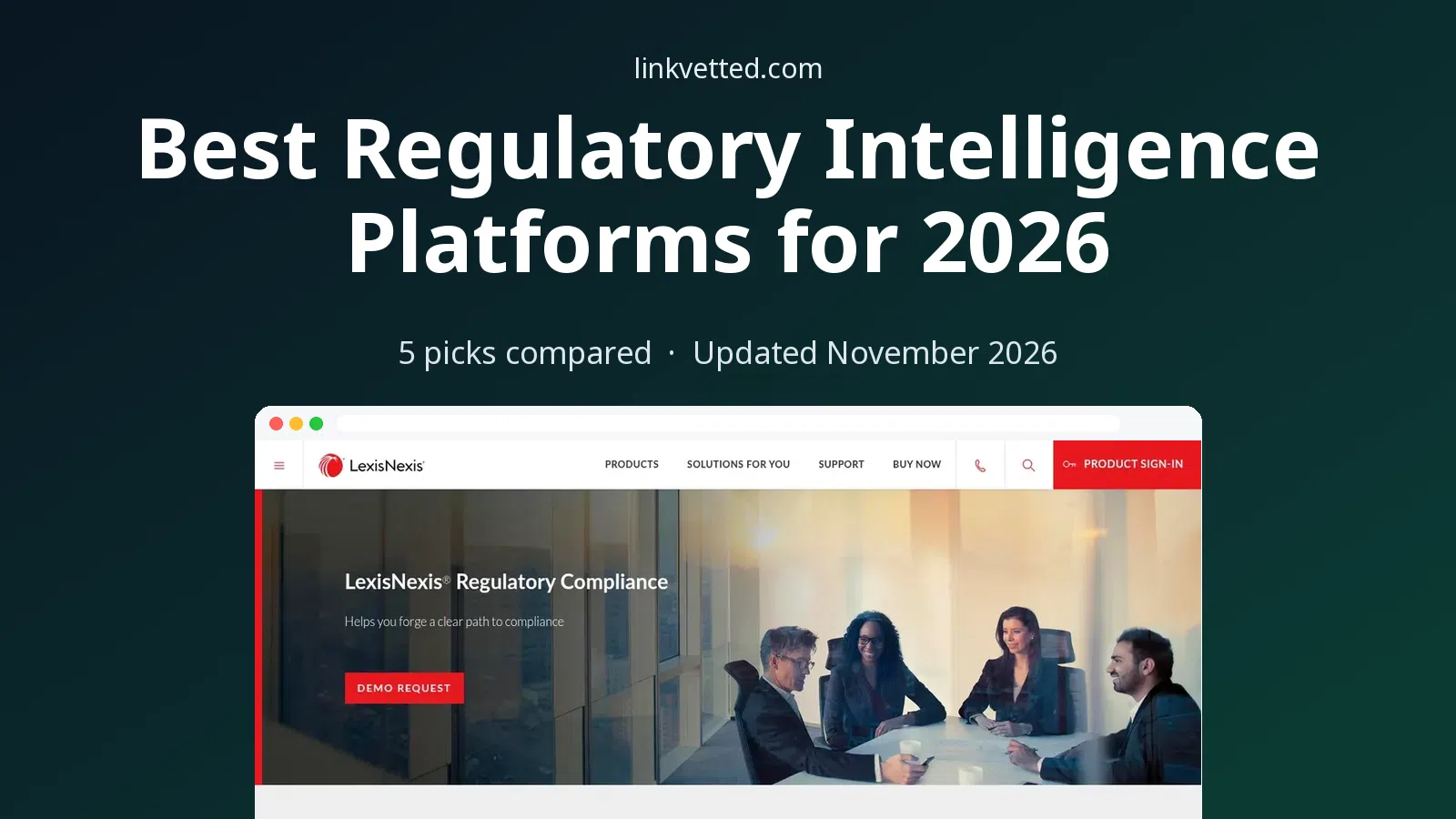
LexisNexis Regulatory Compliance targets building a structured compliance framework. LexisNexis Regulatory Compliance centers on helping organizations build and maintain a compliance framework in the face of constant regulatory change.
For everyday use, legal and compliance groups that want a documented, defensible framework commonly start here. Beyond that, since the emphasis is on framework building, teams wanting automated regulatory change alerts or AI-driven obligation extraction may find it less direct. No starting price is listed for LexisNexis Regulatory Compliance here; confirm pricing on the vendor site. As for free access: Not stated.
Downsides: Less concentrated on automatic change feeds.
- Aims to cut penalty exposure
- Framework-oriented compliance content
- Framework work needs internal effort
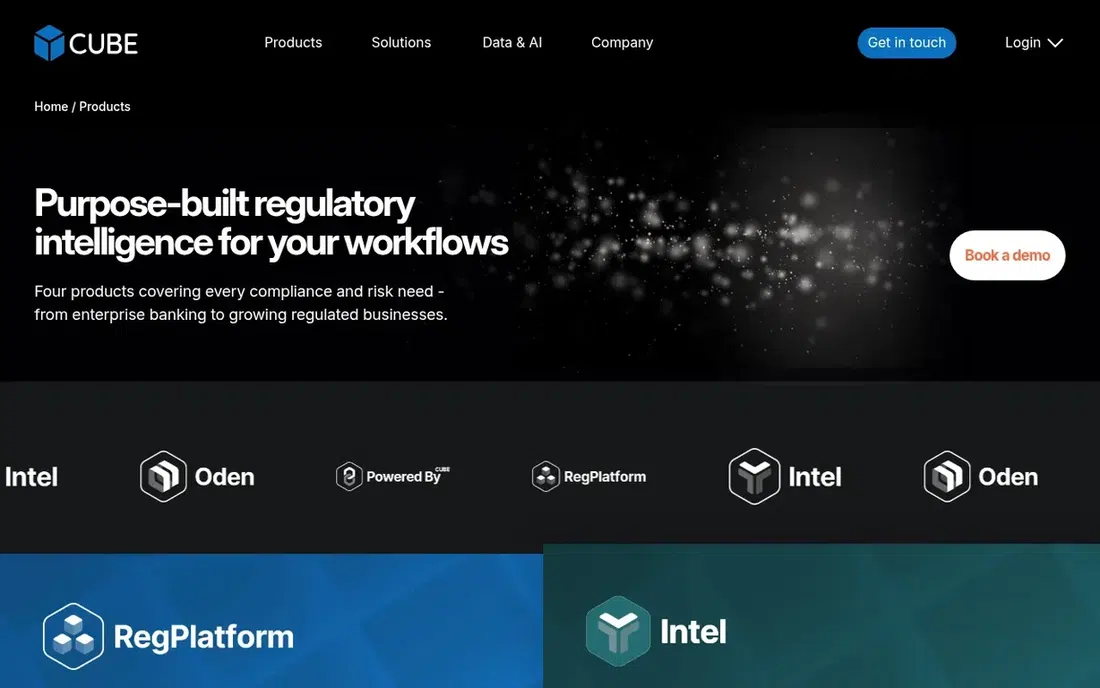
CUBE makes the most sense for AI-native global regulatory intelligence. CUBE merges AI-native technology with global regulatory data and proprietary network data so customers can gather deep intelligence and automate compliance and risk processes.
What to check first: Needs content and workflow planning.
Worth adding: businesses with heavy cross-border exposure are the clearest audience. In practice, the system is oriented toward enterprise regulatory programs, so smaller teams may find the scope bigger than needed. CUBE shows no starting price here, so confirm the cost on the vendor site. Free access: Not stated.
- Global regulatory data
- Automates compliance and risk processes
- Enterprise-scale orientation
Thomson Reuters Regulatory Intelligence
Best for: Deep regulatory content with monitoring
Thomson Reuters Regulatory Intelligence is built with deep regulatory content with monitoring in mind. Thomson Reuters Regulatory Intelligence is a content-led system that merges regulatory material with monitoring and change tracking. Worth adding: the product leans toward research and monitoring instead of deep workflow automation.
So teams wanting obligation-level task routing may need extra tooling. Beyond that, consider alternatives if your priority is automatic obligation extraction or embedding compliance into a wider GRC system instead of regulatory content depth. Thomson Reuters Regulatory Intelligence does not show a starting price in this comparison, so check the vendor site for current pricing. Free access: Not stated.
The main drawbacks: Content-heavy setup takes time.
- Broad regulatory content coverage
- Suits established compliance teams
- May overlap with existing research tools
Compliance.ai
Best for: Automating compliance obligations and workflows
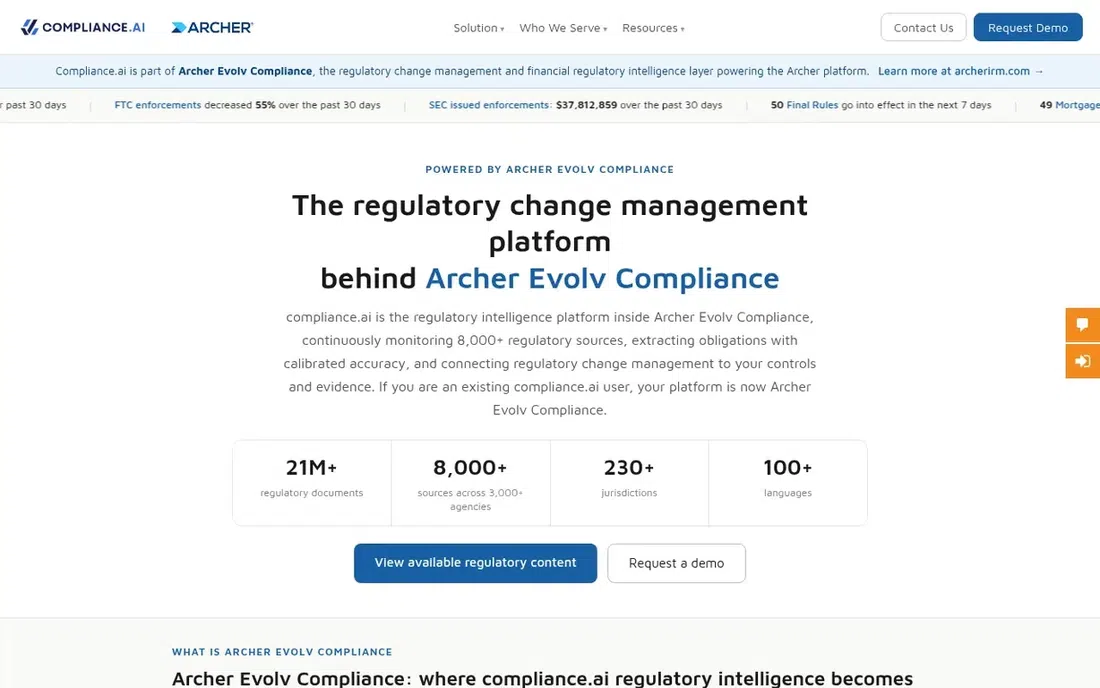
Compliance.ai works best for automating compliance obligations and workflows. Choose it when automation of compliance workflows is the priority and broader GRC coverage is handled elsewhere.
Drawbacks to consider: Narrower than full GRC suites.
As for the details, organizations drowning in spreadsheet-based obligation tracking are a natural audience. Compliance.ai does not show a starting price in this comparison, so check the vendor site for current pricing. Trial and free access: Not stated.
- Automation of obligations and activities
- Workflow simplifying focus
- Automation quality relies on content mapping
Selection criteria
LinkVetted looked at what each vendor publishes: pricing, plan limits, feature coverage for regulatory intelligence platforms and stated drawbacks. No hands-on testing is claimed. Treat prices as a snapshot: vendors change plans often, so check the vendor site for the figure that applies today. The ranking is editorial: typical fit first, then clear pricing, then free access. If your needs are unusual, read the profiles rather than relying on position.
What to check before you buy
- Confirm the entry price with every vendor: no tool from Ascent to Compliance.ai shows a fixed starting price.
- Read the limits listed for Ascent first: less wide than large GRC suites.
- Ask Thomson Reuters Regulatory Intelligence about contract length, onboarding fees and user minimums before you sign.
- Work out what LexisNexis Regulatory Compliance costs with your real seat count, add-ons and usage, not just the entry price.
- Check how data leaves Ascent: formats, limits and whether exports are available on every plan.
FAQ
Do these tools publish their prices?
No. None of the tools, from Ascent to Compliance.ai, shows a fixed starting price here, so budget time for quotes.
What is a regulatory intelligence system?
Plenty of products combine content libraries with monitoring and workflow tools. Broader GRC suites may bundle regulatory features alongside risk and audit.
Can these systems handle several jurisdictions?
Multiple do, particularly CUBE and Thomson Reuters Regulatory Intelligence, which emphasize global regulatory data. Coverage varies by vendor and region, so verify the specific jurisdictions you operate in.
Which platform suits a small compliance team?
Teams with restricted resources frequently prefer focused tools like Compliance.ai or Ascent over wide GRC suites. These emphasize automation and workflow efficiency instead of full enterprise governance. Confirm scope and implementation effort before committing.
Can I try these options before paying?
Not by default. None of the tools, from Ascent to Compliance.ai, lists a free plan or a free trial here, so ask each vendor for a demo before committing.
Is Ascent the right pick for everyone comparing regulatory intelligence platforms?
No single tool suits every team. Ascent comes first because it fits Regtech tools with expert insights, while LexisNexis Regulatory Compliance suits building a structured compliance framework and CUBE suits AI-native global regulatory intelligence. Match the tool to your own size, budget and workflow before deciding.
Sources
- https://www.ascentregtech.com
- https://www.lexisnexis.com/en-us/products/regulatory-compliance.page
- https://www.cube.global
- https://legal.thomsonreuters.com/en/products/regulatory-intelligence
- https://www.compliance.ai