Best Blockchain Intelligence Tool in 2026: 8 Tools Compared
We compared the best blockchain intelligence tool options for compliance, investigations and research, with pricing, chain coverage and honest limits.
- Editor's choice
 Chainalysis
Enterprise compliance and investigations
Starts atSee websiteVisit chainalysis.comFull review - Great alternative
 TRM Labs
Cross-chain risk monitoring
Starts atSee websiteVisit trmlabs.comFull review - Also consider
 Elliptic
Screening and cross-chain tracing
Starts atSee websiteVisit elliptic.coFull review
TL;DR:
- Enterprise compliance teams should start with Chainalysis, TRM Labs or Elliptic, since all three offer screening, monitoring and case-ready tracing.
- Arkham and Dune suit researchers and smaller teams that need public data and dashboards without an enterprise contract.
- Chain coverage matters more than headline features, so check whether your main networks, tokens and bridges are covered before you buy.
- Most enterprise prices are quoted, not published, so budget for a sales conversation and a proof of concept with your own cases.
Quick comparison
| Tool | Best for | Starts at | Free plan? | |
|---|---|---|---|---|
| Chainalysis | Enterprise compliance and investigations | See website | No | Visit |
| TRM Labs | Cross-chain risk monitoring | See website | No | Visit |
| Elliptic | Screening and cross-chain tracing | See website | No | Visit |
 Arkham | Public wallet research | Free | Yes | Visit |
 Crystal Intelligence | Evidence-grade investigations | See website | No | Visit |
 Bitquery | Developer data and APIs | $39 per month | Free trial | Visit |
 Nansen | Wallet and token research | See website | Yes | Visit |
 Dune | Custom on-chain dashboards | See website | Yes | Visit |
The best blockchain intelligence tools
Blockchain intelligence is a broad label, and the right pick depends on whether you screen transactions, investigate a case or study market activity. We compared official feature pages, pricing pages and public documentation for the tools below.
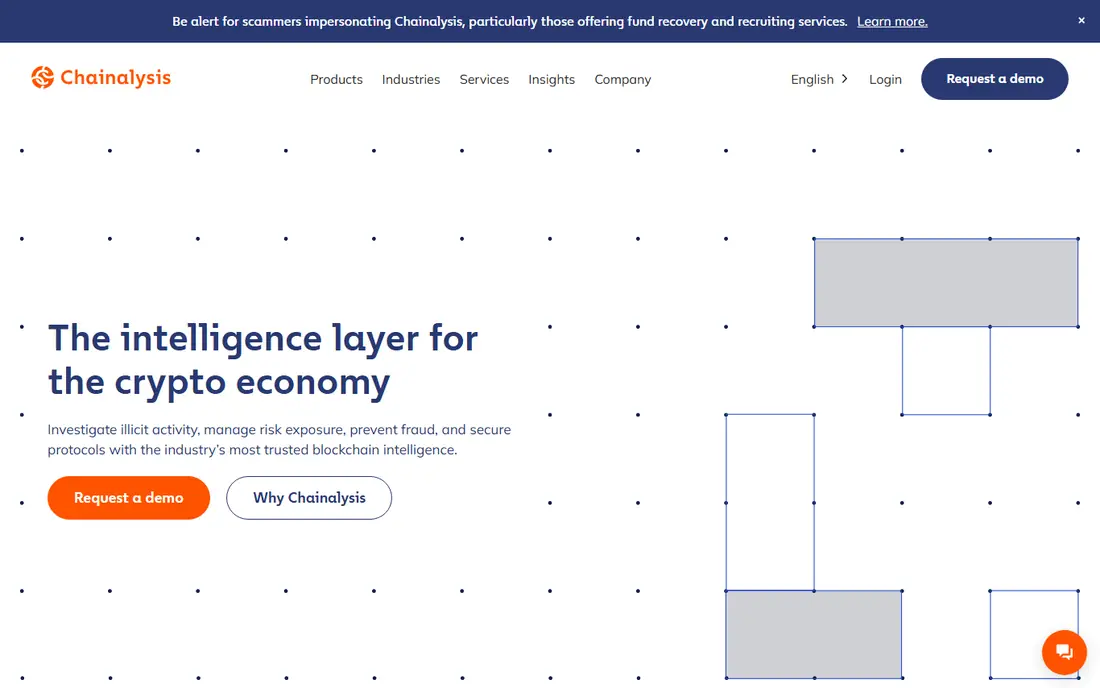
Chainalysis is the default first call for many compliance and investigations teams, and that position is earned by depth rather than marketing alone. Its Reactor tool traces funds across wallets and services, while its monitoring products screen transactions and customers against risk categories. For a bank, exchange or law enforcement unit, that combination covers the full path from a suspicious deposit to a documented case file.
The honest catch is access. Pricing is quoted, onboarding is enterprise grade, and a small team with a handful of cases a month may find the contract hard to justify. If your work involves court-ready evidence, sanctions screening or large transaction volumes, start here and ask for a trial on your own historical cases. If you only need occasional public research, the free tools later in this list will serve you better.
- Deep entity attribution
- Investigation and monitoring in one platform
- Widely used by regulators and large firms
- Enterprise pricing
- Buying process can be slow for smaller teams
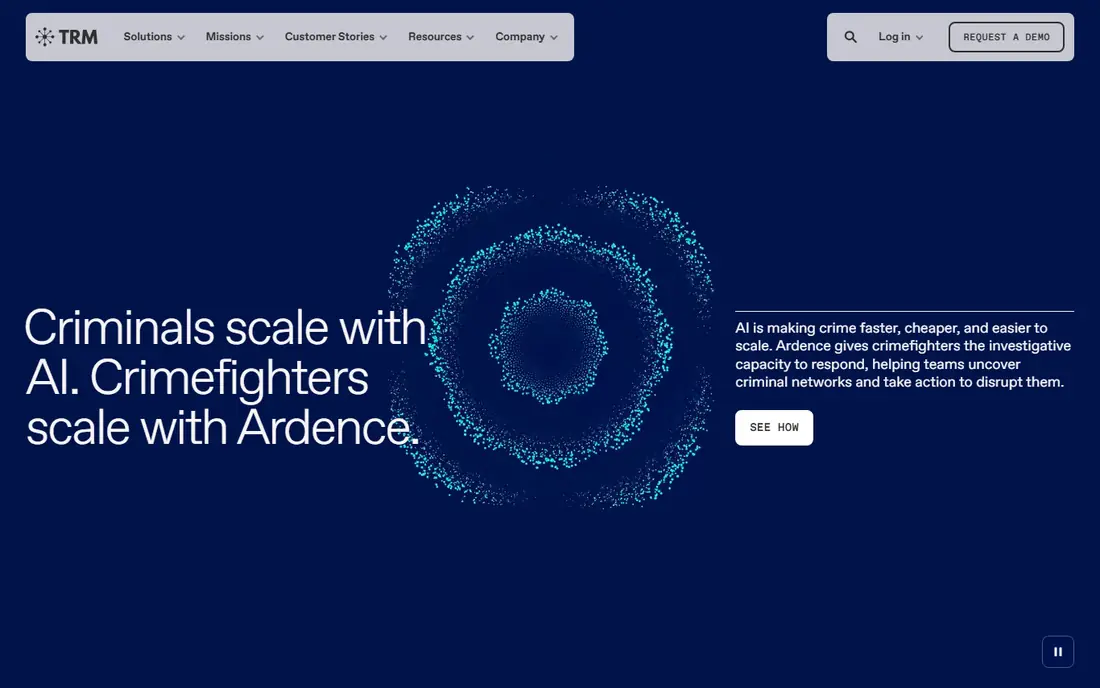
TRM Labs stands out for teams that need to watch many chains at once without stitching together separate tools. Its platform combines transaction monitoring, wallet screening and investigation views, with an emphasis on automated detection as volumes grow. That matters for exchanges and payment firms that process stablecoin flows across several networks, where a single missed hop can change a risk decision.
TRM also earns attention for its work with government and financial crime teams, which tends to show up in the quality of its attribution data. The trade-off is the same as with Chainalysis: this is a negotiated enterprise product, not a self-serve signup. Ask how it handles your highest-volume chains, how alerts are tuned, and what the total cost looks like at your expected screening volume.
- Broad chain coverage
- Strong automation for monitoring
- Clear risk scoring workflows
- Enterprise pricing
- Less suited to casual one-off research

Elliptic is a strong pick for regulated firms that screen at scale and need to explain each risk score to a compliance officer or an auditor. Its screening tools check wallets and transactions before they settle, while its investigation tools follow funds across chains and bridges. That cross-chain view is the point, since illicit flows rarely stay on one network.
We like Elliptic most for European and UK facing firms, where its regulatory focus and reporting fit local expectations well. The limit is price and fit: smaller firms may pay for scale they do not use, and complex investigations still need a skilled analyst behind the tool. Run a pilot with your own flagged transactions and compare false positive rates before you commit.
- Strong cross-chain and bridge coverage
- Screening plus investigation tools
- Clear risk explanations
- Enterprise pricing
- Investigation depth varies by case type
Arkham is the most accessible tool on this list, and it changes who can do blockchain research. Anyone can look up a wallet, follow its flows and see labels for exchanges, funds and other known entities. For journalists, researchers and curious investors, that open access is a real advantage over gated enterprise platforms.
The limit is important to state plainly. Arkham labels are research aids, not verified identities, and public data can be misread without context. A wallet linked to an exchange does not mean the exchange controls every transaction, and a labelled fund wallet does not prove intent. Use Arkham to find leads and patterns, then verify anything material through primary sources before you publish or act on it.
- Free to start
- Entity labels for known wallets
- Portfolio and flow views
- Public data only
- Labels are not proof of identity
Crystal Intelligence, formerly Crystal Blockchain, is built for investigators who need a clean, defensible trail. Its visual tracing maps show how funds move between entities, and its reports are designed to be shared with compliance teams, auditors and legal partners. That focus on documentation sets it apart from research-first tools that look good on screen but export poorly.
Crystal suits mid-size exchanges, forensic firms and compliance teams that handle serious cases but do not need the largest platform on the market. Pricing is quoted, so expect a scoping call about chains, users and case volume. Before you buy, test it on a multi-hop case with bridges and privacy tools, since those are the cases where tracing quality shows.
- Clear visual tracing
- Audit-ready reporting
- Wide chain coverage
- Enterprise pricing
- Smaller brand presence than Chainalysis
Bitquery is the pick for teams that build their own dashboards, alerts or research tools on top of on-chain data. Its APIs index many chains and let developers query balances, transfers, trades and money flows without running their own nodes. The Coinpath money flow feature helps developers trace paths through wallets and tokens in code rather than by clicking through a visual tool.
The catch is that Bitquery is a data layer, not a compliance department in a box. You will need engineering time to turn raw data into screening decisions, alerts and reports. For a product team, that control is a benefit. For a compliance officer who needs a finished case workflow on day one, an enterprise platform above will be a faster fit.
- GraphQL and REST APIs
- Real-time streams
- Money flow analysis
- Built for developers
- Less ready-made compliance reporting
Nansen is best known for tracking so-called smart money wallets, token flows and on-chain trends, and it remains a strong research tool for traders and analysts. Its dashboards surface which wallets are accumulating or selling, how tokens move between exchanges and protocols, and where activity is concentrating. That makes it useful for market research in a way that compliance platforms are not designed to be.
Nansen is not a substitute for a screening or monitoring system, and it should not be used as one. Its labels describe observed behaviour, not verified identities or legal findings. Use it to understand activity and generate research questions, and use a dedicated compliance tool when the decision affects customer onboarding, blocking or reporting.
- Smart money wallet labels
- Token and NFT analytics
- Accessible dashboards
- Research focus
- Not a full compliance screening platform
Dune takes a different approach from every other tool here: it gives you query access to indexed blockchain data and lets you build and share dashboards. The community library is the hidden value, since thousands of public dashboards already cover token holders, protocol revenue, exchange flows and NFT activity. A researcher can often start from an existing dashboard instead of building from zero.
The limit is skill and verification. You need SQL to write your own queries, and community dashboards should be checked before you cite them, since methods and data definitions differ. For a data-savvy team, Dune is a low-cost way to answer specific questions. For a team that needs turnkey compliance, it is a complement, not a replacement.
- Free tier for public dashboards
- SQL-based queries
- Large community library
- Requires SQL skills
- Community dashboards vary in quality
How we picked these
We compared official product pages, pricing pages and public documentation for tools that are live and actively maintained in October 2026. We favoured tools with clear chain coverage, a defined use case in compliance, investigation, research or development, and a pricing model we could state honestly. Enterprise tools without published prices are listed as See website rather than given an invented figure.
We also weighted breadth against fit. A tool with the most chains is not the best pick for a researcher who needs one clean dashboard, and a free research tool is not a safe pick for a regulated firm that must screen every transaction. The list mixes enterprise leaders with accessible research tools so different readers can find a realistic starting point.
What to check before you sign a contract
Start with the chains and assets you actually touch. Ask each vendor to show screening and tracing on your top five networks, including any bridges and stablecoins you handle, and to explain what happens when a token or chain is not yet covered. A tool that looks strong on Bitcoin and Ethereum may be thin on the chain where your risk actually sits.
Next, test the workflow, not just the demo. Give the vendor a set of your own past cases, including false positives and tricky multi-hop flows, and measure how long each case takes and how clear the final report is. Check alert tuning, user permissions, audit logs and API access, since those details decide whether the tool fits daily work or just looks good in a sales call.
Finally, settle the commercial terms early. Ask what counts toward volume, how pricing changes as screening grows, what support hours cover, and how data is stored and shared. For public research tools, check the licence and label disclaimers before you cite findings. This is not financial advice, and blockchain intelligence tools support risk decisions but do not replace legal or compliance judgment.
FAQ
What is the best blockchain intelligence tool for a small exchange?
A small exchange should usually start with a dedicated compliance platform such as TRM Labs or Elliptic, even if pricing is quoted, because screening and monitoring are core duties. Arkham and Dune can support research, but they do not replace transaction monitoring. Ask vendors for pricing at your actual volume before you rule any option out.
Are blockchain intelligence tools free?
Some research tools are free to start, including Arkham and the free tier of Dune, while enterprise compliance platforms are generally quoted. Bitquery and Nansen offer lower cost entry points for developers and researchers. Free access usually means public data and limited support, not full compliance coverage.
How do these tools identify wallet owners?
They cluster addresses by transaction patterns and link clusters to known entities such as exchanges, using heuristics and off-chain data. That process produces labels and risk scores, not confirmed personal identities. Treat labels as leads that need verification, especially before any public claim or enforcement action.
What is the difference between blockchain intelligence and blockchain analytics?
The terms overlap in practice. Intelligence often refers to compliance, investigation and risk work, while analytics often refers to market and protocol research. Many vendors cover both, so judge a tool by its screening, tracing and reporting features rather than by the label on its homepage.
Do I need a blockchain intelligence tool if I only hold crypto personally?
Most individual holders do not need an enterprise tool. Arkham or Dune can help you research wallets and tokens, and your exchange already runs its own screening. If you run a business that accepts crypto, screening and record keeping become much more important.