Best Blockchain Development Companies in 2026: 9 Companies Compared
We compared the best blockchain development companies for startups and enterprises, covering smart contracts, dApps, audits, and pricing to help you choose.
- Editor's choice
 ConsenSys
Ethereum products and enterprise builds
Starts atSee websiteVisit consensys.ioFull review - Great alternative
 Alchemy
Web3 infrastructure and developer APIs
Starts atSee websiteVisit alchemy.comFull review - Also consider
 OpenZeppelin
Smart contract security and libraries
Starts atSee websiteVisit openzeppelin.comFull review
TL;DR:
- The best blockchain development company depends on your build: product teams need builders, while live protocols need auditors and infrastructure specialists.
- ConsenSys and Alchemy suit Ethereum and Web3 product work, while OpenZeppelin is the natural first call for smart contract security.
- ChainSafe and PixelPlex fit protocol level work and tokenization, and LeewayHertz and SoluLab fit startups that want a broad service menu.
- Every firm here prices by project scope, so request a written scope, timeline, and audit plan before you sign anything.
- Ask who owns the code, who handles post launch support, and how upgrades and key management will work.
Quick comparison
| Tool | Best for | Starts at | Free plan? | |
|---|---|---|---|---|
| ConsenSys | Ethereum products and enterprise builds | See website | No | Visit |
| Alchemy | Web3 infrastructure and developer APIs | See website | Free trial | Visit |
| OpenZeppelin | Smart contract security and libraries | See website | Yes | Visit |
 ChainSafe | Protocol engineering and cross chain work | See website | No | Visit |
 LeewayHertz | Enterprise blockchain and AI builds | See website | No | Visit |
 PixelPlex | Tokenization and DeFi products | See website | No | Visit |
 SoluLab | Startups needing a broad Web3 menu | See website | No | Visit |
 HashCash Consultants | Finance and exchange products | See website | No | Visit |
 Innowise | Custom blockchain and Web3 products | See website | No | Visit |
The best blockchain development companies
We compared official service pages, public project work, and pricing models for firms that build and secure blockchain products today. The list below mixes large Ethereum specialists with smaller firms that take on full product builds.

ConsenSys is the company behind MetaMask and Infura, and that history matters when you are building on Ethereum. Its teams work on client software, developer tooling, and advisory services, so a client can get product development and technical guidance from one vendor. For banks, large firms, and teams building regulated products, that breadth is a real advantage.
The trade off is cost and fit. A small startup with a simple token idea may find a smaller studio faster and cheaper. ConsenSys makes most sense when the project is large, touches real users and real value, and needs careful planning around security, compliance, and long term maintenance.
- Deep Ethereum experience
- MetaMask and Infura heritage
- Enterprise and advisory services
- Enterprise focus can mean higher minimum budgets
- Not the cheapest option for a small prototype
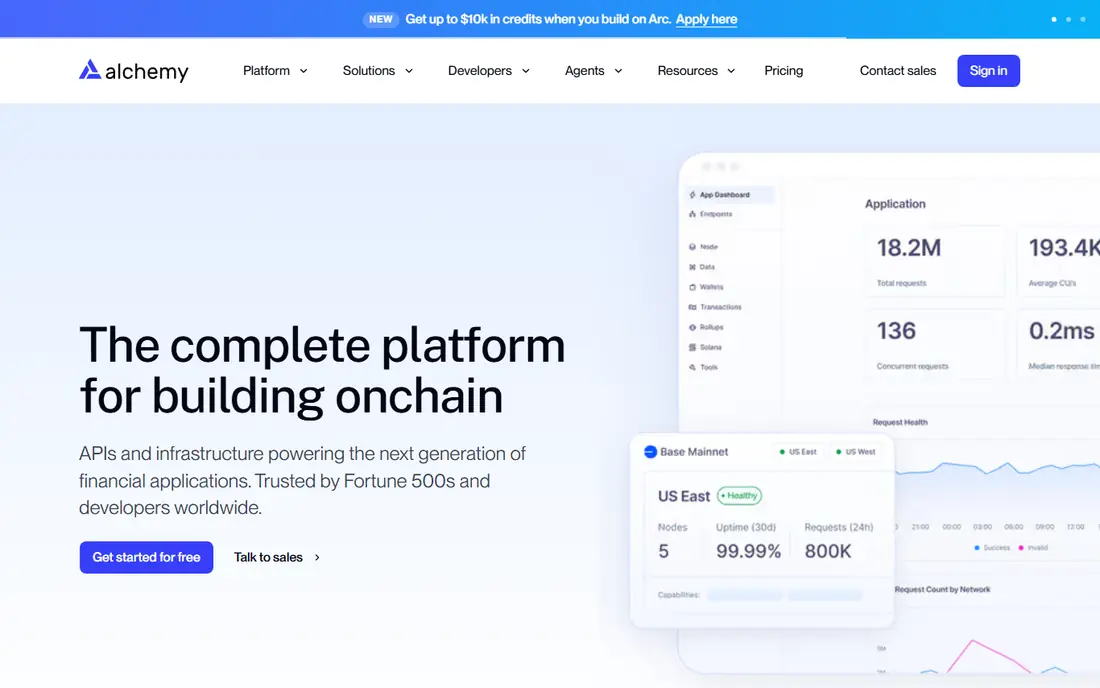
Alchemy gives developers the plumbing behind many Web3 apps: node access, APIs, indexing, and tools that help apps read and write chain data without running their own nodes. If your team already has designers and product managers, Alchemy can speed up the build a great deal. Its documentation and dashboards are built for working developers rather than for nontechnical buyers.
Alchemy is less suited to a client who wants a vendor to own the whole product, from branding to launch. You will still need your own product team, or a separate development partner, to turn the infrastructure into a finished app that users enjoy.
- Developer friendly APIs and node infrastructure
- Multi chain support
- Strong tooling for app teams
- It is infrastructure first, not a full design studio
- Large scale use can get costly
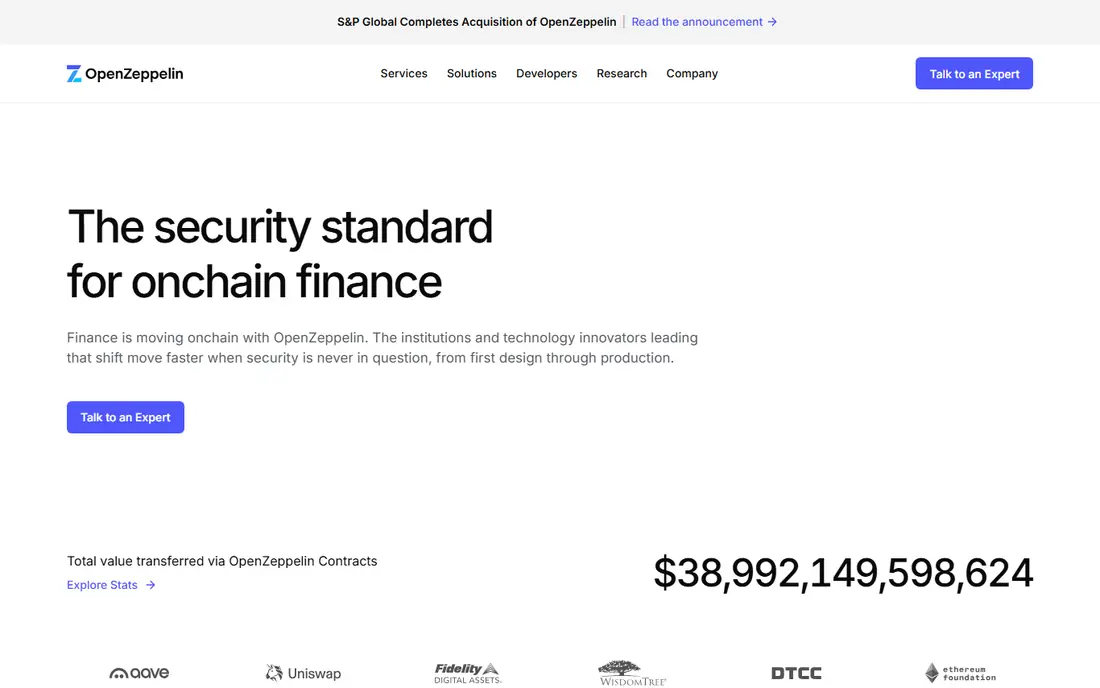
OpenZeppelin Contracts are the standard starting point for many Ethereum projects, and its audit practice reviews code for teams that cannot afford a costly bug. That combination of public libraries and paid review work makes it a strong pick for any project where contracts will hold user funds. Teams that build on its libraries also benefit from community review and familiar patterns.
OpenZeppelin will not build your full consumer app or your marketing site. Think of it as the security and contract layer of your project, and pair it with a product studio if you need design, mobile apps, or back end work beyond the chain itself.
- Widely used open source contract libraries
- Respected security audits
- Defender operations tooling
- Audit wait times can be long
- Not a general app development shop
ChainSafe works at a deeper layer than most firms on this list, building clients, tooling, and infrastructure for Ethereum, Filecoin, and other networks. That makes it a strong choice for teams building protocols, bridges, or developer tools rather than a simple consumer app. Its engineers are used to hard problems such as networking, consensus, and cross chain messaging.
A nontechnical founder may struggle to brief ChainSafe well, because the work assumes a clear technical specification. If you have a chief technology officer or a strong technical lead, ChainSafe can be an excellent partner. If you do not, start with a product studio and bring ChainSafe in for the protocol pieces.
- Protocol and client engineering depth
- Cross chain and infrastructure experience
- Research driven team
- Better for technical clients than for nontechnical founders
- Project based pricing only
LeewayHertz builds custom blockchain products for enterprises and startups, covering smart contracts, decentralized apps, tokenization, and AI linked features. That breadth helps when a project spans several pieces, such as a token, a wallet, and an admin dashboard. Clients who want one vendor to carry the whole build often find this model convenient.
The risk with any broad firm is uneven depth on your specific chain or use case. Ask for past projects on the exact chain you plan to use, and ask to speak with the engineers who would work on your project rather than only the sales team. A good answer to those questions is a strong buying signal.
- Broad service menu across chains
- Enterprise and startup clients
- AI plus blockchain work
- Broad focus means you must check chain specific depth
- Pricing is quote based
PixelPlex has built tokenization platforms, DeFi products, and enterprise blockchain systems, and it also offers smart contract audits. That mix suits teams that want to launch a tokenized asset or a lending product and want security review in the same engagement. Its case work spans finance, supply chain, and gaming, which helps when a product must fit a real business process.
PixelPlex is not a giant consultancy, so very large multi year programs may need a bigger vendor or a consortium. For a focused product build with a clear scope, its size can be a plus, since senior staff tend to stay close to the work.
- Tokenization and DeFi experience
- Smart contract audits
- Product development from idea to launch
- Smaller than the global consultancies
- Availability can vary by project timing
SoluLab offers a wide menu of blockchain services, from DeFi and NFT marketplaces to wallets and enterprise systems. Startups like that range because an early idea often changes shape, and a vendor that can pivot from a token to a marketplace saves a painful handover. Its pricing is project based, so a detailed brief will get you a much better quote.
As with any full service studio, the team assigned to you matters more than the company brochure. Ask for the resumes of the lead developer and project manager, ask how code reviews work, and agree on milestones tied to working software rather than to calendar dates alone.
- Covers DeFi, NFTs, wallets, and enterprise builds
- Startup friendly engagement models
- Token work
- Quality can vary by team, so vet the assigned staff
- Quote based pricing needs careful scoping
HashCash Consultants builds blockchain products and platforms for financial and industrial clients, including exchange and payment related systems. If your product moves money, settles trades, or needs to meet financial rules, that background is valuable. Financial products fail in specific ways, and a vendor that has seen those failures before can save you from repeating them.
Consumer focused teams, such as a gaming studio or an NFT brand, may find HashCash less natural than a studio that lives in that world. Match the vendor to the domain, not just to the technology, and check references from clients in your own industry before you commit.
- Exchange and payment product experience
- Blockchain products for financial clients
- Global delivery
- Finance focus may not suit gaming or consumer NFT projects
- Enterprise style process
Innowise is a software development firm with a large blockchain practice, covering custom chains, layer two work, enterprise dApps, and Web3 products. Its size helps when a project needs many engineers at once, or when you want design, mobile, and back end work alongside the chain build. Clients that need to scale a team quickly often value that capacity.
Size also brings a risk: the people in the sales call may not be the people who build your product. Insist on meeting the delivery lead, agree on communication cadence, and ask how the firm handles staff changes mid project. Those answers tell you more than any portfolio page.
- Custom development across chains
- Enterprise dApps and Web3 products
- Large engineering team
- Large team means you must confirm who leads your project
- Scoping calls are essential
How we picked these
We compared official service pages, public case studies, and the kinds of work each firm is known for, rather than relying on a single ranking site. We favored firms with verifiable products, open source work, or named clients, and we kept a mix of infrastructure specialists, security auditors, and full product studios. We did not test these firms hands on, and we did not accept vendor claims at face value where a public record could confirm or challenge them.
What to ask before you hire a blockchain firm
Start with the chain and the problem, not with the vendor list. A team building on Ethereum needs different skills from a team building a permissioned ledger for a supply chain, and a token launch needs different review than an internal record system. Write a one page brief that states the users, the value at stake, the chain, and the launch date, then send the same brief to each shortlisted firm so their quotes are comparable.
Check security and ownership early
Ask who writes the tests, who reviews the contracts, and whether an independent audit is included or bought separately. Agree in writing who owns the code, the repositories, and the deployment keys, and what happens if the engagement ends. For any contract that will hold funds, budget for an audit from a firm other than the builder, since a second pair of eyes is the cheapest insurance in this field.
Compare total cost, not the headline quote
Project quotes often exclude audits, infrastructure, node hosting, and post launch support, and those items can rival the build cost. Ask for a line by line estimate that covers development, testing, audit, deployment, and three months of support. Also ask how change requests are priced, since blockchain projects change often once users touch a prototype.
FAQ
What is the best blockchain development company?
There is no single best firm, because the right choice depends on the chain, the product, and the budget. ConsenSys and Alchemy suit Ethereum product work, OpenZeppelin suits security, and studios such as LeewayHertz and SoluLab suit full product builds. Shortlist two or three firms and compare them on the same written brief.
What is the best blockchain company for a startup?
Startups often do better with a product studio such as SoluLab, PixelPlex, or LeewayHertz, which can carry design and development together. Keep the first scope small, ship a working prototype, and add features after real users have tried it. Avoid signing a large fixed scope before you have validated the core idea.
Which is the best web3 company for smart contract audits?
OpenZeppelin is a strong starting point for smart contract audits and libraries, and it is widely used across Ethereum projects. For very large or novel protocols, consider getting a second audit from another respected firm as well. Audits reduce risk but do not guarantee that code is free of bugs.
How much does a blockchain development company charge?
Most firms price by project scope, team size, and timeline, so there is no reliable flat rate. A simple prototype costs far less than a regulated finance platform with audits and ongoing support. Request itemized quotes on the same brief, and confirm what is excluded before you compare totals.
Should I hire a blockchain company or build in house?
Hiring a firm makes sense when you need chain expertise quickly or for a single launch. Building in house makes sense when blockchain will be a permanent part of your product and you can hire and retain specialists. Many teams start with a firm for the first launch, then hire in house staff to maintain the product.